

P0300 on 2008-2015 Buick Enclave: Random Misfire Causes and Fixes
On a 2008-2015 Buick Enclave, a P0300 code is most often caused by worn spark plugs and failing ignition coils. However, stretched timing chains are a serious and well-documented issue on this engine that must be considered, especially if accompanied by codes like P0008 or P0017. On 2009+ models with the LLT direct-injection engine, carbon buildup on intake valves is another common culprit.
- P0300 on a Buick Enclave indicates a random misfire that requires immediate attention to prevent further damage, especially to the catalytic converter.
- The most common fixes are replacing worn spark plugs and failed ignition coils. Due to difficult access to the rear engine bank, it's cost-effective to replace all rear plugs and coils at once.
- A notorious and expensive potential cause is a stretched timing chain. If you see codes like P0017 alongside P0300, this should be your primary suspect.
- For 2009 and newer models with direct injection, carbon buildup on the intake valves is a likely cause, especially if the misfire is most noticeable on cold starts.
What's Unique About the 2008-2015 Buick ENCLAVE

The 2008-2015 Buick Enclave uses a 3.6L V6 engine (LY7 in 2008, LLT from 2009-2015) which is known for specific issues leading to a P0300 code. Prematurely stretched timing chains are a major concern, particularly on earlier models, and can cause random misfires. This was exacerbated by an overly optimistic Oil Life Monitor (OLM) calibration from the factory, which led to oil degradation and accelerated chain wear. GM issued Special Coverage Adjustment 11340C to address this by extending the warranty and reprogramming the OLM. Additionally, the direct-injection LLT engine (2009+) is prone to heavy carbon buildup on the intake valves, which can disrupt airflow and cause misfires, especially on a cold start, as noted in TSB #18-NA-115 and discussed in owner forums.
Diagnostic Flowchart
Tap your situation to follow the diagnostic path that matches what you're seeing on this vehicle.
Symptoms You May Notice
- Rough or shaking idle.
- Hesitation or stumbling during acceleration.
- Flashing or solid Check Engine Light.
- Noticeable loss of engine power.
- Reduced fuel economy.
- Engine may stall unexpectedly.
- Strong smell of fuel from the exhaust.
- Traction control light may illuminate and turn off traction control system.
- Replacing only one ignition coil or spark plug when others are near the end of their service life, especially when the intake manifold has to be removed for access.
- Replacing camshaft or crankshaft sensors when timing-related codes (e.g., P0017, P0008) are present. On this engine, the root cause is almost always a stretched timing chain, not a bad sensor.
- Assuming a flashing check engine light is only an ignition problem without considering a clogged catalytic converter, which can also cause severe misfires due to backpressure.
- Confusing a torque converter shudder for an engine misfire. A shudder felt during steady-speed cruising is often transmission-related, not a P0300 cause.
Most Likely Causes

- Worn Spark Plugs 🔴 High Probability Spark plugs are a regular maintenance item with a finite lifespan. The recommended interval is 100,000 miles, but they can fail sooner, causing misfires. The required Iridium plugs can be sensitive to damage if gapped incorrectly.
How to confirm: Inspect the spark plugs for wear (worn electrode), fouling (oil, carbon, or coolant), and an incorrect gap. A diagnostic step is to swap a suspected plug with one from a known good cylinder to see if the misfire follows. Use a scan tool with Mode $06 to view per-cylinder misfire counts before and after swapping.
Typical fix: Replace all six spark plugs. It is highly recommended to use the specified ACDelco Iridium plugs (P/N 41-109 for LLT engines). Given the labor to access the rear bank (cylinders 1, 3, 5) requires removing the intake manifold, it's wise to replace all six plugs and all three rear coils at the same time. 🎬 Watch: Step-by-step guide to replacing spark plugs and coils.
Est. part cost: $50-$150 for a set of six plugs - Failing Ignition Coils 🔴 High Probability Heat and vibration cause ignition coils to fail over time. An owner complaint (ODI #10818536) specifically mentions replacing all spark plugs and coils to fix a P0300 code. GM also issued TSBs like PIP5038 for misfires caused by heat-stressed coils on early models. The rear bank coils (1, 3, 5) are under the intake manifold and subject to more heat soak.
How to confirm: Use a scan tool to check for misfire counts on specific cylinders. Swap an ignition coil from a misfiring cylinder (if identifiable) with a coil from a good cylinder. If the misfire code changes to the new cylinder (e.g., P0302 becomes P0304 after swapping coils from cylinder 2 to 4), the coil is bad.
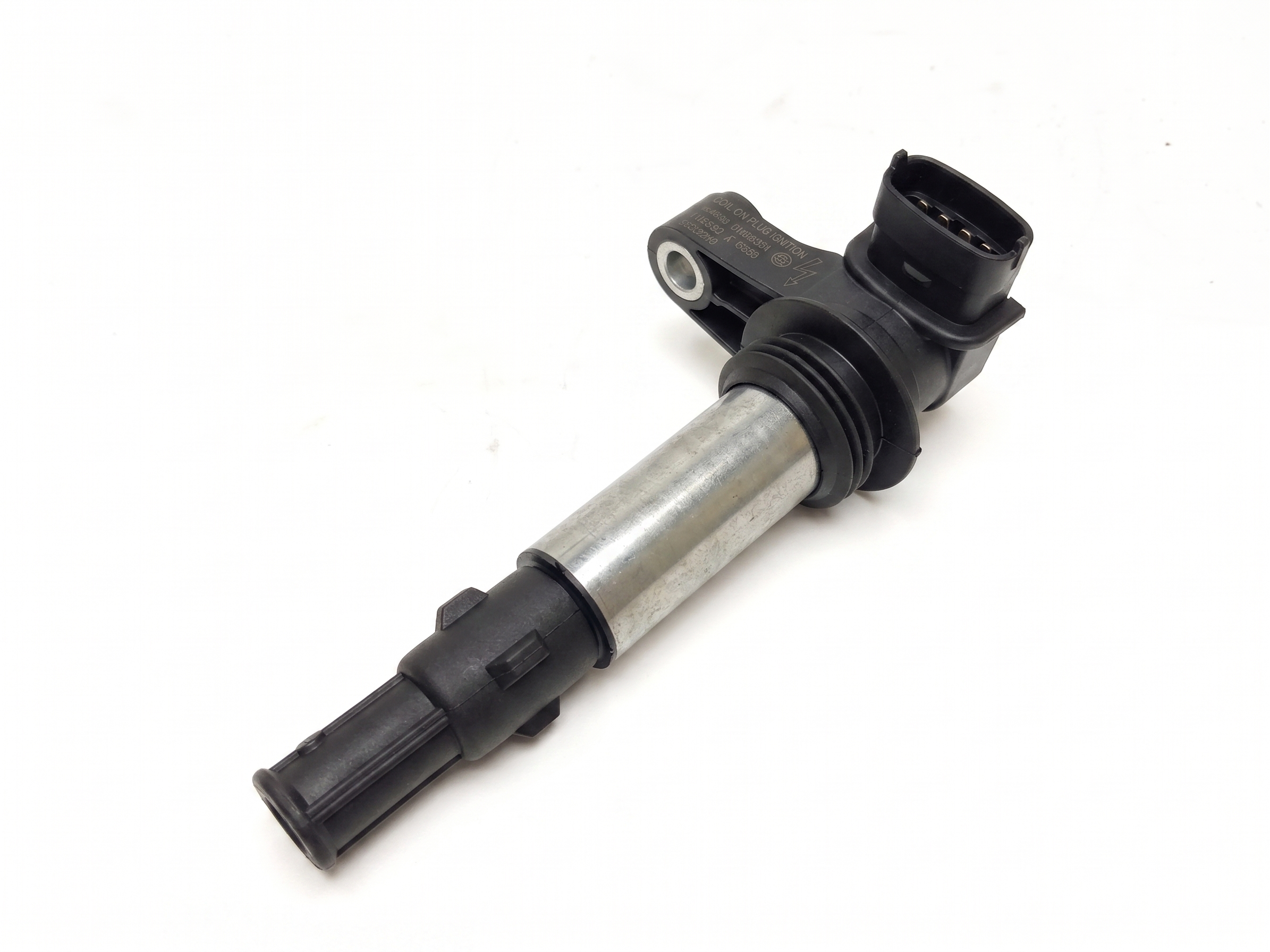
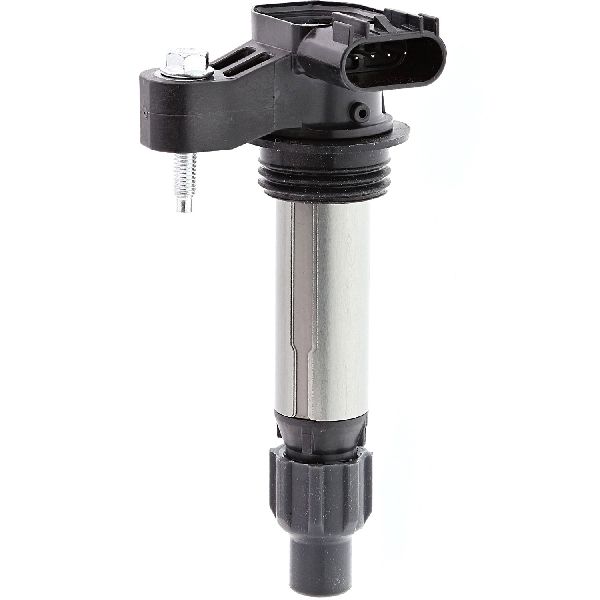
Typical fix: Replace the faulty ignition coil. The OEM part is ACDelco D515C (GM P/N 12632479). Because accessing the rear three coils requires removing the intake manifold, it is strongly recommended to replace all three rear coils and all six spark plugs at the same time to save on future labor costs.
Est. part cost: $30-$90 per coil - Stretched Timing Chains 🟡 Medium Probability The 3.6L V6 engines in this range are notorious for premature timing chain wear. This was often caused by extended oil change intervals recommended by the original Oil Life Monitor (OLM) calibration, leading to oil breakdown and increased wear. GM issued a special coverage program (11340C) extending the warranty to 10 years/120,000 miles for this issue on some model years. An owner complaint (ODI #11022515) directly links P0300 with timing code P0017.
How to confirm: Look for accompanying codes like P0008, P0009, P0016, P0017, P0018, or P0019, which strongly indicate a timing correlation issue. A rattling noise on a cold start is also a classic symptom. Definitive diagnosis requires a mechanic to measure chain deflection, which is a labor-intensive process.
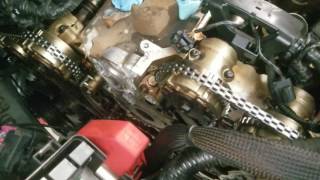
Typical fix: This is a major and expensive repair that involves replacing the three timing chains, tensioners, and guides. It requires significant engine disassembly. 🎬 See this expert teardown of the 3.6L timing chain replacement. Using a quality, complete kit like those from Cloyes or ACDelco is critical. Post-repair, many owners recommend 5,000-mile oil change intervals with full synthetic oil, regardless of the OLM.
Est. part cost: $300-$600 for a full kit - Intake Valve Carbon Buildup 🟡 Medium Probability This is very common on the direct-injection (GDI) 3.6L LLT engine (2009-2015). Because fuel is injected directly into the cylinder, it no longer washes over the intake valves. Oil vapor from the PCV system bakes onto the back of the hot intake valves, restricting airflow and causing misfires, especially during cold starts. TSB #18-NA-115 addresses cold start misfires which can be caused by this.
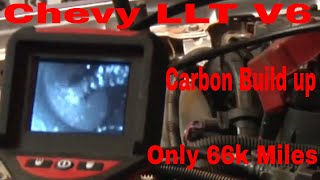
How to confirm: This requires a visual inspection of the intake valves using a borescope after removing the upper intake manifold. 🎬 Watch: See what carbon buildup looks like on these intake valves. Misfires that are most prevalent on cold starts and then improve as the engine warms up are a strong indicator.
Typical fix: The valves must be cleaned manually, typically through walnut shell blasting for best results. Chemical induction services may provide temporary relief but are often not a complete or lasting solution. Some owners install an oil catch can on the PCV line to reduce future buildup.
Est. part cost: $400-$800 for a professional walnut blasting service
Rare But Worth Checking
- Clogged or Failing Fuel Injectors: If ignition components are good, a fuel delivery issue can cause a random misfire. A lean condition from a clogged injector can trigger the code. On GDI engines (2009+), injector failure is less common but more expensive to fix.
- Vacuum Leak: A leak in a vacuum hose, a cracked intake manifold, or a bad intake manifold gasket can introduce unmetered air, throwing off the air-fuel ratio and causing multiple cylinders to misfire. A smoke test is the most effective way to find a leak.
- Low Fuel Pressure: A weak fuel pump or clogged fuel filter can starve the engine of fuel, leading to lean misfires across all cylinders, especially under load. This can be tested with a fuel pressure gauge.
- Clogged Catalytic Converter: A clogged converter can create excessive backpressure, leading to poor engine performance and random misfires across an entire bank. This is often a result of long-term, unaddressed misfires dumping raw fuel, not the initial cause.
- Faulty EVAP Purge Valve: A stuck-open EVAP purge solenoid (often setting code P0496) can create a vacuum leak, causing a rough idle and random misfires, especially after refueling.
Diagnosis Steps
- Read all stored DTCs with an OBD-II scanner. Note any codes accompanying P0300, especially timing (P00xx) or EVAP (P04xx) codes.
- Check the freeze-frame data to understand the engine conditions (speed, load, temperature) when the misfire occurred. Misfires only on cold start point towards carbon buildup on LLT engines.
- Use a scan tool with live data (Mode $06) to view misfire counts for each individual cylinder. This can help narrow down the issue even without a specific P030x code.
- Inspect spark plugs for wear, damage, or fouling. Ensure they are the correct type (ACDelco Iridium 41-109 is specified for many) and do not attempt to gap them.
- Inspect and test ignition coils. Swap a coil from a frequently misfiring cylinder with one from a good cylinder. If the misfire count follows the coil, the coil is bad.
- If timing-related codes (P0008, P0017, etc.) are present, investigate the timing chains for stretching. This is a critical step before replacing other parts.
- On 2009+ models, if misfires are worse on cold starts, suspect carbon buildup and inspect the intake valves with a borescope after removing the intake manifold.
- Perform a fuel pressure test to rule out a weak fuel pump or clogged filter.
- Check for vacuum leaks by inspecting all hoses and gaskets. A smoke test is the most effective method to find elusive leaks from sources like intake gaskets or a faulty EVAP purge valve.
Parts You'll Likely Need

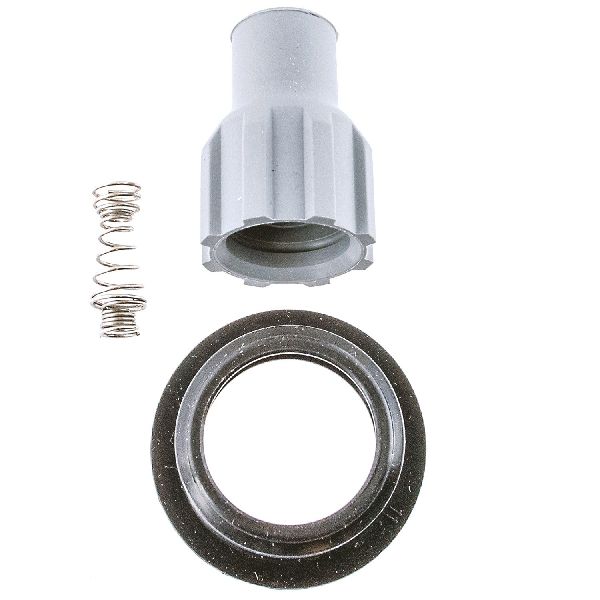
- Ignition Coil
(OEM #12632479)— A primary cause of misfires. Coils are subject to failure from heat and age. The OEM part is ACDelco D515C. Given the labor to access the rear bank, replacing in sets is common.
Trusted brands: ACDelco, Delphi, NGK, Hitachi - Spark Plugs
(OEM #41-109)— A standard maintenance item that is a frequent cause of P0300. The specified part is often the ACDelco 41-109 Iridium plug. Should be replaced with coils, especially on the rear bank.
Trusted brands: ACDelco, NGK - Timing Chain Kit
(OEM #12650230)— Required for the notorious stretched timing chain issue. A complete kit with chains, guides, and tensioners is necessary. This is a very labor-intensive job with high repair costs.
Trusted brands: ACDelco (OEM), Cloyes - Intake Manifold Gasket Set — Required whenever the upper intake manifold is removed to service the rear spark plugs, ignition coils, or to inspect intake valves for carbon buildup.
Trusted brands: Fel-Pro, ACDelco
Related Codes That Often Appear With This One
- P0301-P0306 — If the random misfire begins to occur more frequently on specific cylinders, the ECM will log a cylinder-specific code (e.g., P0301 for Cylinder 1). This can help pinpoint a bad coil or plug.
- P0017 — This code indicates a Crankshaft/Camshaft Position Correlation error. On the Enclave's 3.6L engine, seeing this with a P0300 is a strong indicator of a stretched timing chain. [ODI #11022515, 7]
- P0008 — Similar to P0017, this code indicates an Engine Positions System Performance Bank 1 error. It is another primary indicator of a stretched timing chain on the GM 3.6L engine.
- P0496 — This EVAP system code for "EVAP Flow During a Non-Purge Condition" is very common. It's typically caused by a faulty purge valve stuck open, which creates a vacuum leak that can lead to an incorrect air-fuel mixture and random misfires.
Technical Service Bulletins (TSBs) & Recalls
- Special Coverage - Timing Chain Wear: A special coverage program by GM that extended the warranty on the timing chains for certain 2007-2009 vehicles with the 3.6L V6 engine to 10 years or 120,000 miles. It addressed premature wear caused by issues including the original oil life monitor calibration. The fix involved either replacing the timing chains or reprogramming the ECM with a more conservative oil life algorithm.
- Engine Misfire And/Or Shudder: An early technical service bulletin addressing misfire codes (P0300-P0306) on 2009 models. It pointed towards heat-stressed ignition coils as a potential cause and, in some cases, recommended the replacement of all six coils to resolve the issue.
- Cold Start Misfire and/or Rough Idle with DTC P0300: This bulletin provides diagnostic guidance for dealers dealing with a cold start misfire and P0300. This symptom is strongly associated with carbon buildup on the intake valves of the direct-injection (LLT) engine.
Platform-Specific Known Issues

- Timing Chain Stretch: GM acknowledged this issue by issuing Special Coverage Adjustment 11340C, which extended the warranty to 10 years/120,000 miles for premature timing chain wear on certain model years, including the 2009 Enclave. This is a critical issue to check for when P0300 is present.
- Carbon Buildup on Intake Valves: A known issue on the direct-injected 3.6L LLT engine (2009-2015) that causes cold start misfires and can set a P0300 code. TSB #18-NA-115 was issued to address this problem.
- Difficult Rear Bank Access: Replacing the spark plugs and ignition coils on the rear cylinders (1, 3, 5) is labor-intensive as it requires removing the upper intake manifold.
Mechanic-Grade Diagnostic Values
- High-Pressure Fuel Pressure (2009-2015 LLT Engine) — expected: Should closely match the 'Desired Fuel Rail Pressure' PID on a scan tool, typically around 4 MPa (580 PSI) at idle.. Failure: If the actual pressure cannot meet the desired pressure, especially under load, it indicates a weak high-pressure fuel pump (HPFP) or a leak.
- Low-Pressure Fuel Pressure — expected: Approximately 400-450 kPa (58-65 PSI).. Failure: A pressure drop below this range indicates a failing in-tank fuel pump or a clogged fuel filter.
- Ignition Coil Primary Resistance — expected: Typically 0.4 to 2.0 ohms. Some sources specify a tighter range of 0.49—0.57 ohms.. Failure: A reading of zero, infinity (OL), or significantly outside the expected range suggests a faulty coil. This test is not always foolproof as coils can fail under heat/load but test good when cold.
Hidden / Shadow Codes Worth Checking
- Mode $06 Misfire Counts: The Engine Control Module (ECM) tracks misfire events per cylinder even if they don't meet the threshold to set a P0301-P0306 code. This data can reveal which specific cylinder(s) are the primary offenders in a P0300 random misfire scenario. (see via A professional-level scan tool with Mode $06 capabilities. The data is typically found under Test ID $A2 to $AD, depending on the specific tool and vehicle.)
Scan Tool Commands That Help
- GDS2 (GM Tech Tool) or equivalent professional scanner: Cylinder Power Balance / Fuel Injector Balance Test — This is a crucial test when P0300 is present but specific misfiring cylinders are not identified. The tool sequentially disables the fuel injector to each cylinder and measures the corresponding drop in engine RPM. A cylinder that causes little or no RPM drop when disabled is not contributing power, pinpointing the source of the misfire without guesswork.
- GDS2 (GM Tech Tool) or equivalent professional scanner: Crankshaft Position (CKP) Variation Learn — After replacing a crankshaft position sensor, ECM, or performing major engine work like a timing chain replacement. Failure to perform this relearn can cause the ECM to misinterpret normal crankshaft speed variations as misfires, falsely setting a P0300 code.
Wiring & Ground Locations
- ECM (Engine Control Module) — Located in the left front corner of the engine compartment.. The ECM is the brain of the system. All sensor inputs related to misfire detection terminate here, and it controls both spark and fuel. A poor connection at the ECM or a faulty module itself can be a rare cause of P0300.
- G110 — On the right front of the engine, mounted directly to the cylinder head.. This is a primary engine ground. A loose or corroded engine ground can cause erratic behavior in sensors and actuators, including ignition coils and fuel injectors, leading to random misfires.
- G301 — Behind the left kick panel, inside the passenger cabin.. This is a body ground point. While less likely to cause engine misfires than an engine ground, it provides the ground path for various modules inside the car that communicate with the ECM.
Real Owner Repair Stories
- Chevy HHR Network forum user (Chevy HHR 2.2L with 115,000 miles (different vehicle, but demonstrates a key failure pattern for P0300 on GM vehicles)) — P0300, bad idle, stalling at stops, and a 'dry start' clatter/rattle for 2-4 seconds on every startup.
❌ Tried (didn't work) Verified fuel pressure was good (60 psi), Swapped fuel injectors, Replaced spark plugs, Replaced ignition control module and coil pack, Checked grounds
✅ What actually fixed it During a timing chain replacement, the technician discovered the timing chain tensioner was stuck shut. This had allowed the timing to slip slightly, causing the random misfire. Replacing the timing set and tensioner resolved the P0300 code.
"I Checked Everything" — The Actual Cause
- In cases where a smoke test reveals no vacuum leaks and ignition components have been checked, the cause can be mechanical timing. A stuck timing chain tensioner allowed the chain to develop slack and jump timing slightly, causing a P0300 that was impossible to diagnose through fuel or ignition system checks. The key secondary symptom was a brief engine rattle on cold starts.
When the Usual Fixes Don't Work
- Owners have reported chasing a P0300-like shudder by replacing spark plugs and ignition coils, only to find the issue persists. In one documented case, a 2015 Enclave had its torque converter replaced, which fixed the shudder only temporarily. The owner then used a fluid additive which also provided a temporary fix, suggesting the root cause was transmission-related (clutch material or fluid breakdown) rather than an engine misfire, even though the symptoms felt identical.
OEM Part Supersession History
12622561→ACDelco 41-109— Standard part evolution and branding.
Heads up: A critical installation note for the ACDelco 41-109 is that it comes pre-gapped to 0.040 inches and should NOT be re-gapped. Attempting to change the gap can damage the fine iridium electrode.
Model Year Variations Within This Range
- 2008 (LY7 Engine): Uses a port fuel injection system and a plastic intake manifold (P/N 12602220) that is prone to cracking or gasket leaks. The PCV system uses a fixed orifice in the valve cover that can clog, as detailed in TSB PI0746C.
- 2009-2015 (LLT Engine): Uses a Gasoline Direct Injection (GDI) fuel system with both a low-pressure in-tank pump and a high-pressure mechanical pump on the engine. This system is not prone to intake manifold cracks like the LY7 but is highly susceptible to carbon buildup on the back of the intake valves, which is a primary cause of cold-start misfires.
Helpful Videos
Used OEM Parts in Stock



New Aftermarket Parts Available


The information in this article is provided for general reference and educational purposes only. Vehicle specifications, procedures, and part compatibility can vary by production date, trim level, and region. Always consult your vehicle's factory service manual and verify part numbers before purchasing or performing repairs. Safety-critical components such as airbags, seat belts, and braking systems should be installed by a qualified professional.
- Buick ENCLAVE:
- 🎬 Helpful Videos
- 🛍️ Shop This Part
- What's Unique About the 2008-2015 Buick ENCLAVE
- Diagnostic Flowchart
- Symptoms You May Notice
- Most Likely Causes
- Rare But Worth Checking
- Diagnosis Steps
- Parts You'll Likely Need
- Related Codes That Often Appear With This One
- Technical Service Bulletins (TSBs) & Recalls
- Platform-Specific Known Issues
- Mechanic-Grade Diagnostic Values
- Hidden / Shadow Codes Worth Checking
- Scan Tool Commands That Help
- Wiring & Ground Locations
- Real Owner Repair Stories
- "I Checked Everything" — The Actual Cause
- When the Usual Fixes Don't Work
- OEM Part Supersession History
- Model Year Variations Within This Range
- 🎟️ Get 5% Off