

P0300 on 2000-2005 Buick Century: Random Misfire Causes & Fixes
Code P0300 on a 2000-2005 Buick Century almost always points to a basic ignition system problem like worn spark plugs and wires. If a tune-up doesn't fix it, suspect a faulty fuel pressure regulator or leaking intake manifold gaskets, two well-known issues on the 3.1L V6 engine.
- Start with the basics: P0300 on this car is most often fixed with a simple tune-up (spark plugs and wires).
- Check the fuel pressure regulator next; it's a common failure and takes only a minute to diagnose by checking for fuel in the vacuum line.
- If tune-up parts and the regulator are good, suspect a vacuum leak from the infamous lower intake manifold gaskets.
- A flashing check engine light means stop driving as soon as safely possible to prevent expensive catalytic converter damage.
What's Unique About the 2000-2005 Buick CENTURY

The 3.1L V6 (RPO code LG8) engine in the 2000-2005 Buick Century is a reliable workhorse, but it has two well-documented weak points that frequently lead to a P0300 code. The most notorious is the failure of the original plastic-carrier lower intake manifold (LIM) gaskets, which degrade over time and cause vacuum leaks or coolant intrusion, leading to widespread misfires. Additionally, a failing fuel pressure regulator, where the internal diaphragm ruptures and leaks raw fuel into the vacuum line, is a very common and easy-to-diagnose issue on this specific engine.
Diagnostic Flowchart

Tap your situation to follow the diagnostic path that matches what you're seeing on this vehicle.
Symptoms You May Notice
- Rough or shaking idle
- Hesitation or stumbling during acceleration
- Flashing or solid Check Engine Light
- Noticeable loss of engine power
- Reduced fuel economy
- Difficulty starting the engine, especially after sitting
- Engine may stall when coming to a stop
- Black smoke from the exhaust (if fuel pressure regulator has failed)
- Strong smell of gasoline under the hood
- Replacing only the spark plugs but not the wires. Wires are a common failure point and should always be replaced with the plugs on this engine.
- Replacing the Ignition Control Module (ICM) without testing the coils first. While the ICM can fail, it's often damaged by a bad coil. It's best to test coils by swapping them and seeing if the misfire moves.
- Replacing the Powertrain Control Module (PCM). This is very rarely the cause and should only be considered after all other possibilities, including wiring and grounds, have been exhausted.
Most Likely Causes


- Worn Spark Plugs and/or Wires 🔴 High Probability These are standard maintenance items that wear out from heat and high voltage. The rear three spark plugs (cylinders 1-3-5) are difficult to access against the firewall, so they are often neglected during tune-ups.
How to confirm: Inspect spark plugs for wear (worn electrode), fouling (black, sooty, or oily deposits), or incorrect gap. Inspect wires for cracks, corrosion on the terminals, or signs of arcing (white marks or burns on boots).
Typical fix: Replace all six spark plugs and the full set of spark plug wires. It is critical to do them together. Using a quality OEM-spec part is recommended.
Est. part cost: $50-$120 - Faulty Fuel Pressure Regulator 🔴 High Probability The internal diaphragm is known to rupture, allowing raw fuel to be sucked directly into the vacuum line connected to the intake manifold. This causes a severe rich condition and random misfires.
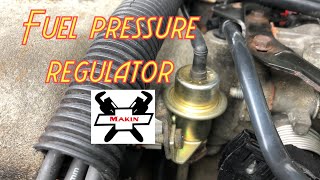
How to confirm: Locate the regulator on the fuel rail and pull off the small vacuum hose attached to it. If raw fuel is present in the hose or drips from the regulator's port, it has failed. This is considered the 'smoking gun' test for this part.
Typical fix: Replace the fuel pressure regulator. Be sure to depressurize the fuel system before starting the repair by pressing the Schrader valve on the fuel rail.
Est. part cost: $40-$80 - Failed Ignition Coil Pack(s) 🟡 Medium Probability The 3.1L V6 uses a waste-spark system with three coil packs, each firing two companion cylinders (1-4, 2-5, 3-6). When one coil fails, it can cause misfires on two cylinders simultaneously, which the PCM may log as a P0300 before setting a specific cylinder code.
How to confirm: Use a scan tool with live data to check for misfire counts on specific cylinders. Swap a suspected bad coil with a known good one (e.g., swap the 1-4 coil with the 2-5 coil) and see if the misfire counts move to the new cylinder pair.
Typical fix: Replace the faulty ignition coil pack and the Ignition Control Module (ICM) it sits on, as a failing coil can damage the module.
Est. part cost: $30-$70 per coil - Leaking Lower Intake Manifold (LIM) Gaskets 🟡 Medium Probability The original factory gaskets on the GM 3.1L V6 used a plastic carrier frame that is notorious for cracking and deteriorating from exposure to engine oil and coolant (Dex-Cool), creating a vacuum leak that leans out the air/fuel mixture across all cylinders.
How to confirm: A professional smoke test is the most reliable method. A common DIY method is to spray carburetor cleaner or starter fluid around the intake manifold gasket sealing surfaces while the engine is idling; if the idle speed changes or stumbles, a leak is present.
Typical fix: Replace the lower intake manifold gaskets with an updated, more durable metal-carrier design. The Fel-Pro MS98004T is a widely recommended replacement part for this reason. This is a labor-intensive job that also requires draining the coolant and changing the oil.
Est. part cost: $50-$150 for the gasket set
Rare But Worth Checking
- Clogged Catalytic Converter: A persistent misfire can destroy a catalytic converter by dumping raw fuel into it. Conversely, a clogged converter can increase exhaust backpressure, causing a P0300 misfire, especially under load. A mechanic can test for this with a backpressure gauge or by temporarily removing the upstream oxygen sensor to see if performance improves.
- Faulty Crankshaft Position Sensor (CKP): A failing CKP can send erratic signals to the PCM, causing misfires that are hard to trace. After replacing the CKP sensor, a "Crankshaft Variation Relearn" procedure must be performed with a capable scan tool for the engine to run correctly. Failure to perform the relearn can itself cause a P0300 code.
- Clogged or Dirty Fuel Injectors: If multiple injectors are not delivering the correct amount of fuel, it can lead to random misfires. This can sometimes be caused by poor fuel quality. GM issued a TSB (03-06-04-030F) related to clogged injectors causing various driveability issues, including P0300. A professional cleaning or testing with a tool like the AFIT (Active Fuel Injector Tester) may be needed.
Diagnosis Steps
- Read all stored DTCs with an OBD-II scanner. Note any other codes besides P0300, as they can provide crucial clues 🎬 Watch: A mechanic's guide to diagnosing random cylinder misfires. (e.g., P0172, P0171, P1336).
- Check live data for fuel trims. Long-term fuel trims consistently above +10% suggest a vacuum leak (like LIM gaskets). Consistently negative trims (e.g., -15% or more) suggest a rich condition (like a bad fuel pressure regulator).
- Perform a visual inspection of the engine bay. Look for cracked vacuum hoses, loose connections, or signs of arcing (white dust or burn marks) around ignition wires and coils.
- Test the fuel pressure regulator. With the engine off, pull the vacuum line from the top of the regulator. If fuel is present in the line or port, the regulator is bad and must be replaced.
- Inspect the ignition system. Start with the spark plugs and wires, as they are the most common cause. Replace them if they are old or show signs of wear. A quality set is recommended.
- Test the ignition coils. Using a scan tool that can display Mode $06 data, check for misfire counts per cylinder. Swap the coil from a misfiring cylinder pair to another position and see if the misfire count follows the coil.
- Check for vacuum leaks from the Lower Intake Manifold gaskets. The most effective method is a smoke test. Alternatively, with the engine running, carefully spray short bursts of brake cleaner or starter fluid around the gasket area where the manifold meets the cylinder heads. If the engine RPM changes, a leak is present.
- If a Crankshaft Position Sensor (CKP) was recently replaced, ensure the Crank Variation Relearn procedure was performed using a bi-directional scan tool. If not, this is a likely cause.
- If all else fails, test fuel pressure with a gauge to rule out a weak fuel pump and perform an engine compression test to check for mechanical issues like a worn camshaft or bad head gasket.
Parts You'll Likely Need
- Spark Plugs and Wire Set
(OEM #ACDelco 9746T (Wire Set))— This is the most common cause of a P0300 code and is a fundamental part of a tune-up. Wires and plugs should always be replaced together.
Trusted brands: ACDelco (OEM), NGK, Delphi
OEM price range: $80-$150
Aftermarket price range: $50-$100 - Fuel Injection Pressure Regulator
(OEM #ACDelco 217-3073 (Replaces older numbers))— A very common failure on this engine. The internal diaphragm ruptures, leaking raw fuel into the vacuum line and causing a rich condition and random misfires.
Trusted brands: ACDelco (OEM), Standard Motor Products, Delphi
OEM price range: $60-$100
Aftermarket price range: $40-$80 - Lower Intake Manifold Gasket Set
(OEM #Fel-Pro MS98004T (Recommended Upgrade))— The original plastic-framed gaskets are a notorious failure point. The upgraded Fel-Pro metal-carrier design is highly recommended to prevent repeat failures from vacuum leaks or coolant intrusion.
Trusted brands: Fel-Pro (PermaDryPlus), ACDelco, Mahle
OEM price range: $70-$120
Aftermarket price range: $50-$90
Related Codes That Often Appear With This One
- P0301-P0306 — If the random misfire begins to occur more frequently on a specific cylinder, the PCM may also log a cylinder-specific code (e.g., P0304 for cylinder 4).
- P0172 — This code for 'System Too Rich' often appears with a P0300 when the cause is a leaking fuel pressure regulator dumping excess fuel into the engine.
- P0171 / P0174 — These codes for 'System Too Lean' can accompany a P0300 if the root cause is a significant vacuum leak, such as from failed lower intake manifold gaskets.
- P1336 — This code indicates that the Crankshaft Position System Variation has not been learned. It will appear if the CKP sensor is replaced and the mandatory relearn procedure is not performed with a scan tool.
Technical Service Bulletins (TSBs) & Recalls
- PIP5628G: General diagnostic information for misfire codes P0300-P0308.
- 03-06-04-030F: Addresses various driveability symptoms, including P0300, that can be caused by restricted or clogged fuel injectors due to fuel quality.
Platform-Specific Known Issues
- The lower intake manifold gaskets are a well-known, high-failure-rate item on the GM 3.1L V6 engine. The original plastic-framed gaskets degrade over time from exposure to coolant, leading to vacuum and/or coolant leaks that cause misfires.
Mechanic-Grade Diagnostic Values
- Crankshaft Position Sensor (CKP) Resistance — expected: Between 700 and 1,200 Ohms. Failure: A reading outside this range indicates a faulty sensor.
- Crankshaft Position Sensor (CKP) AC Voltage Signal — expected: Above 0.5V AC while cranking the engine.. Failure: No AC voltage reading suggests the sensor is not generating a signal, pointing to a failed sensor or wiring issue.
- Fuel Pressure (Key On, Engine Off) — expected: 48-55 PSI. Failure: Pressure below 48 PSI indicates a weak fuel pump or clogged filter. Pressure that drops quickly after the pump primes indicates a leaking regulator or injector.
- Engine Compression — expected: Approximately 150-170 PSI per cylinder, with less than 15% variation between cylinders.. Failure: Low compression in one or more cylinders can indicate mechanical issues like worn piston rings or bad valves, which can cause misfires.
Hidden / Shadow Codes Worth Checking
- Mode $06 Data: This is not a specific code, but a diagnostic mode that provides access to raw test data from the PCM's onboard monitors. For P0300, it is invaluable for viewing misfire counts for each individual cylinder (e.g., Test ID $A2, Component ID $01 for cylinder 1) before they are high enough to trigger a cylinder-specific code like P0301. (see via A scan tool that supports Mode $06 data. Many mid-range and professional scanners like the GM Tech 2 have this capability.)
Scan Tool Commands That Help
- GM Tech 2 / GDS2 or equivalent professional scanner: Crankshaft Variation Relearn (CASE Relearn) — This procedure is mandatory after replacing the crankshaft position sensor, PCM, or making significant engine mechanical repairs. The function allows the PCM to learn the minor variations in the crankshaft reluctor wheel to accurately detect misfires. Failure to perform this can directly cause a P1336 and/or P0300 code.
- GM Tech 2 / GDS2 or equivalent professional scanner: Active Tests / Actuator Tests — Allows the technician to command specific components on and off to test their function. For a P0300, a technician can perform an 'Injector Balance Test' to see if all injectors are flowing equally, or cycle the EGR valve to see if it's sticking, without having to remove parts.
Wiring & Ground Locations
- G111 — On the right side of the engine, mounted on the Ignition Control Module (ICM) bracket.. This is the primary ground for the Ignition Control Module. A loose or corroded connection here can cause erratic spark, weak coil performance, and random misfires across all cylinders, directly leading to a P0300.
- G113 — Located to the left of the starter, on a transaxle stud.. This serves as a major ground point for the engine block to the chassis. Poor connection here can affect the performance of various sensors, including the crankshaft position sensor, which relies on a stable ground reference.
- Crankshaft Position Sensor Harness — The harness runs from the sensor, located on the back of the engine block near the transmission, up towards the ICM. It is often routed near the rear exhaust manifold.. The wiring is susceptible to heat damage from the exhaust manifold. The insulation can become brittle and crack, causing the signal wires to short to each other or to ground, resulting in an erratic CKP signal and a P0300 code.
Real Owner Repair Stories
- YouTube user comment/video (Vehicle in video appeared to be a GM with a V6, similar to the 3.1L.) — P0300 random misfire code, check engine light.
❌ Tried (didn't work) Replaced spark plugs, Replaced ignition wires, Replaced ignition coils, Performed compression test (all cylinders were good), Replaced cam sensor (new part was faulty, so old one was reinstalled)
✅ What actually fixed it The wiring connector to the camshaft position sensor had a poor connection. After inspecting the wires, which appeared brown and possibly heat-damaged, the owner unplugged and re-plugged the connector. This seemingly simple action restored a proper connection, and the P0300 code did not return after extensive driving. The misfire was caused by a wiring/connection issue, not a faulty component. - YouTube video diagnosis (2000 Buick Century) — P0301 (Cylinder 1 misfire) and P0300, rough idle, hesitation.
❌ Tried (didn't work) Swapping spark plug did not resolve the issue.
✅ What actually fixed it A visual inspection revealed a crack in the spark plug wire for cylinder 1. The spark was arcing from the crack to the engine block instead of reaching the spark plug. The final fix was simply replacing the faulty spark plug wire set.
OEM Part Supersession History
GM OEM plastic-carrier LIM gaskets→Fel-Pro MS98004T (and similar metal-carrier designs)— The original plastic-framed gaskets were prone to cracking and deforming from exposure to engine oil and Dex-Cool coolant. The updated design uses a rigid, aluminized steel carrier that resists warping and has molded rubber sealing beads that provide a more durable and reliable seal, especially on imperfect surfaces.
Model Year Variations Within This Range
- 2000-2005: The 3.1L V6 (LG8) engine received a minor power update during this period. Models from 2000-2003 were typically rated at 175 horsepower, while some sources indicate a slight increase for 2004-2005 models. However, for the purpose of diagnosing a P0300 code, the engine architecture, common failure points (LIM gaskets, fuel pressure regulator, ignition system), and diagnostic procedures remained consistent across the entire 2000-2005 model year range.
Helpful Videos
Used OEM Parts in Stock

New Aftermarket Parts Available



The information in this article is provided for general reference and educational purposes only. Vehicle specifications, procedures, and part compatibility can vary by production date, trim level, and region. Always consult your vehicle's factory service manual and verify part numbers before purchasing or performing repairs. Safety-critical components such as airbags, seat belts, and braking systems should be installed by a qualified professional.
- Buick CENTURY:
- 🎬 Helpful Videos
- 🛍️ Shop This Part
- What's Unique About the 2000-2005 Buick CENTURY
- Diagnostic Flowchart
- Symptoms You May Notice
- Most Likely Causes
- Rare But Worth Checking
- Diagnosis Steps
- Parts You'll Likely Need
- Related Codes That Often Appear With This One
- Technical Service Bulletins (TSBs) & Recalls
- Platform-Specific Known Issues
- Mechanic-Grade Diagnostic Values
- Hidden / Shadow Codes Worth Checking
- Scan Tool Commands That Help
- Wiring & Ground Locations
- Real Owner Repair Stories
- OEM Part Supersession History
- Model Year Variations Within This Range
- 🎟️ Get 5% Off