

P0300 on 2006-2009 Buick Allure: Random Misfire Causes and Fixes
P0300 on a 2006-2009 Buick Allure indicates a random misfire. On the 3.8L V6, this is most often caused by a failed Ignition Control Module (ICM) or worn spark plugs and wires. For the 3.6L V6, failing ignition coils are more common, and this code can be an early warning of a stretched timing chain. A basic tune-up is often the first step, costing between $150 and $300 in parts.
- P0300 means multiple cylinders are misfiring, and you should stop driving if the check engine light is flashing to avoid catalytic converter damage.
- For the 3.8L V6 engine, the most likely culprit is a failed Ignition Control Module (ICM) or a basic tune-up (plugs and wires).
- For the 3.6L V6 engine, failing individual ignition coils are a more common cause.
- Do not rule out a vacuum leak from a bad intake manifold gasket, as this is a known issue on these GM platforms.
- If basic ignition and fuel system checks don't solve the problem, be aware of the TSB mentioning worn camshaft lobes as a more serious, mechanical possibility.
What's Unique About the 2006-2009 Buick ALLURE
The Buick Allure from this period primarily used two different V6 engines, and the cause of a P0300 often depends on which one you have. The 3.8L V6 (Series III) is known for the reliability of its core components but has a well-documented weakness in its Ignition Control Module (ICM), which sits under the ignition coils and fails from heat over time. The more modern 3.6L DOHC V6 (LY7), on the other hand, uses a coil-on-plug design where individual ignition coils are a more common failure point. Crucially, for the 3.6L V6, a P0300 code can be a primary symptom of a stretched timing chain, a notorious and expensive issue for this engine family. Additionally, several Technical Service Bulletins (TSB) exist, including one for the 2008 model year (PIP4138R) pointing to worn camshaft lobes and another (18-NA-115) detailing rare engine block porosity causing cold-start misfires.
Diagnostic Flowchart
Tap your situation to follow the diagnostic path that matches what you're seeing on this vehicle.
Symptoms You May Notice
- Flashing or steady Check Engine Light
- Rough or shaking idle
- Engine hesitation or stumbling during acceleration
- Noticeable loss of power
- Increased fuel consumption
- Engine stalling
- Traction control or StabiliTrak light may illuminate during misfire events
- Replacing only one spark plug or coil when a full tune-up is needed.
- Replacing oxygen sensors when the root cause is a vacuum leak or ignition issue that is creating a lean/rich condition.
- Replacing ignition coils on a 3.8L V6 when the Ignition Control Module (ICM) is the actual point of failure.
- On the 3.6L V6, repeatedly replacing ignition components when the underlying cause is a stretched timing chain.
Most Likely Causes
- Failed Ignition Control Module (ICM) (3.8L V6 only) 🔴 High Probability The ICM on the GM 3800 Series III engine is mounted directly under the hot ignition coils, making it susceptible to heat-related failure over time, a widely documented issue.
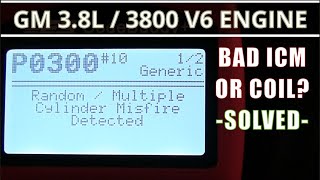
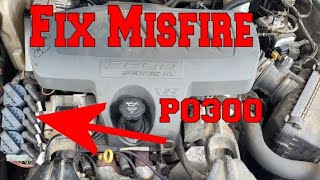
How to confirm: If two cylinders that share a coil pack are misfiring (e.g., 2 and 5), the ICM is a likely suspect. A common diagnostic step is to swap a known-good ignition coil onto the position of the non-firing cylinders. If the misfire does not move with the coil, the ICM is the most probable cause. A YouTube video by 'DIY-Maker-Dan' on a 2006 LaCrosse with the 3.8L demonstrates this exact diagnostic process. 🎬 Watch: Diagnosing and fixing a P0300 on the 3.8L engine.
Typical fix: Replace the Ignition Control Module. It is located beneath the ignition coil pack bracket. It is critical to apply new dielectric grease to the metal contact points on the back of the new module to ensure proper heat dissipation.
Est. part cost: $60-$150 - Worn Spark Plugs and/or Wires 🔴 High Probability Spark plugs and wires are standard maintenance items that wear out. On the 3.8L V6, the rear spark plug wires are routed near hot exhaust components, which can accelerate their degradation. A cracked wire can arc to the engine block, causing a misfire.
How to confirm: Inspect the spark plugs for wear, carbon fouling, oil contamination, or damage to the ceramic insulator (carbon tracking). Inspect wires for cracks, brittleness, or signs of arcing (white marks or burns). A user on W-body.com noted their P0300 was caused by the metal heat shields on the rear plug boots shorting against the block.
Typical fix: Replace all spark plugs and spark plug wires as a set. Use of quality OEM-spec brands like ACDelco or NGK is highly recommended, as some GM 3800 engines can be sensitive to other plug types.
Est. part cost: $80-$200 - Defective Ignition Coils 🔴 High Probability Coils are subjected to high heat and voltage and can fail with age, developing cracks or internal shorts. This is a very common cause on the 3.6L V6 engine.
How to confirm: Use a scan tool to identify which cylinders are misfiring. Swap the ignition coil from a misfiring cylinder with one from a cylinder that is firing correctly. If the misfire code moves to the new cylinder (e.g., P0302 becomes P0304 after swapping coils from cylinder 2 to 4), the coil is bad.
Typical fix: Replace the faulty ignition coil. On the 3.6L V6, accessing the rear bank of coils (cylinders 1, 3, 5) requires removing the upper intake manifold, so it is highly recommended to replace all six coils, all six spark plugs, and the intake gasket at the same time to avoid repeat labor.
Est. part cost: $40-$90 per coil - Vacuum Leak (Intake Manifold Gasket) 🟡 Medium Probability The plastic upper intake manifolds and their gaskets on some GM V6 engines of this era can degrade, crack, or warp, causing unmetered air to enter the engine and create a lean condition that leads to misfires. On the 3.8L V6, the lower intake manifold gaskets are a known failure point.
How to confirm: Perform a smoke test to check for leaks around the intake manifold and vacuum hoses. Alternatively, with the engine running, carefully spray carburetor cleaner or brake cleaner around the gasket sealing surfaces; a change in engine RPM indicates a leak has been found.
Typical fix: Replace the upper and/or lower intake manifold gaskets. The manifold itself may need replacement if it is cracked or warped. Using an upgraded metal-frame gasket set like the Fel-Pro MS98014T for the 3.8L is a common, durable repair.
Est. part cost: $50-$150 for gaskets - Clogged or Faulty Fuel Injectors ⚪ Low Probability
How to confirm: Use a scan tool to monitor long-term and short-term fuel trims; high positive numbers can indicate a lean condition caused by clogged injectors. A fuel injector balance test can confirm if one or more injectors are flowing less fuel than the others.
Typical fix: Clean the fuel injectors professionally or replace the faulty ones. Using a quality fuel system cleaner may sometimes help, but is often insufficient for a heavily clogged injector.
Est. part cost: $50-$120 per injector
Rare But Worth Checking
- Stretched Timing Chain (3.6L V6 only): A very significant and well-documented issue on the 3.6L LY7 engine. A stretched timing chain causes camshaft and crankshaft correlation errors, leading to random misfires. This is often accompanied by codes like P0008, P0017, P0018, or P0019. This is a major, labor-intensive repair. 🎬 See this teardown of a 3.6L timing chain replacement.
- Worn Camshaft Lobe: A manufacturer TSB (PIP4138R) specifically mentions that if standard diagnostics don't find the cause for P0300, technicians should inspect for a worn camshaft lobe. This can create a consistent chirp or tick noise. This is a serious mechanical engine issue.
- Low Fuel Pressure: A weak fuel pump or clogged fuel filter can starve the entire engine for fuel, causing random misfires across all cylinders, especially under load. On the 3.8L V6, a failing fuel pressure regulator is also a known issue that can leak fuel into the vacuum line.
- Faulty Crankshaft Position Sensor (CKP): The ECM relies on the CKP sensor to detect misfires by monitoring crankshaft speed variations. A failing sensor can send erratic signals, causing the ECM to incorrectly report misfires or stumble.
- Engine Block Porosity (Cold Start Misfire): TSB 18-NA-115 describes a rare condition where porosity in the engine block casting allows a small amount of coolant to leak into a cylinder when the engine is cold. This causes a misfire on startup that goes away as the engine warms up. Diagnosis involves using a borescope to look for coolant dye in the cylinder. This repair requires engine replacement.
Diagnosis Steps
- Use an OBD-II scanner to confirm the P0300 code and check for any other codes (e.g., P0301-P0306, P017
Parts You'll Likely Need
- Ignition Control Module (for 3.8L V6) — This is the most common point of failure for random misfires on the GM 3800 Series III engine due to its location and susceptibility to heat.
Trusted brands: ACDelco, Delphi
OEM price range: $100-$150
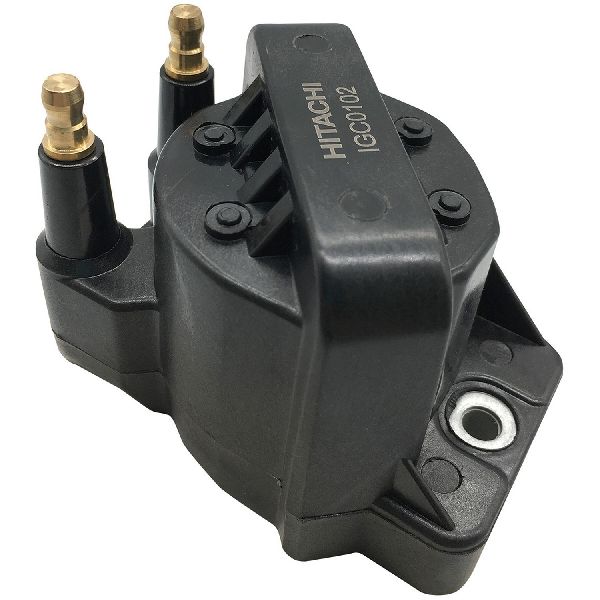
Aftermarket price range: $60-$110 - Ignition Coil
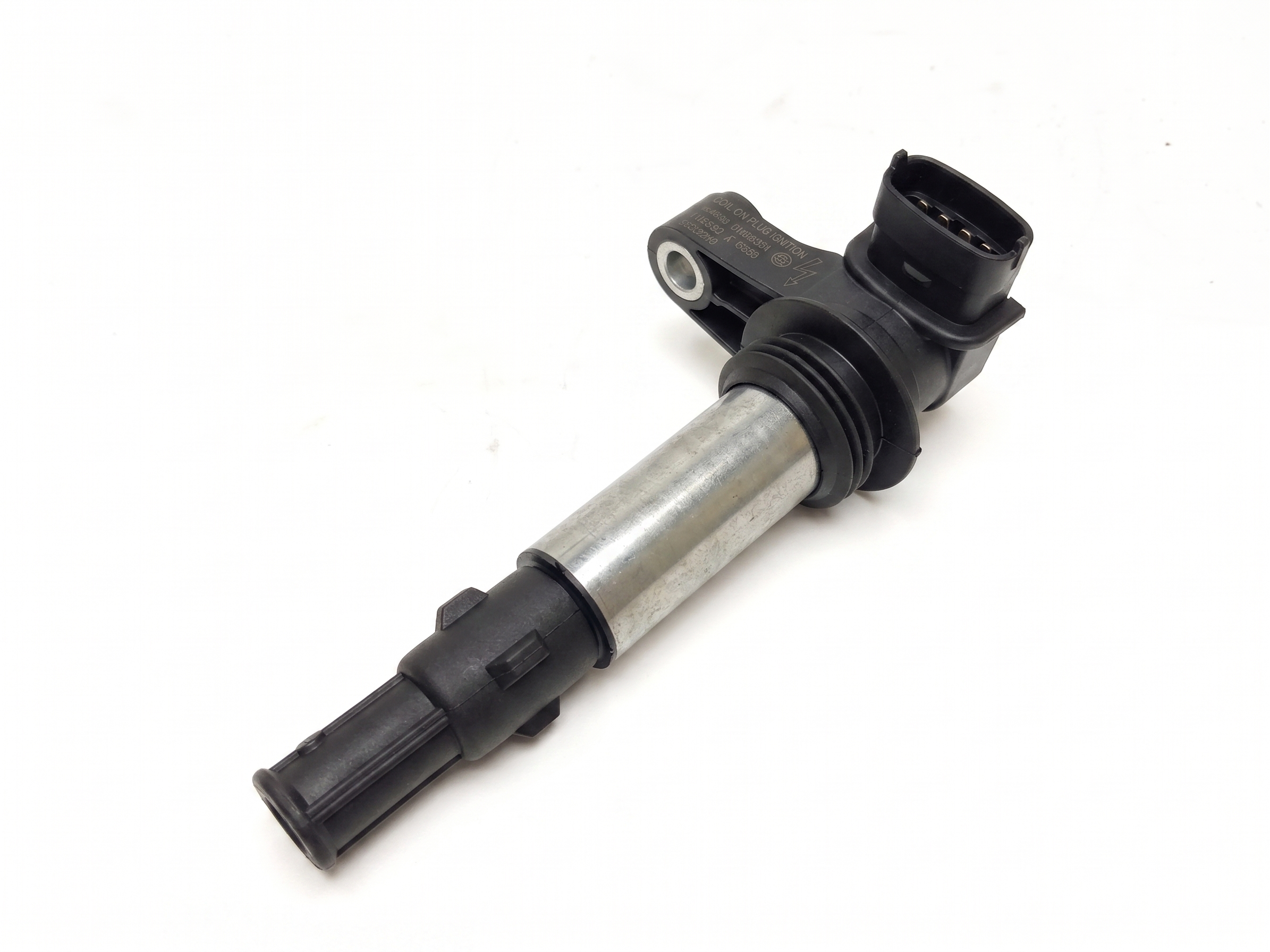
(OEM #12632479)— A primary cause of misfires, especially on the 3.6L V6 engine. They fail from heat and age.
Trusted brands: ACDelco, NGK, Delphi
OEM price range: $60-$90
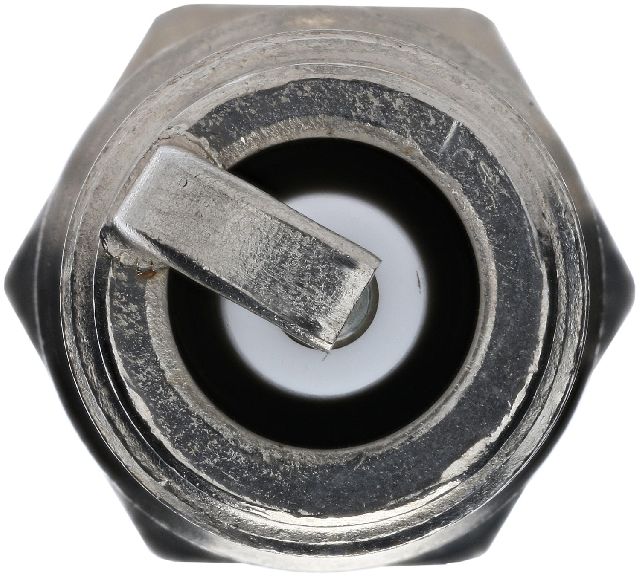
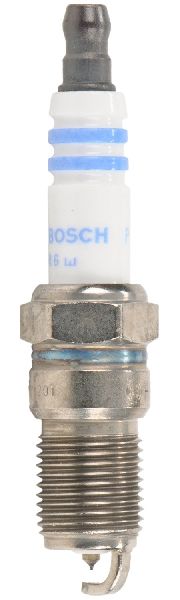
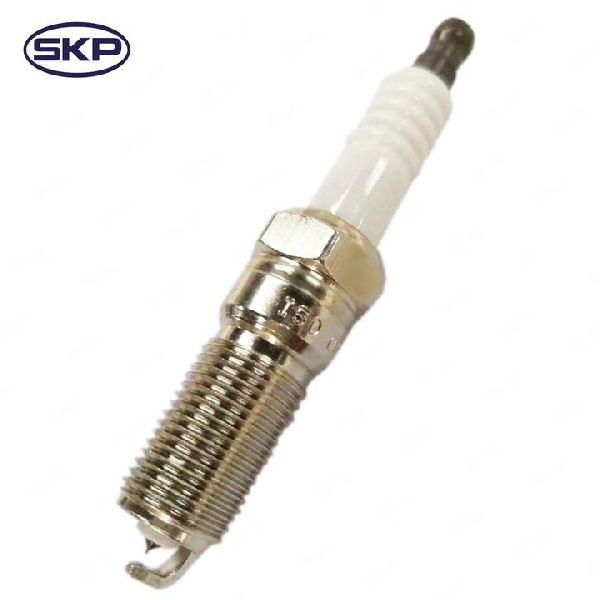
Aftermarket price range: $30-$60 - Spark Plugs — Worn or fouled spark plugs are a fundamental cause of misfires and should be the first items checked during a tune-up.
Trusted brands: ACDelco, NGK
OEM price range: $8-$15 per plug
Aftermarket price range: $4-$10 per plug - Intake Manifold Gasket Set — Required for fixing vacuum leaks from the intake manifold, a common issue. Also a mandatory replacement part if the intake must be removed to service the rear coils on the 3.6L V6.
Trusted brands: Fel-Pro, ACDelco
OEM price range: $80-$150
Aftermarket price range: $40-$90
Related Codes That Often Appear With This One
- P0301-P0306 — If the ECM can eventually isolate the random misfire to a specific cylinder, it will log a cylinder-specific code (e.g., P0301 for Cylinder 1) alongside P0300.
- P0171 / P0174 — These codes mean 'System Too Lean (Bank 1 / Bank 2)' and often appear with P0300 if the cause is a significant vacuum leak, such as a bad intake manifold gasket, or a failing fuel pump.
- P0420 / P0430 — These codes mean 'Catalyst System Efficiency Below Threshold.' They often appear after a P0300 has been ignored, indicating that prolonged misfiring has damaged the catalytic converter.
- P0008 / P0017 — On 3.6L V6 engines, these codes indicate a problem with engine timing/camshaft position. Their presence with a P0300 strongly suggests a stretched timing chain is the root cause.
Technical Service Bulletins (TSBs) & Recalls
- PIP4138R: Mentions investigating for a worn camshaft lobe if standard diagnostics fail to find the cause of a P0300-P0308 code.
- 18-NA-115: Details a rare but serious issue of engine block porosity causing a coolant leak into a cylinder, resulting in a cold-start misfire and P0300. The fix is engine replacement.
- PIP5628G: Preliminary information for technicians to aid in diagnosing P0300-P0308 codes.
- PIP4959G: Predecessor to TSB 18-NA-115, also discussing cold start misfires due to potential engine block porosity.
Platform-Specific Known Issues
- Owner Experience: 3.8L ICM Failure: Multiple YouTube videos and forum posts confirm the ICM as a primary P0300 culprit on the 3.8L V6. In a video on a 2008 Buick LaCrosse, 'The Daninator' diagnoses a P0300 by swapping coils and finding the misfire doesn't move, correctly identifying the ICM as the failed component. After replacement, the misfire was resolved. This is a classic diagnostic path for this engine.
- Owner Experience: 3.6L Timing Chain Failure: On forums and YouTube for platform mates like the GMC Acadia and Cadillac CTS with the 3.6L engine, a P0300 is often the first sign of timing chain problems. Owners report a violent engine shake and sometimes a rattling noise. A diagnostic video on a 2008 Acadia showed that even after replacing plugs and coils, the misfire on cylinders 3 & 5 persisted, with a rattling sound appearing after clearing codes, confirming the timing chain was the true cause.
Mechanic-Grade Diagnostic Values
- Fuel Pressure (3.8L V6, Engine Idling) — expected: 48-55 PSI (with vacuum hose disconnected from regulator). Failure: Pressure below 48 PSI indicates a weak fuel pump or clogged filter.
- Fuel Pressure (3.6L V6, Low-Pressure System) — expected: 40-75 PSI. Failure: Pressure below this range from the in-tank pump will starve the high-pressure pump, causing misfires under load.
- Ignition Control Module (ICM) Power Supply (3.8L V6) — expected: 10-12 Volts DC at the pink wire (Circuit A) of the ICM connector with key on, engine off.. Failure: No voltage indicates a wiring or fuse issue upstream of the module.
- Ignition Control Module (ICM) Ground Circuit (3.8L V6) — expected: Continuity to ground (near 0 ohms) on the black/white wire of the ICM connector.. Failure: High resistance indicates a poor ground connection, which is a common failure point.
Hidden / Shadow Codes Worth Checking
- P1336: Indicates that the Crankshaft Position (CKP) System Variation Learn procedure has not been successfully completed. This can be stored after replacing a CKP sensor, ECM, or major engine components, and can cause false P0300 codes. (see via Standard OBD-II scan tool, often appears after a related repair if the relearn procedure is skipped.)
Scan Tool Commands That Help
- GM Tech 2 / GDS2 or equivalent professional scan tool: Crankshaft Position Variation Learn (CASE Relearn) — This procedure MUST be performed after replacing the crankshaft position sensor, the ECM, or performing major engine mechanical work. Failure to do so can cause the ECM to misinterpret normal crankshaft speed variations as misfires, setting a P0300 code.
- Professional scan tool: Misfire Counters (Mode $06) — To view raw misfire counts for each cylinder before a specific P030x code is set. This helps identify which cylinder(s) are contributing most to the random misfire count, even if the ECM hasn't isolated the fault yet.
- Professional scan tool: Cylinder Power Balance Test — To actively disable individual fuel injectors or ignition coils one by one to see the effect on engine RPM. A cylinder that causes little or no RPM drop when disabled is the one that is misfiring.
Wiring & Ground Locations
- G115 — For the 3.6L V6, mounted to the Bank 1 (rear) cylinder head, above the exhaust manifold.. This is a primary ground for the Engine Control Module (ECM). A loose or corroded connection here can cause erratic ECM behavior, including false misfire detection and other phantom electrical issues.
- G103 — For the 3.6L V6, this is a redundant ground from the ECM to the even (front) bank cylinder head.. Provides a secondary ground path for the ECM. Both G115 and G103 must be clean and tight for stable engine management.
- ICM Ground (3.8L V6) — A small ground wire is located under the Ignition Control Module bracket.. This ground is critical for the ICM to function correctly. It is very easy to break or forget to reattach when replacing the ICM or coil packs, leading to immediate misfires.
- ECM Ground Pins (3.6L V6) — On the ECM connector X1, pin 49 serves as a ground circuit.. For advanced diagnostics, this specific pin can be tested for high resistance if ground issues are suspected after checking the main ground points (G115/G103).
Real Owner Repair Stories
- YouTube video by 'The Daninator' (Buick LaCrosse with 3.8L V6 (same platform/engine)) — Severe misfire, P0300 code. The misfire was not present on a cold start but appeared as soon as the engine warmed up.
❌ Tried (didn't work) The owner had previously replaced the Ignition Control Module, but the problem returned, suggesting a faulty replacement part or an intermittent failure mode.
✅ What actually fixed it Replacing the Ignition Control Module (ICM) a second time with a new, warrantied part. The key symptom was the heat-soak failure: the car ran perfectly cold and only started misfiring once it reached operating temperature, a classic sign of electronic component failure.
OEM Part Supersession History
Various early 3.6L LY7 timing chain designs→Kits containing GM's latest revision chains (often made in Germany by ACDelco).— The original timing chains were prone to premature stretching, causing P0008, P0017, and P0300 codes. The revised chains are made of a more durable material to resist stretching.
Heads up: When replacing chains, it is critical to use a complete kit that includes the new chains, tensioners, and guides, as mixing old and new design parts is not recommended.
Model Year Variations Within This Range
- 2008-2009: The 3.6L V6 (LY7) engine became more common as an option. While the 3.8L V6 remained the base engine, diagnostics for P0300 on 2008-2009 models are more likely to involve 3.6L-specific issues like timing chains and coil-on-plug failures, as opposed to the 3.8L's ICM failures.
Helpful Videos
Used OEM Parts in Stock



New Aftermarket Parts Available


The information in this article is provided for general reference and educational purposes only. Vehicle specifications, procedures, and part compatibility can vary by production date, trim level, and region. Always consult your vehicle's factory service manual and verify part numbers before purchasing or performing repairs. Safety-critical components such as airbags, seat belts, and braking systems should be installed by a qualified professional.
- Buick ALLURE:
- 🎬 Helpful Videos
- 🛍️ Shop This Part
- What's Unique About the 2006-2009 Buick ALLURE
- Diagnostic Flowchart
- Symptoms You May Notice
- Most Likely Causes
- Rare But Worth Checking
- Diagnosis Steps
- Parts You'll Likely Need
- Related Codes That Often Appear With This One
- Technical Service Bulletins (TSBs) & Recalls
- Platform-Specific Known Issues
- Mechanic-Grade Diagnostic Values
- Hidden / Shadow Codes Worth Checking
- Scan Tool Commands That Help
- Wiring & Ground Locations
- Real Owner Repair Stories
- OEM Part Supersession History
- Model Year Variations Within This Range
- 🎟️ Get 5% Off