

P0300 on 2012-2016 Bentley Continental Flying Spur: Random Misfire Causes & Fixes
On the 2012-2016 Bentley Flying Spur, a P0300 code is most often caused by failing ignition coils or worn spark plugs. Vacuum leaks from brittle plastic hoses located behind the engine and above the transmission are another very common culprit, often requiring engine removal to fix. For the 4.0L V8, fuel quality and a clogged turbo oil screen are also documented causes. A specialist with Bentley-specific tools is highly recommended for diagnosis and repair.
- P0300 on a Bentley Flying Spur is a serious code that requires immediate attention to prevent costly damage to catalytic converters.
- The most likely culprits are failing ignition coils and/or worn spark plugs. Due to high labor costs, it's wise to replace them all at once.
- Hard-to-find vacuum leaks from brittle plastic hoses are a very common cause on this platform and can be expensive to fix due to poor accessibility.
- This is not a DIY-friendly repair. The complexity of the W12 and V8 engines requires specialist knowledge and tools for accurate diagnosis and repair.
- Always use the correct premium, high-octane fuel as recommended by Bentley, as fuel quality can be a factor.
What's Unique About the 2012-2016 Bentley CONTINENTAL FLYING SPUR

The 2012-2016 Flying Spur features complex and tightly packaged W12 and V8 twin-turbo engines. This complexity makes diagnosis and repair significantly more labor-intensive than on simpler vehicles. A notorious issue for these cars is the degradation of plastic vacuum lines located in high-heat areas, particularly behind the engine and over the transmission bellhousing. These lines become brittle and crack, causing difficult-to-trace vacuum leaks that lead to misfires. Additionally, a Bentley Technical Service Bulletin (TSB 2041495/1) for the V8 engine specifically points to deviations in country-specific fuel quality causing carbon deposits on injectors as a potential cause for P0300, suggesting these engines can be sensitive to fuel composition.
Diagnostic Flowchart

Tap your situation to follow the diagnostic path that matches what you're seeing on this vehicle.
Generation note: Yes, this range spans two generations. The 2012-2013 models are the first generation, named 'Continental Flying Spur', and were available only with the 6.0L W12 engine. For the 2014 model year, the second generation was introduced, dropping the 'Continental' prefix to become simply the 'Flying Spur'. This new generation introduced the 4.0L V8 engine as an option alongside the W12. While the causes of P0300 are similar, the V8 and W12 have different part numbers and specific access procedures.
Symptoms You May Notice
- Rough or unstable idle, with the RPM needle hunting between 500-1000 RPM.
- Engine hesitation or stumbling during acceleration.
- Noticeable loss of power and zero turbo boost.
- Solid or flashing Check Engine Light.
- A 'chuffing' or sputtering sound from the exhaust, sometimes isolated to one side.
- Hissing sounds from the engine bay, indicating a vacuum leak.
- Replacing only one spark plug or coil when multiple are near the end of their service life, leading to recurring misfires on other cylinders shortly after.
- Replacing oxygen sensors without confirming they are the root cause. While a bad O2 sensor can contribute to fuel trim issues, it's less likely to be the primary cause of a P0300 than ignition system faults or vacuum leaks.
- Assuming a misfire that doesn't follow a swapped coil is a bad fuel injector, without first performing a thorough smoke test to rule out hard-to-find vacuum leaks.
Most Likely Causes

- Failing Ignition Coils 🔴 High Probability Coil-on-plug systems are a common failure point on most modern engines. On high-output engines like Bentley's, heat and vibration take their toll over time, leading to internal coil failure. This is a very frequent cause of misfires on both the W12 and V8.
How to confirm: A technician can use a diagnostic tool (like VCDS) to view misfire data for each cylinder. A common diagnostic step is to swap the suspected bad coil with a known good one from another cylinder and see if the misfire code (e.g., P0304) follows the coil to the new cylinder.
Typical fix: Replace the failing ignition coil(s). It is best practice to replace all coils (8 for V8, 12 for W12) and spark plugs at the same time, especially if they are original, to prevent repeat failures.
Est. part cost: $50-$150 per coil - Worn or Fouled Spark Plugs 🔴 High Probability Spark plugs are a regular maintenance item. If not replaced at the recommended interval, the electrode can wear down, increasing the gap and leading to a weak spark and misfires. Due to the high labor cost to access them on the W12, this service is sometimes deferred by owners.
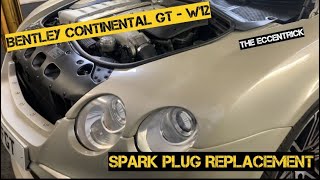
How to confirm: Physical inspection of the spark plugs is required. Look for worn electrodes, cracks in the ceramic, or fouling from oil or carbon. On the W12, this requires removing the intake manifold. 🎬 See how to access and replace W12 spark plugs.
Typical fix: Replace all spark plugs (8 for V8, 12 for W12). Given the labor involved, it is critical to use high-quality OEM-spec plugs.
Est. part cost: $15-$40 per plug - Vacuum Leaks 🔴 High Probability Bentley used hard plastic vacuum lines that are routed through very hot and inaccessible parts of the engine bay, specifically behind the engine and on top of the transmission. Over time, these lines become extremely brittle and crack, creating vacuum leaks that introduce unmetered air, causing a lean condition (often with P0171/P0174 codes) and random misfires. This is a notorious and well-documented failure on the W12 platform.
How to confirm: A smoke test is the most effective method. A technician injects low-pressure smoke into the intake system and looks for where it escapes, which is often from behind the engine near the firewall. A hissing noise at idle is a strong indicator. Checking fuel trims (MVB 032 in VCDS) for high positive numbers will also indicate the ECU is adding fuel to compensate for a leak.
Typical fix: Replace the cracked vacuum lines. This can be an extremely labor-intensive job, often requiring engine and transmission removal for proper access on earlier models. Some specialists and DIYers have developed methods to bypass the failed lines by routing new hoses to avoid engine removal.
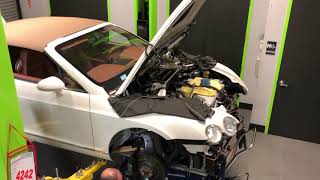
Est. part cost: $100-$500 for hoses, but labor is the primary cost, potentially reaching $10,000+ for an engine-out service. 🎬 Watch: A detailed walkthrough of a Bentley W12 engine-out service.
- Fuel Quality or Delivery Issues 🟡 Medium Probability For the 4.0L V8, TSB #2041495/1 specifically mentions that deviations in fuel specifications can lead to carbon deposits on injectors, altering the spray pattern and causing misfires. For both engines, issues like a weak fuel pump or clogged injectors can starve the engine of fuel.
How to confirm: Confirm the correct high-octane fuel is being used. For the V8, a dealer or specialist may recommend using a fuel additive (Part No. G 001 770 A2) and an extended test drive as a first step per the TSB. A technician can also perform a fuel pressure test and test injectors for flow and spray pattern.
Typical fix: Use correct, high-quality fuel and the recommended additive for the V8. Replace clogged fuel filter, failing fuel pump, or faulty/dirty fuel injectors as needed.
Est. part cost: $200-$2000+ depending on component (filter vs. pump vs. injectors)
Rare But Worth Checking
- Clogged Turbocharger Oil Screen (4.0L V8): A critical issue specific to the 4.0T V8 engine. A small oil screen designed to protect the turbos can get clogged with carbon, starving the turbos of oil and leading to catastrophic failure. While this may not directly cause a misfire, associated running problems and TSBs (Bentley TSB 2052085/1) make it a crucial item to check during any major engine work.
- Low Engine Compression: A mechanical issue like a worn piston ring, burnt valve, or failed head gasket can cause a loss of compression and misfires. This is a serious mechanical failure and less common than ignition or fuel issues.
- Faulty Engine Control Module (ECM): In very rare cases, the ECM itself can fail, causing misfire codes. This should only be considered after all other possibilities, including wiring harness issues, have been exhaustively ruled out.
Diagnosis Steps
- Read the fault codes with a professional-grade OBD-II scanner (like VCDS or ODIS) to identify all active codes, including specific cylinder misfires (P0301-P0312).
- Analyze live data. Check misfire counters for each cylinder. Crucially, check short-term and long-term fuel trims (e.g., VCDS Measuring Value Block 032). Consistently high positive values (e.g., > +10%) strongly suggest a vacuum leak.
- Perform a thorough visual inspection of the engine bay, looking for obvious issues like disconnected hoses, cracked breather pipes, or damaged wiring to MAF sensors or coil packs.
- If specific cylinders are identified, swap the ignition coil from a misfiring cylinder to a non-misfiring cylinder. Clear codes and run the engine. If the misfire code follows the coil, the coil is bad.
- If coils are confirmed good, inspect the spark plugs for wear, fouling, and proper gap. This will require significant labor on the W12 engine (intake manifold removal).
- Perform a comprehensive smoke test to check for vacuum leaks. Pay close attention to the complex network of plastic hoses behind the engine and on top of the transmission, as this is a known failure point.
- Check fuel pressure and ensure the vehicle is being run on the correct high-octane fuel. For the V8, follow TSB #2041495/1 guidance regarding fuel additives if applicable.
Parts You'll Likely Need

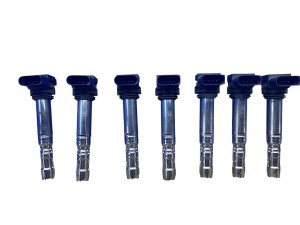
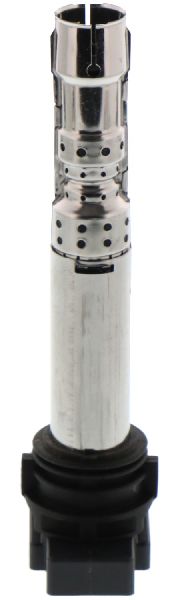
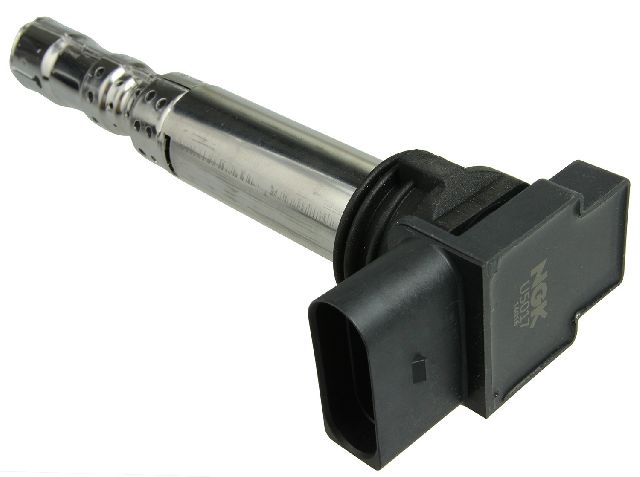
- Ignition Coil
(OEM #07C905715A / 07C905115L (W12), 079905110N (V8))— A primary cause of misfires due to failure from heat and age. Replacing them often resolves P0300 codes.
Trusted brands: Bosch, Beru, NGK, Genuine Bentley
OEM price range: $100-$200
Aftermarket price range: $50-$150 - Spark Plug
(OEM #07C905600 (W12 Flex-Fuel), 101905600B / NGK PZFR6Q-11 (W12 non-Flex), 06K905601D (V8))— A critical maintenance item. Worn plugs cause weak spark and misfires. The labor to replace them is high, so using the correct, high-quality part is essential.
Trusted brands: NGK, Bosch, Genuine Bentley
OEM price range: $25-$50
Aftermarket price range: $15-$40 - Vacuum Hose/Line Kit — The original plastic lines are prone to cracking from engine heat, causing major vacuum leaks. This is a very common cause for P0300 on the W12.
Trusted brands: Genuine Bentley, Custom-fabricated metal lines
OEM price range: $200-$600
Aftermarket price range: $50-$200 (for materials) - PCV Valve / Oil Separator — A failed PCV system can itself be a vacuum leak or cause one. A user on 6speedonline identified a leaking PCV diaphragm as the source of their P0300 code after a smoke test.
Trusted brands: Genuine Bentley
OEM price range: $150-$400
Aftermarket price range: $100-$250
Related Codes That Often Appear With This One
- P0301-P0312 — These codes specify which cylinder is misfiring (e.g., P0301 for Cylinder 1, P0312 for Cylinder 12). A P0300 will almost always be accompanied by one or more of these specific cylinder codes, helping to narrow down the problem.
- P0171, P0174 — These are 'System Too Lean' codes for Bank 1 and Bank 2. They frequently appear with P0300 when the root cause is a significant vacuum leak, as the unmetered air entering the engine creates a lean air/fuel mixture that the ECU struggles to compensate for.
Technical Service Bulletins (TSBs) & Recalls

- 2041495/1: Addresses misfiring on the 4.0L TFSI V8. States that deviations in fuel quality can cause carbon deposits on injectors. Recommends using fuel additive (G 001 770 A2) and swapping coils/plugs to diagnose before more invasive measures.
- 2052085/1: Addresses a clogged turbocharger oil screen on the 4.0L V8, which can lead to turbo failure.
Platform-Specific Known Issues
- W12 Engine-Out Vacuum Line Service: The most infamous issue on the 6.0L W12 is the failure of plastic vacuum hoses routed behind the engine. Due to extreme heat and lack of access, they become brittle and crack, causing severe vacuum leaks and random misfires. The factory-correct repair requires removing the entire engine and transmission assembly, a 40+ hour job. This makes it one of the most expensive potential repairs for a P0300 code.
- 4.0L V8 'Hot V' Related Issues: The 4.0T V8 has a 'hot V' design, with the turbochargers located inside the 'V' of the engine. This creates immense heat. A critical TSB-documented issue is a small oil screen that clogs with carbon, starving the turbos of oil. While not a direct cause of misfire, any work inside the 'V' (like replacing the PCV/oil separator) is extremely labor-intensive, and these related components should be addressed at the same time to prevent future failures.
Mechanic-Grade Diagnostic Values
- Long-Term Fuel Trim (Additive) — expected: Close to 0.0% (+/- 3%) at idle.. Failure: Consistently high positive values (e.g., > +10%) indicate the ECU is adding fuel to compensate for unmetered air, strongly suggesting a vacuum leak.
- Misfire Counters — expected: Zero or near-zero misfires on all cylinders when the engine is running smoothly.. Failure: A rapidly increasing count on one or more cylinders identifies the location of the misfire.
Scan Tool Commands That Help
- VCDS or ODIS: Misfire Counter / Misfire Graph — To view live data and identify which specific cylinders are misfiring and under what conditions (idle, load, cold start), which is critical for narrowing down a P0300 code.
- VCDS or ODIS: Fuel Trim Monitoring (MVB 032) — To diagnose unmetered air leaks. High positive fuel trims indicate the system is compensating for a lean condition, pointing towards a vacuum leak even if a smoke test is inconclusive.
Wiring & Ground Locations
- Dual Engine Control Modules (W12 Only) — The W12 engine utilizes two separate ECUs.. ECM 1 (Address 01 in VCDS) controls the left bank (cylinders 1-6), while ECM 2 (Address 11) controls the right bank (cylinders 7-12). If misfires are isolated to one bank, it can help narrow the diagnosis to a specific ECU or its associated wiring and sensors.
- Passenger Side Vacuum System — A vacuum pressure sensor is hidden near the passenger side wheel well shield. Its line connects to a 13mm vacuum port on the rear passenger side of the engine and runs to the EVAP system and exhaust flaps.. A fault in this line or the connected EVAP purge valve can introduce unmetered air or fuel vapor, causing misfires that may appear to be a typical intake vacuum leak but originate from the emissions control system.
- Ignition Coil & MAF Sensor Harnesses — Connectors for the ignition coils on top of the engine and the Mass Airflow (MAF) sensors near the airboxes.. Broken clips on coil connectors or broken wires in the MAF harness have been documented as direct causes of misfires. Physical inspection of the wiring and connectors is crucial, as a bad connection can mimic a failed component.
Real Owner Repair Stories
- 6SpeedOnline forum user 'Vwtech' (2008 Bentley Continental GT W12) — Slight misfire at idle, primarily on bank 1, with rich fuel trims (-15% to -20%).
❌ Tried (didn't work) Swapping Mass Air Flow sensors side-to-side., Pinching off the vacuum line to the fuel pressure regulator., Replacing a leaking EVAP purge valve (N80 valve) initially helped but the problem returned.
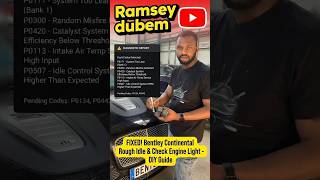
✅ What actually fixed it The charcoal canister was found to be saturated with raw gasoline. The faulty, leaking EVAP purge valve was sucking fuel/rich vapor into the intake manifold, causing a rich condition and misfires on bank 1. Replacing the saturated charcoal canister and the purge valve resolved the issue. - YouTube video by Ramsey Dubem (Bentley Continental GT W12 (year not specified)) — Multiple misfire codes (P0300, P0305, P0312), rough idle, power loss, and other ignition/turbo codes.
❌ Tried (didn't work) The video focuses on the successful repair process rather than failed attempts.
✅ What actually fixed it A multi-part repair was required: 1) Secured a loose fuel injector connector on cylinder 5. 2) Replaced failed ignition coils on cylinders 11 and 12. 3) Replaced all 12 spark plugs. 4) Removed and professionally cleaned all 12 fuel injectors. 5) Repaired a broken vacuum pipe that was discovered after removing the intake manifold.
"I Checked Everything" — The Actual Cause
- In one documented case on a 2014 Flying Spur W12, a professional smoke test found no vacuum leaks, yet misfires on cylinders 4, 9, and 11 persisted after swapping plugs and coils. This pushed the diagnosis towards other causes like faulty fuel injectors or fuel delivery problems, demonstrating that a clean smoke test does not entirely rule out all causes of a lean condition or misfire.
- A misfire and rich condition on a W12 was traced to a faulty EVAP purge valve pulling raw fuel from a saturated charcoal canister. A standard smoke test of the intake manifold would not have revealed this issue, as the 'leak' was introducing fuel, not air.
Model Year Variations Within This Range
- All W12 Models: The repair procedure for the notorious rear vacuum lines differs. On earlier models, this often required a full engine-out service. On later models within this range, some technicians have found it possible to replace the lines by removing the steering rack and accessing them from below, which is still labor-intensive but avoids engine removal.
Helpful Videos
Used OEM Parts in Stock
New Aftermarket Parts Available


The information in this article is provided for general reference and educational purposes only. Vehicle specifications, procedures, and part compatibility can vary by production date, trim level, and region. Always consult your vehicle's factory service manual and verify part numbers before purchasing or performing repairs. Safety-critical components such as airbags, seat belts, and braking systems should be installed by a qualified professional.
- Bentley CONTINENTAL FLYING SPUR:
- 🎬 Helpful Videos
- 🛍️ Shop This Part
- What's Unique About the 2012-2016 Bentley CONTINENTAL FLYING SPUR
- Diagnostic Flowchart
- Symptoms You May Notice
- Most Likely Causes
- Rare But Worth Checking
- Diagnosis Steps
- Parts You'll Likely Need
- Related Codes That Often Appear With This One
- Technical Service Bulletins (TSBs) & Recalls
- Platform-Specific Known Issues
- Mechanic-Grade Diagnostic Values
- Scan Tool Commands That Help
- Wiring & Ground Locations
- Real Owner Repair Stories
- "I Checked Everything" — The Actual Cause
- Model Year Variations Within This Range
- 🎟️ Get 5% Off