

P0300 on 2020-2022 Audi A6 ALLROAD: Random Misfire Causes and Fixes
P0300 on a 2020-2022 Audi A6 Allroad indicates random or multiple cylinder misfires. The most common causes are failing spark plugs or ignition coils. Replacing all six of each is a typical first step, costing between $300 and $600 in parts. However, this engine platform (EA839) also has a known, more serious issue with rocker arm failure that can manifest as a P0300 code.
- P0300 means multiple cylinders are misfiring, and the cause is likely something that affects the whole engine.
- Do not drive extensively if the check engine light is flashing, as you risk destroying your catalytic converters.
- Start your diagnosis with the most common and affordable culprits: spark plugs and ignition coils. Replace them as a set of six.
- If new plugs and coils don't solve the issue, the problem is likely more complex (e.g., vacuum leak, fuel delivery, or carbon buildup) and may require professional diagnosis.
- Be aware of the more serious, though less common, engine issues documented for the EA839 3.0T engine, such as rocker arm or piston problems.
What's Unique About the 2020-2022 Audi A6 ALLROAD
The 2020-2022 A6 Allroad uses the EA839 3.0L turbocharged V6 engine, co-developed with Porsche. While generally robust, this engine platform is known for specific issues that can lead to misfires. The provided NHTSA technical service bulletins (TSBs) show that Audi was actively tracking misfire events (P0300-P0306) during this period, instructing technicians to log cases in a central database, which suggests an awareness of emerging or hard-to-diagnose problems. Furthermore, the EA839 engine family has a well-documented history of rocker arm bearing failure, which can cause a ticking noise and eventually lead to misfires (including P0300) and camshaft damage. This issue was more common on earlier 2017-2019 models but has been reported by owners of vehicles up to 2020. Another known issue is piston instability or 'rocking' within the cylinder, which can lead to skirt wear, loss of compression, and eventual piston failure, sometimes even on stock vehicles.
Diagnostic Flowchart
Tap your situation to follow the diagnostic path that matches what you're seeing on this vehicle.
Symptoms You May Notice
- Flashing or solid Check Engine Light
- Rough or shaky engine idle
- Engine hesitation or stumbling during acceleration
- Noticeable loss of power
- Reduced fuel economy
- Fuel smell from the exhaust
- Metallic ticking or tapping noise from the top of the engine that increases with RPM (a key sign of rocker arm failure)
- Replacing only one spark plug or ignition coil when others are near the end of their service life.
- Replacing oxygen (O2) sensors. While a bad O2 sensor can contribute to fuel mixture problems, it's less likely to be the primary cause of a P0300 code compared to ignition components, vacuum leaks, or fuel delivery issues.
- Replacing the Engine Control Module (ECM). A faulty ECM is a very rare cause for misfires and should only be considered after all other possibilities, including wiring and connectors, have been exhaustively checked.
Most Likely Causes
- Worn or Faulty Spark Plugs 🔴 High Probability Spark plugs are a regular maintenance item with a recommended replacement interval of 40,000 miles on the EA839 engine. On turbocharged, direct-injection engines like the 3.0T, they are under high stress and their condition is critical. Using incorrect or counterfeit plugs, which are common online, can also cause immediate issues.
How to confirm: Inspect the spark plugs for wear, fouling, or incorrect gap. However, modern iridium plugs should not be re-gapped. The best confirmation is replacement, especially if they are near or over their service life. A swap test can also be performed if a cylinder-specific code (P0301-P0306) is present.
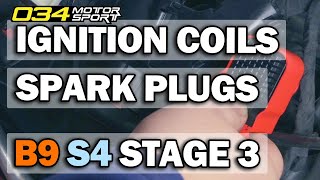
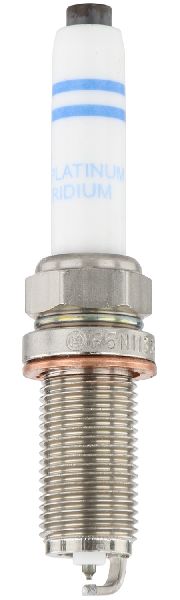
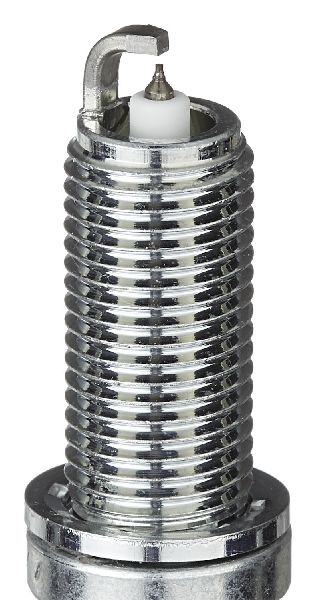
Typical fix: Replace all six spark plugs. It is recommended to use OEM-spec brands like NGK. The OEM part number is often 06M905606F, which corresponds to the NGK SILKGR9A7ES. 🎬 See this walkthrough for installing performance coils and spark plugs.
Est. part cost: $120-$250 - Failing Ignition Coils 🔴 High Probability Ignition coils on modern Audis are a known failure point. Heat cycles can cause the internal electronics or the housing to fail, leading to a weak or non-existent spark. The wiring harness for the coils on the V6 engine sits directly on top of them, which can trap heat and contribute to failure.
How to confirm: Swap the ignition coil from a misfiring cylinder to a known good cylinder. Clear the codes and drive the vehicle. If the misfire code moves to the new cylinder (e.g., P0302 becomes P0304 after moving the coil from cylinder 2 to 4), the coil is bad. This test requires a cylinder-specific code.
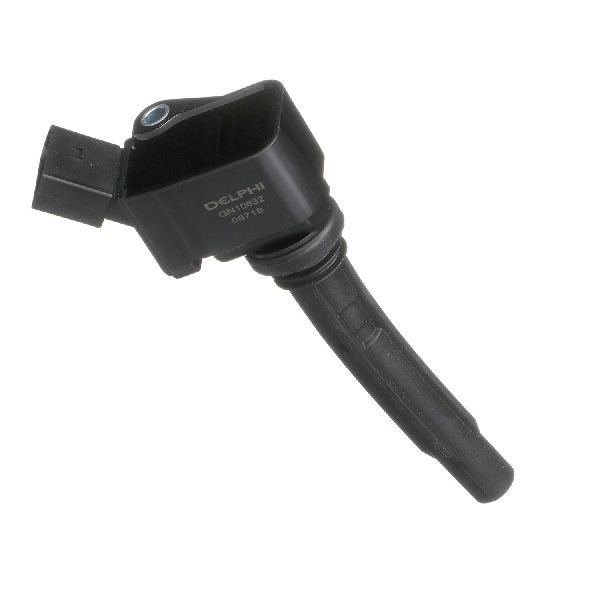
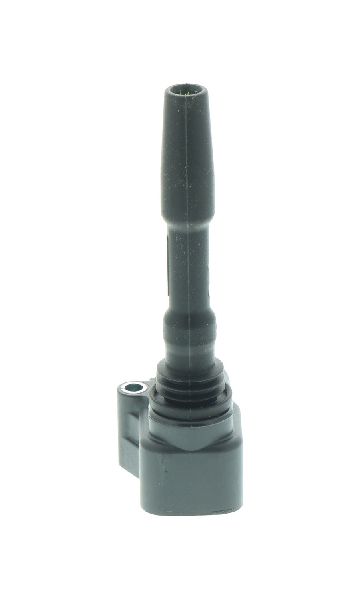
Typical fix: Replace the faulty ignition coil. It is best practice to replace all six at the same time to prevent future failures. An updated OEM part number is 06L905110K.
Est. part cost: $180-$400 - Clogged or Faulty Fuel Injectors 🟡 Medium Probability Direct injection fuel injectors operate under high pressure and can become clogged or fail electronically, leading to an improper fuel spray pattern and misfires. This can sometimes flood a cylinder with fuel. In some rare cases, a faulty ECU driver can repeatedly cause an injector in a specific cylinder to fail.
How to confirm: This is more difficult to diagnose for a DIYer. A professional may need to perform a fuel system test or use an advanced scan tool like VCDS to monitor injector performance and fuel trims.
Typical fix: Clean or replace the faulty fuel injector(s). Using high-quality, Top Tier gasoline can help prevent clogging.
Est. part cost: $150-$400 per injector - Vacuum Leak ⚪ Low Probability A common source of random misfires is unmetered air entering the engine after the mass airflow sensor, which throws off the air-fuel ratio for all cylinders. The PCV (Positive Crankcase Ventilation) system is a potential culprit on the EA839 engine, with the check valves inside the breather hose known to fail. This failure allows boost pressure to enter the crankcase, which can cause oil leaks and even eject the oil cap.
How to confirm: A mechanic can perform a smoke test to pressurize the intake system with smoke and visually identify where it leaks out. A failing PCV breather hose can be tested by removing it and blowing through the port that connects to the charge pipe; if air passes through, the internal check valve has failed.
Typical fix: Replace the cracked hose, leaking gasket, or faulty PCV valve/oil separator assembly. Upgraded, more durable aftermarket PCV breather hoses are available. 🎬 Watch: DIY guide for replacing the PCV valve on this engine.
Est. part cost: $50-$300
Rare But Worth Checking
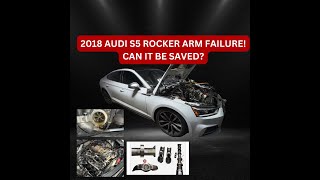
- Rocker Arm Failure: This is a significant and known issue on the EA839 engine family. Needle bearings inside the rocker arms fail, causing the roller to stop spinning and grind against the camshaft lobe. This creates a distinct metallic ticking sound and sends metal particles into the oil. Eventually, the altered cam profile causes misfires (P0300) and can lead to catastrophic engine damage. This was more common in 2017-2019 models, but failures on 2020 models have been reported by owners.
- Carbon Buildup on Intake Valves: Direct injection engines spray fuel directly into the cylinder, so gasoline detergents don't wash over the intake valves. Over time, oil vapor from the PCV system can bake onto the valves, restricting airflow and causing misfires, especially on a cold start.
- Low Fuel Pressure: A weak low-pressure fuel pump (in the tank) or a failing high-pressure fuel pump (HPFP) can starve the engine of fuel, causing random misfires across all cylinders, especially under load. The low-pressure side should deliver fuel to the HPFP at approximately 4 to 6 bar.
- Internal Engine Issues: While rare, the EA839 engine has documented cases of piston skirt wear, causing the piston to 'rock' in the cylinder. This can lead to loss of compression, misfires, and eventually engine failure. Audi issued a warranty extension for this issue on some vehicles.
Diagnosis Steps
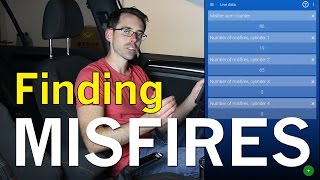
- Read the fault codes with an OBD-II scanner to confirm P0300 and check for any cylinder-specific codes (P0301-P0306). 🎬 Watch: How to find and diagnose engine misfires on Audis.
- Note if the Check Engine Light is solid or flashing. A flashing light indicates a severe, catalyst-damaging misfire.
- Listen carefully to the engine for a rhythmic, metallic ticking noise. A borescope can be inserted into the oil filler cap to visually inspect the rocker arms for the updated design (larger, non-needle bearings) as a preliminary check.
- Inspect the service history. Determine the age of the spark plugs and ignition coils. If they are over 40,000 miles old, consider replacing them as a starting point.
- If cylinder-specific codes are present, perform a 'swap test'. Move the ignition coil from the misfiring cylinder to a different cylinder. Clear the codes and drive the car. If the misfire code follows the coil, the coil is bad.
- If the misfire does not follow the coil, repeat the swap test with the spark plug.
- If ignition components are confirmed good, the next step is to check for vacuum leaks. A professional smoke test is the most effective method. Check the PCV system for signs of failure.
- If no vacuum leaks are found, investigate the fuel system. Check fuel pressure and use a scan tool to monitor fuel injector data.
- For persistent issues, especially if a ticking noise is present, a professional diagnosis is required. This involves a compression test, cylinder leak-down test, and likely removal of the valve covers to inspect the camshafts and rocker arms for scoring and wear.
Parts You'll Likely Need
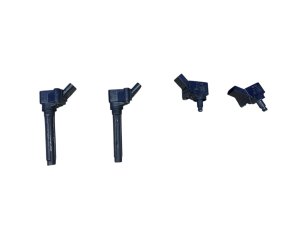
- Ignition Coil
(OEM #06L905110K)— This is one of the most common failure items causing misfires on modern Audi engines.
Trusted brands: Eldor (OEM), Bosch, NGK
OEM price range: $50-$70 each
Aftermarket price range: $30-$50 each - Spark Plug
(OEM #06M905606F)— Spark plugs are a routine maintenance part and a primary cause of misfires when worn. The 40,000-mile interval is key.
Trusted brands: NGK (OEM), Bosch
OEM price range: $20-$30 each
Aftermarket price range: $15-$25 each
Related Codes That Often Appear With This One
- P0301-P0306 — These codes specify which cylinder is misfiring (e.g., P0301 for Cylinder 1). They often accompany P0300, helping to narrow down the location of the fault to a specific coil, plug, or injector.
- P0171/P0174 — These codes indicate a lean fuel condition (too much air, not enough fuel), which can be caused by a vacuum leak from a failed PCV system that is also causing the P0300 misfire.
- P0341/P0345 — Camshaft Position Sensor codes can be triggered if a failing rocker arm has damaged a camshaft lobe, affecting valve timing and leading to misfires.
Technical Service Bulletins (TSBs) & Recalls
- A0123852058038_5: Instructs technicians to create a Pending Service Solutions record for misfires with DTCs P0300-P0306.
- A0124212069038_5: Provides information for when the MIL is on due to cylinder misfires (P0300-P0306).
- A0123802069038_4: Provides information for when the MIL is on due to cylinder misfires (P0300-P0306).
- A0123912069038_5: Provides information for when the MIL is on due to DTCs P0300-P0306.
- A0123362058038_4: Requests technicians open a PSS record for MIL illumination with DTCs P0300-P0306.
Platform-Specific Known Issues
- The provided NHTSA TSBs (A0123852058038_5, A0124212069038_5, etc.) indicate that Audi dealerships were instructed to create special service records for vehicles presenting with P0300-P0306 codes, suggesting a pattern of issues the manufacturer was tracking.
- The EA839 3.0T engine has a widely-documented issue with rocker arm failure, especially in earlier years (2017-2019), but still reported on 2020 models. Failure leads to a ticking noise, camshaft damage, and eventually misfires.
- A Reddit user with a 2020 Audi S5 (same EA839 engine) reported rocker arm failure at 55k miles, which manifested as a loud ticking noise without a check engine light initially. The repair cost can be over $5,000.
Mechanic-Grade Diagnostic Values
- Low-Pressure Fuel Pump (LPFP) delivery pressure — expected: 4 to 6 bar. Failure: Pressure below 4 bar can starve the High-Pressure Fuel Pump (HPFP), causing misfires under load.
- High-Pressure Fuel Pump (HPFP) rail pressure — expected: Up to 200 bar (2900 PSI) with factory parts. Failure: Significant pressure drops from the requested value under acceleration, viewable with a scan tool, indicate a failing HPFP.
- Ignition Coil Primary Resistance (example value) — expected: ~0.4–0.7 ohms. Failure: Significant deviation from the expected resistance can indicate an internal coil failure.
- Ignition Coil Secondary Resistance (example value) — expected: ~10–15 kOhms. Failure: Readings outside this range suggest a breakdown in the secondary windings.
Scan Tool Commands That Help
- VCDS (VAG-COM): Advanced Measuring Values (Blocks 014, 015, 016) — To monitor live misfire counts for each individual cylinder. This is extremely useful for identifying intermittent misfires that may not be severe enough to set a specific P030x code but contribute to a P0300.
- VCDS (VAG-COM) or equivalent professional scanner: Clear Fault Codes (in Engine module 01) — For some 2.0T engines (related EA888 family), Ross-Tech notes that clearing fault codes three times in a row in under 29 seconds may be necessary to reset misfire adaptations stored in the ECU after a repair. While not explicitly documented for the EA839, this procedure may be relevant if misfires persist after a fix.
Wiring & Ground Locations
- Engine Ground Wires — Check for main ground straps from the engine block to the chassis. A common location is near the engine mounts.. A loose or corroded engine ground can cause a weak spark across all cylinders, leading to random misfires. This is often overlooked but is a critical check for electrical issues.
Real Owner Repair Stories
- AudiWorld Forums user (Audi A4 (similar ignition system principles)) — P0300 and a specific cylinder misfire code.
❌ Tried (didn't work) Initial shop diagnosed a bad ECM, quoting a very expensive repair.
✅ What actually fixed it The owner took it to a second shop. They swapped the Ignition Control Modules (ICMs) between cylinder banks, and the misfire moved. The final fix was a single faulty ICM, which cost significantly less than replacing the ECM. - 034Motorsport Engineering Case Study (Audi S4 (EA839 engine)) — Repeated failure of the fuel injector in cylinder 2.
❌ Tried (didn't work) Replacing the fuel injector multiple times. The new injector would work for a short period and then fail again.
✅ What actually fixed it After extensive troubleshooting, it was determined that the Engine Control Unit (ECU) had a faulty driver that was damaging the injector for that specific cylinder. Replacing the ECU resolved the issue permanently.
"I Checked Everything" — The Actual Cause
- A known failure pattern on the EA839 engine is a faulty internal check valve in the PCV breather hose. This will not show up on a smoke test because it is not a leak to the outside atmosphere. Instead, it allows pressurized air from the turbocharger's boost side to enter the crankcase, disrupting pressure and causing oil leaks or misfires. The failure is confirmed by removing the hose and attempting to blow air through the boost-side port; if air passes, the valve is bad.
OEM Part Supersession History
06L905110C, 06L905110D, 06L905110E, 06L905110F, 06L905110H→06L905110K— Standard revision and improvement process by the manufacturer to increase reliability and performance.
Heads up: The latest revision 'K' is generally backwards compatible with earlier versions for this engine family.Unknown earlier revisions→06M905606F (NGK SILKGR9A7ES)— Updated design for performance and longevity in EA839 direct-injection turbocharged engines.
Helpful Videos

Used OEM Parts in Stock

New Aftermarket Parts Available


The information in this article is provided for general reference and educational purposes only. Vehicle specifications, procedures, and part compatibility can vary by production date, trim level, and region. Always consult your vehicle's factory service manual and verify part numbers before purchasing or performing repairs. Safety-critical components such as airbags, seat belts, and braking systems should be installed by a qualified professional.
- Audi A6 ALLROAD:
- 🎬 Helpful Videos
- 🛍️ Shop This Part
- What's Unique About the 2020-2022 Audi A6 ALLROAD
- Diagnostic Flowchart
- Symptoms You May Notice
- Most Likely Causes
- Rare But Worth Checking
- Diagnosis Steps
- Parts You'll Likely Need
- Related Codes That Often Appear With This One
- Technical Service Bulletins (TSBs) & Recalls
- Platform-Specific Known Issues
- Mechanic-Grade Diagnostic Values
- Scan Tool Commands That Help
- Wiring & Ground Locations
- Real Owner Repair Stories
- "I Checked Everything" — The Actual Cause
- OEM Part Supersession History
- 🎟️ Get 5% Off