

P0300 on 2016-2020 Acura MDX: Random Misfire Causes and Fixes
P0300 on a 2016-2020 Acura MDX indicates a random engine misfire. The most common causes are worn spark plugs, failing ignition coils, or faulty fuel injectors, an issue noted in Acura TSBs for this platform. Expect to pay $200-$600 for plugs and coils, or over $1,500 if fuel injectors need replacement.
- P0300 means your 2016-2020 MDX has a random misfire affecting multiple cylinders.
- Do not ignore a flashing check engine light; it signals a severe misfire that can cause expensive catalytic converter damage.
- Start your diagnosis with the most common and affordable parts: spark plugs and ignition coils.
- Due to manufacturer TSBs, be aware that faulty fuel injectors are a known potential issue on this specific vehicle.
- If misfires are accompanied by a P0420 or P0430 code, the catalytic converter has likely been damaged as a result of the misfire and will also need replacement.
What's Unique About the 2016-2020 Acura MDX

For the 2016-2020 MDX with the 3.5L direct-injection V6, a P0300 code is particularly noteworthy because Acura issued Technical Service Bulletins (TSBs) specifically to investigate this issue. Bulletins like #BTI&08252021901 and #BPAS04242017901 show the manufacturer was actively collecting parts (specifically fuel injectors) from affected vehicles to understand the root cause of random misfires, suggesting a pattern beyond typical wear and tear. This, combined with the engine's direct injection design, points towards faulty fuel injectors and carbon buildup on intake valves as highly probable causes alongside the usual suspects of spark plugs and coils.
Diagnostic Flowchart

Tap your situation to follow the diagnostic path that matches what you're seeing on this vehicle.
Symptoms You May Notice
- Rough or shaky engine idle
- Hesitation or stumbling during acceleration
- Noticeable loss of engine power
- Solid or flashing Check Engine Light
- Reduced fuel economy
- Difficulty starting the engine
- Engine stutters or jerks
- Replacing only one spark plug or coil when multiple are near the end of their service life.
- Replacing oxygen (O2) sensors. While a faulty O2 sensor can affect the air-fuel mixture and potentially cause a misfire, it is not a primary cause of a P0300 code and would typically set its own specific sensor code.
- Assuming the catalytic converter is the cause. A catalytic converter is almost always the victim of a misfire, not the cause. An owner complaint (ODI #11584900) shows a P0420 code appearing with P0300, indicating the misfire likely damaged the converter.
Most Likely Causes

- Worn or Fouled Spark Plugs 🔴 High Probability Spark plugs are a routine maintenance item and a primary cause of misfires on any gasoline engine. The J35Y5 engine specifies NGK Laser Iridium plugs (DILZKR7B11G), and using incorrect plugs can cause issues.
How to confirm: Visually inspect the spark plugs for wear, fouling (black, oily, or white deposits), and check if the gap is within specification. Replace them if they are past their service interval (typically around 100,000 miles).
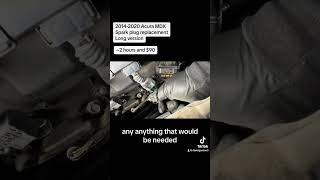
Typical fix: Replace all six spark plugs as a set. 🎬 Watch: Step-by-step spark plug replacement for 3rd gen MDX models. A Reddit user with multiple misfire codes was advised by a mechanic to replace all plugs and coils at once to prevent recurring issues.
Est. part cost: $90-$150 - Faulty Ignition Coils 🔴 High Probability
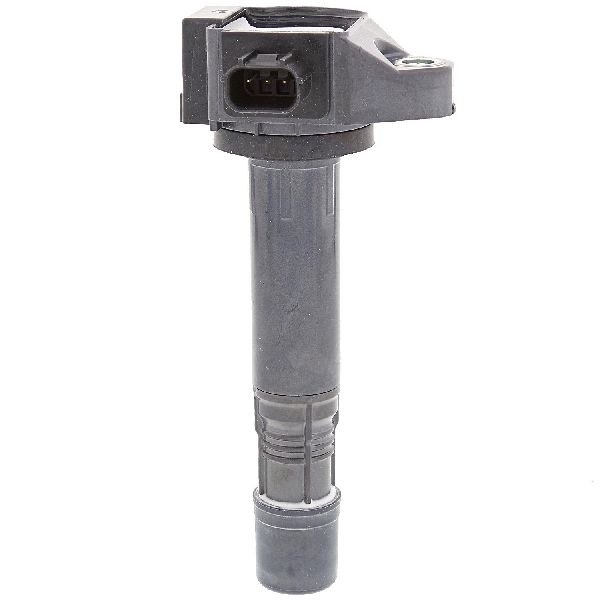
How to confirm: If you have a specific cylinder misfire code (e.g., P0304) along with P0300, swap the ignition coil from the misfiring cylinder with one from a known good cylinder. Clear the codes and see if the misfire code follows the coil (e.g., changes to P0306). If it does, the coil is bad. A technician can also test the coil's primary and secondary resistance with a multimeter.
Typical fix: Replace the faulty ignition coil. It is often recommended to replace all coils at the same time, especially on higher-mileage vehicles.
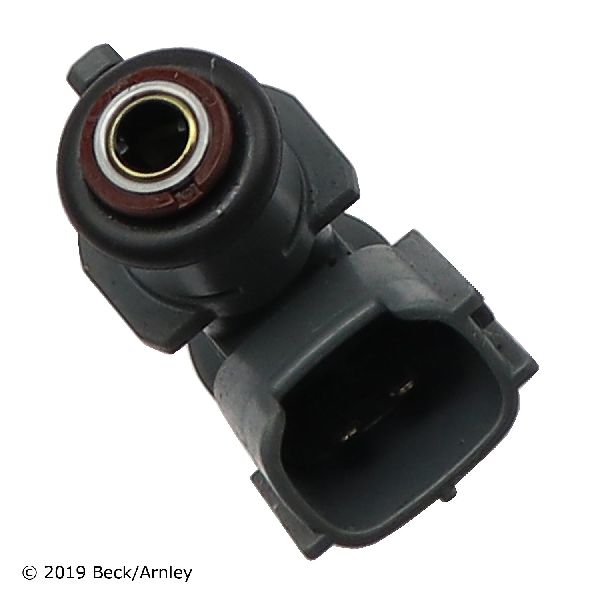
Est. part cost: $50-$100 per coil - Faulty or Clogged Fuel Injectors 🔴 High Probability The J35Y5 engine uses direct injection, which can be more susceptible to injector issues. Acura's TSBs requesting parts collection for misfire analysis strongly suggest a known issue with fuel injectors on this platform. This is the most-cited unique issue for this specific vehicle and engine combination.
How to confirm: This is more difficult for a DIYer. A professional can perform a fuel injector balance test. You can also listen to each injector with a mechanic's stethoscope; a healthy injector will have a consistent clicking sound. An owner on Honda-tech forums with a 2016 MDX noted that even after replacing plugs and coils, the random misfires continued, pointing towards a fuel system problem.
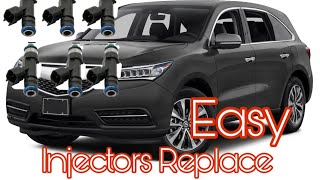
Typical fix: Replace the faulty fuel injector(s). Due to the labor involved in accessing the fuel rail, it's often cost-effective to replace all six at once. Acura sells a set of injectors for this purpose (part number 16010-R9P-305). 🎬 See this walkthrough on how to replace the fuel injectors.
Est. part cost: $100-$250 per injector - Carbon Buildup on Intake Valves 🟡 Medium Probability Direct injection engines spray fuel directly into the cylinder, so gasoline detergents don't wash over the intake valves. Over time, oil vapor from the PCV system can bake onto the valves, restricting airflow and causing misfires. This is a known characteristic of many direct-injection engines, not just the J35Y5.
How to confirm: Requires a borescope to visually inspect the intake valves. This is typically done by a professional mechanic.
Typical fix: The intake manifold must be removed and the valves cleaned, often through walnut shell blasting.
Est. part cost: $0 (service only, labor can be $500-$1000)
Rare But Worth Checking
- Leaking Head Gasket: A slow coolant leak into a cylinder can cause a misfire, especially on a cold start. This can be diagnosed by pressure testing the cooling system and using a borescope to check for coolant inside the cylinders.
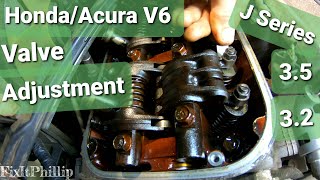
- Incorrect Valve Clearance: Honda/Acura J-series engines require periodic valve adjustments, typically around 100,000 miles. If the exhaust valves become too tight, they may not close properly, causing a loss of compression and misfires that often worsen as the engine warms up. Multiple owners of older MDX models with P0300 codes have fixed the issue with a valve adjustment. 🎬 Watch: How to perform a J-series V6 valve adjustment.
- Crankshaft Position Sensor (CKP) Relearn Needed: Sometimes, after a battery dies or is replaced, the PCM can lose its learned crankshaft position pattern, leading to false misfire detection. A CKP pattern relearn procedure using an advanced scan tool can resolve this.
- Clogged EGR Passages: On some Honda/Acura V6 engines, the EGR (Exhaust Gas Recirculation) passages in the intake manifold can become clogged with carbon, leading to poor running and multiple misfire codes. A technician in a YouTube video pointed to clogged EGR ports as the cause of P0300 and stalling on a 2002 MDX.
Diagnosis Steps
- Read all stored DTCs with an OBD-II scanner. Note any specific cylinder misfire codes (P0301-P0306) or other related codes like P0171/P0174.
- Inspect the basics: Check that the air filter is clean and the intake hose is secure and free of cracks.
- Inspect spark plugs and ignition coils. If a specific cylinder is identified, swap its coil with a known good one to see if the misfire follows.
- If plugs and coils are good, the next likely culprit is the fuel system, specifically the injectors, given the TSBs for this model. Listen to the fuel injectors for consistent clicking.
- Check for vacuum leaks by listening for hissing sounds around the intake manifold or by using a smoke machine.
- If the vehicle has over 100,000 miles, consider performing a valve clearance adjustment, as tight valves are a known cause of misfires on J-series engines.
- If the above steps don't reveal the cause, more advanced diagnostics are needed, such as a fuel pressure test, a compression test to check for mechanical engine issues, or a borescope inspection for carbon buildup.
- Consider a CKP pattern relearn procedure if the battery was recently disconnected or replaced.
Parts You'll Likely Need
- Ignition Coil
(OEM #30520-5J6-A01)— Ignition coils are a common failure point that directly causes misfires.
Trusted brands: Denso (673-2310), NGK (48885)
OEM price range: $80-$120
Aftermarket price range: $40-$70 - Spark Plug
(OEM #NGK DILZKR7B11G)— Worn or incorrect spark plugs are a primary cause of misfires and are a standard maintenance item.
Trusted brands: NGK
OEM price range: $15-$25 per plug
Aftermarket price range: $10-$20 per plug - Fuel Injector Set
(OEM #16010-R9P-305)— Faulty fuel injectors are a known issue on this platform, confirmed by Acura TSBs. They are often replaced as a set.
Trusted brands: Acura (OEM)
OEM price range: $1600-$1800 for a set of 6
Aftermarket price range: Not recommended due to direct injection complexity.
Related Codes That Often Appear With This One
- P0301-P0306 — These codes specify which cylinder is misfiring (e.g., P0301 for cylinder 1). They often accompany P0300 and help pinpoint the location of a bad coil, plug, or injector.
- P0420 / P0430 — These codes indicate 'Catalyst System Efficiency Below Threshold.' They appear when unburnt fuel from a persistent misfire overheats and damages the catalytic converter. An owner complaint for a 2016 MDX (ODI #11584900) explicitly lists P0300 and P0420 together.
- P0171 / P0174 — These codes for 'System Too Lean' can appear with misfire codes. An Acura TSB investigating misfires on the 2016-2020 MDX also listed these lean codes as potentially being stored at the same time.
Technical Service Bulletins (TSBs) & Recalls

- BTI&08252021901: Acura request for parts from 2017-2020 MDX V6s with misfire DTCs P0300-P0306 to better understand the cause. This bulletin also mentions related lean codes (P0171, P0174) and air-fuel ratio codes (P219A, P219B).
- BPAS04242017901: Acura investigation into 2016 MDX models with MIL on and DTCs P0300-P0303.
Platform-Specific Known Issues
- High Probability of Fuel Injector Failure: Unlike many other vehicles where P0300 is almost always plugs or coils, the 2016-2020 MDX has a documented history of fuel injector problems. Acura's own internal bulletins asking dealers to collect injectors from misfiring cars for analysis is the strongest evidence of a platform-specific weakness. Owners should consider injectors a primary suspect, not just a rare cause.
- Valve Adjustment as a Key Maintenance Item: While required for all J-series engines, a valve adjustment is a critical diagnostic step for a P0300 on a higher-mileage MDX. Many owners and mechanics have reported that multiple, random misfires that don't resolve with ignition or fuel parts are often caused by exhaust valves that have tightened over time, reducing compression.
Mechanic-Grade Diagnostic Values
- Valve Clearance (Intake) — expected: 0.20-0.24 mm (0.008-0.009 in). Failure: Clearance is excessively loose, causing a ticking noise.
- Valve Clearance (Exhaust) — expected: 0.28-0.32 mm (0.011-0.013 in). Failure: Clearance is too tight (little to no gap), which can hold the valve slightly open, causing a loss of compression and misfires, especially as the engine warms up.
- High-Pressure Fuel System Check — expected: After setting the power mode to ON, the fuel pump should run for ~2 seconds to pressurize the line. This should be repeated 2-3 times.. Failure: Inability to hold pressure or visible fuel leakage after pressurization cycles indicates a problem in the high-pressure fuel system.
Scan Tool Commands That Help
- Acura HDS (Honda Diagnostic System) or compatible advanced scanner (Autel, Launch, Foxwell): CKP Pattern Learn / Crank Pattern Calibration — To resolve false misfire codes (P0300, P030x) that appear after the battery has been disconnected, jump-started, or after engine/sensor replacement. The PCM needs to relearn the variations in the crankshaft position sensor's signal.
- Acura HDS or compatible bidirectional scanner: Misfire Cylinder Test / Power Balance Test — To help isolate a random misfire when specific cylinder codes (P0301-P0306) are not present. The tool can sequentially disable fuel or spark to each cylinder, and the cylinder that causes the least change in engine RPM when disabled is the likely source of the misfire.
- Acura HDS or compatible bidirectional scanner: Reset All Learned Values / Reset Tests — After replacing components like fuel injectors or performing a valve adjustment, this function clears the long-term fuel trims and other adaptations, forcing the PCM to create new baseline values with the new parts.
Real Owner Repair Stories
- YouTube channel 'FixItPhillip' (2003 Acura MDX 3.5L V6 with 177k miles (Note: Older model but same J-series engine family and P0300 issue)) — Check engine light on with codes P0300, P0301, P0302, P0303, P0304, P0305, and P0306. Engine ran rough, especially when cold.
❌ Tried (didn't work) The video implies that basic checks like plugs and coils were likely considered but the direct cause was suspected to be mechanical due to the age and mileage.
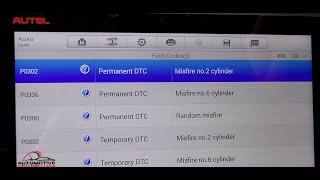
✅ What actually fixed it A valve adjustment. The mechanic found the exhaust valve clearances were extremely tight and the intake valve clearances were loose, a common wear pattern for Honda J-series engines. After adjusting the valve lash to specifications, the engine ran smoothly and the misfire codes were resolved. - YouTube channel 'Pro-Spec Auto' (2012 Acura MDX (Note: Older model but demonstrates the CKP relearn fix)) — Misfire codes P0302 and P0306 appeared 20-30 seconds after starting the engine. The issue began after the battery died and the vehicle was jump-started.
❌ Tried (didn't work) Replacing all spark plugs, Replacing all ignition coils
✅ What actually fixed it Performing a Crank Pattern Calibration (CKP Relearn) using an Autel Maxisys Elite scan tool. After the procedure, the misfire issue was resolved. - YouTube channel 'Repairs and Stuff' (2016 Acura MDX) — Check engine light with misfire codes.
❌ Tried (didn't work) Not specified, video focuses on the successful repair.
✅ What actually fixed it Replacement of all six fuel injectors. The video provides a detailed tutorial on the replacement process, which resolved the check engine light and misfire condition.
OEM Part Supersession History
Not specified→16010-R9P-305— This is the current OEM part number for the fuel injector set (including 6 injectors, O-rings, and seals) for the 2014-2020 MDX 3.5L.
Heads up: Given the TSBs from Acura to investigate injector issues, it is critical to use the latest specified OEM part number when replacing injectors to ensure you have the most updated revision.
Model Year Variations Within This Range
- 2017-2020: The 2017 model year marked a mid-cycle refresh which included a new 9-speed automatic transmission replacing the previous 6-speed. While not directly causing a P0300, some owners have reported transmission-related judders (addressed by TSB 17-025) which could potentially be confused with a light engine misfire. The core J35Y5 engine, ignition, and fuel systems remained largely the same for non-hybrid models.
Helpful Videos
Used OEM Parts in Stock


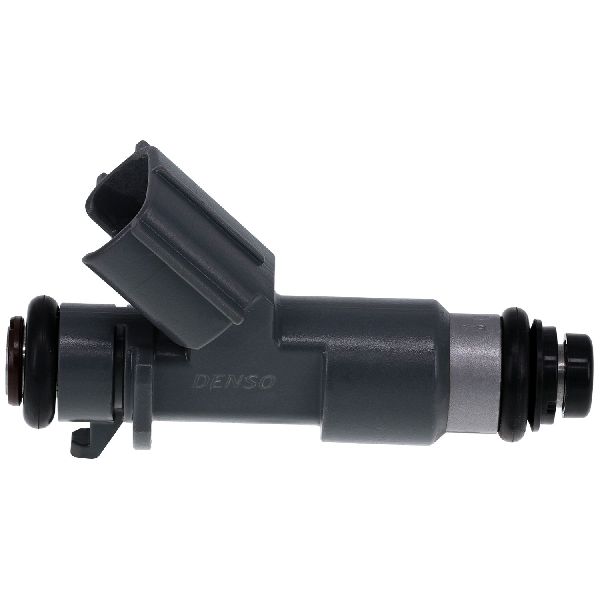
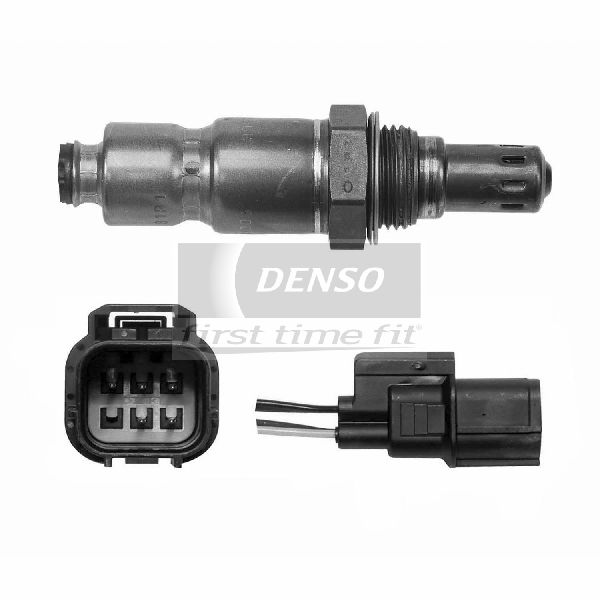
New Aftermarket Parts Available


The information in this article is provided for general reference and educational purposes only. Vehicle specifications, procedures, and part compatibility can vary by production date, trim level, and region. Always consult your vehicle's factory service manual and verify part numbers before purchasing or performing repairs. Safety-critical components such as airbags, seat belts, and braking systems should be installed by a qualified professional.
- Acura MDX:
- 🎬 Helpful Videos
- 🛍️ Shop This Part
- What's Unique About the 2016-2020 Acura MDX
- Diagnostic Flowchart
- Symptoms You May Notice
- Most Likely Causes
- Rare But Worth Checking
- Diagnosis Steps
- Parts You'll Likely Need
- Related Codes That Often Appear With This One
- Technical Service Bulletins (TSBs) & Recalls
- Platform-Specific Known Issues
- Mechanic-Grade Diagnostic Values
- Scan Tool Commands That Help
- Real Owner Repair Stories
- OEM Part Supersession History
- Model Year Variations Within This Range
- 🎟️ Get 5% Off