

P0299 on 2009-2017 Volvo XC60 2.4L D5: Turbo Underboost Causes and Fixes
On the Volvo XC60 D5, code P0299 is most often caused by a split or leaking turbo intercooler hose. Before suspecting an expensive turbo failure, thoroughly inspect all charge air pipes for cracks or loose connections. A replacement hose is often a sub-$100 fix. Other common culprits include the electronic turbo actuator and the vacuum-operated Turbo Control Valve (TCV).
- Do not assume you need a new turbo. The most likely cause of P0299 on a Volvo XC60 D5 is a much cheaper component.
- Start your diagnosis by thoroughly inspecting all charge air hoses for splits, especially the one after the intercooler.
- A smoke test is the best way to find air leaks that aren't obvious from a visual inspection.
- If hoses are intact, the next most likely culprits are the electronic turbo actuator and its controlling solenoid valve.
- As a simple and inexpensive step, consider replacing the fuel filter if its service history is unknown.
What's Unique About the 2009-2017 Volvo XC60

The 2.4L D5 engine in this generation of XC60 often uses a sequential twin-turbocharger system (one small, one large). The complexity of switching between the small and large turbos introduces specific failure points. The electronic actuator that controls the variable vanes and the vacuum control solenoids that manage the transition are common culprits for P0299, in addition to the usual boost leaks that affect all turbocharged cars.
Symptoms You May Notice
- Significant loss of engine power, especially during acceleration above 2,000-2,500 RPM.
- "Engine System Service Required" or "Motorsystem Service Spoed" message displayed on the dashboard.
- Vehicle enters a reduced power state, often called 'limp mode'.
- A whistling or hissing sound from the engine bay, indicating a boost leak.
- Check Engine Light is illuminated.
- Hesitation or jerky acceleration.
- Increased black smoke from the exhaust under load.
- Replacing the entire turbocharger assembly without first diagnosing boost leaks, actuator, or control valve issues. The turbo itself is often the last component to fail, and the other causes are far more common and cheaper to fix.
Most Likely Causes

- Split or Leaking Intercooler/Boost Hose 🔴 High Probability The rubber and plastic hoses in the charge air system become brittle over time with exposure to heat and pressure changes. The hose leading from the intercooler to the throttle body is a frequent failure point, as are the smaller hoses connecting the twin turbos.
How to confirm: Visually inspect all accessible boost hoses for cracks, splits, or oily residue (which indicates a leak). A split may not be visible until the hose is squeezed or pressurized. For leaks that are not visible, a smoke test is the most effective method to pinpoint the source.
Typical fix: Replace the damaged hose. It's recommended to use a quality OEM or aftermarket replacement. A common failure is the S-shaped hose, part number 31261365 or 31338453 depending on the specific D5 variant.
Est. part cost: $50-$150 - Faulty Turbo Control Actuator 🟡 Medium Probability The electronic actuator controls the variable vanes or wastegate on the turbo(s). Its internal plastic gears can wear out, or the electronics can fail, causing it to get stuck or respond slowly.
How to confirm: Observe the actuator arm when the engine is started and stopped; it should move smoothly through its full range of motion in a self-test sweep. A diagnostic scan with Volvo-specific software (VIDA) can often directly test the actuator's function. Ordering a replacement requires matching the G-number (e.g., G-27) on the old unit, which is crucial for compatibility.
Typical fix: Replace the electronic actuator. This part can sometimes be purchased separately from the entire turbo assembly. Calibration using VIDA may be required after installation to teach the ECU the new actuator's travel range.
Est. part cost: $150-$300 - Faulty Turbo Control Valve (TCV) / Solenoid 🟡 Medium Probability This solenoid manages the vacuum supply to the turbo actuator(s). It can become clogged with debris, fail electrically, or the small vacuum lines attached to it can perish, preventing proper turbo control.
How to confirm: Check for a buzzing sound from the valve with the engine running, which indicates it is receiving power. You can attempt to clean the valve with electrical contact or brake cleaner. Testing involves checking for correct vacuum and voltage signals at the valve and inspecting all connected vacuum hoses for cracks or loose fittings.
Typical fix: Clean or replace the turbo control valve. The Pierburg brand is a common OEM supplier. Part number is often 30774762.
Est. part cost: $40-$90 - Dirty or Faulty Boost Pressure (MAP) Sensor ⚪ Low Probability The sensor, located on the intake manifold, can become coated with oil and carbon from the EGR and PCV systems, leading to inaccurate boost pressure readings.
How to confirm: Remove the sensor and inspect it for contamination. It can be carefully cleaned with a dedicated MAF or electronics cleaner. If cleaning doesn't resolve the issue, the sensor may need to be replaced.
Typical fix: Clean the sensor. If the problem persists, replace the sensor.
Est. part cost: $60-$120 - Clogged Fuel Filter ⚪ Low Probability This is an unusual but documented cause. If the fuel filter is severely clogged, it can restrict fuel flow under high load. The ECU detects that the engine isn't producing the expected power (and thus exhaust gas volume) to spin the turbo, triggering an underboost code as a secondary effect.
How to confirm: Check the vehicle's service history. If the fuel filter has not been replaced according to the maintenance schedule (typically every 54,000 miles or less), replace it as a preventative and diagnostic step.
Typical fix: Replace the fuel filter.
Est. part cost: $30-$70
Rare But Worth Checking
- Sticking Swirl Flaps: The swirl flaps in the intake manifold can become clogged with carbon and stick, or the plastic linkage arm can break. If they stick in a closed or partially closed position, they can restrict airflow and contribute to underboost conditions. This is a very common issue on the D5 engine.
- Blocked Diesel Particulate Filter (DPF) or Catalytic Converter: An excessively blocked DPF creates high exhaust backpressure, which can impede the turbocharger's ability to spin freely and generate boost. This is usually accompanied by other DPF-related fault codes and may require a forced regeneration or cleaning.
- Internal Turbocharger Failure: While often misdiagnosed, actual failure of the turbocharger is possible, especially at high mileage. This could be due to worn bearings, damaged turbine/compressor wheels, or sticking variable vanes inside the housing. A seized turbo will produce no boost at all.
Diagnosis Steps
- Read all fault codes using an OBD-II scanner. A Volvo-specific tool like VIDA is highly recommended for more detailed sub-codes and diagnostics.
- Perform a thorough visual inspection of the entire air intake path, from the air filter to the engine. Pay close attention to all rubber and plastic hoses, especially the large ones connected to the intercooler, looking for cracks, splits, or loose clamps.
- If no visual leaks are found, perform a smoke test on the charge air system to identify hairline cracks or hidden leaks.
- With the engine cover off, start the engine and watch the turbo actuator rod. It should move to one position. When the engine is shut off, it should move back. A lack of movement or jerky movement indicates a problem with the actuator or the control system.
- Inspect and test the turbo control valve (TCV). Check for loose electrical connections and listen for a buzzing noise indicating it's active. Check vacuum lines to and from the valve for cracks or leaks. A vacuum pump can be used to test the integrity of the lines and the actuator diaphragm.
- Remove and inspect the Boost Pressure (MAP) sensor on the intake manifold. Clean it carefully with a suitable electronics cleaner if it is dirty.
- Check the fuel filter's age and condition. If it's old or clogged, replace it.
- Inspect the swirl flap linkage arm. It is a small plastic rod on the top/front of the engine. If it is disconnected, the swirl flaps are not operating correctly.
- If all other steps fail, the issue may be with the turbocharger itself (e.g., worn bearings, stuck vanes), which may require professional inspection or replacement.
Parts You'll Likely Need

- Turbo Intercooler Hose
(OEM #31338453 or 31261365)— This is the most common failure point leading to a P0299 code on this vehicle due to material degradation over time.
Trusted brands: Volvo (OEM), Meyle, CRP Automotive
Related Codes That Often Appear With This One
- P004C — This code relates to the 'Turbocharger Boost Control 'B' Circuit Low' and often appears with P0299 when there is an electrical fault with the control solenoid or actuator.
- P0101 — This code indicates a problem with the Mass Air Flow (MAF) sensor circuit. A major air leak after the MAF sensor but before the engine (like a split boost hose) can cause both the MAF and boost pressure readings to be out of their expected ranges.
- P2015 — This code relates to Intake Manifold Runner Position Sensor/Switch Circuit Range/Performance. It often points to issues with the swirl flaps, which can also contribute to the P0299 underboost condition.
Platform-Specific Known Issues
- The twin-turbo D5 models rely on a complex system of valves and actuators to switch between turbos. A failure in this changeover mechanism is a specific cause of P0299 on these engines.
Mechanic-Grade Diagnostic Values
- P0299 Fault Trigger Threshold (VIDA) — expected: Actual boost pressure is within 15 kPa of requested pressure.. Failure: Actual boost pressure is more than 15 kPa below requested pressure for over 10 seconds.
- Boost Pressure (MAP) Sensor Voltage (D5244T14) — expected: Approx. 1.3V at idle.. Failure: Significantly lower voltage at idle (e.g., 1.2V was measured on a faulty car) can indicate a dirty sensor or port.
- Boost Pressure (MAP) Sensor Voltage vs. Pressure — expected: Sensor should output ~2.51V when 1.0 bar (14.5 psi) of pressure is applied with a hand pump.. Failure: Voltage does not respond linearly to applied pressure, or is stuck at a certain value.
- Live Data Scan Tool (Desired vs. Actual Boost) — expected: Actual boost should track desired boost closely during acceleration.. Failure: Under hard acceleration, desired boost may request ~40 PSI while actual boost flattens out at a lower value (e.g., ~32 PSI), triggering the code.
Hidden / Shadow Codes Worth Checking
- ECM-P029900: This is the Volvo-specific fault code for 'Turbocharger/Supercharger A Underboost Condition' that is read by the VIDA diagnostic system. (see via Volvo VIDA/DICE diagnostic tool.)
- ECM-1507: An older Volvo-specific code for 'Turbo control - pressure too low'. This often points towards the same set of faults as P0299 and can be stored alongside it, particularly in earlier models or when diagnosing with older software. (see via Volvo VIDA/DICE diagnostic tool.)
Scan Tool Commands That Help
- Volvo VIDA: Turbo Actuator Calibration / Adaptation — After replacing the electronic turbo actuator. This function cycles the new actuator through its full range of motion, allowing the Engine Control Module (ECM) to learn the new component's start and stop positions. This can resolve issues if the actuator is not operating correctly post-installation.
- Volvo VIDA: Activating Components - Turbocharger Control Valve — To test the function of the Turbo Control Valve (TCV) solenoid directly. VIDA can command the valve to open and close, and the technician can verify its operation by listening for clicks or measuring vacuum changes, confirming if the valve is stuck or has an electrical issue.
Wiring & Ground Locations
- Boost Pressure Sensor (B105 on D5244T14) — Located on the intake manifold.. Incorrect readings from this sensor are a direct cause of P0299. Wiring issues can mimic a sensor failure. Pin 1: 5V Reference. Pin 2: Signal wire to ECM Connector A, Pin 18. Pin 4: Sensor Ground to ECM Connector A, Pin 2.
- 31/4 — Main engine block ground point, typically a large gauge wire from the chassis to the engine block near the starter or alternator.. A poor engine ground can cause floating voltages and erratic behavior from all engine sensors and actuators, including the turbo control valve and electronic actuator, leading to intermittent and hard-to-diagnose underboost faults.
- Strut Tower Grounds — Multiple ground posts are located on the driver and passenger side strut towers in the engine bay.. These are critical grounding points for the engine wiring harness. Corrosion or looseness here can affect the signals for various components in the turbo control system.
Real Owner Repair Stories
- YouTube channel 'Jarkko Works' (Volvo XC60 D5 (twin-turbo model)) — Lack of power, P0299 code.
❌ Tried (didn't work) Checking for boost leaks, Inspecting MAP sensor, Inspecting turbo control valve (TCV), Verifying actuator movement
✅ What actually fixed it The root cause was a severely clogged fuel filter located under the rear axle. The resulting fuel starvation prevented the engine from producing enough exhaust gas to spool the turbo properly, which the ECU interpreted as an underboost condition. - Commenter on YouTube channel 'Jarkko Works' (Volvo XC60 D5) — Turbo fault, P0299 code, diagnosed by two garages as 'boost/wastegate circuit open'.
❌ Tried (didn't work) Initial diagnosis pointed towards expensive turbo or actuator failure.
✅ What actually fixed it After watching a diagnostic checklist video, the owner found a loose electrical plug on the turbo control valve (TCV) solenoid. Securing the connector resolved the fault completely.
"I Checked Everything" — The Actual Cause
- A documented case showed that after all boost leak checks (including smoke tests) passed, the P0299 code was ultimately resolved by replacing a clogged fuel filter. The lack of fuel under load meant the engine couldn't produce enough exhaust volume to spin the turbo to its target speed, which the ECU logs as an underboost fault, even though the air system is perfectly sealed.
- On related Volvo engines, an internally clogged intercooler has been found to be the cause. Soot from a small, undetected crack in the DPF can build up inside the intercooler over time. This creates a flow restriction at high RPMs that a standard, low-pressure smoke test won't detect, leading to an underboost condition only when driving under load.
When the Usual Fixes Don't Work
- While boost leaks and actuator faults are the most common causes, multiple owner reports confirm that P0299 can be a 'symptom' code rather than a 'cause' code. In one case, a 2012 V70 D5 with 300k miles had desired boost of 40psi but actual boost flattened at 32psi. In another, the final fix was not in the air system at all, but a clogged fuel filter preventing the engine from generating enough exhaust gas to create boost. This highlights the need to confirm the fuel system is healthy before committing to expensive turbo-related repairs.
OEM Part Supersession History
Varies (e.g., 30757080, 31219698)→Varies (e.g., 31293030)— Updates to the electronic turbo actuator for reliability.
Heads up: Crucially, the Hella G-Number (e.g., G-26, G-27, G-35) on the aluminum housing of the actuator must be matched when ordering a replacement. Using an actuator with the wrong G-number, even if it physically fits, will result in incorrect operation and persistent fault codes.
Model Year Variations Within This Range
- 2009-onward (specific models): The introduction of the 3rd generation D5 engine (e.g., D5244T10, 205bhp) brought a sequential twin-turbocharger system. This is different from other D5 variants in the same XC60 that used a single Variable Geometry Turbo (VGT). The twin-turbo setup has additional failure points, such as the charge air valve that switches between the small and large turbos, which can cause P0299 if it fails.
- 2009-2017: Volvo used the same 'D5' badge on engines with different power outputs and internal codes (e.g., D5244T4, T10, T15, T20) across the generation. This means a '2012 D5' and a '2016 D5' may have different turbo setups (single vs. twin) and require different diagnostic approaches for P0299. It is essential to identify the specific engine code (D5244Txx) from the vehicle's specification plate.
Diagnostic Flowchart

Other Known Issues on This Vehicle
Issues unrelated to this code that are worth knowing about as an owner of this generation:
- Auxiliary (Serpentine) Belt & Tensioner Failure 🔴 High — Common, especially if not replaced every 54,000 miles. Failure can be catastrophic if the belt gets ingested by the timing belt. (Ref: Recall and service campaigns have been issued for certain model years. Owners report tensioner bolt shearing even after replacement.)
- Swirl Flap Linkage Failure / Clogged Flaps 🟠 Medium — Extremely common. The plastic linkage arm breaks or pops off, or the flaps themselves get clogged with carbon and seize. (Ref: No official recall, but it's a widely known design flaw of the D5 engine.)
- Haldex AOC Pump / DEM Failure (AWD Models) 🟠 Medium — Fairly common around 40k-80k miles. The pump filter gets clogged, leading to pump failure and loss of AWD. Often presents with code P1889.
- Power Tailgate Strut/Motor Failure 🟡 Low — Common issue where the tailgate fails to open or close properly, or makes grinding noises. (Ref: A recall was issued for some model years due to the tailgate lifting arm potentially separating.)
- Cracked Intercooler 🟠 Medium — The intercooler end tanks can develop cracks, leading to boost leaks that can cause a P0299 code. This is less common than hose failures but a known possibility.
Used vs. New Parts: Buying Guide for This Vehicle
When a used part is the smart pick: For non-wear items, a used part can be a good value. This includes the intercooler (if inspected for leaks/blockage), the MAP sensor, and potentially the Turbo Control Valve (TCV) if sourced from a low-mileage, reputable salvage yard.
Donor-vehicle mileage cap: roughly under 80000 miles for the part to have meaningful remaining life.
What to inspect on the donor part:
- Check for low, documented mileage on the donor vehicle.
- For intercoolers, inspect the fins for heavy damage and look inside the end tanks for excessive oil pooling.
- For sensors, ensure connectors are clean and free of corrosion or damage.
OEM-only on this vehicle (don't cheap out):
- Electronic Turbo Actuator: This is a high-risk part to buy used or from a cheap aftermarket source. The internal gears wear out, and calibration is critical. An OEM part or a rebuild from a specialist with flow-bench calibration is strongly recommended.
- Charge Air Hoses: Never buy used rubber hoses. They will have the same age and heat-cycle degradation as the part being replaced. Always buy new.
Aftermarket brands forum-validated for this vehicle:
- Turbo Control Valve (TCV): Pierburg is the OEM supplier, so their aftermarket version is a reliable choice.
- Hoses: Meyle, CRP Automotive (Rein), Proparts Sweden are known for quality replacement hoses for Volvos.
Brands owners have reported issues with on this vehicle:
- Unbranded electronic turbo actuators from online marketplaces (eBay, Amazon). These frequently have calibration issues or premature electronic failure, leading to a repeat of the P0299 code.
Real Owner Stories
Aggregated from forums and TSBs cited above. Mileages and costs reflect what owners reported in those sources.
2008 Volvo V70 D5 185hp
Symptoms: ECM-P029900 underboost code and the car entering limp mode.
What fixed it: The owner replaced the turbo, actuator, and intercooler to resolve the persistent underboost issue.
Source hint: volvoforums.org.uk thread titled '2008 v70, D5 185hp, ECM-P029900 underboost, limp mode'
Volvo XC60 D5 Twin Turbo
Symptoms: Underboost code P0299; owner checked the actuator, TCV, and MAP sensor but the issue persisted.
What fixed it: The problem was finally resolved by replacing a clogged fuel filter.
Source hint: YouTube video 'Volvo xc60 d5 twin turbo boost p0299'
Volvo S80 D5
Symptoms: P029900 Turbocharger underboost; owner performed checks on the MAP sensor and various hoses.
What fixed it: The issue was resolved by replacing a vacuum control valve.
Source hint: Problemcar.nl thread 'volvo s80 p029900 turbocharger underboost'
Related OBD-II Codes
Frequently Asked Questions
My XC60 D5 is showing 'Motorsystem Service Spoed' and lost power. Is this related to P0299?
Which specific boost hose is most likely to fail on the 2.4L D5 engine?
Can I replace just the turbo actuator on my XC60, or do I need a whole new turbo?
I hear a whistling sound from the engine bay during acceleration; what should I check first?
How can I tell if my Turbo Control Valve (TCV) is working?
Is there a specific maintenance item often overlooked that causes underboost on the D5?
Helpful Videos

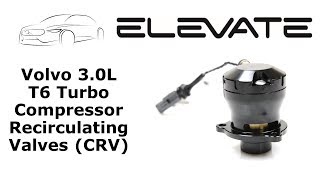
We Have This Part in Stock



The information in this article is provided for general reference and educational purposes only. Vehicle specifications, procedures, and part compatibility can vary by production date, trim level, and region. Always consult your vehicle's factory service manual and verify part numbers before purchasing or performing repairs. Safety-critical components such as airbags, seat belts, and braking systems should be installed by a qualified professional.
- Volvo XC60:
- 🎬 Helpful Videos
- 🛍️ Shop This Part
- What's Unique About the 2009-2017 Volvo XC60
- Symptoms You May Notice
- Most Likely Causes
- Rare But Worth Checking
- Diagnosis Steps
- Parts You'll Likely Need
- Related Codes That Often Appear With This One
- Platform-Specific Known Issues
- Mechanic-Grade Diagnostic Values
- Hidden / Shadow Codes Worth Checking
- Scan Tool Commands That Help
- Wiring & Ground Locations
- Real Owner Repair Stories
- "I Checked Everything" — The Actual Cause
- When the Usual Fixes Don't Work
- OEM Part Supersession History
- Model Year Variations Within This Range
- Diagnostic Flowchart
- Other Known Issues on This Vehicle
- Used vs. New Parts: Buying Guide for This Vehicle
- Real Owner Stories
- 2008 Volvo V70 D5 185hp
- Volvo XC60 D5 Twin Turbo
- Volvo S80 D5
- Related OBD-II Codes
- Frequently Asked Questions
- 🎟️ Get 5% Off