

P0299 on 2015-2016 Volkswagen Golf: Turbo Underboost Causes and Fixes
P0299 on a 2015-2016 VW Golf almost always points to a failed turbocharger wastegate actuator or a bad diverter valve. Expect to pay $150-$400 for a replacement actuator (often requiring turbo removal) or around $100-$150 for an upgraded diverter valve, which is a common DIY fix.
- P0299 on a 2015-2016 Golf is most likely caused by a failed turbo wastegate actuator or a torn diverter valve.
- Before considering an expensive turbo replacement, always inspect the diverter valve first; it's a cheap and easy part to check and replace.
- Check the wastegate actuator arm for excessive play; if it's loose, this is the likely culprit, though the repair is more involved.
- A smoke test is the best way to rule out less common boost leaks in the charge pipes or intercooler.
- Upgrading to a piston-style diverter valve (like the 'D' revision) is a smart preventative measure even if yours hasn't failed yet.
What's Unique About the 2015-2016 Volkswagen GOLF

The 2015-2016 (Mk7) Golf, particularly with the 1.8T and 2.0T EA888 Gen3 engines, is well-known for this code. The two most frequent culprits are specific to this platform's design: a failure-prone electronic wastegate actuator integrated into the IHI IS12/IS20/IS38 turbochargers and a diaphragm-style diverter valve that is known to tear. While boost leaks can happen on any car, these two component failures are exceptionally common on this generation of Golf and its platform-mates (like the GTI and Audi A3) and are often the root cause of a P0299 code.
Diagnostic Flowchart

Tap your situation to follow the diagnostic path that matches what you're seeing on this vehicle.
Symptoms You May Notice
- Significant loss of power and acceleration.
- Check Engine Light illuminated
- Vehicle enters 'limp mode'.
- Flashing glow plug light (on TDI models).
- Unusual noises from the engine bay, like hissing (boost leak) or a distinct metallic rattle from the wastegate area, especially on deceleration or cold starts.
- Reduced fuel economy.
- In some cases, especially early failure, no noticeable symptoms may be present other than the fault code itself.
- Replacing the turbocharger when only the diverter valve is bad.
- Replacing boost pressure sensors without first checking for physical leaks in the system.
- Mistaking a loose heat shield for wastegate rattle.
Most Likely Causes

- Faulty Turbocharger Wastegate Actuator 🔴 High Probability The electronic actuator on the IHI turbos used in this generation is a known high-failure item. The internal gears can strip or the motor can fail, but more commonly, the linkage bushing wears out, causing the wastegate arm to become loose and rattle. This prevents the wastegate flapper from sealing properly, allowing exhaust gas to bypass the turbine wheel.
How to confirm: With the engine off and cool, attempt to move the wastegate actuator arm by hand. If there is significant free play or it feels loose and rattles, the actuator or its linkage is likely bad. A diagnostic tool like VCDS can perform an output test on the actuator and check its voltage readings; values outside the typical range (e.g., below 3.4V at idle) can indicate a problem. A rattling noise on deceleration is a strong audible symptom.
Typical fix: VW does not sell the actuator separately, so dealers will replace the entire turbocharger assembly. However, aftermarket actuators are available. Some owners attempt a temporary fix by applying high-temperature anti-seize to the linkage to dampen the rattle. Another aftermarket solution involves a tool that intentionally bends the actuator rod to restore preload on the wastegate flapper. For a permanent fix, replacing the actuator or the full turbo is required. The new actuator must be electronically calibrated (Basic Settings) with a tool like VCDS.
Est. part cost: $150-$400 for an aftermarket actuator, $1000+ for a new turbocharger - Failed Diverter Valve (DV) 🔴 High Probability The factory diverter valve uses a rubber diaphragm that is notorious for tearing due to heat and oil exposure, creating a significant boost leak. This is one of the most common failure points on VW/Audi turbocharged engines of this era.
How to confirm: Remove the diverter valve from the turbocharger (held by three 5mm Allen bolts) and inspect the rubber diaphragm for any rips or tears. Oil dripping from the electrical connector is also a sure sign of a failed diaphragm seal.
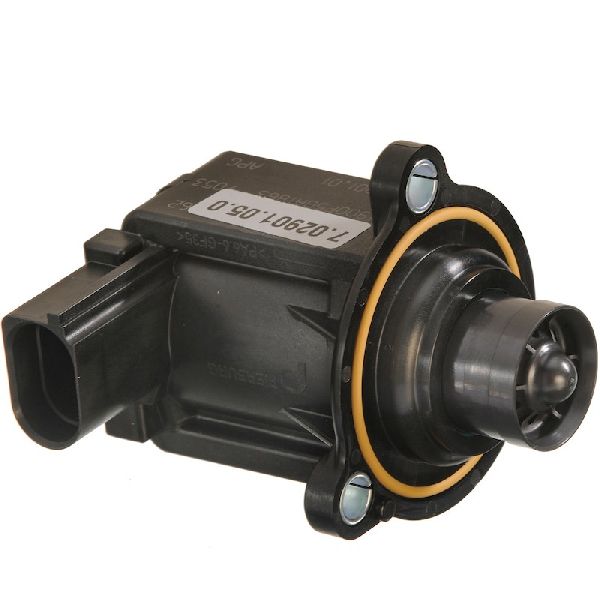
Typical fix: Replace the faulty diverter valve. Many owners opt for an upgraded piston-style DV (like the Pierburg unit, part number 06H145710D) or aftermarket units (like the GFB DV+) which are more durable than the original diaphragm design. This is a common DIY job that can be done from under the car.
Est. part cost: $80-$150 - Boost/Charge Pipe Leak 🟡 Medium Probability While not unique to this platform, the plastic charge pipes and rubber seals can become brittle and fail over time. Common leak points include the rubber elbow off the turbo outlet and the intercooler connections.
How to confirm: Perform a visual inspection of all charge pipes and hoses between the turbo, intercooler, and throttle body for cracks, loose clamps, or disconnected sections. A smoke test is the most effective way to find small, hard-to-see leaks.
Typical fix: Tighten any loose clamps or replace the cracked or damaged hose/pipe section.
Est. part cost: $50-$300 depending on the specific pipe - Faulty Boost Pressure Sensor (MAP Sensor) ⚪ Low Probability
How to confirm: Use a diagnostic scanner to monitor the boost pressure reading with the engine off (it should read atmospheric pressure) and compare the live data of 'specified' vs 'actual' boost pressure during a test drive. If the readings are illogical or don't respond, the sensor may be faulty.
Typical fix: Replace the boost pressure sensor.
Est. part cost: $30-$70
Rare But Worth Checking
- Clogged Catalytic Converter: A restriction in the exhaust can prevent the turbo from spooling up effectively. This is less common but can happen on higher mileage vehicles and may be the end result of other issues.
- Internal Turbocharger Failure: While the actuator is the most common point of failure, the turbo itself can fail due to worn bearings or damaged turbine wheels, especially if there are oil supply issues. This would typically be accompanied by a 'dentist drill' whining noise.
- Faulty PCV Valve: A failed Positive Crankcase Ventilation (PCV) valve can create a vacuum leak in the intake manifold, which can contribute to underboost conditions and trigger other codes alongside P0299.
Diagnosis Steps
- Scan the vehicle for fault codes using a VW-specific tool like VCDS or OBDeleven. Check for any other codes that may be present with P0299.
- Perform a thorough visual inspection of the engine bay. Look for any disconnected hoses, loose clamps on the charge pipes, or visible cracks.
- Inspect the diverter valve. This is a top suspect. Remove it (three 5mm Allen bolts) and check the diaphragm for tears. Oil in the connector is a dead giveaway.
- Inspect the turbocharger wastegate actuator. With the engine cool, reach down and wiggle the actuator arm. Excessive play (rattling) indicates wear and is a very common cause. Using VCDS or OBDeleven, check the 'Charge pressure actuator acknowledgement' voltage at idle. A reading below ~3.4V often indicates a worn actuator/wastegate linkage.
- Log Data on a Test Drive. Using a scan tool, graph 'Charge air pressure specified value' vs. 'Charge air pressure actual value' during a full-throttle pull in 3rd or 4th gear. A large, consistent discrepancy where the actual value fails to meet the specified value points to a physical problem (leak, wastegate, DV) rather than a sensor issue.
- If no obvious issues are found, perform a boost leak test (smoke test) to pressurize the intake and charge system. This will reveal any hidden leaks in hoses, the intercooler, or gaskets.
- If all other components check out, the issue may be with the turbocharger itself, requiring a more in-depth inspection for shaft play or internal damage.
Parts You'll Likely Need

- Turbocharger Diverter Valve
(OEM #06H145710D)— The original diaphragm-style valve is a known weak point that tears easily. The 'D' revision is a more robust piston-style design that is a common and recommended upgrade.
Trusted brands: Pierburg (OEM supplier), GFB (Go Fast Bits) DV+, ECS Tuning
OEM price range: $100-$130
Aftermarket price range: $80-$150 - Turbocharger Wastegate Actuator
(OEM #06K145614C (Aftermarket))— This electronic actuator frequently fails, causing the wastegate to not close properly, leading to an underboost condition. VW does not sell this part separately from the turbo, but aftermarket options are available. Quality of aftermarket brands can vary.
Trusted brands: URO Parts, Aftermarket units from various online sellers
OEM price range: N/A
Aftermarket price range: $150-$400 - Turbocharger Assembly
(OEM #06K145722H)— Required if the wastegate actuator cannot be sourced separately or if the turbo has failed internally. A failed actuator is the most common reason for full turbo replacement on this vehicle at a dealership. Note: The 1.8T Golf uses an IS12 turbo, while the GTI uses an IS20 and the Golf R uses an IS38. Ensure the correct part for the specific model.
Trusted brands: IHI (OEM), BorgWarner
OEM price range: $1200-$1800
Aftermarket price range: $800-$1100
Related Codes That Often Appear With This One
- P0101 — A Mass Air Flow (MAF) sensor code can appear if a boost leak occurs after the turbo but before the engine, causing unmetered air to throw off calculations. The provided TSB VIN-4-A-PIN AUGU also lists P0101 alongside P0299.
- P0234 — This code for 'Turbocharger Overboost Condition' can sometimes appear alongside P0299 if the wastegate actuator is sticking or behaving erratically, causing both underboost and overboost at different times.
Technical Service Bulletins (TSBs) & Recalls
- Bulletin #VIN-4-A-PIN AUGU - Mentions MIL-ON P0299 as a known issue on 2016 models.
- VW Tech Tip 21-10-02 - Addresses checking for a seized/dropped wastegate lever on 2.0L TSI engines.
- Audi TPI 2031245 - Though for an Audi engine, it details the issue of excessive turbocharger wastegate play causing underboost, which is directly applicable to the shared VW engine architecture.
Platform-Specific Known Issues
- Volkswagen issued Technical Service Bulletin (TSB) #VIN-4-A-PIN AUGU which lists 'MIL-ON P0299' as a known issue for the 2016 Golf, confirming this is a recognized problem by the manufacturer.
Mechanic-Grade Diagnostic Values
- Wastegate Actuator Voltage (at idle, engine running) — expected: 3.4V - 3.9V. Failure: A voltage reading of 3.1V or lower often indicates excessive wear in the wastegate linkage or a failing actuator, preventing the wastegate from closing fully.
- Wastegate Actuator Voltage (bench test, manually closed) — expected: Target ~3.5V - 3.6V. Failure: Inability to adjust the actuator rod to achieve this voltage indicates a faulty actuator. The resting (open) voltage is typically around 1.18V.
- Wastegate Actuator to Turbo Housing Clearance — expected: ~3.0mm. Failure: If the wastegate lever has dropped or seized, this clearance will be incorrect, leading to boost control issues.
Scan Tool Commands That Help
- VCDS (VAG-COM) or OBDeleven: Basic Settings - IDE04304: First adaptation of charge pressure actuator — This procedure is mandatory after replacing the turbocharger or the electronic wastegate actuator. It teaches the ECU the new actuator's end-stop positions (fully open and fully closed) to ensure accurate boost control.
- VCDS (VAG-COM) or OBDeleven: Advanced Measuring Values - 'Charge pressure actuator acknowledgement' and 'Charge air pressure: specified value' vs 'actual value' — Used to diagnose the P0299 code. The voltage value helps determine if the actuator is worn, while comparing specified vs. actual boost during a test drive confirms if an underboost condition is actively occurring.
Wiring & Ground Locations
- Wastegate Actuator Connector (on actuator) — On the electronic wastegate actuator body, attached to the turbocharger assembly.. This is where voltage measurements are taken to diagnose the actuator. Pin 1: 5V power supply, Pin 3: Ground, Pin 5: Signal wire for voltage reading.
- Ground Point 15 — On the cylinder head.. A poor engine ground can cause erratic behavior in sensors and actuators, including the electronic wastegate actuator, potentially leading to incorrect operation and fault codes.
- Ground Point 671 / 672 — On the front of the left longitudinal member (frame rail) in the engine bay.. This is a primary chassis ground point in the engine bay. Corrosion or a loose connection here can affect multiple electronic systems.
Real Owner Repair Stories
- golfmk7.com forum user (2015 VW Golf, early build) — Car would suddenly lose all boost power during a track session, triggering a P0299 code. Restarting the car would temporarily restore power.
❌ Tried (didn't work) Clearing the code (it returned), Switching from a custom EQT tune back to a Cobb Stage 0 tune (problem disappeared on the less aggressive tune, suggesting the hardware couldn't meet the higher boost target).
✅ What actually fixed it The user suspected the common wastegate actuator failure, which is often exacerbated by higher boost demands from aftermarket tunes. The discussion pointed towards checking the actuator voltage with VCDS as the definitive diagnostic step, as physical looseness isn't always apparent.
OEM Part Supersession History
06K145702N, 06K145722A→06K145722H (for IS38 Turbo)— Part revisions to improve reliability and performance. The IS38 is an upgrade for the IS12/IS20 but is a direct fit for the Golf R and Audi S3.
Heads up: While the IS38 (06K145722H) is a popular upgrade for the Golf 1.8T (which has an IS12), it is not a direct stock replacement. The stock replacement turbo for a Golf R is the IS38. Ensure the correct turbo (IS12, IS20, or IS38) is used for the specific vehicle trim.
Model Year Variations Within This Range
- 2016: The 2016 models received an updated MIB II infotainment system with a larger touchscreen (6.5 inches vs 5 inches on the base 2015), a standard USB port, and support for Apple CarPlay and Android Auto. This has no impact on the P0299 code but is a key difference between the model years.
We Have This Part in Stock




The information in this article is provided for general reference and educational purposes only. Vehicle specifications, procedures, and part compatibility can vary by production date, trim level, and region. Always consult your vehicle's factory service manual and verify part numbers before purchasing or performing repairs. Safety-critical components such as airbags, seat belts, and braking systems should be installed by a qualified professional.
- Volkswagen GOLF:
- 🛍️ Shop This Part
- What's Unique About the 2015-2016 Volkswagen GOLF
- Diagnostic Flowchart
- Symptoms You May Notice
- Most Likely Causes
- Rare But Worth Checking
- Diagnosis Steps
- Parts You'll Likely Need
- Related Codes That Often Appear With This One
- Technical Service Bulletins (TSBs) & Recalls
- Platform-Specific Known Issues
- Mechanic-Grade Diagnostic Values
- Scan Tool Commands That Help
- Wiring & Ground Locations
- Real Owner Repair Stories
- OEM Part Supersession History
- Model Year Variations Within This Range
- 🎟️ Get 5% Off