

P0299 on 2019-2020 Ram 2500: Turbo Underboost Causes & Fixes
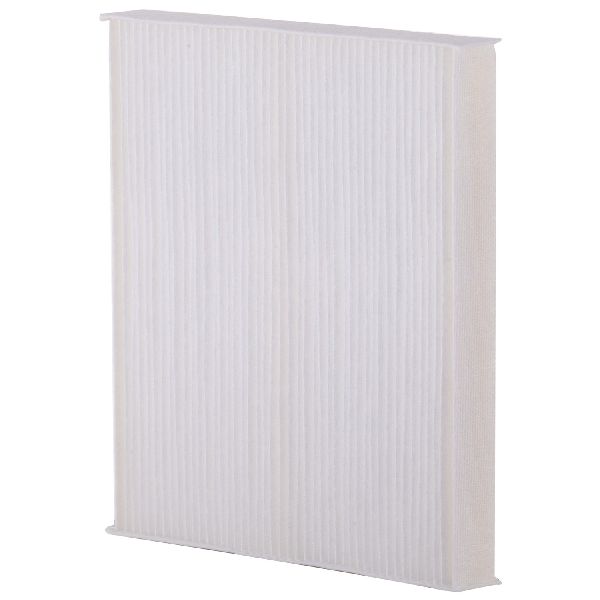
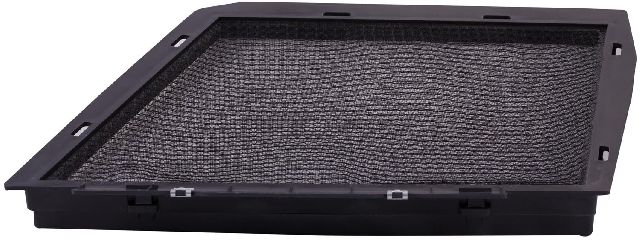
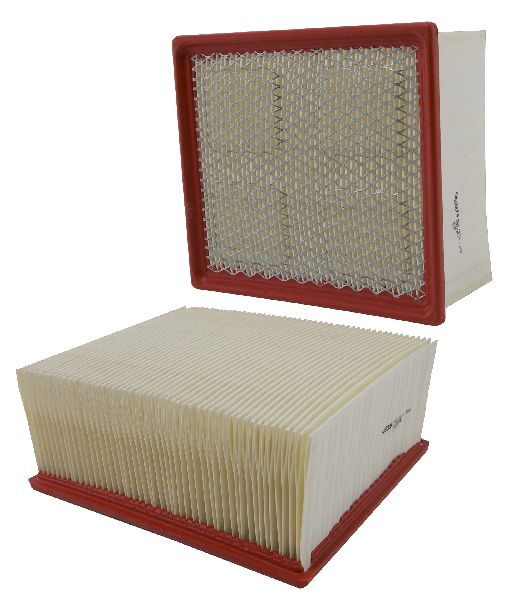
On a 2019-2020 Ram 2500 with the 6.7L Cummins, P0299 is most often caused by an incorrect, collapsed, or clogged aftermarket air filter. Before attempting expensive repairs, the first and most critical step is to replace the air filter with a genuine Mopar part (OEM #68645327AA), as this is a well-documented fix confirmed by multiple TSBs (like #09-003-26 and #9100678) and countless owner experiences.
- Always start your diagnosis by replacing the engine air filter with a genuine Mopar part. This is the most common and cheapest fix for P0299 on this truck.
- Do not immediately assume the expensive turbocharger has failed. Boost leaks, a faulty actuator, or outdated software are far more likely causes.
- A boost leak test is essential. Visually inspect and then pressure test the charge air system to find hidden cracks in hoses or loose clamps.
- Check with a dealer for any available PCM software updates, as revised software can fix overly sensitive underboost detection.
- Avoid using oiled or cheap aftermarket air filters, as their design can disrupt airflow and falsely trigger this code.
What's Unique About the 2019-2020 Ram 2500

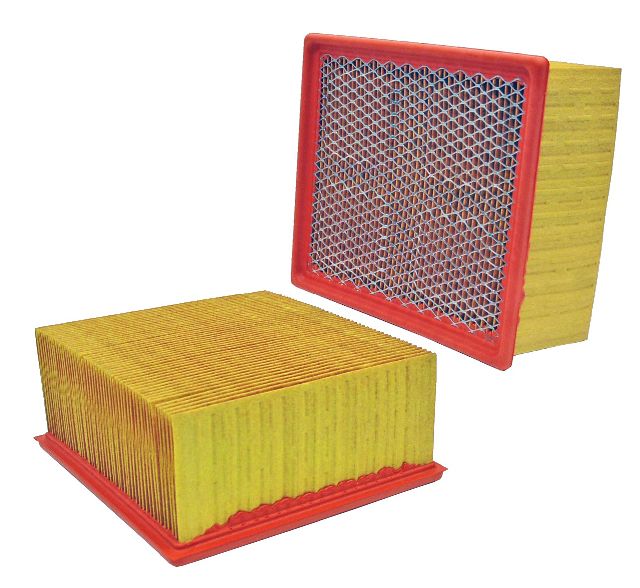
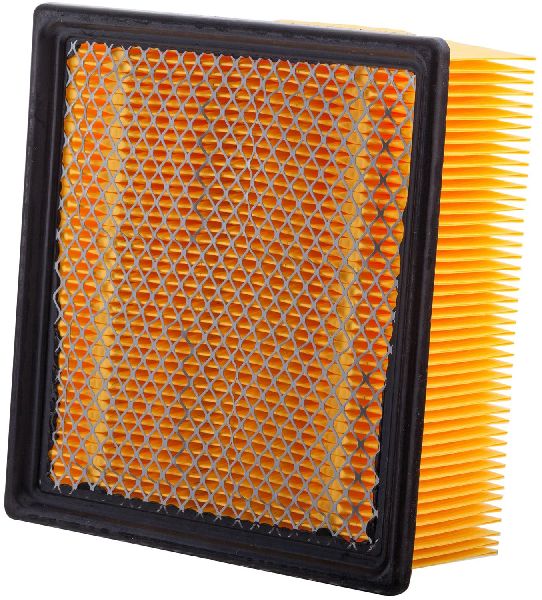
The 6.7L Cummins engine in the fifth-generation Ram HD trucks is exceptionally sensitive to airflow characteristics. Multiple Technical Service Bulletins (TSBs) from the manufacturer, including #09-003-26, #9100678, and service document S2018000007, specifically link the P0299 code to the use of incorrect, oiled, or aftermarket air filters. These non-OEM filters can have thick glue beads, fewer pleats, or lack the metal support mesh of the factory part, causing them to collapse or create air turbulence that the truck's sensors misinterpret as an underboost condition, often at light throttle (around 15% accelerator position). Unlike many other vehicles where P0299 immediately points to a major mechanical fault, the diagnostic process on this specific platform must always begin with inspecting and replacing the air filter with a proper OEM part.
Diagnostic Flowchart

Tap your situation to follow the diagnostic path that matches what you're seeing on this vehicle.
Symptoms You May Notice

- Significant loss of engine power and acceleration
- Check Engine Light illuminated
- Reduced fuel economy
- Hesitation or stuttering on light acceleration
- Audible hissing or whistling from the engine bay (if a boost leak is present)
- Inoperative or weak-performing exhaust brake
- Black smoke from the exhaust under acceleration
- A 'surging' or 'deep breathing' sound from the air intake area, sometimes noticeable on the dash boost gauge
- Replacing the entire turbocharger assembly when only the less expensive electronic actuator was faulty.
- Replacing sensors like the MAP sensor before checking for the much more common air filter issue or boost leaks.
- Assuming a new aftermarket air filter is good, without realizing its design (glue strips, lack of mesh) is the root cause of the code.
Most Likely Causes

- Incorrect, Clogged, or Aftermarket Air Filter 🔴 High Probability As documented in TSBs #09-003-26, #9100678, and service bulletin S2018000007, the 6.7L Cummins is extremely sensitive to air filter design. Aftermarket filters, especially oiled types or those with heavy glue strips, fewer pleats, and no metal support mesh, can collapse or create airflow turbulence that triggers P0299, often under light throttle. Owners on forums like hdrams.com and TDR have repeatedly confirmed that switching from an aftermarket filter (like AFE or STP) back to OEM resolved the code.
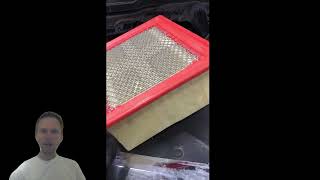
How to confirm: Inspect the air filter. If it is not a genuine Mopar/OEM filter with the correct metal support mesh design, replace it. A technician in a YouTube video demonstrated how an aftermarket filter with thick glue beads and folded pleats caused the code.
Typical fix: Replace the air filter with a new, genuine Mopar/OEM filter. For 2019+ models, the part number is 68645327AA. This simple fix resolves the code in a high percentage of cases. 🎬 Watch: How a simple air filter swap fixes the P0299 code.
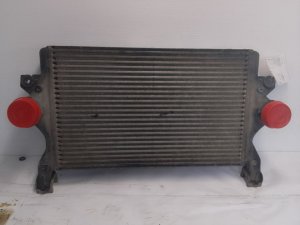
Est. part cost: $50-$90 - Boost Leak (Cracked Hoses, Loose Clamps, Cracked Intercooler) 🟡 Medium Probability The charge air cooler (CAC) hoses are made of rubber or silicone and are exposed to high heat and pressure, causing them to crack, split, or blow off over time. A common failure point noted by owners is the lower clamp on the throttle body boot.
How to confirm: Visually inspect all hoses from the turbo to the intercooler and to the intake manifold for cracks, tears, or oil residue (which indicates a leak). Perform a boost leak or smoke test by pressurizing the system to 20-30 PSI and listening for hissing or using soapy water to find bubbles.
Typical fix: Replace the cracked hose or tighten the loose clamp. The hot-side hose from the turbo to the intercooler is a common failure point. Aftermarket CAC tube upgrades are available from brands like Mishimoto or Sinister Diesel.
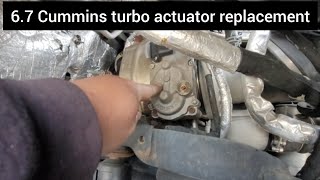
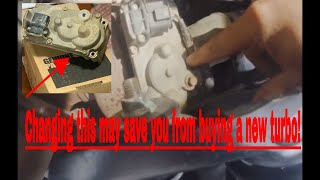
Est. part cost: $80-$300 - Faulty Turbocharger Actuator 🟡 Medium Probability The electronic actuator on the Holset Variable Geometry Turbo (VGT) is a well-documented failure point across all 6.7L Cummins engines. The internal motor or position sensor fails due to heat and vibration, preventing it from correctly adjusting the turbo vanes to build boost.
How to confirm: A capable diagnostic scan tool (like AlfaOBD or wiTECH) can run a self-test on the actuator. A mechanic can also observe the actuator's movement during engine operation to see if it's sluggish or unresponsive. Codes like P003A or P00AF may also be present.
Typical fix: Replace the turbocharger actuator. The OEM part number is often cited as 68481772AB. This part can be replaced without replacing the entire turbocharger assembly. Calibration with a scan tool is required after installation to ensure it communicates correctly with the PCM.
Est. part cost: $400-$850 - Powertrain Control Module (PCM) Software Update Needed ⚪ Low Probability Multiple TSBs, including #1806623, #18-010-21, and #18-101-22, have been issued to update the PCM software. The original calibration can be overly sensitive and may falsely trigger the P0299 code, sometimes related to high-altitude driving. Owners on forums report dealers performing a reflash as a common, and sometimes successful, step.
How to confirm: Contact a Ram dealership with your vehicle's VIN to determine if there are any open recalls or available software updates. The TSBs specifically mention P0299 as a code addressed by the update.
Typical fix: The dealership will reprogram the PCM with the latest software version.
Est. part cost: $0 under warranty, or $100-$250 for shop labor
Rare But Worth Checking
- Cracked Air Intake Resonator: The plastic resonator (Part #68321029AA) between the airbox and turbo can crack along its seams due to heat and vibration. This allows unmetered and unfiltered air into the system, which can trigger P0299 and potentially cause catastrophic turbo damage from debris ingestion ('dusting the engine'). Symptoms include a loud hissing or sucking sound under acceleration.
- Leaking or Faulty EGR Valve: An EGR valve that is stuck open or leaking internally can cause a loss of boost pressure, leading to a P0299 code. Some owners on forums have reported an EGR valve replacement being the eventual fix after other attempts failed.
- Faulty MAP Sensor: A Manifold Absolute Pressure (MAP) sensor that is clogged with soot or damaged can send inaccurate low-pressure readings to the PCM, falsely triggering P0299. One owner on RamForum.com noted the code appeared every time they pressure washed the engine bay, suggesting moisture was affecting the sensor.
- Worn/Failed Turbocharger: While less common than actuator or leak issues, the turbocharger itself can fail due to worn bearings, damaged vanes, or excessive soot buildup causing the VGT mechanism to stick. This should only be considered after all other more common and less expensive causes are ruled out.
Diagnosis Steps
- Check and Replace the Air Filter: This is the #1 step. Remove the engine air filter. If it is dirty, an aftermarket brand (especially oiled types or those with heavy glue strips and no metal mesh), or shows signs of collapse, replace it with a new, genuine Mopar filter (Part #68645327AA). Do this even if the filter looks new.
- Check for PCM Software Updates: Contact a Ram dealer with your VIN to see if any software updates (like TSB #18-010-21 or #18-101-22) related to P0299 are available for your truck.
- Inspect for Boost Leaks: Visually inspect all charge air cooler (CAC) hoses, pipes, and clamps between the turbo and the engine intake. Look for cracks, tears, loose connections, and oil residue. Pay close attention to the plastic air intake resonator between the filter and turbo.
- Perform a Boost Leak Test: If visual inspection reveals nothing, pressurize the charge air system with a smoke or boost leak tester to 20-30 PSI. Listen for hissing sounds and spray connections with soapy water to pinpoint leaks.
- Use a Scan Tool: Monitor commanded vs. actual boost pressure while driving. A large, consistent discrepancy confirms a problem. Check freeze frame data to see the conditions when the code was set; P0299 on this platform often sets at light throttle (e.g., 15% accelerator pedal) with actual boost reading 0 PSI, pointing towards a sensor/airflow calculation issue rather than a mechanical failure under heavy load.
Parts You'll Likely Need
- Engine Air Filter
(OEM #68645327AA)— This is the single most common cause of P0299 on this platform due to the engine's sensitivity to airflow. It is always the first part to replace.
Trusted brands: Mopar (OEM)
OEM price range: $60-$90
Aftermarket price range: $25-$70 - VGT Turbocharger Actuator
(OEM #68481772AB)— A common electronic failure point. The actuator motor or position sensor fails, preventing proper vane control. It can be replaced without replacing the entire turbo.
Trusted brands: Holset (OEM), BD Diesel
OEM price range: $500-$850
Aftermarket price range: $400-$600 - Charge Air Cooler (CAC) Hose
(OEM #68357482AB (Inlet Duct))— The rubber/silicone hoses in the charge air system are prone to cracking and splitting from heat and pressure, causing boost leaks. The hot-side hose is a frequent culprit.
Trusted brands: Mopar (OEM), Mishimoto, Sinister Diesel
OEM price range: $100-$180
Aftermarket price range: $150-$350 (for upgraded kits)
Related Codes That Often Appear With This One
- P061B — Internal Control Module Torque Calculation Performance. TSB #1806623 links this code with P0299, indicating the PCM's torque calculations are being affected by the incorrect boost pressure.
- P20EE — NOx Catalyst Efficiency Below Threshold. Incorrect combustion from an underboost condition can affect the emissions system, and this code is cited alongside P0299 in TSBs #1810122REVA and #1810222REVA.
- P242F / P2463 — Diesel Particulate Filter (DPF) Restriction. An underboost condition can lead to excess soot production (visible as black smoke), which quickly clogs the DPF.
- P0506 — Idle Control System RPM Lower Than Expected. This code is mentioned with P0299 in multiple TSBs, suggesting the underboost condition can affect idle stability.
- P2509 — PCM/ECM Power Input Signal Intermittent. Technicians note this can appear in freeze frame data before P0299, sometimes indicating a battery was disconnected in an attempt to clear the light.
Technical Service Bulletins (TSBs) & Recalls
- 09-003-26: Air Handling Performance Test / Air Filter Replacement for P0299.
- 9100678: Special service procedure for P0299 related to 'oiled' filter types.
- 1806623: PCM software update for P0299 and P061B, among others.
- 18-010-21 / 18-101-22: PCM software updates specifically listing P0299 as a target fix.
- 1810122REVA / 1810222REVA: Links P0299 with various DPF and emissions codes.
- S2018000007 REV. B: Service document warning against air filters with glue strips causing P0299.
Platform-Specific Known Issues
- TSB #09-003-26 and #9100678 specifically call out the air filter as a cause for P0299 on the 6.7L Cummins, warning against the use of non-OEM or previously oiled filters.
- TSB #1806623 and others indicate that a PCM software update may be required to correct overly sensitive P0299 detection logic.
- Owners on forums like hdrams.com and cumminsforum.com widely report that switching from an aftermarket air filter (e.g., K&N, WIX, etc.) to a genuine Mopar filter resolved their P0299 code immediately.
Mechanic-Grade Diagnostic Values
- Freeze Frame Data at Fault — expected: Commanded boost should be close to actual boost pressure.. Failure: Technicians report that P0299 often sets under light load (e.g., 15% accelerator position) where the freeze frame shows actual boost at 0 PSI, suggesting an airflow calculation error (from a bad filter or sensor) rather than a mechanical failure under high load.
- MAP Sensor Voltage (Key-On, Engine-Off) — expected: A 5V sensor should operate within a range of approximately 0.5V to 4.5V.. Failure: Voltage readings below 0.4V or above 4.6V can indicate a faulty sensor or wiring issue.
Hidden / Shadow Codes Worth Checking
- P2509: PCM/ECM Power Input Signal Intermittent. A technician noted this code can be found in the freeze frame data, set before the P0299 code. It often indicates that the battery was recently disconnected, likely by an owner or fleet mechanic attempting to clear the check engine light, which can be a useful piece of diagnostic information. (see via A professional scan tool that can read historical and freeze frame data, such as Mopar's wiTECH.)
Scan Tool Commands That Help
- wiTECH, AlfaOBD, or equivalent professional scanner: VGT Turbo Actuator Pre-Alignment Self-Calibrate — This is the MANDATORY first step when replacing the turbo actuator. The function must be run with the new actuator plugged in but NOT physically installed on the turbo. The scan tool commands the actuator to cycle through its full range to find its limits. Failure to perform this step will damage the new actuator.
- wiTECH, AlfaOBD, or equivalent professional scanner: VGT Actuator Installation and Calibration — This is the second and final calibration step after the new actuator has been physically installed on the turbo. This function verifies that the actuator can move the turbo vanes without binding and completes the pairing process with the PCM.
Wiring & Ground Locations
- Manifold Absolute Pressure (MAP) Sensor — Located on the driver's side of the engine on the intake manifold.. This sensor provides the primary 'actual boost' reading to the PCM. If it is clogged with soot or its wiring is damaged, it can send an inaccurate low-pressure signal, directly causing a P0299 code. It is held in by a single Torx screw.
- Fuel Rail Pressure (FRP) Sensor — Located at the back of the engine bay, towards the driver's side of the engine block. The connector often has a recognizable yellow tab.. While not a primary cause, issues with fuel pressure can sometimes accompany or be misdiagnosed as boost problems. Knowing its location is useful for comprehensive engine diagnostics.
Real Owner Repair Stories
- Reddit user Spoogebob (2020 Dodge Ram, 85,000 miles) — Recurring P0299 code, but no limp mode and able to tow a 15k 5th wheel through mountains with the light on.
❌ Tried (didn't work) Cleaning the EGR system at the dealership.
✅ What actually fixed it A hole in the Charge Air Cooler (CAC) hose was found. The resulting unfiltered airflow had also damaged the EGR valve, requiring replacement of both the hose and the EGR valve. - YouTube channel RedJeepClub (2021 Ram 2500, 30,500 miles) — P0299 Turbo Underboost code appeared a few weeks after other warranty work was performed.
❌ Tried (didn't work) Owner checked forums and waited for a dealer appointment.
✅ What actually fixed it The dealership performed two actions: 1) Updated the truck's software/firmware. 2) Replaced the aftermarket air filter with a factory Mopar filter. The combination of these two official dealer actions resolved the code. - RamForum.com user wec728 (2021 Ram 6.7L) — P0299 code appeared immediately after a detail and then recurred every single time the engine bay was pressure washed.
❌ Tried (didn't work) Dealer replaced the DEF heater, which did not solve the issue.
✅ What actually fixed it The issue was moisture getting into the MAP sensor connector during pressure washing. The final fix is to avoid spraying the sensor directly or to ensure the connection is dry and secure.
"I Checked Everything" — The Actual Cause
- The most common scenario is a faulty aftermarket air filter. A smoke test of the charge air system will come back clean, showing no leaks, but the poor design of the filter itself (e.g., heavy glue beads, folded pleats, lack of support mesh) creates airflow turbulence that the MAF/MAP sensors misinterpret as an underboost condition.
- A soot-clogged MAP sensor. The charge air system can be perfectly sealed, but if the sensor's orifice is blocked with soot, it cannot read the actual boost pressure in the manifold and will report a lower-than-actual value to the PCM, triggering P0299.
When the Usual Fixes Don't Work
- While the most common fix is an OEM air filter, a Reddit user's experience shows that even with correct filters and software, a physical defect can be the root cause. Their recurring P0299 was only resolved after a technician found a hole in a charge air cooler (CAC) hose, which had gone undetected and subsequently caused collateral damage to the EGR valve. This highlights the importance of performing a physical boost leak test even if the air filter seems like the obvious culprit.
OEM Part Supersession History
N/A→68481772AB (Turbo Actuator)— Standard replacement part for failed VGT actuator.
Heads up: Many aftermarket actuators are sold as 'pre-calibrated'. These should be avoided. They are calibrated on a jig, not to your specific turbo, and can cause overload faults or improper boost control because the learned end-positions do not match the actual end-positions of the vanes in your turbo. Always perform the two-step calibration with a proper scan tool after installation.
Model Year Variations Within This Range
- 2019+: The 2019 model year marked a significant update. The 6.7L Cummins received a new, larger Holset VGT turbo, a new 29,000 psi fuel system, and a lighter block with new pistons and camshafts. The engine is offered in a standard output (370 hp / 850 lb-ft) for the Ram 2500, paired with a 68RFE transmission. While the P0299 causes are similar, the specific turbo and actuator parts are unique to the 2019+ generation.
Helpful Videos

Used OEM Parts in Stock
New Aftermarket Parts Available

The information in this article is provided for general reference and educational purposes only. Vehicle specifications, procedures, and part compatibility can vary by production date, trim level, and region. Always consult your vehicle's factory service manual and verify part numbers before purchasing or performing repairs. Safety-critical components such as airbags, seat belts, and braking systems should be installed by a qualified professional.
- Ram 2500:
- 🎬 Helpful Videos
- 🛍️ Shop This Part
- What's Unique About the 2019-2020 Ram 2500
- Diagnostic Flowchart
- Symptoms You May Notice
- Most Likely Causes
- Rare But Worth Checking
- Diagnosis Steps
- Parts You'll Likely Need
- Related Codes That Often Appear With This One
- Technical Service Bulletins (TSBs) & Recalls
- Platform-Specific Known Issues
- Mechanic-Grade Diagnostic Values
- Hidden / Shadow Codes Worth Checking
- Scan Tool Commands That Help
- Wiring & Ground Locations
- Real Owner Repair Stories
- "I Checked Everything" — The Actual Cause
- When the Usual Fixes Don't Work
- OEM Part Supersession History
- Model Year Variations Within This Range
- 🎟️ Get 5% Off