

P0299 on 2014-2020 Ram 1500 EcoDiesel: Turbo Underboost Causes and Fixes
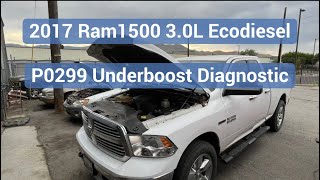
P0299 on a Ram 1500 EcoDiesel most often means there's a boost leak from a cracked intercooler hose, a failing EGR cooler, or a faulty turbo actuator. Check for audible hissing, coolant loss, or soot-clogged sensors first before suspecting the turbo itself. A completely clogged MAP sensor is a very common and easy-to-check cause.
- P0299 on the Ram 1500 EcoDiesel is a serious code that causes limp mode and requires prompt attention.
- Before assuming the expensive turbo has failed, thoroughly investigate more common and cheaper causes: boost leaks, the EGR cooler, the turbo actuator, and the MAP sensor.
- Check for coolant loss. A dropping coolant level with no visible leaks is a strong indicator that the EGR cooler has failed, a known issue with these engines.
- A smoke test is the most reliable way to find hard-to-see cracks in the intake hoses and intercooler.
- Check for open recalls or TSBs, as a simple software update from the dealer may resolve the problem.
What's Unique About the 2014-2020 Ram 1500

The 3.0L EcoDiesel engine in the Ram 1500 is particularly susceptible to P0299 due to its complex emissions systems. Unlike many other trucks where a boost leak is the primary culprit, on the EcoDiesel, a failing EGR cooler is a very common cause. These coolers can crack internally, leaking coolant and exhaust, which disrupts boost pressure and can even melt the plastic intake manifold, causing a massive boost leak and potential fire hazard. Additionally, the variable geometry turbo (VGT) actuator is a known failure point, and software glitches have been significant enough to warrant multiple Technical Service Bulletins (TSBs) from the manufacturer. [S2018000008, S2218000022, 18]
Diagnostic Flowchart

Tap your situation to follow the diagnostic path that matches what you're seeing on this vehicle.
Generation note: This range covers both the fourth-generation Ram 1500 (DS), which used the 'Gen 2' EcoDiesel, and the fifth-generation (DT), which introduced the updated 'Gen 3' EcoDiesel in 2020. While the fundamental causes are similar, TSBs and some parts (like the EGR cooler and turbo) may differ between generations. The underlying issues with boost leaks, EGR problems, and actuator failures are common to both. The Jeep Grand Cherokee (WK2) with the same engine shares these exact P0299 problems.
Symptoms You May Notice

- Significant loss of engine power and sluggish acceleration.
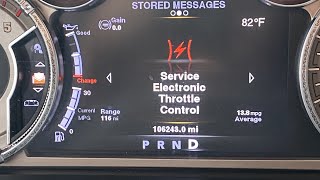
- Check Engine Light and/or 'Service Electronic Throttle Control' warning on the dash.
- Audible hissing or whooshing sound from the engine bay under acceleration, indicating a boost leak.
- Engine surge or inconsistent power delivery. [S2018000008]
- Noticeable drop in fuel economy.
- Smell of exhaust fumes or sweet-smelling coolant in the cabin or engine bay.
- Unexplained loss of engine coolant (if caused by EGR cooler).
- White smoke/steam from the exhaust, indicating coolant is being burned.
- Black smoke from the exhaust under acceleration, indicating a rich fuel condition from a boost leak.
- Replacing the turbocharger when the actual fault is a much cheaper component like a cracked hose, a bad actuator, a loose clamp, a clogged MAP sensor, or a leaking EGR cooler. A full diagnostic should always be performed before condemning an expensive part like the turbo.
Most Likely Causes

- Leaking or Cracked EGR Cooler 🔴 High Probability The EGR cooler on the EcoDiesel is a known weak point and subject to recalls (e.g., VB1, X78, V08). It can crack internally due to thermal fatigue, leaking exhaust pressure and/or coolant directly into the intake tract. This causes a loss of boost and can melt the plastic intake manifold.
How to confirm: Check for signs of coolant loss without external leaks. Smell for raw exhaust or sweet coolant fumes under the hood. A technician can perform a pressure test on the cooling system and inspect the intake for signs of coolant, extreme soot, or melting. A melted MAP sensor tip is a strong indicator.
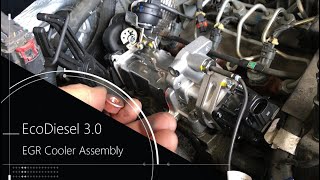
Typical fix: Replacement of the EGR cooler and valve assembly. If the intake manifold is melted, it must also be replaced. 🎬 See this walkthrough for replacing the EGR cooler and valve. It's critical to check for open recalls with a dealer.
Est. part cost: $400-$800 for the cooler, plus potential intake manifold cost ($300+). - Boost Leak (Cracked Hoses/Pipes/Seals) 🔴 High Probability The rubber and plastic components of the charge air system degrade from heat and oil vapor. A common failure point is the plastic turbo resonator cracking or a nicked O-ring on the intercooler tube outlet. A pop followed by a hissing noise is a classic sign of a hose blowing off or splitting.
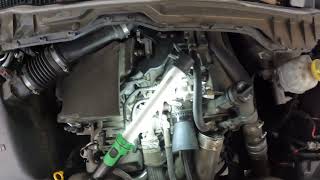
How to confirm: Visually inspect all intake piping from the turbo to the engine for cracks, loose clamps, or oil residue indicating a leak. A smoke test is the most effective way to pinpoint small, hard-to-see leaks. 🎬 Watch: How to inspect your EcoDiesel for common boost leaks.
Typical fix: Replace the specific cracked hose, damaged O-ring (Mopar P/N 68193520AA), or tighten the loose clamp. Many owners upgrade the plastic resonator to a more durable aftermarket metal pipe.
Est. part cost: $20 (O-ring) - $300 (full hose assembly). - Soot-Clogged MAP Sensor 🔴 High Probability The MAP (Manifold Absolute Pressure) sensor, which measures boost, is located post-EGR and can become completely clogged with soot. A clogged sensor cannot read boost pressure accurately, leading the PCM to believe there is an underboost condition even if there isn't one.
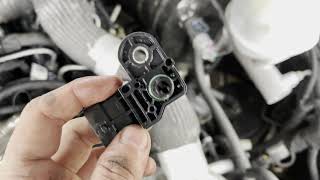
How to confirm: Remove the MAP sensor (T40 Torx bit) from the intake manifold and visually inspect it. If the sensing element is caked in hard soot to the point it's blocked, it needs cleaning or replacement. 🎬 Watch: How to properly clean your EcoDiesel MAP sensor.
Typical fix: Carefully clean the MAP sensor with a dedicated sensor cleaner (do not use brake cleaner). If cleaning doesn't resolve the issue, replace the sensor (Mopar P/N 68211211AA or equivalent).
Est. part cost: $0 (cleaning) - $100 (new sensor). - Failed Turbocharger Actuator 🟡 Medium Probability The electronic actuator controls the variable geometry vanes inside the turbo. These actuators can fail electronically or the internal gears can wear out, causing them to lose control of the vanes and fail to build boost correctly.
How to confirm: A capable scan tool can command the actuator through its range of motion while monitoring the commanded vs. actual position. If the actual position doesn't match the command, or it moves erratically, the actuator is likely faulty. A grinding or clicking noise from the actuator area after engine shutdown is also a common symptom.
Typical fix: Replace the turbocharger actuator. This part is available separately from the turbo (e.g., Mopar P/N 68211212AA), which is much cheaper than replacing the entire turbo assembly.
Est. part cost: $300-$800 for the actuator vs $2000+ for a full turbo assembly. - Sticking VGT (Variable Geometry Turbo) Vanes ⚪ Low Probability Soot and carbon buildup from the diesel combustion process can cause the delicate vanes inside the turbo's exhaust housing to stick. If they are stuck in the 'open' position, the turbo cannot spool up quickly and create boost at lower RPMs. This is often a consequence of other issues like a failing EGR system.
How to confirm: This is difficult to confirm without removing the turbo. Sometimes, with the actuator removed, the control lever for the vanes can be manually checked for smooth movement. If it's sticky or seized, the turbo needs to be replaced or professionally cleaned.
Typical fix: Replacement of the entire turbocharger assembly. On the Ram 1500, this is a major job that may require cab removal.
Est. part cost: $800-$2000 for the part, plus significant labor.
Rare But Worth Checking
- PCM Software Glitch: Multiple TSBs indicate that software updates are required to fix issues where P0299 is set incorrectly, sometimes after a previous software update or in cold weather. Always check if your vehicle has any open recalls or TSBs related to the PCM. [S2018000008, S2218000022, 18-015-15]
- Restricted Air Filter: A severely clogged engine air filter can starve the turbo for air, preventing it from building the required boost. This is a simple but sometimes overlooked cause.
- Wiring to MAP Sensor: In some cases, a wire leading to the MAP sensor can have high resistance, causing an incorrect signal and triggering P0299 even after the sensor itself is cleaned or replaced.
Diagnosis Steps
- Read all fault codes from the PCM. Note any codes that accompany P0299, as they provide crucial clues (e.g., EGR, fuel injection, MAP sensor codes).
- Perform a visual inspection of the engine bay. Look for obvious signs like disconnected hoses, cracked plastic pipes (especially the turbo resonator), loose clamps, or black soot streaks indicating a leak.
- Check the engine coolant level. If it is low without any visible external leaks, suspect a failed EGR cooler. Also check the oil level; a level that is too high could indicate coolant has leaked into the oil pan.
- Remove and inspect the MAP sensor (T40 Torx). It is located on the top rear of the engine. If it's covered in soot, clean it thoroughly with MAF/sensor cleaner and reinstall. This is a very common fix.
- If no obvious leaks are found, perform a smoke test on the entire charge air system to find hidden leaks in hoses, the intercooler, or gaskets.
- Using a capable scan tool, monitor the 'Commanded VGT Position' vs. 'Actual VGT Position' PIDs while driving. If the actual position does not follow the commanded position, suspect a faulty actuator or sticking vanes.
- If an EGR cooler leak is suspected, a technician can pressure test the cooling system and use a borescope to inspect the intake manifold for signs of coolant or melting.
Parts You'll Likely Need
- EGR Cooler Assembly — A very common failure point on the 3.0L EcoDiesel that directly causes P0299 by leaking exhaust pressure and/or coolant.
Trusted brands: Mopar
OEM price range: $600-$900
Aftermarket price range: $350-$600 - Charge Air Cooler Hose (Intercooler Pipe) — These rubber/silicone hoses are known to split or crack, creating a significant boost leak.
Trusted brands: Mopar, Mishimoto, Gates
OEM price range: $100-$200
Aftermarket price range: $50-$150 - Turbocharger Actuator — The electronic actuator is a frequent point of failure, causing loss of boost control. It's often a more likely culprit than the turbo itself.
Trusted brands: Garrett, Holset
OEM price range: $400-$800
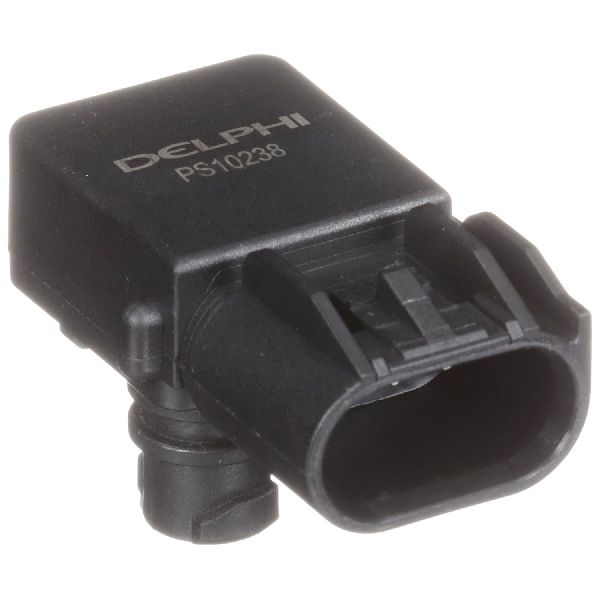
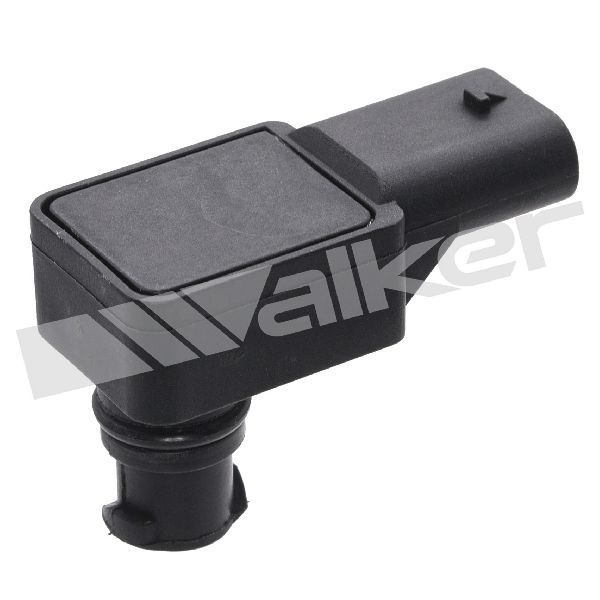
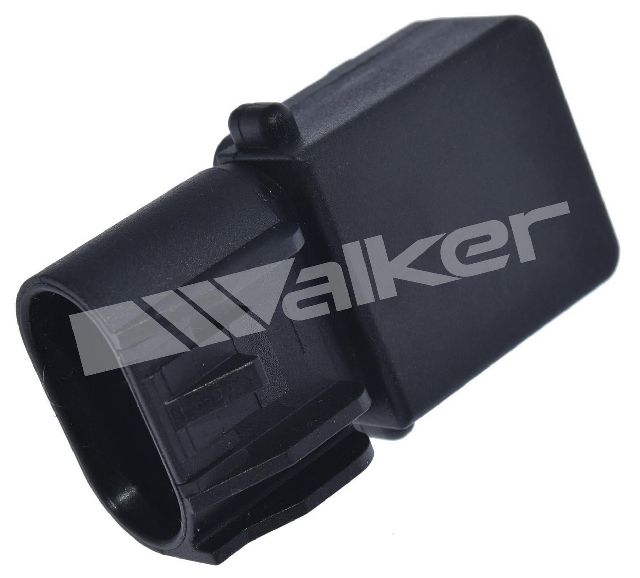
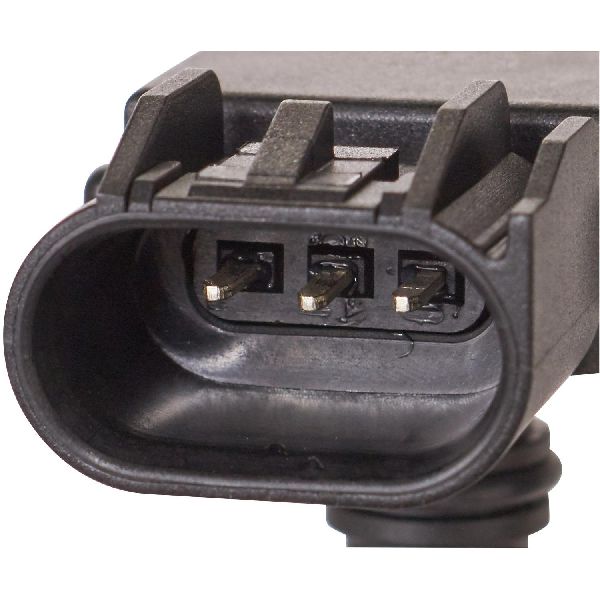
Aftermarket price range: $250-$500 - MAP Sensor (Boost Pressure Sensor) — Frequently gets clogged with soot, leading to incorrect boost readings. It's an inexpensive part to replace as part of diagnosis.
Trusted brands: Bosch, Mopar
OEM price range: $70-$120
Aftermarket price range: $30-$80
Related Codes That Often Appear With This One
- P026D — Fuel Injection Quantity Higher Than Expected. This code often appears with P0299, as noted in TSB #S2218000022, suggesting the engine is trying to compensate for the lack of air (from the underboost condition) by adjusting fuel, leading to a related fault. [S2218000022, 19]
- P0402 — EGR Flow Excessive Detected. This code, mentioned in TSB #18-069-20 REV. A, points directly to a problem in the EGR system, which is a common root cause for P0299 on these engines. [18-069-20 REV. A]
- P20EE — SCR NOx Catalyst Efficiency Below Threshold. This code, seen in TSB #18-068-20 REV. B, indicates an issue with the aftertreatment system, which can be related to the incorrect air/fuel mixture caused by the underboost condition. [18-068-20 REV. B]
Technical Service Bulletins (TSBs) & Recalls
- S2218000022: Addresses low power/lag with P0299 and/or P026D, often fixed with a PCM software update.
- S2018000008: Relates to engine surge and P0299 after a previous PCM software update.
- 18-069-20 REV. A & 18-068-20 REV. B: Lists P0299 alongside various emissions system codes, pointing to interrelated system faults.
- 18-015-15: Notes that P0299 can appear specifically in cold weather (below 32°F/0°C), pointing to a potential software calibration issue.
- VB1 (NHTSA 19V-757): A safety recall for EGR cooler cracking that can cause P0299 and, in severe cases, a melted intake manifold and vehicle fire.
Platform-Specific Known Issues
- EGR Cooler Failure Leading to Melted Intake: The most severe and unique cause for P0299 on this platform. A cracked EGR cooler leaks hot vaporized coolant into the plastic intake manifold, which can melt it, causing a massive boost leak and a fire risk. This was the subject of major safety recall VB1.
- Cracked Intercooler Resonator: The plastic resonator on the charge air pipe is a known weak point that can crack from heat and vibration, causing a boost leak. Many owners opt for an aftermarket metal replacement pipe for a permanent fix.
- MAP Sensor Clogging: Due to the EGR system routing, the MAP sensor is highly prone to becoming completely blocked with soot, making it unable to read boost and falsely triggering P0299. Cleaning is a common and often successful first step.
Mechanic-Grade Diagnostic Values
- VGT Actuator Commanded vs. Actual Position — expected: The 'Variable Geometry Turbo A Position' PID should closely mirror the 'Commanded Variable Geometry Turbo A Position' PID during acceleration and deceleration. Both should sweep through a wide range (e.g., 5% to 95%).. Failure: If the actual position is stuck, limited in range (e.g., only moves between 5-45%), or reads zero while commanded position changes, the actuator or its position sensor is faulty.
- Target Boost vs. Actual Boost Pressure — expected: During a wide-open throttle pull, the actual boost pressure should track closely with the target boost pressure.. Failure: If the actual boost is consistently more than 4-5 PSI below the target boost for several seconds, it confirms an underboost condition and will set the P0299 code.
Scan Tool Commands That Help
- AlphaOBD, wiTECH, or other capable bidirectional scanner: VGT Actuator Test / Turbocharger Learn — Use this function to command the VGT actuator through its full range of motion while the engine is off. This allows you to visually and audibly confirm if the actuator is moving and if the vanes are sweeping smoothly without binding. It's a critical step to differentiate between a failed actuator and mechanically stuck turbo vanes.
- AlphaOBD, wiTECH, or other capable bidirectional scanner: EGR Valve Test — This command allows you to cycle the EGR valve open and closed to check for proper mechanical operation. If the valve is stuck due to soot buildup, it can cause boost pressure to leak, contributing to a P0299 code.
Wiring & Ground Locations
- Engine/Body Ground Straps — A primary ground strap is typically located on the passenger side, connecting the frame/body to the engine block, often near the alternator. Other grounds are located on the inner fender/sidewall near the battery.. Poor grounding can cause erratic sensor readings and communication issues between modules. The ECM relies on a clean ground reference for all its sensors, including the MAP sensor and turbo actuator. Corroded or loose grounds bolted to painted surfaces are a known issue and can lead to a variety of phantom codes, including P0299.
- Turbo Actuator Connector — The 4-pin electrical connector on the VGT turbo actuator itself.. This is the primary connection for power and data to the actuator. A loose or corroded connector will cause a loss of communication (sometimes setting a U010C code) and prevent the actuator from responding to PCM commands, leading directly to an underboost condition.
Real Owner Repair Stories
- EcoDieselRam.com forum user (2015 Ram 1500 EcoDiesel) — P0299 and P026D codes, low power.
✅ What actually fixed it A dealer technician found a nicked O-ring on the outlet intercooler tube that was allowing boost to leak by. Replacing the intercooler tube (which included the new O-ring) resolved the codes. - RamForum.com user (2014 Ram 1500 EcoDiesel) — P0299 code, 'Service Electronic Throttle Control' light, no turbo boost.
❌ Tried (didn't work) Initial assumption was a failed turbo.
✅ What actually fixed it The issue was a loose hose clamp for the turbo outlet hose. After tightening the clamp and clearing codes, the issue was resolved for a cost of $150 at the dealer. - YouTube video creator (2014 Ram EcoDiesel) — P0299 code, sudden loss of power, stalling under load.
❌ Tried (didn't work) Cleaning the EGR valve and MAP sensor, which were both heavily caked in soot but did not solve the root problem.
✅ What actually fixed it The charge air hose clamp connecting to the intercooler had come completely loose, causing the hose to disconnect. Re-attaching the hose and tightening the clamp restored all boost. - EcoDieselRam.com forum user (2015 Ram 1500 EcoDiesel, 119,900 miles) — P0299, low coolant, oil level too high, limp mode, engine sounds 'stuffed up'.
❌ Tried (didn't work) Replacing the completely clogged MAP sensor did not fix the issue.
✅ What actually fixed it The root cause was a leaking EGR cooler, which is covered under an extended warranty. The dealer replaced the EGR cooler to fix the problem. The high oil level and low coolant were direct symptoms of the internal leak.
"I Checked Everything" — The Actual Cause
- In some cases, a standard boost leak smoke test may not reveal a crack in the exhaust manifold or a leaking EGR cooler. If a smoke test on the charge air side passes, but you can smell exhaust fumes in the engine bay, the leak is likely on the hot side of the turbo or in the EGR system. A smoke test introduced into the exhaust system (with the tailpipe blocked) can help find these leaks.
OEM Part Supersession History
68239570AA, 68239570AB→68239570AC, 68445601AA, 68509351AA— The original EGR coolers were prone to internal cracking and leaking. Later revisions feature improved internal construction to better withstand thermal stress.
Heads up: Always verify the correct part number with a VIN, as there are slight variations. Aftermarket options from brands like Bullet Proof Diesel also exist, claiming superior designs to prevent future failures.
Model Year Variations Within This Range
- 2020: The 2020 model year marked the introduction of the 'Gen 3' 3.0L EcoDiesel in the Ram 1500. While many P0299 causes are similar, the turbocharger, EGR system, and intake manifold were redesigned. Part numbers for these components are generally not interchangeable with the 2014-2019 'Gen 2' engines.
- 2014-2015: TSB #18-015-15 specifically addresses P0299 being set in ambient temperatures below 32°F (0°C) on early models, indicating a software sensitivity issue that required a PCM update. [18-015-15]
Helpful Videos
Used OEM Parts in Stock
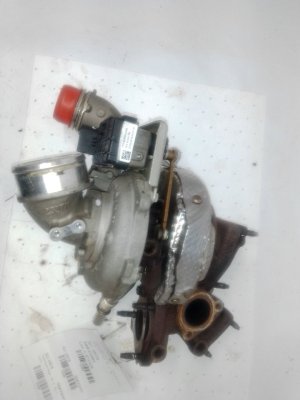

New Aftermarket Parts Available


The information in this article is provided for general reference and educational purposes only. Vehicle specifications, procedures, and part compatibility can vary by production date, trim level, and region. Always consult your vehicle's factory service manual and verify part numbers before purchasing or performing repairs. Safety-critical components such as airbags, seat belts, and braking systems should be installed by a qualified professional.
- Ram 1500:
- 🎬 Helpful Videos
- 🛍️ Shop This Part
- What's Unique About the 2014-2020 Ram 1500
- Diagnostic Flowchart
- Symptoms You May Notice
- Most Likely Causes
- Rare But Worth Checking
- Diagnosis Steps
- Parts You'll Likely Need
- Related Codes That Often Appear With This One
- Technical Service Bulletins (TSBs) & Recalls
- Platform-Specific Known Issues
- Mechanic-Grade Diagnostic Values
- Scan Tool Commands That Help
- Wiring & Ground Locations
- Real Owner Repair Stories
- "I Checked Everything" — The Actual Cause
- OEM Part Supersession History
- Model Year Variations Within This Range
- 🎟️ Get 5% Off