

P0299 on 2014-2022 Mercedes Sprinter 2.1L Diesel: Underboost Causes and Fixes
P0299 on a Sprinter with the OM651 engine is most often caused by a leak in the charge air system, typically a cracked hose, a failed plastic turbo resonator, or a bad seal. A faulty vacuum transducer controlling the turbo wastegate is another very common cause. Inspecting hoses is the first step. In many cases, the root cause is contamination of the vacuum lines from a leaking water pump, which requires a more extensive repair.
- P0299 on the Sprinter OM651 almost always points to an air leak or a vacuum control problem, not a failed turbo.
- Always start your diagnosis by visually inspecting all charge air hoses and the plastic turbo resonator for cracks and oil residue.
- A smoke test is the most effective method to find hard-to-see leaks in the charge air system.
- If no air leaks are found, the next most likely culprits are the vacuum transducers that control the turbo wastegates or contamination within the vacuum lines.
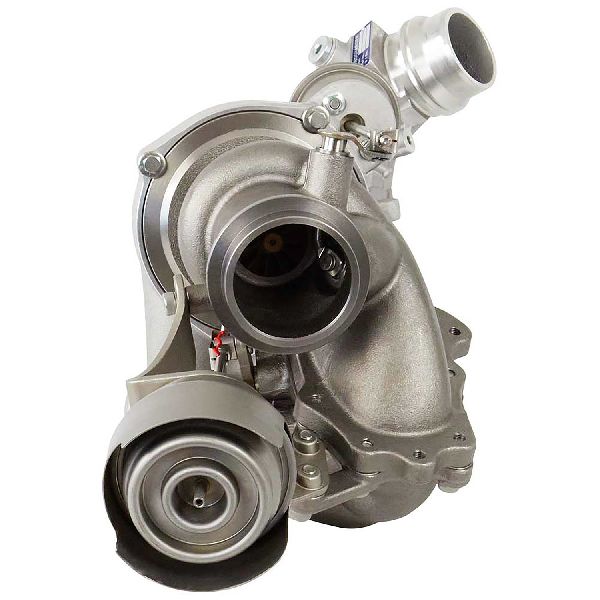
- Do not replace the expensive turbocharger assembly until all other potential causes have been definitively ruled out.
What's Unique About the 2014-2022 Mercedes-Benz Sprinter

The OM651 is a workhorse engine, but its complex bi-turbo system relies on numerous plastic and rubber components that are prone to failure from heat and age. Unlike some simpler turbo systems, the P0299 code on this engine is frequently caused by issues in the vacuum control system that operates the turbo wastegates, or by unique failure points like the plastic turbo resonator. Critically, contamination of the vacuum lines by a leaking water pump (coolant) or vacuum pump (oil) can also lead to this code, a diagnostic path not common on many other vehicles.
Generation note: This range covers the later NCV3 generation (2014-2018) and the VS30 generation (2019-2022). Both used the OM651 engine, and the common causes for P0299 are largely the same. Part numbers for hoses and some components may differ slightly, but the diagnostic approach is identical.
Symptoms You May Notice

- Check Engine Light illuminated.
- Significant loss of engine power, especially when accelerating or climbing hills.
- Vehicle enters 'Limp Mode', often limiting RPMs to below 3000.
- Loud hissing or whistling sound from the engine bay under acceleration.
- Black smoke from the exhaust during acceleration.
- Flashing engine light when trying to accelerate uphill.
- Poor fuel economy.
- Replacing the entire turbocharger assembly when the actual fault is a simple, inexpensive boost leak from a hose or resonator.
- Replacing the turbo actuator when the problem is a vacuum leak in a line or a faulty transducer that controls it.
Most Likely Causes

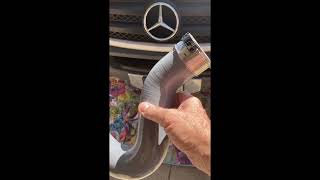
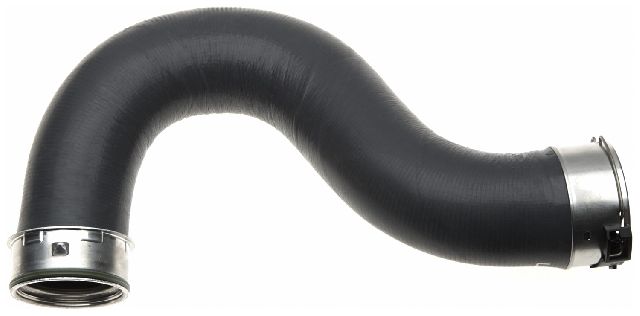
- Leaking/Cracked Charge Air Hoses (Intercooler Hoses) 🔴 High Probability The rubber and plastic hoses become brittle over time due to constant heat cycles and pressure, leading to cracks and splits. The driver-side hose from the intercooler to the intake is a particularly common failure point.
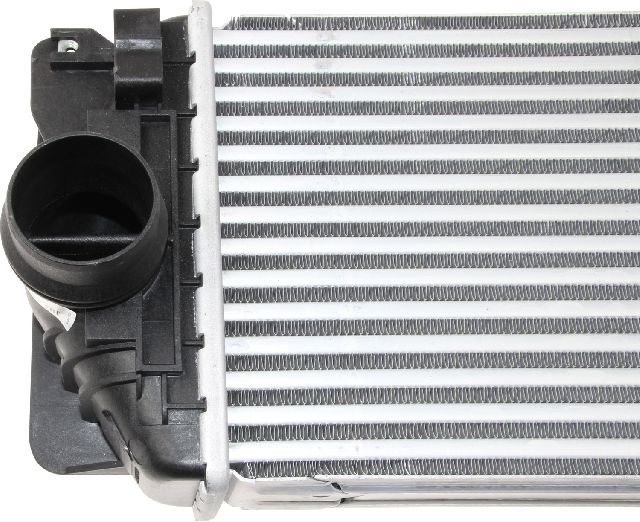
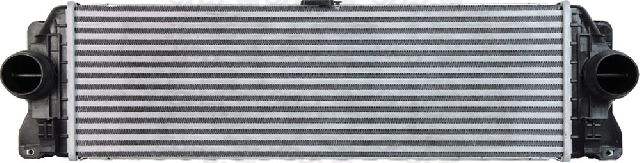
How to confirm: Visually inspect all hoses between the turbos, intercooler, and intake manifold for cracks, swelling, or oily residue which indicates a leak. A smoke test is the most definitive way to find a leak.
Typical fix: Replace the damaged hose and clamps. The left-side hose is often part number A9065282582. 🎬 Watch this step-by-step guide to replacing your intercooler hoses.
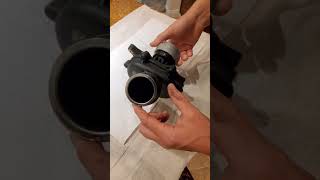
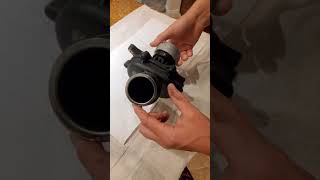
Est. part cost: $60-$250 - Failed Turbo Resonator 🔴 High Probability The original plastic resonator (OEM Part No. A6510900037) is notorious for cracking at the seams or having its seals fail, creating a major boost leak.
How to confirm: Inspect the resonator (a black plastic box connected to the turbo outlet) for oily grime, which is a sign of a leak. The split seam may only open under boost pressure.
Typical fix: Replace the resonator with an OEM part or a more durable aftermarket aluminum 'resonator delete' pipe. Aftermarket versions like the Dorman 917-991 are available, but some users report fitment issues and recommend using a genuine Mercedes O-ring for a better seal.
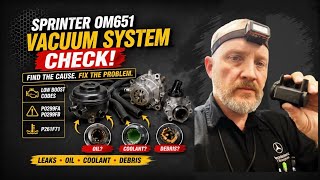
Est. part cost: $50-$180 - Contaminated or Leaking Vacuum System 🔴 High Probability The engine's water pump can leak coolant internally into the vacuum system, or the main vacuum pump can leak oil into it. This debris clogs the vacuum reservoir (Part No. A6510700768) and lines, preventing the transducers from properly controlling the turbos.
How to confirm: Disconnect vacuum lines and inspect for any white, crusty residue (coolant) or engine oil. Remove and shake the black plastic vacuum reservoir; if it rattles from dried debris inside, 🎬 Watch: How to check your vacuum system for contamination and leaks. the system is contaminated and the reservoir must be replaced.
Typical fix: Replace the contaminated vacuum lines, reservoir, and any affected components (transducers, actuators). The source of the contamination (e.g., water pump) must also be replaced to prevent a recurrence.
Est. part cost: $150-$700+ - Faulty Vacuum Transducer/Switchover Valve 🟡 Medium Probability The OM651 uses vacuum-actuated wastegates. The electronic transducers that control this vacuum (Part No. A0091533128) are a known failure point, either by leaking vacuum internally or failing electronically, preventing the wastegates from closing to build boost.
How to confirm: Test the transducer's ability to hold vacuum using a hand-held vacuum pump. A capable scan tool can also be used to actuate the valve and check for response.
Typical fix: Replace the faulty vacuum transducer. There are two, one for each turbo's wastegate control circuit, though one is a more common failure point than the other.
Est. part cost: $40-$100 - Clogged DPF or Exhaust Restriction ⚪ Low Probability High mileage and certain driving cycles can lead to a clogged Diesel Particulate Filter (DPF), creating excessive backpressure that prevents the turbos from spooling correctly.
How to confirm: Use a diagnostic scan tool to check the DPF backpressure sensor readings. High pressure at idle and under load indicates a restriction.
Typical fix: Initiate a forced DPF regeneration using a scan tool. If unsuccessful, the DPF may need professional cleaning or replacement.
Est. part cost: $250-$2500
Rare But Worth Checking
- Faulty Turbocharger Actuator: While less common than leaks, the electronic actuator that controls the turbo's variable geometry can fail or get stuck. This is often a more expensive repair as the actuator may be sold with the turbocharger.
- Blocked Fuel Filter: In some rare cases, a severely blocked fuel filter can cause symptoms similar to an underboost condition, including triggering a P0299 code, by starving the engine of fuel under load. One owner on MBClub UK fixed their P0299 issue simply by replacing the fuel filter.
- Cracked or Leaking Intake Manifold: The plastic intake manifold (Part No. A6510900037) can develop cracks, or the bolts holding it to the engine can snap, causing a boost leak.
- Stuck/Clogged EGR Valve: A stuck or heavily carboned-up EGR valve can disrupt airflow and pressure, leading to an underboost code. One owner on Sprinter-Source.com reported that cleaning their EGR valve resolved the P0299 code.
Diagnosis Steps

- Read all fault codes with a Mercedes-compatible scanner. Note any other codes that appear with P0299, especially those related to the MAF sensor or vacuum system.
- Perform a thorough visual inspection of the entire charge air path. Start at the turbo outlet, check the resonator, all hoses to and from the intercooler (especially the driver's side), and the connection to the intake manifold. Look for obvious cracks, splits, loose clamps, or oily residue.
- If no obvious leaks are found, perform a smoke test on the charge air system. Pressurize the system with smoke-filled air (engine off) to about 15-20 psi and look for smoke escaping.
- Inspect the vacuum system. Check vacuum lines for cracks and contamination (oil or coolant). Remove and shake the vacuum reservoir; if it rattles, it is contaminated and must be replaced along with the source of the leak (likely the water pump).
- Test the vacuum transducers and wastegate actuators with a vacuum pump to ensure they hold vacuum.
- With a scan tool, monitor live data for the boost pressure sensor. Compare the desired (commanded) boost with the actual boost reading during a test drive to confirm the underboost condition.
- Check DPF backpressure readings via the scan tool to rule out an exhaust restriction.
Parts You'll Likely Need

- Charge Air Hose / Intercooler Hose
(OEM #A9065282582 (Left/Driver side))— These are the most common failure points for boost leaks due to material degradation. The driver-side hose is a frequent culprit.
Trusted brands: Mercedes-Benz Genuine, Rein, URO Parts
OEM price range: $150-$300
Aftermarket price range: $60-$150 - Turbo Resonator
(OEM #A6510900037)— The factory plastic resonator is a well-documented weak point that cracks at the seams, causing a significant boost leak.
Related Codes That Often Appear With This One
- P0101 — A Mass Air Flow (MAF) Sensor Performance code can be triggered alongside P0299 because a large, unmetered air leak (boost leak) causes a discrepancy between the air measured by the MAF and the air expected by the ECU.
- P261F71 — This code, 'The output for the recirculation pump 'coolant' has a malfunction', often appears with P0299 if the water pump is leaking coolant into the vacuum system, as this system is shared and affects turbo control.
- P003313, P226100, P012800 — These codes, related to the charge air bypass flap and coolant temperature, are also listed in a Mercedes technical document as being related to vacuum system contamination that also causes P0299.
Technical Service Bulletins (TSBs) & Recalls
- MC-10135729-9999: This is a Mercedes-Benz document hosted by the NHTSA that details troubleshooting for a group of fault codes, including P0299FA and P0299FB. It explicitly links these underboost codes to potential contamination of the vacuum system by either a leaking water pump (coolant) or a leaking vacuum pump (oil). It provides official guidance to replace the water pump, vacuum reservoir, and change-over valves if coolant is found.
Platform-Specific Known Issues
- The plastic turbo resonator is a primary and frequent cause of P0299. Many owners opt for an aluminum 'resonator delete' pipe for a permanent fix.
- Internal coolant leaks from the water pump can contaminate the entire vacuum system, requiring extensive cleaning and parts replacement to restore turbo function.
Mechanic-Grade Diagnostic Values
- Boost Pressure Sensor (MAP) Signal Voltage — expected: Approximately 3.7 V with ignition on, engine off (at atmospheric pressure).. Failure: Voltage should decrease as pressure/vacuum is applied. If the voltage is stuck or does not respond correctly to pressure changes, the sensor may be faulty or clogged with oil.
- Boost Pressure Sensor (MAP) Supply Voltage — expected: 5.0 V on Pin 3 of the sensor connector with ignition on.. Failure: A lack of 5V indicates a wiring or ECU issue, not a sensor failure.
- Turbo Wastegate Vacuum Diaphragm Test — expected: The diaphragm should hold a vacuum of at least -700 mbar without sinking.. Failure: If the applied vacuum level drops, the diaphragm is leaking and the actuator cell must be replaced.
- Engine Vacuum Pump Output — expected: Should pull a steady vacuum of at least 20-25 inHg (inches of mercury) at idle.. Failure: An erratic needle or a low reading (e.g., 5-7 inHg) indicates a failing vacuum pump or a significant leak in the system.
- Vacuum System Smoke Test Pressure — expected: Maximum 1 bar / 14.7 psi.. Failure: Applying pressure higher than this can damage sensitive components within the vacuum system.
Hidden / Shadow Codes Worth Checking
- P0299FA / P0299FB: These are Mercedes-specific sub-codes for P0299, both indicating 'boost pressure of turbocharger 1 is too low'. Their presence strongly points towards issues in the vacuum control system, such as leaking transducers, contaminated lines, or a faulty water pump leaking into the vacuum circuit. (see via These codes are typically visible with Mercedes-specific diagnostic tools like XENTRY or high-end professional scanners (e.g., Launch X431, Autel) with enhanced Mercedes software.)
Scan Tool Commands That Help
- XENTRY / Advanced Scanners: Charge Pressure Control Test / Actuation — To command the turbocharger wastegate actuators to open and close while monitoring the vacuum supplied by the transducers. This helps isolate whether the fault is with the electronic control (transducer) or the mechanical part (actuator/wastegate).
- XENTRY / Advanced Scanners: Charge Air System Adaptation Reset — After replacing major components like the turbocharger, intake manifold, or boost pressure sensors, resetting the learned adaptations can be necessary to ensure the ECU uses the correct baseline values for the new parts.
Wiring & Ground Locations
- Engine-to-Frame Ground Strap — Located near the left-hand (driver side) engine mount, running from the engine block to the chassis frame rail, often below the oil filter area.. Corrosion on this main ground strap increases electrical resistance for the entire engine's electrical system. This can cause erratic voltage for sensors and actuators, including the boost pressure sensor and vacuum transducers, leading to phantom codes like P0299.
- Body Builder Ground Terminals — Two M6 ground points are located under the driver's seat. Another is under the floor on the frame on van models.. While less direct than the main engine ground, poor body grounds can contribute to a host of unpredictable electrical issues that may affect ECU operation and sensor readings.
Real Owner Repair Stories
- The Urban Caravan blog (Mercedes Sprinter with OM651 engine) — Engine light on, limp mode above 40 mph, especially uphill. No revs above 2500-3000 rpm.
❌ Tried (didn't work) Physical check of all visible pipes, including the large red intercooler pipe., Replacing gaskets on the intercooler pipe.
✅ What actually fixed it A faulty turbo vacuum transducer. A mobile specialist diagnosed a vacuum leak and confirmed the transducer was the faulty component using a vacuum tester. - Sprinter-Source.com forum user (Sprinter with OM651) — P0299 code, loss of power.
❌ Tried (didn't work) Initial diagnosis pointed towards common boost leaks.
✅ What actually fixed it Oil from a failing vacuum pump contaminated the entire vacuum system. The fix required replacing the vacuum pump, the brake booster (which had ingested oil), and cleaning out all vacuum lines to restore proper function to the turbo actuators. - YouTube Mechanic (paraphrased from multiple OM651 videos) (Mercedes with OM651 engine) — P0299 and/or mass airflow codes, low power.
❌ Tried (didn't work) Replacing sensors., Checking for obvious hose leaks.
✅ What actually fixed it A cracked intake manifold. The small bolts holding the plastic manifold to the engine block had snapped due to vibration, creating an air leak at the manifold-to-head gasket surface. This is often missed by a smoke test if the crack only opens under specific engine load/vibration.
"I Checked Everything" — The Actual Cause
- A smoke test on the charge air (boost) side passed, but the actual cause was a leak in the separate vacuum system controlling the turbo wastegates. This can be due to a bad vacuum pump, contaminated lines, or a leaking vacuum transducer, none of which would be found by pressurizing the intercooler pipes.
- The charge air system passed a smoke test, but the plastic intake manifold had a hairline crack or broken mounting bolts that only leaked air under the vibration and torque of a running engine, causing a P0299 that was not apparent during a static, engine-off test.
OEM Part Supersession History
Not specified→A0091533128— This is the current, commonly available part number for the vacuum transducer/pressure converter valve used for turbo control on the OM651 engine.A6510900037→A6510903037— The intake manifold part number has been superseded. The new part may have design improvements to address issues like cracking or snapped bolts seen in earlier versions.
Heads up: When replacing, it is critical to ensure all associated gaskets and bolts are also replaced to prevent leaks.
Diagnostic Flowchart
Real Owner Stories
Aggregated from forums and TSBs cited above. Mileages and costs reflect what owners reported in those sources.
Mercedes-Benz Sprinter 2.1L OM651
Symptoms: Experienced a P0299 underboost condition.
What fixed it: Diagnosed the issue by checking the turbo resonator, charge air hoses, and a stuck EGR valve as potential causes.
Source hint: Sprinter-Source.com: Help diagnose the P0299 underboost please
Mercedes-Benz Sprinter 2.1L OM651
Symptoms: Experienced a water pump failure that triggered a host of codes, including P0299.
What fixed it: Identified that the water pump had failed and contaminated the vacuum system with coolant, requiring replacement of the water pump and affected vacuum components.
Source hint: Sprinter-Source.com: Infamous 2.1 Sprinter Water pump failure and the related joys!
2015 Mercedes-Benz GLK250 Bluetec
Symptoms: Triggered error codes P0101 and P0299 simultaneously.
What fixed it: Replaced a cracked intercooler charge hose (driver-side hose, part number A2045280000).
Source hint: MBWorld.org: 2015 GLK250 Error Code P0101 and P0299
Mercedes-Benz Sprinter 2.1L OM651
Symptoms: Dealt with a persistent P0299 underboost mystery where previous mechanics incorrectly suspected the turbocharger itself had failed.
What fixed it: A specialist quickly identified and repaired a vacuum leak, restoring proper turbo function.
Source hint: The Urban Caravan: The P0299 code underboost mystery solved!
Related OBD-II Codes
Frequently Asked Questions
Does TSB MC-10135729-9999 apply to my Sprinter's P0299 code?
Why do people recommend an aluminum resonator delete pipe for the OM651?
How can a water pump failure cause a turbo underboost code on my Sprinter?
Which charge air hose is most likely to fail on the 2.1L Sprinter?
How do I check if my vacuum reservoir (Part No. A6510700768) is contaminated?
Are there aftermarket replacements for the factory turbo resonator?
Helpful Videos

We Have This Part in Stock



The information in this article is provided for general reference and educational purposes only. Vehicle specifications, procedures, and part compatibility can vary by production date, trim level, and region. Always consult your vehicle's factory service manual and verify part numbers before purchasing or performing repairs. Safety-critical components such as airbags, seat belts, and braking systems should be installed by a qualified professional.
- Mercedes-Benz Sprinter:
- 🎬 Helpful Videos
- 🛍️ Shop This Part
- What's Unique About the 2014-2022 Mercedes-Benz Sprinter
- Symptoms You May Notice
- Most Likely Causes
- Rare But Worth Checking
- Diagnosis Steps
- Parts You'll Likely Need
- Related Codes That Often Appear With This One
- Technical Service Bulletins (TSBs) & Recalls
- Platform-Specific Known Issues
- Mechanic-Grade Diagnostic Values
- Hidden / Shadow Codes Worth Checking
- Scan Tool Commands That Help
- Wiring & Ground Locations
- Real Owner Repair Stories
- "I Checked Everything" — The Actual Cause
- OEM Part Supersession History
- Diagnostic Flowchart
- Real Owner Stories
- Mercedes-Benz Sprinter 2.1L OM651
- Mercedes-Benz Sprinter 2.1L OM651
- 2015 Mercedes-Benz GLK250 Bluetec
- Mercedes-Benz Sprinter 2.1L OM651
- Related OBD-II Codes
- Frequently Asked Questions
- 🎟️ Get 5% Off