

P0299 on 2012-2021 Mazda Mazda6 SKYACTIV-D 2.2L: Turbo Underboost Causes and Fixes
On the Mazda 2.2L SKYACTIV-D, P0299 is most often caused by a failure in the complex twin-turbo assembly, specifically a broken internal changeover/bypass valve flap or a faulty control solenoid. However, the ultimate root cause is frequently traced back to failing injector seals that contaminate the oil, leading to a clogged oil pickup strainer and subsequent oil starvation of the turbochargers. Expect a diagnostic-heavy repair that must address the root cause, not just the turbo.
- P0299 on this engine is rarely a simple fix and often points to a serious underlying mechanical issue.
- The health of the engine oil is critical. Leaking injector seals are a known issue that contaminates the oil, leading to a cascade of failures including P0299.
- Before replacing an expensive turbocharger, it is essential to diagnose the root cause. Check for a clogged oil pickup strainer, faulty control solenoids, or a broken internal turbo valve.
- If the oil pickup strainer is clogged with sludge, you MUST replace the injector seals and thoroughly clean the oiling system, or the new turbo will also fail.
What's Unique About the 2012-2021 Mazda Mazda6

This isn't a simple boost leak issue. The SKYACTIV-D 2.2L is a sequential twin-turbo engine with known failure points that directly cause P0299. A very common and critical problem is the failure of copper injector seals, which allows combustion gases to enter the crankcase and carbonize the engine oil, turning it into thick sludge. This sludge clogs the oil pump pickup strainer, starving the turbochargers of lubrication and causing catastrophic failure. This oil starvation can also lead to worn exhaust camshafts, which shed metal particles that further damage the turbo. Additionally, mechanical failure of the turbocharger's internal changeover valve is a frequent and direct culprit for the low-RPM underboost condition that sets P0299.
Symptoms You May Notice
- Significant lack of power, especially below 3,000 RPM.
- Check Engine Light is on.
- Vehicle may enter 'limp mode' or reduced power mode.
- Multiple, seemingly unrelated warning lights on the dashboard, such as 'SCBS', 'DSC', or 'TPMS', triggered by the ECU in response to the engine fault.
- Unusual hissing, whining, or rattling noises from the engine bay.
- Engine struggles to rev or feels sluggish on acceleration.
- In some cases, a throaty or loud intake sound if a boost pipe has come loose.
- Replacing only the turbocharger without addressing the underlying oil contamination from leaking injector seals. The new turbo will fail quickly.
- Replacing the MAP sensor. While possible for it to fail, it is far more likely that the sensor is accurately reporting a real underboost problem.
- Cleaning only the oil pickup strainer without replacing the injector seals. The strainer will simply clog again in a short period.
Most Likely Causes


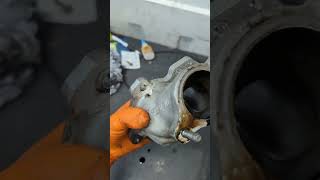
- Failed Turbocharger Changeover/Bypass Valve 🔴 High Probability The valve flap inside the turbo assembly that directs exhaust gas flow between the small and large turbos is known to break off its actuator arm. This is a very common failure. The arm moves, but the flap itself is detached and stuck, preventing the small turbo from getting enough exhaust flow to build boost at low RPMs.
How to confirm: A visual inspection is required, which involves removing intake piping to see inside the turbo housing. Using a vacuum pump on the actuator will show the arm moving, but the internal flap will remain stationary or can be seen as broken. This is a well-documented failure shown in multiple repair videos.
Typical fix: Replace the broken valve assembly. Repair kits are available that allow replacement of just the failed valve components without replacing the entire turbocharger. The repair involves removing the valve assembly from the turbo, replacing the broken flap and arm, and reinstalling.
Est. part cost: $50-$150 for a repair kit, $1500+ for a full turbo assembly. - Leaking Fuel Injector Seals 🔴 High Probability This is a well-documented and critical failure point on early SKYACTIV-D engines. The original copper injector seals fail, allowing combustion gases to blow by into the valve cover area. This process, known as 'blow-by', carbonizes the engine oil, turning it into a thick, gritty sludge.
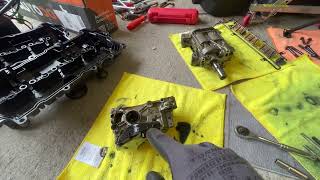
How to confirm: Remove the oil filler cap and inspect for a strong smell of exhaust fumes or visible black soot. A definitive check is to drop the oil pan and inspect the oil pump pickup strainer for clogging with thick, black sludge. This is often diagnosed after a turbo has already failed from oil starvation.
Typical fix: Replace all four injector seals with the updated, more durable parts (often referred to as 'silver' washers instead of the original copper). The oil pan must be removed and the oil pickup strainer must be thoroughly cleaned or, more advisably, replaced. The oil pump itself should be disassembled and cleaned. Multiple engine oil flushes are required to remove all contaminated oil.
Est. part cost: $50-$100 for seals and gaskets. The labor is intensive. - Failed Turbocharger due to Oil Starvation 🟡 Medium Probability This is a direct consequence of leaking injector seals. The sludgy oil clogs the oil pickup strainer (Part No. SH01-14-240 🎬 Watch: How to inspect and clean a clogged oil strainer), starving the engine and turbochargers of lubrication. The turbo bearings are often the first components to fail due to their high speed and reliance on clean oil, leading to excessive shaft play and an inability to build boost.
How to confirm: After removing the intake pipe to the turbo, check the turbo shaft for excessive radial (side-to-side) or axial (in-and-out) play. Any noticeable play indicates bearing failure. Metal shavings from worn camshaft lobes, another result of oil starvation, can also be found in the oil and turbo.
Typical fix: Replace the entire turbocharger assembly. It is absolutely critical to also address the root cause (leaking injector seals and clogged oil strainer) or the new turbo will fail immediately.
Est. part cost: $1200-$2500+ for the turbo, plus costs for addressing the root cause. - Faulty Turbo Control Solenoid Valve 🟡 Medium Probability The vacuum solenoid that controls the turbocharger's actuator can fail electronically or become clogged. This prevents the actuator from moving the changeover valve or wastegate correctly, leading to incorrect boost levels.
How to confirm: A mechanic can use a scan tool to command the solenoid on and off while monitoring vacuum at the actuator. Testing for correct power, ground, and vacuum supply to the solenoid is also necessary. In one documented case, a mechanic confirmed sufficient vacuum was supplied to the solenoid, but the solenoid itself was not actuating the turbo valve, confirming its failure.
Typical fix: Replace the faulty regulating solenoid valve. The part is often located in a bank of similar solenoids near the turbo.
Est. part cost: $80-$200. An example part number is K047-18-740. - Boost/Vacuum Leak ⚪ Low Probability While less common than the major mechanical issues, leaks in the vacuum lines controlling the turbo actuators or the charge air pipes can still occur. A recall (SSP AF069A) was issued in 2016 for inadequate clips on the turbo outlet pipe which could lead to boost loss.
How to confirm: Perform a visual inspection of all intake hoses and vacuum lines from the air filter to the intake manifold. A smoke test can be performed to pressurize the system and reveal leaks from cracked hoses, loose clamps, or a damaged intercooler. A vacuum gauge can be used to trace leaks in the control system.
Typical fix: Replace the cracked hose, tighten the loose clamp, or replace the damaged intercooler. Ensure updated hose clamps are used if subject to the recall.
Est. part cost: $20-$400 depending on the part.
Rare But Worth Checking
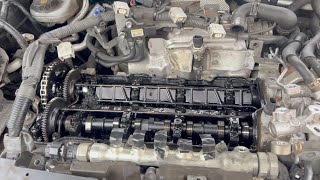
- Worn Exhaust Camshaft: A known, severe consequence of the oil contamination issue. Metal particles from worn camshaft lobes travel downstream and destroy the turbocharger bearings. A Reddit user noted this specific failure chain, which is corroborated by specialists. If the turbo is being replaced due to oil starvation, the camshaft MUST be inspected for wear.
- Clogged Diesel Particulate Filter (DPF) or Exhaust Restriction: If the exhaust cannot flow freely, the turbocharger cannot spin up effectively. While not the most common cause for P0299, a severely clogged DPF can contribute to a range of performance issues and is a common problem on these engines, especially with city driving.
Diagnosis Steps
- Scan for all fault codes. Pay close attention if oil pressure codes (P055F, P06DE) are present, as this points towards the critical injector seal and oil strainer issue.
- Using a scan tool, monitor live data for Desired vs. Actual Boost Pressure (PIDs: MAP_DSD and MAP). Confirm that actual boost is lagging significantly behind desired boost, especially at low RPMs.
- Perform a thorough visual inspection of all intake piping and vacuum lines for obvious leaks, cracks, or loose connections. Check for the updated hose clamps from the 2016 recall.
- Inspect the turbocharger control system. Use a vacuum pump to test the changeover valve actuator's mechanical movement while visually inspecting the internal flap for corresponding movement. Test the control solenoids for proper operation.
- Remove the upper intake hose to the turbocharger. Carefully check the turbo's compressor wheel for damage and check the shaft for any radial or axial play. Any noticeable movement is a sign of failure.
- If turbo failure or oil pressure codes are present, drop the oil pan. Inspect the oil pickup strainer (Part No. SH01-14-240) for sludge and clogging. This is a mandatory step.
- If the oil strainer is clogged, remove the valve cover to replace the injector seals and inspect the exhaust camshaft lobes for scoring or wear.
Parts You'll Likely Need

- Turbocharger Assembly
(OEM #SH01-13-700)— Often fails due to oil starvation from clogged oil pickup or mechanical failure of the internal changeover valve.
Trusted brands: Mazda OE
OEM price range: $1800-$2500
Aftermarket price range: $1000-$1600 (Remanufactured) - Fuel Injector Seal Kit
(OEM #SH01-13-H51)— This is the root cause of oil contamination that leads to most major failures on this engine. The seals fail and allow combustion gas to create sludge in the oil.
Trusted brands: Mazda OE
OEM price range: $40-$60
Aftermarket price range: $20-$40 - Engine Oil Pickup Strainer
(OEM #SH0114240)— Gets clogged with carbon sludge as a result of failed injector seals, leading to oil starvation. Must be cleaned or replaced during any major engine or turbo repair.
Trusted brands: Mazda OE
OEM price range: $50-$80
Aftermarket price range: $30-$60 - Turbocharger Regulating Solenoid Valve — This solenoid controls the vacuum sent to the turbo actuator. Its failure can prevent the turbo from adjusting boost correctly.
Trusted brands: Mazda OE, Denso
OEM price range: $150-$250
Aftermarket price range: $80-$150
Related Codes That Often Appear With This One
- P2263 — Turbo/Super Charger Boost System Performance. This is a more general turbo performance code that often appears with P0299 when the system is not behaving as expected, sometimes pointing towards a vacuum line or control issue.
- P0048 — Turbo/Super Charger Boost Control 'A' Circuit High. This code points specifically to an electrical or control problem with the boost control solenoid, which can be the root cause of the P0299 underboost.
- P055F / P06DE / P0524 — Engine Oil Pressure Sensor/Switch Circuit Low / Oil Pressure Out of Range. These codes indicate low oil pressure, which strongly points to a clogged oil pickup strainer caused by leaking injector seals, the primary root cause of many P0299 failures on this engine.
Platform-Specific Known Issues
- Widespread failure of copper injector seals leads to oil contamination, sludge, clogged oil pickup strainer, and subsequent oil starvation of the turbocharger and camshafts.
- The changeover valve flap inside the twin-turbo assembly is known to mechanically break, causing a complete loss of low-end boost.
- Worn exhaust camshafts, a secondary effect of oil starvation, can shed metal that further damages the turbocharger.
Mechanic-Grade Diagnostic Values
- Brake Booster Pressure Sensor (Live Data) — expected: Should drop to ~7.6 kPa at idle with a healthy vacuum system.. Failure: Stagnating at a higher value (e.g., 15.7 kPa or 26 kPa) indicates a vacuum leak or a faulty vacuum pump.
- Turbo Control Solenoid Coil Resistance — expected: Approximately 30-40 Ohms. One source for a similar Mazda solenoid suggests ~37 Ohms.. Failure: Significantly higher or lower resistance, or an open circuit, indicates a failed solenoid.
- PCM DTC Trigger Conditions — expected: N/A. Failure: Code P0299 sets if actual boost is lower than target boost for a continuous 7 seconds while engine speed is between 1,750-5,000 RPM and fuel injection is 25 mm3/stroke or more.
Scan Tool Commands That Help
- M-MDS (Mazda Modular Diagnostic System) or similar (FORScan): PID Monitoring: MAP_DSD and MAP — During a test drive, monitor both the desired (MAP_DSD) and actual (MAP) manifold absolute pressure. The PCM looks for a continuous deviation between these two values to set the fault. A large, persistent gap confirms the underboost condition is real.
- M-MDS (Mazda Modular Diagnostic System) or similar (FORScan): PID Monitoring: Brake Booster Pressure Sensor — Use this PID at idle to quickly assess the health of the entire vacuum system. A reading that does not drop to the target (~7.6 kPa) points to a vacuum supply issue affecting the turbo controls.
Wiring & Ground Locations
- Engine Bay Ground Points — Key grounds are located on the passenger side motor mount, on top of and on the front of the transmission case, and on the driver's side fender area connected to the negative battery terminal.. Poor ground connections for the PCM or the turbo control solenoids can cause erratic behavior and incorrect readings, potentially leading to an underboost condition or a false P0299 code.
- Turbo Control Solenoid Connector — The three control solenoids are located in a bank on the gearbox side of the engine.. This is the primary electrical connection to test for power, ground, and signal when diagnosing a faulty control solenoid as the cause of P0299.
Real Owner Repair Stories
- YouTube channel - Unlogged (Mazda 2.2 SKYACTIV-D, unknown year/mileage) — Engine management light on, P0299 fault code, no low-end boost, then a sudden surge of power.
❌ Tried (didn't work) Initial checks of vacuum supply and solenoid operation were performed to rule them out.
✅ What actually fixed it The technician removed the intake pipe from the high-pressure side of the turbo and visually confirmed the internal bypass/changeover valve flap was broken and missing from its actuator arm. A repair kit was used to replace the valve assembly, which resolved the underboost condition.
OEM Part Supersession History
SH01-13-700, SH01-13-700A→SH01-13-700B, SH01-13-700C, SH01-13-700D, SH01-13-700E— Progressive revisions to the twin-turbocharger assembly to improve reliability and address failure points like the changeover valve.
Heads up: Later revisions are generally backwards compatible and preferred for replacement.Original 'copper' injector seals→Revised 'silver' type injector seals (Part number SH01-13-H51 is for the washer/seal)— The original copper seals were prone to failure, leading to combustion blow-by, oil contamination, and the cascade of related engine problems (clogged oil strainer, turbo failure). The revised seals offer improved durability.
Model Year Variations Within This Range
- 2012-2021: The SKYACTIV-D 2.2L was offered in two power levels: a standard version with ~150 hp (110kW) and a high-power version with ~175 hp (129kW). These two versions are mechanically identical; the power difference comes from the factory ECU tuning only. This means the physical failure points and repairs for P0299 are the same for both.
Diagnostic Flowchart
Other Known Issues on This Vehicle
Issues unrelated to this code that are worth knowing about as an owner of this generation:
- Leaking Injector Seals & Oil Contamination 🔴 High — Very common on 2012-2017 models. Failure of original copper seals leads to oil sludging, clogged oil pickup, and potential engine/turbo failure.
- Exhaust Camshaft Lobe Wear 🔴 High — Common on 2012-2018 models, often a direct result of oil starvation caused by leaking injector seals. Worn lobes shed metal into the oil, destroying the turbo.
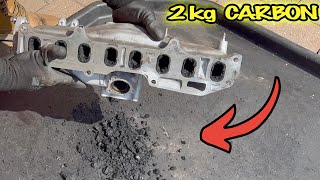
- Intake Manifold Carbon Buildup ('Coking') 🟠 Medium — Common on all direct-injection diesels, but pronounced on this engine due to EGR system design. Leads to power loss and limp mode over time, typically requires cleaning every 70k-100k km.
- DPF Clogging & Frequent Regeneration 🟠 Medium — Especially common for vehicles used primarily for short, urban trips where the DPF cannot get hot enough to regenerate effectively. Can lead to limp mode and oil dilution.
- Automatic Transaxle Whining Noise 🟡 Low — Affects some vehicles, caused by a damaged bearing in the transaxle case. Not engine-related but a known platform issue. (Ref: TSB 05-002/19)
- Engine Tapping Noise at Idle 🟡 Low — Some vehicles may exhibit a tapping noise from the engine, potentially caused by air in the hydraulic lash adjusters (HLA). (Ref: TSB 01-002/21)
Used vs. New Parts: Buying Guide for This Vehicle
When a used part is the smart pick: For this specific engine with its known oil contamination issues, buying used mechanical parts is extremely high-risk. A used part should only be considered for non-moving, external components like intake piping, brackets, or possibly a control solenoid if its history is known. A used engine or turbocharger assembly is a major gamble.
Donor-vehicle mileage cap: roughly under 30000 miles for the part to have meaningful remaining life.
What to inspect on the donor part:
- For a turbo: demand proof of the donor vehicle's service history, specifically oil change intervals and injector seal replacement.
- Inspect the turbo for any shaft play (both radial and axial) before purchase. Any perceptible movement means it's already worn.
- Check inside the donor engine's oil filler cap for signs of thick, black sludge or a strong exhaust smell, which are red flags for failed injector seals and oil contamination.
OEM-only on this vehicle (don't cheap out):
- Turbocharger Assembly: Due to the complexity of the sequential system and the high failure rate of cheap copies, a new OEM or professionally remanufactured unit from a reputable specialist is the only reliable option.
- Injector Seals: These are a critical, low-cost part. Only use the latest revised OEM seals to prevent a recurrence of the root problem.
- Oil Pump Pickup Strainer: This part is inexpensive and vital for engine health. Never reuse a clogged one; always replace with a new OEM part (SH01-14-240).
Aftermarket brands forum-validated for this vehicle:
- For turbochargers, brands like Garrett (the OEM manufacturer) or reputable remanufacturing specialists are the best choice. Some aftermarket suppliers offer repair kits for the internal changeover valve, which can be a cost-effective fix if the rest of the turbo is healthy.
Brands owners have reported issues with on this vehicle:
- Avoid unbranded, low-cost turbocharger assemblies from online marketplaces. These often use inferior materials, are poorly balanced, and are known to fail very quickly, sometimes catastrophically.
Real Owner Stories
Aggregated from forums and TSBs cited above. Mileages and costs reflect what owners reported in those sources.
2015 Mazda 6 2.2L SKYACTIV-D
Symptoms: Significant power loss under 3000 RPM and a P0299 code.
What fixed it: The failure was attributed to a combination of worn exhaust camshafts, leaking injector washers, and a broken wastegate flap.
Source hint: Reddit: P0299 Turbocharger Underboost on 2015 Mazda 6
2014 Mazda 6 2.2L SKYACTIV-D
Symptoms: P0299 code accompanied by 'SCBS' and 'engine inspection required' warnings.
What fixed it: The issue was related to the turbo outlet pipe clips (addressed by recall SSP AF069A) causing a boost leak.
Source hint: Mazda6 Owners Club: 2014 Mazda 6 2.2 turbo issues
Related OBD-II Codes
Frequently Asked Questions
Is there a recall for the turbocharger issues on my 2014 Mazda 6?
Why does my Mazda 6 have SCBS, DSC, and TPMS lights on when the problem is the turbo?
My mechanic says I need a whole new turbo for my 2.2L diesel; is there a cheaper way to fix the changeover valve?
What is the 'silver washer' fix I keep hearing about for the SKYACTIV-D?
Which specific part number should I check if I suspect oil starvation is causing my underboost code?
Can a faulty solenoid cause the P0299 code on the Mazda 6?
Helpful Videos


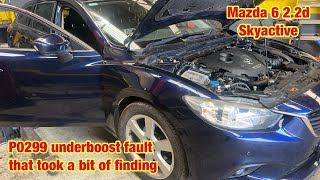
Used OEM Parts in Stock


New Aftermarket Parts Available

The information in this article is provided for general reference and educational purposes only. Vehicle specifications, procedures, and part compatibility can vary by production date, trim level, and region. Always consult your vehicle's factory service manual and verify part numbers before purchasing or performing repairs. Safety-critical components such as airbags, seat belts, and braking systems should be installed by a qualified professional.
- Mazda Mazda6:
- 🎬 Helpful Videos
- 🛍️ Shop This Part
- What's Unique About the 2012-2021 Mazda Mazda6
- Symptoms You May Notice
- Most Likely Causes
- Rare But Worth Checking
- Diagnosis Steps
- Parts You'll Likely Need
- Related Codes That Often Appear With This One
- Platform-Specific Known Issues
- Mechanic-Grade Diagnostic Values
- Scan Tool Commands That Help
- Wiring & Ground Locations
- Real Owner Repair Stories
- OEM Part Supersession History
- Model Year Variations Within This Range
- Diagnostic Flowchart
- Other Known Issues on This Vehicle
- Used vs. New Parts: Buying Guide for This Vehicle
- Real Owner Stories
- 2015 Mazda 6 2.2L SKYACTIV-D
- 2014 Mazda 6 2.2L SKYACTIV-D
- Related OBD-II Codes
- Frequently Asked Questions
- 🎟️ Get 5% Off