

P0299 on 2013-2018 Jaguar XF: Turbo/Supercharger Underboost Causes and Fixes
On 2013-2018 Jaguar XF models with the 3.0L Supercharged V6, code P0299 is frequently caused by an internally failed exhaust manifold (per TSB JTB00393NAS1), a significant repair. For the 2.0L Turbo engine, the cause is more likely a boost leak from a cracked or disconnected hose, a faulty diverter valve, or a bad wastegate actuator. Always perform a smoke test before suspecting the turbo itself.
- P0299 on a 2013-2018 Jaguar XF means the engine's turbo or supercharger is not producing enough boost.
- For the 3.0L V6 engine, the most probable cause is a known issue with the exhaust manifold failing internally.
- For the 2.0L Turbo engine, check for boost leaks from cracked hoses before suspecting the turbo itself.
- Diagnosis should always start with a visual inspection and a smoke test for leaks, as this is a common and relatively inexpensive fix.
- Do not assume the turbo/supercharger has failed; it is often a supporting component like a hose, actuator, or a restricted manifold that is the true cause.
What's Unique About the 2013-2018 Jaguar XF

The Jaguar XF platform, particularly models with the 3.0L Supercharged V6, has a well-documented issue that directly causes the P0299 code. A manufacturer Technical Service Bulletin (TSB JTB00393NAS1) points to the internal structures of the exhaust manifold breaking down, creating a restriction that leads to an underboost condition. For the 2.0L turbocharged models (both the earlier Ford-sourced GTDi and later Ingenium), another TSB (JTB00393NAS1) highlights a similar issue where exhaust manifold internal failure can cause this code and potential turbocharger damage. Furthermore, TSB SSM73671 specifically calls out incorrectly fitted air intake elbows on the 2.0L Ingenium engine as a cause for boost leaks and P0299. These specific, known failure points make diagnosis on the XF different from a generic P0299 investigation.
Diagnostic Flowchart

Tap your situation to follow the diagnostic path that matches what you're seeing on this vehicle.
Generation note: This range covers two Jaguar XF generations: the X250 (2013-2015) and the X260 (2016-2018). The 3.0L Supercharged V6 was available in both, and the exhaust manifold issue noted in TSB JTB00393NAS1 (issued in 2015) can affect both generations. The 2.0L Turbo engine changed from a Ford-sourced unit (GTDi) in the X250 to Jaguar's own Ingenium engine in the X260, but both are susceptible to boost leaks and wastegate problems, with specific TSBs for each.
Symptoms You May Notice

- Check Engine Light illuminated
- "Restricted Performance" message on the dashboard
- Significant loss of engine power and poor acceleration
- Engine juddering or running rough under load
- Audible whistling, hissing, or 'leaking air' sound from the engine bay, indicating a boost leak
- Black smoke from the exhaust during acceleration, indicating a rich fuel mixture due to lack of air
- Rattling or 'marbles in a can' noise at idle (3.0L V6), potentially indicating a worn supercharger torsional isolator/coupler.
- Replacing the turbocharger or supercharger unit before thoroughly checking for boost leaks, wastegate/bypass valve function, or exhaust restrictions. A complete diagnosis, including a smoke test and vacuum test, should always be performed first.
Most Likely Causes

- Internally Collapsed/Restricted Exhaust Manifold 🔴 High Probability This is a known issue documented in Jaguar TSB #JTB00393NAS1 for both the 3.0L SCV6 and 2.0L GTDi engines. The internal baffling or substrate of the manifold can break apart, creating a blockage that impedes exhaust flow. This prevents the turbo/supercharger from spooling correctly and building boost.
How to confirm: Diagnosis often requires removing the manifold for a visual inspection of its internal passages. 🎬 Watch: A clever method for fixing a cracked manifold without removal. A borescope may sometimes be used to inspect it while partially installed. An exhaust backpressure test can also point to a restriction.
Typical fix: Replacement of the faulty exhaust manifold. This is a labor-intensive job, often quoted at 8+ hours.
Est. part cost: $800-$1500 - Boost/Intake Air Leak 🟡 Medium Probability Plastic and rubber components in the intake system, like charge pipes and intercooler hoses, can become brittle and crack over time due to heat and pressure cycles. A loose clamp or split hose is a very common cause for underboost. TSB SSM73671 specifically points to an incorrectly fitted air intake elbow on the 2.0L Ingenium engine.
How to confirm: A smoke test is the most effective method. This involves filling the intake system with pressurized smoke to visually identify where it escapes. A simple visual inspection of all hoses and clamps should be the first step, especially after any other engine service.
Typical fix: Replace the cracked hose, pipe, or faulty clamp. Secure any loose connections.
Est. part cost: $50-$300 - Faulty Turbocharger Wastegate Actuator or Solenoid (2.0L Turbo) 🟡 Medium Probability The wastegate controls boost pressure by diverting exhaust gas. The actuator that controls it can fail mechanically or electronically, often getting stuck open, which prevents the turbo from building sufficient pressure. Vacuum lines controlling the actuator can also leak, preventing it from closing properly.
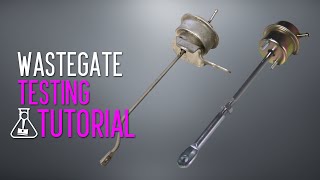
How to confirm: Test the actuator's movement using a handheld vacuum pump to see if it holds vacuum and moves the wastegate arm freely. 🎬 See this demonstration of testing a wastegate with a vacuum pump. A diagnostic scan tool can also be used to command the control solenoid and monitor its response. 🎬 Watch: A quick guide on how to test wastegate actuators. Sometimes a new turbo comes with the wastegate improperly adjusted (stuck open), which will immediately cause a P0299 code.
Typical fix: Replace the wastegate actuator or the control solenoid. In some cases, the linkage may just need adjustment.
Est. part cost: $150-$400 - Faulty Supercharger Bypass Valve/Actuator (3.0L Supercharged) ⚪ Low Probability Similar to a wastegate, the bypass valve recirculates air to regulate boost. A TSB (SSM 75757) mentions this component in relation to underboost codes, suggesting it can get stuck open, often setting a P2261 code alongside P0299.
How to confirm: Visually inspect the valve and actuator for movement during engine operation or test with a vacuum pump. Check for related code P2261.
Typical fix: Replace the bypass valve actuator.
Est. part cost: $100-$250
Rare But Worth Checking
- Clogged Catalytic Converter: If the catalytic converter is clogged, it creates excessive exhaust backpressure, preventing the turbo from spinning up effectively. This can sometimes be a consequence of an engine misfire or the internal failure of the exhaust manifold upstream.
- Failed Turbocharger/Supercharger Unit: While often suspected first, the turbo or supercharger unit itself is less likely to fail than the supporting components. However, if bearings fail or turbine/compressor wheels are damaged from debris (like from a failed manifold), it will need to be replaced.
- Faulty Boost Pressure Sensor (MAP Sensor): The sensor that measures boost pressure can fail and send incorrect low readings to the ECM, triggering the code even if the pressure is normal. However, this will often be accompanied by other sensor-specific codes.
- Worn Supercharger Torsional Isolator / Coupler (3.0L V6): The spring-loaded coupler in the supercharger's 'snout' can wear out, causing a rattling noise. While primarily a noise issue, severe wear could potentially impact the supercharger's efficiency and contribute to underboost. The fix involves replacing the coupler or the entire snout, not the whole supercharger unit.
- Failing Engine Vacuum Pump (3.0L V6 / 5.0L V8): The engine-driven vacuum pump supplies vacuum to multiple systems, including the brake booster and potentially boost control actuators. A failing pump or leaking vacuum lines can cause a lack of vacuum, preventing actuators from closing properly and leading to underboost. A primary symptom is often a hard brake pedal.
Diagnosis Steps
- Read all stored Diagnostic Trouble Codes (DTCs) to see if other codes are present that could point to the root cause, such as P2261 for a bypass valve.
- Perform a thorough visual inspection of the entire air intake system, from the air filter box to the throttle body. Look for cracked or disconnected hoses, loose clamps, and signs of oil leaks which can indicate a breach.
- If no obvious leaks are found, perform a smoke test on the intake and charge pipe system to identify hard-to-see leaks. This is a critical step.
- For 2.0L Turbo models, inspect and test the turbocharger wastegate actuator. Use a handheld vacuum pump to ensure it moves freely and holds vacuum. Check the linkage to ensure it's not disconnected or improperly adjusted.
- For 3.0L Supercharged models, inspect and test the supercharger bypass actuator for proper movement. Use a vacuum pump to confirm the diaphragm holds vacuum.
- Using a diagnostic scan tool, monitor live data for the Manifold Absolute Pressure (MAP) sensor. Compare its reading with atmospheric pressure with the engine off. While driving under load, compare the 'commanded' boost pressure with the 'actual' boost pressure to confirm the underboost condition. For the 2.0L diesel, requested boost can be around 2900mbar, with an underboost condition showing actual boost at 2300-2400mbar.
- For 3.0L V6 models, listen for a distinct rattling from the supercharger snout at idle, which could indicate a worn torsional isolator/coupler.
Parts You'll Likely Need
- Exhaust Manifold (3.0L Supercharged, Left Side)
(OEM #C2Z17843)— A primary cause of P0299 on the 3.0L V6 due to internal failure causing a restriction as per TSB JTB00393NAS1.
Trusted brands: Jaguar (OEM)
OEM price range: $625-$750
Aftermarket price range: $400-$600 - Turbocharger Assembly (2.0L GTDi)
(OEM #C2D45424)— TSB JTB00393NAS1 for the 2.0L GTDi engine recommends replacing the turbo if an internal manifold failure is suspected, as debris can damage the turbine.
Trusted brands: Jaguar (OEM)
OEM price range: $1500-$2500
Aftermarket price range: $800-$1500 - Charge Air Hose / Intercooler Pipe — These hoses are a common source of boost leaks as they can crack or split under pressure and heat.
Trusted brands: Jaguar (OEM), URO Parts
OEM price range: $150-$300
Aftermarket price range: $50-$150 - Turbocharger Wastegate Actuator — A failed or leaking actuator will cause the wastegate to stay open, preventing boost from building.
Trusted brands: Pierburg (OEM supplier), Dorman
OEM price range: $150-$400
Aftermarket price range: $100-$250
Related Codes That Often Appear With This One
- P2261-72 — This code for 'Turbocharger/Supercharger Bypass Valve "A" - Mechanical - Actuator stuck open' is often seen with P0299 as it directly points to a mechanical reason for the loss of boost pressure. TSB SSM 75757 links these two codes directly.
- P2178-00 — Mentioned in TSB #SSM73671 alongside P0299. This code for 'System Too Rich Off Idle' can occur because the ECM expects a certain amount of air that isn't arriving due to the underboost condition, leading to an incorrect air-fuel mixture.
- P0234 — While this code means 'Overboost', it can sometimes appear alongside P0299 in stored faults. This can indicate an erratic problem with the boost control system, such as a sticking wastegate or bypass valve that is not moving smoothly through its range.
- P049B — For diesel models, 'EGR B - insufficient flow detected' can accompany P0299. A faulty EGR system can sometimes be related to boost pressure issues.
Technical Service Bulletins (TSBs) & Recalls
- Specifically addresses P0299 on 2013+ XF models with the 2.0L GTDi petrol engine. It states that the internal components of the exhaust manifold can break down, causing a restriction and potential damage to the turbocharger. The recommended action is to confirm the turbo is faulty and then replace it. The causal part is listed as JDE34737.
- For the Ingenium I4 2.0L Petrol engine, this Service Message notes that P0299 can be caused by an incorrectly fitted air intake elbow below the throttle body. It advises technicians to use a smoke tester to confirm the air leak.
- While for the I6 Diesel, this is relevant as it links P0299-84 with P2261-72 (Bypass Valve Stuck Open). It instructs technicians to perform a vacuum leakage test on the high-pressure turbocharger actuator system before replacing any parts, as a vacuum leak can prevent the actuator from functioning correctly.
Platform-Specific Known Issues
- TSB JTB00393NAS1 specifically calls out that on 3.0L SCV6 engines, a breakdown of exhaust manifold internals can cause a restriction, leading to P0299.
- TSB JTB00393NAS1 notes a similar issue for the 2.0L GTDi engine, where exhaust manifold internal failure can cause P0299 and require turbocharger replacement.
- TSB SSM73671 links P0299 with other codes and points towards potential issues with the supercharger bypass valve or intake air temperature sensor.
Mechanic-Grade Diagnostic Values
- Manifold Absolute Pressure (MAP) Sensor Signal Voltage — expected: Typically 0.85V to 1.3V at idle.. Failure: A voltage that is stuck high (e.g., near 5V) or low, or does not change with engine RPM/load, indicates a faulty sensor or circuit issue.
- MAP Sensor 3-Wire Connector (Key On, Engine Off) — expected: Pin A (Ground): ~0V. Pin B (Signal): Varies with atmospheric pressure. Pin C (+5V Reference): ~5.0V.. Failure: No 5V reference suggests a wiring or PCM issue. Resistance to ground on the signal or 5V line indicates a short.
- Live Data Boost Pressure (2.0L Diesel) — expected: Requested boost pressure under load should be ~2900 mbar.. Failure: Actual measured boost pressure is significantly lower, for example, 2300-2400 mbar, confirming the underboost condition logged by P0299.
Hidden / Shadow Codes Worth Checking
- P0299-00: The '-00' is a Failure Type Byte (FTB) used in JLR diagnostics. It's a generic identifier meaning 'No sub type information' is available, often indicating a general or electrical cause. It's the most common variant of this code. (see via JLR-specific diagnostic tools like SDD or Pathfinder.)
- P0299-84: This variant with FTB '-84' indicates 'Signal below allowable range'. This is more specific and points directly to the sensor's output being lower than the minimum threshold expected by the PCM, as noted in JLR service messages. (see via JLR-specific diagnostic tools like SDD or Pathfinder.)
Scan Tool Commands That Help
- iCarSoft (or similar advanced OBD tool): DPF Service Regeneration / Reset — On diesel models, if P0299 is accompanied by DPF-related codes like P2453, a forced regeneration or reset of the DPF differential pressure sensor may be required after the primary fault is fixed. A clogged DPF can contribute to underboost, and the ECU may need to be told that the component has been serviced.
- Jaguar Land Rover (JLR) SDD or Pathfinder: Clear Diagnostic Trouble Code(s) and Retest — JLR documentation emphasizes that after any repair for P0299, the approved diagnostic equipment must be used to clear the codes and re-run system tests to confirm the fix.
Wiring & Ground Locations
- MAP Sensor Connector (3.0L SC) — On the 3.0L Supercharged engine, there is a MAP/IAT sensor on the left-hand rear of the supercharger itself that must be disconnected when removing the supercharger for service (e.g., coolant pipe replacement).. Forgetting to reconnect this sensor after a major repair is a common cause of MAP-related codes (like P0238) and can contribute to incorrect boost readings. A user on Reddit experienced this exact issue after a coolant pipe repair.
Real Owner Repair Stories
- JaguarForums user 'BDuncan' (Jaguar XF (exact year/engine not specified, but in X350/X358 subforum)) — Got "Performance Restricted" message and P0299 code immediately after having the alternator and water pump replaced.
❌ Tried (didn't work) Clearing the code with an OBD reader (it would return immediately upon acceleration).
✅ What actually fixed it The owner took the car back to the garage that performed the prior work. The mechanic found a loose air conductor hose that had not been properly tightened during reassembly. Tightening the hose clamp resolved the underboost code in 25 minutes. - MHH Auto forum user 'albert jackson' (2014 Jaguar XF 2.0L Turbo) — Persistent P0299 code, limp mode, engine runs well otherwise.
❌ Tried (didn't work) The owner was 'tired of chasing it' and even considered having the code programmed out of the ECU., Was aware of the TSB regarding exhaust manifold failure but the final decision points away from it being the cause in this instance.
✅ What actually fixed it After extensive diagnosis, the final decision was to replace the entire turbocharger unit. This was considered the solution after other avenues were exhausted.
"I Checked Everything" — The Actual Cause
- In a Reddit thread concerning a 2017 XF 2.0L Diesel with P0299, the owner reported that a smoke test and pressure test revealed no leaks. The DPF and EGR systems were also checked and cleared. After these standard procedures failed, they replaced the turbocharger based on a specialist's advice, but this also did not fix the issue. The final resolution was not posted, but it highlights a scenario where standard leak tests are clean, yet the underboost problem persists, pointing towards more complex issues like sensor data conflicts or exhaust restrictions not found by intake-side tests.
- A user on a VW/Audi forum (with a similar turbo system) reported fixing a P0299 code that persisted after a clean boost leak test. The ultimate cause was a clogged catalytic converter, which prevented the turbo from spooling correctly due to high exhaust backpressure. This was diagnosed by visually inspecting the catalyst matrix through the turbo outlet flange.
Model Year Variations Within This Range
- 2016-2018 (X260 with Ingenium 2.0L Petrol): The 2.0L Ingenium petrol engine was offered in different power outputs, notably the P250 (250 PS) and P300 (300 PS). These variants use the same AJ200 engine block but have different turbochargers, ECU calibrations, and potentially intercooler piping. Swapping parts between them, especially the turbo or engine, without corresponding ECU reprogramming will trigger fault codes and performance issues.
- 2015-2019 (X260 with Ingenium 2.0L Diesel): The electronic turbocharger actuator for the 2.0L Ingenium diesel engine (e.g., part 6NW01043027) is specific to model year ranges and horsepower ratings (e.g., 180 HP vs 240 HP). Using an incorrect actuator can lead to connector mismatches or incorrect calibration, causing P0299. Compatibility must be verified by VIN and engine code, not just model year.
Helpful Videos

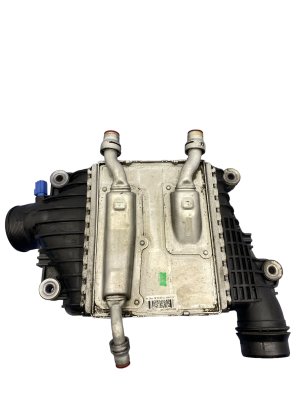
Used OEM Parts in Stock



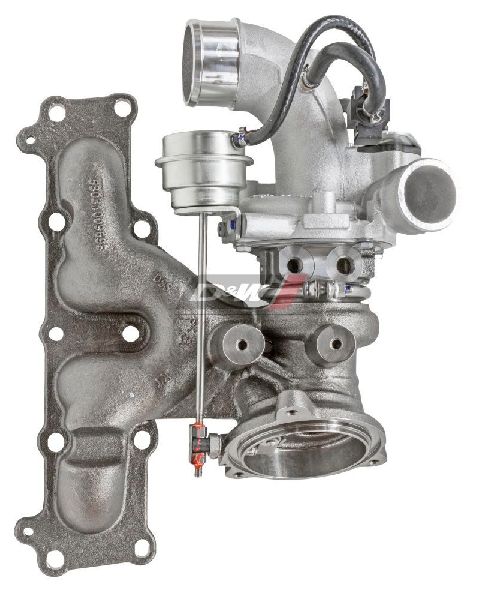
New Aftermarket Parts Available


The information in this article is provided for general reference and educational purposes only. Vehicle specifications, procedures, and part compatibility can vary by production date, trim level, and region. Always consult your vehicle's factory service manual and verify part numbers before purchasing or performing repairs. Safety-critical components such as airbags, seat belts, and braking systems should be installed by a qualified professional.
- Jaguar XF:
- 🎬 Helpful Videos
- 🛍️ Shop This Part
- What's Unique About the 2013-2018 Jaguar XF
- Diagnostic Flowchart
- Symptoms You May Notice
- Most Likely Causes
- Rare But Worth Checking
- Diagnosis Steps
- Parts You'll Likely Need
- Related Codes That Often Appear With This One
- Technical Service Bulletins (TSBs) & Recalls
- Platform-Specific Known Issues
- Mechanic-Grade Diagnostic Values
- Hidden / Shadow Codes Worth Checking
- Scan Tool Commands That Help
- Wiring & Ground Locations
- Real Owner Repair Stories
- "I Checked Everything" — The Actual Cause
- Model Year Variations Within This Range
- 🎟️ Get 5% Off