

P0299 on 2014-2018 Jaguar F-TYPE: Supercharger & Turbo Underboost Fixes
For supercharged V6/V8 F-TYPEs, P0299 often points to a worn supercharger coupler (a ~$150 part plus significant labor), a vacuum leak, or a faulty bypass valve. For the 2.0L turbo engine, the most common cause is a boost leak from a cracked hose, loose clamp, or a faulty wastegate actuator.
- P0299 on an F-TYPE means the engine is not producing the required boost, resulting in a major loss of power.
- The cause is highly dependent on your engine: for V6/V8 supercharged models, listen for a rattle indicating a bad coupler; for the 2.0L turbo, suspect an air leak.
- A smoke test is the most reliable way to find hard-to-see air leaks, which are a common cause across all engine types.
- Do not immediately assume the expensive supercharger or turbo has failed. The problem is much more likely to be a cheaper supporting component like a hose, valve, or internal coupler.
- Due to the complexity and need for special tools, diagnosis and repair are best left to a professional familiar with Jaguar vehicles.
What's Unique About the 2014-2018 Jaguar F-TYPE
The 2014-2018 F-TYPE is unique because it uses two different types of forced induction within the same generation. Most models have a supercharged V6 (AJ126) or V8 (AJ133), while the 2018 model year introduced a turbocharged 2.0L four-cylinder (Ingenium). The P0299 code applies to both, but the root causes are distinct. On the supercharged engines, the issue is frequently mechanical wear inside the supercharger snout, specifically the coupler. On the turbocharged engine, the problem is more likely to be a leak in the intake plumbing or a faulty control valve like the wastegate.
Diagnostic Flowchart
Tap your situation to follow the diagnostic path that matches what you're seeing on this vehicle.
Symptoms You May Notice
- Check Engine Light is on
- "Restricted Performance" message displayed with a red triangle
- Significant loss of engine power and poor acceleration
- Sluggish or hesitant throttle response
- Whining or hissing noises from the engine bay, indicating a possible air leak
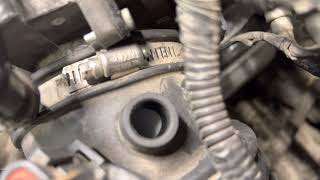
- Rattling or clattering sound from the front of the supercharger at idle, which may sound like marbles in a can (V6/V8 models) 🎬 Watch: Hear the distinct rattling sound of a failing supercharger.
- For the 2.0L Turbo, black smoke from the exhaust under acceleration can occur due to the incorrect air/fuel mixture.
- Replacing the MAP sensor before performing a smoke test to check for air leaks.
- Replacing the entire supercharger assembly for $5000+ when only the inexpensive internal coupler has failed, a repair that can be done for a few hundred dollars in parts.
- Replacing the entire turbocharger on a 2.0L model when the issue is a less expensive, externally mounted component like a diverter valve or wastegate actuator.
Most Likely Causes
- Worn Supercharger Coupler / Isolator (V6 & V8 Models) 🔴 High Probability The Eaton TVS superchargers on the AJ126 V6 and AJ133 V8 engines use a spring-loaded coupler that is a known, widespread failure point. The internal spring fatigues and breaks, creating excessive play and a rattling noise, and eventually fails to spin the rotors effectively under load. A technical service bulletin (JTB0000349 V2) was issued in May 2014 for a chattering or rattling noise from the supercharger due to wear on this part.
How to confirm: Listen for a distinct rattling or clattering sound from the supercharger snout at idle. The noise may go away as RPMs increase. A definitive diagnosis requires removing the supercharger snout for visual inspection of the coupler.
Typical fix: Replace the factory spring-loaded coupler. The most common and recommended repair is to install a more durable solid coupler upgrade. 🎬 See how to save money by replacing the coupler yourself. This repair requires removing the supercharger or at least its snout, which is labor-intensive. The snout bolts should be torqued to 27Nm during reassembly.
Est. part cost: $30-$175 - Boost or Vacuum Leak 🔴 High Probability The engine bay is packed with plastic and rubber hoses for the intake, PCV, and vacuum systems. Over time, heat and age cause them to become brittle and crack. A leak in any of these can allow unmetered air to enter or boost pressure to escape.
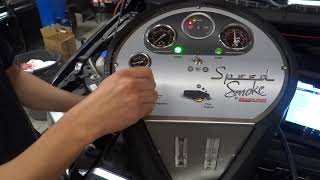
How to confirm: A smoke test is the most effective method. Pressurized smoke is fed into the intake system, and any leaks will be visually obvious. 🎬 Watch: How to use a smoke machine to find leaks. A visual inspection may reveal obvious cracks in hoses or loose clamps. JLR Special Service Message SSM73671 specifically points to an incorrectly fitted air intake elbow below the throttle body on 2.0L Ingenium engines as a source for leaks. Another JLR message (SSM not numbered in source) directs technicians to start P0299 diagnosis with a vacuum system leak test.
Typical fix: Replace the cracked hose, leaking gasket, or tighten the loose clamp. Common culprits include the PCV hoses and the brake booster vacuum line.
Est. part cost: $20-$200 - Faulty Supercharger Bypass Valve or Actuator (V6 & V8 Models) 🟡 Medium Probability This valve controls boost by recirculating air at idle and low loads. The actuator, which can be vacuum-operated or electronic, can fail. If the valve sticks open, it will continuously bleed off boost pressure, preventing the supercharger from being effective.
How to confirm: Use a scan tool to command the valve open and closed while observing its physical movement. For vacuum-operated valves, a handheld vacuum pump can be used to test if the actuator holds vacuum and moves the valve arm. Code P2261 often accompanies P0299 when this valve is stuck.
Typical fix: Replace the bypass valve actuator. In some cases, the valve itself may be seized. The part number for the electronic actuator is AJ813841.
Est. part cost: $130-$300 - Faulty Turbocharger Wastegate or Diverter Valve (2.0L I4 Model) 🟡 Medium Probability The wastegate controls boost by diverting exhaust gas. If its actuator fails or the linkage gets stuck, it can remain open, preventing the turbo from spooling up. The diverter valve (or blow-off valve) can also develop a leak in its diaphragm, bleeding off boost between shifts or on throttle lift.
How to confirm: Visually inspect the wastegate actuator rod for movement during engine start-up and under vacuum/pressure using a hand pump. The diverter valve can be removed and inspected for tears or tested for leaks.
Typical fix: Replace the faulty wastegate actuator or the diverter valve.
Est. part cost: $150-$400 - Clogged Catalytic Converters ⚪ Low Probability While not specific to this platform, a severe exhaust restriction creates backpressure that prevents the engine from breathing out. This chokes exhaust flow, stopping the turbo or supercharger from spooling up effectively.
How to confirm: A technician can perform an exhaust backpressure test. A dramatic loss of power at high RPM that gets progressively worse is a key symptom. Visual inspection with the component removed may show a cracked or blocked honeycomb structure.
Typical fix: Replace the clogged catalytic converter(s).
Est. part cost: $1000-$2500+ - Faulty Boost Pressure Sensor (MAP Sensor) ⚪ Low Probability
How to confirm: After confirming there are no air leaks, use a scan tool to compare the MAP sensor's reading at idle with the engine off to the BARO (barometric pressure) sensor reading. They should be nearly identical. Compare live data to a manual boost gauge while driving.
Typical fix: Replace the MAP sensor.
Est. part cost: $80-$250
Rare But Worth Checking
- Failed Turbocharger or Supercharger Unit: This is the most expensive possibility and should only be considered after all other causes are ruled out. Internal bearing failure or damaged turbine/compressor wheels can cause underboost, often accompanied by loud whining, grinding, or siren-like noises.
Diagnosis Steps
- Read all fault codes stored in the PCM. Pay close attention to any other codes, like P2261 or P0171/P0174, that can provide clues.
- Perform a thorough visual inspection of the entire air intake system, from the air filters to the engine. Look for disconnected hoses, loose clamps, or obvious cracks.
- For V6/V8 models, listen carefully at idle for a rattling sound from the supercharger's front pulley area. This strongly indicates a failed coupler.
- Perform a smoke test on the intake and vacuum system to pinpoint any leaks that are not visually apparent. This is the most crucial step for finding hidden leaks and is recommended by Jaguar.
- Using a scan tool with live data, monitor 'Commanded Boost' vs. 'Actual Boost' (MAP sensor reading) during a test drive to confirm the underboost condition.
- Test the supercharger bypass valve (V6/V8) or turbo wastegate/diverter valve (I4) for proper operation using a vacuum pump or scan tool commands. Check if the actuator holds vacuum and moves freely.
- If no leaks or actuator faults are found, test the MAP sensor for accuracy against the BARO sensor with the engine off.
- As a final step, if all else fails, an exhaust backpressure test can be performed to check for clogged catalytic converters.
Parts You'll Likely Need
- Supercharger Coupler / Isolator
(OEM #EAT-361506 (Solid Upgrade))— This is the most common mechanical failure point on the V6 and V8 supercharged engines leading to P0299. The original spring-loaded part fails, causing a rattle and loss of boost. An upgraded solid coupler is the standard, durable replacement.
Trusted brands: Eaton, Powerhouse UK, ZZP Performance
OEM price range: $125-$175 (for original spring style)
Aftermarket price range: $30-$80 (for solid upgrade) - Intake / Vacuum Hose — Cracked plastic or rubber hoses are a very common cause of boost and vacuum leaks that trigger P0299. A smoke test is the best way to identify the specific leaking hose.
Trusted brands: OEM Jaguar, Aftermarket
OEM price range: $50-$200
Aftermarket price range: $20-$100 - Supercharger Bypass Actuator — If the actuator fails, the bypass valve can stick open, bleeding off all boost. This is a common issue and often throws code P2261 alongside P0299.
Trusted brands: OEM Jaguar
OEM price range: $130-$300
Related Codes That Often Appear With This One
- P2261 — This code for 'Turbocharger/Supercharger Bypass Valve - Mechanical' often appears with P0299, as a stuck-open bypass valve is a direct cause of underboost. JLR issued a service message (SSM) for technicians seeing these two codes together.
- P0171/P0174 — If the underboost is caused by a significant vacuum leak (unmetered air entering after the mass airflow sensor), the engine may run lean, triggering these 'System Too Lean' codes.
Technical Service Bulletins (TSBs) & Recalls
- source — For the 2.0L I4 Ingenium Petrol engine, this service message addresses a lack of power and P0299. It suggests the air intake elbow below the throttle body may be incorrectly fitted, causing an air leak. It advises technicians to perform a smoke test to confirm.
- source — For customer reports of P0299 and P2261, this message instructs technicians to first carry out a leakage test on the vacuum system with a vacuum pump and gauge to verify no leaks are present before replacing any components.
Platform-Specific Known Issues
- The factory-installed spring-type supercharger coupler on V6 and V8 models is a widely documented weak point that frequently fails, causing a rattling noise and the P0299 code.
- Many plastic cooling system pipes on the V6 and V8 engines are prone to becoming brittle and cracking. While not a direct cause of P0299, they are often replaced preventatively during a supercharger service, as removal of the supercharger is required to access them.
Mechanic-Grade Diagnostic Values
- Supercharger Bypass Valve Actuator (Vacuum Operated) — expected: The bypass valve should start to close at 10 in Hg (250 mm Hg) of vacuum and be fully closed by 3.5 in Hg (90 mm Hg).. Failure: If the actuator does not hold vacuum when tested with a hand pump (the rod extends immediately after being depressed with the port sealed), the internal diaphragm has failed.
- Engine Ground Strap Voltage Drop — expected: Well under 0.5V (500mV) when cranking the engine.. Failure: A reading higher than 0.5V indicates a poor ground connection, which can cause erratic sensor readings and trigger false codes. The test is performed by connecting a voltmeter between the negative battery terminal and various engine grounding points while an assistant cranks the engine.
Scan Tool Commands That Help
- JLR SDD / Pathfinder: Read all stored DTCs / Clear all stored DTCs — This is the official dealer software for Jaguar Land Rover. It should be the first step to read all manufacturer-specific codes, not just the generic P0299. After a repair, this tool is used to properly clear the codes and reset related modules.
- JLR SDD / Pathfinder: Live Data Monitoring / Actuator Activation — Allows a technician to monitor requested vs. actual boost pressure in real-time to confirm the underboost condition. It can also be used to command components like the electronic supercharger bypass valve or wastegate solenoid to operate, verifying their function without manual removal.
- iCarsoft (or similar advanced OBD-II scanner): DPF Service Regeneration — On diesel models (not applicable to the F-TYPE but relevant to other JLR vehicles with P0299), if the underboost is accompanied by a DPF-related code like P2453, a forced DPF regeneration may be required to clear the exhaust restriction before the P0299 code can be resolved.
Wiring & Ground Locations
- Engine Ground Strap — Located on the right side (US passenger side) of the car, connecting the engine to the lower chassis rail, directly under the starter.. A poor engine ground can cause incorrect readings from critical sensors like the MAP sensor and crank/cam sensors, potentially leading to incorrect calculations by the ECU and triggering false performance codes like P0299.
- Firewall Ground Posts — There are two main ground posts on the firewall, one on each side, approximately level with the wiper grille.. These are primary grounding points for many engine bay systems and the ECM. Corrosion or looseness here can cause a wide range of electrical issues, including sensor data problems related to boost control.
- MAP Sensor Connector — Attached to the intake manifold, near the throttle body. It is a 4-pin connector on this platform.. This connector provides power, ground, and signal return for the sensor that directly measures boost pressure. Corrosion or a loose pin in this connector will cause a direct failure in reporting boost, immediately triggering P0299.
Real Owner Repair Stories
- YouTube user @cars_with_ellie (Jaguar F-TYPE (V6/V8, year not specified)) — Random Check Engine Light, no boost, car feels very sluggish and slow. Resetting the car would temporarily fix it. The issue was accompanied by code P2565, which pointed to the supercharger actuator.
❌ Tried (didn't work) Checked wiring to the actuator, which appeared to be okay.
✅ What actually fixed it The problem was resolved by replacing the electronic supercharger bypass actuator, part number AJ813841.
"I Checked Everything" — The Actual Cause
- In some cases, particularly on turbocharged vehicles, a P0299 code can be set with no boost leaks present. The actual cause was found to be a clogged catalytic converter. The exhaust restriction prevented the turbo from spooling up effectively, but a standard intake smoke test would not have revealed this issue. Diagnosis required separating the exhaust before the catalytic converter to inspect it visually.
OEM Part Supersession History
Factory spring-loaded coupler→EAT-361506 (Eaton Solid Coupler) or similar aftermarket solid couplers— The original spring-loaded design is a widespread failure point due to the spring fatiguing, rusting, or breaking. Solid couplers are a permanent, more durable solution.
Heads up: There are two different coupler sizes. Most V6 models use a larger ~49mm coupler. V8 models used a smaller ~46mm coupler until approximately 2016, when they also switched to the larger size. Physical measurement after removing the supercharger snout is the only way to be 100% certain which size is needed.C2D52713 (Supercharger Snout for early V8)→C2D55131 (Supercharger Snout for later V8)— Change corresponds to the switch from the smaller (~46mm) to the larger (~49mm) supercharger coupler around 2016.
Heads up: These snouts are not interchangeable as they house different sized couplers and bearings.
Model Year Variations Within This Range
- 2018: The 2.0L Turbocharged I4 'Ingenium' engine was introduced as the new base engine. This model uses a turbocharger, so P0299 diagnosis focuses on wastegates, diverter valves, and boost piping, not the supercharger-specific components like the coupler and bypass valve found on the V6/V8.
- 2014-2015 vs 2016-2018 (V8 Models): The 5.0L V8 models around 2016 switched from a smaller (~46mm) supercharger coupler to a larger (~49mm) one. This is critical when ordering a replacement coupler, as they are not interchangeable.
Helpful Videos

Used OEM Parts in Stock

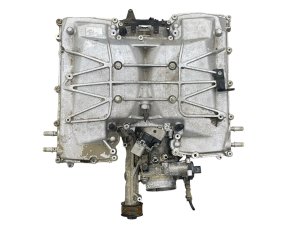
New Aftermarket Parts Available



The information in this article is provided for general reference and educational purposes only. Vehicle specifications, procedures, and part compatibility can vary by production date, trim level, and region. Always consult your vehicle's factory service manual and verify part numbers before purchasing or performing repairs. Safety-critical components such as airbags, seat belts, and braking systems should be installed by a qualified professional.
- Jaguar F-TYPE:
- 🎬 Helpful Videos
- 🛍️ Shop This Part
- What's Unique About the 2014-2018 Jaguar F-TYPE
- Diagnostic Flowchart
- Symptoms You May Notice
- Most Likely Causes
- Rare But Worth Checking
- Diagnosis Steps
- Parts You'll Likely Need
- Related Codes That Often Appear With This One
- Technical Service Bulletins (TSBs) & Recalls
- Platform-Specific Known Issues
- Mechanic-Grade Diagnostic Values
- Scan Tool Commands That Help
- Wiring & Ground Locations
- Real Owner Repair Stories
- "I Checked Everything" — The Actual Cause
- OEM Part Supersession History
- Model Year Variations Within This Range
- 🎟️ Get 5% Off