

P0299 on 2018-2025 GMC Terrain: Turbo Underboost Causes & Fixes
For a 2018-2025 GMC Terrain, code P0299 is most often caused by a faulty charge air cooler (intercooler) or a damaged charge air inlet pipe. This is especially common in cold weather. Expect repair costs to range from $200 for a pipe to over $800 for a charge air cooler replacement at a shop. A full dealer fix following TSBs can exceed $2,000.
- P0299 on a 2018-2025 GMC Terrain is an underboost code, meaning the turbo isn't making enough pressure.
- Before suspecting a failed turbo, thoroughly inspect the entire charge air system for leaks, especially the inlet pipe at the turbo and the intercooler itself.
- This code is very common in cold climates due to moisture freezing in the charge air cooler, a known issue acknowledged by GM in service bulletins.
- A smoke test is the most reliable way to diagnose hard-to-see leaks in the charge air piping.
- The most common repairs involve replacing either the charge air cooler or a cracked section of the charge air piping.
What's Unique About the 2018-2025 Gmc TERRAIN

The second-generation GMC Terrain, particularly with the 1.5L turbo engine, is known for issues related to its charge air system. GM has issued multiple Technical Service Bulletins (TSBs) acknowledging that components like the charge air cooler can accumulate moisture from PCV and the environment, which then freezes in cold climates, causing a blockage that triggers P0299. Additionally, specific charge air pipes have been identified as prone to damage or disconnection, creating boost leaks that also lead to this code. [⭐ MANUFACTURER TSB — highest authority] Bulletin #PIP5927D (2024 UNKNOWN OR OTHER, dated 2026-03-03)
Diagnostic Flowchart

Tap your situation to follow the diagnostic path that matches what you're seeing on this vehicle.
Symptoms You May Notice

- Check Engine Light illuminated
- "Engine Power is Decreased" message on the driver information center.
- Significant loss of acceleration and power (limp mode).
- Sluggish performance, especially when trying to accelerate on a highway.
- In some cases, a whistling or hissing sound from the engine bay during acceleration, indicating a boost leak.
- Noticeably higher engine RPMs at highway speeds as the transmission may be prevented from using overdrive gears as part of a strategy to combat CAC freezing.
- Replacing the turbocharger without first performing a thorough boost leak test with a smoke machine. A simple cracked pipe or disconnected hose is a much cheaper fix and a very common cause.
- Replacing the charge air cooler without first checking for the updated ECM calibration and other TSB-related fixes, leading to a repeat failure in the next cold season.
Most Likely Causes

- Faulty or Frozen Charge Air Cooler (CAC) 🔴 High Probability GM TSBs #18-NA-020 and #22-NA-002 specifically state that moisture can build up inside the CAC and freeze in cold temperatures, restricting airflow and causing P0299. This is a well-documented issue for this platform, corroborated by numerous owner complaints in cold climates like Minnesota and Canada. The TSBs also note that the Turbocharger Wastegate Regulator Solenoid Valve (TCV) can freeze concurrently and should be inspected.
How to confirm: First, perform a smoke test to rule out leaks. In cold weather, if no leaks are found, the cooler may need to be removed to check for internal ice blockage. Signs of moisture are always present and are not a reliable indicator on their own; an actual obstruction must be present.
Typical fix: Per GM TSBs, the fix is multi-faceted. If the CAC is frozen but not leaking, it should be removed, thawed, cleaned, and reinstalled. Dealers will also perform an ECM software update that alters transmission shifting in cold weather to keep RPMs higher, reducing ice formation. In some cases, installing a grille cover or an active shutter assembly is also required to shield the CAC from cold air.
Est. part cost: $90-$260 - Damaged or Disconnected Charge Air Piping 🔴 High Probability TSB #PIP5927D calls out a damaged charge air inlet pipe connection at the turbocharger. [⭐ MANUFACTURER TSB — highest authority] Bulletin #PIP5927D (2024 UNKNOWN OR OTHER, dated 2026-03-03) Furthermore, TSB #22-NA-224 identifies a common failure where the charge air cooler *outlet* tube completely separates from the throttle body, causing a massive boost leak. A recent report from GM TechLink also highlights that the anti-abrasion sleeve on the charge air inlet pipe at the turbocharger can split or get damaged, allowing the hose underneath to swell and leak.
How to confirm: Visually inspect all charge air piping, paying close attention to the connection at the turbocharger and the throttle body. A smoke test is the most reliable method to find leaks that are not visually obvious or to confirm a full disconnection.
Typical fix: Replace the damaged pipe or hose section and secure all clamps. If the outlet tube has disconnected, inspect the tube end and throttle body for damage before reconnecting. Ensure the retaining clip is properly seated. If the anti-abrasion sleeve is damaged, the entire charge air inlet pipe assembly needs to be replaced.
Est. part cost: $70-$150 - Faulty Turbocharger Wastegate or Actuator 🟡 Medium Probability The wastegate controls boost pressure. A common failure on the 1.5L turbo is the linkage hole for the actuator arm becoming worn or 'wallered out,' creating excessive play that prevents the wastegate from closing fully. The electronic actuator or solenoid can also stick or fail.
How to confirm: With the engine off, remove the heat shield and visually inspect the wastegate actuator arm for free play where it connects to the wastegate lever. There should be minimal to no slop. A vacuum pump can test a vacuum actuator's function, while a bi-directional scan tool can command an electronic actuator to check for response.
Typical fix: If the linkage hole is worn, the entire turbocharger assembly typically requires replacement as this is an integral part. If only the electronic actuator/solenoid is faulty, it can sometimes be replaced separately.
Est. part cost: $100-$200 for an actuator, $400+ for a turbocharger - Leaking Vacuum Lines ⚪ Low Probability
How to confirm: Visually inspect all vacuum lines connected to the turbocharger control solenoid and wastegate actuator for cracks, brittleness, or loose connections.
Typical fix: Replace the damaged vacuum line sections.
Est. part cost: $10-$30
Rare But Worth Checking
- Faulty Boost Pressure Sensor: While not the most common cause, a faulty sensor can report incorrect pressure readings to the ECM, tricking it into setting a P0299 code even if the turbo is functioning correctly.
- Clogged Catalytic Converter: A restricted exhaust system can prevent the turbocharger from spooling up to its target speed, leading to an underboost condition. This is often accompanied by other codes, like P0420, and may be a result of a failed turbocharger breaking apart and sending debris into the exhaust.
Diagnosis Steps
- Check for any applicable TSBs for your vehicle's VIN. Key bulletins include 18-NA-020, 22-NA-002, and PIP5927D.
- Perform a smoke test on the entire charge air system. This is the most critical first step. Pressurize the system and check for leaks at all pipe connections, hoses, and the intercooler itself. Pay special attention to the CAC outlet pipe at the throttle body.
- If it is cold weather (especially below 0°C / 32°F) and no leaks are found, suspect a frozen charge air cooler and/or a frozen Turbocharger Wastegate Regulator Solenoid Valve (TCV).
- Visually inspect the turbocharger wastegate actuator arm for excessive play or damage. The linkage should be tight with no 'slop'.
- With a scan tool, monitor the boost pressure sensor data while driving (if safe) to see if it responds correctly to engine load.
- If no external issues are found, the final steps may involve inspecting the turbocharger itself for worn turbine fins, shaft play, or a failed wastegate flapper.
Parts You'll Likely Need
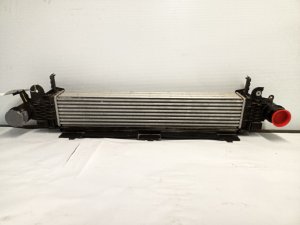
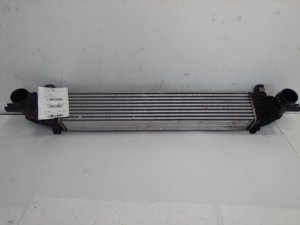
- Charge Air Cooler
(OEM #84454111)— This part is prone to internal blockage from freezing moisture, as documented in GM TSBs #18-NA-020 and #22-NA-002. Note that TSBs may recommend thawing and cleaning rather than replacement if the part is not leaking.
Trusted brands: ACDelco, Dorman
OEM price range: $225-$350
Aftermarket price range: $90-$260 - Charge Air Cooler Inlet Air Tube
(OEM #84498032)— This pipe, which connects to the turbocharger, is cited in TSB #PIP5927D as a common failure point leading to P0299. [⭐ MANUFACTURER TSB — highest authority] Bulletin #PIP5927D (2024 UNKNOWN OR OTHER, dated 2026-03-03) This part number replaces older versions 23278446 and 84287645.
Trusted brands: ACDelco, Autopart Premium
OEM price range: $145-$220
Aftermarket price range: $70-$120
Related Codes That Often Appear With This One
- P0234 — This code for 'Engine Overboost' is also mentioned in TSBs #22-NA-002 and #18-NA-020, as the same underlying issues with moisture and control valves can cause erratic boost regulation.
- P2227 — Mentioned in TSB #18-NA-020, this code for 'Barometric Pressure Sensor 'A' Circuit Range/Performance' is often seen with P0299 when the charge air cooler is blocked by ice, as the restricted airflow affects pressure readings throughout the intake.
- P0300 — Also mentioned in TSB #18-NA-020, this 'Random Misfire' code can be triggered if moisture from the charge air cooler is suddenly drawn into the engine during heavy acceleration.
- P0101 — This Mass Air Flow (MAF) sensor code is mentioned in TSB #22-NA-224 as appearing alongside P0299 when the charge pipe separates from the throttle body, causing unmetered air to disrupt sensor readings. It is also cited by GM TechLink as a possible companion code when the charge air inlet pipe is damaged.
Technical Service Bulletins (TSBs) & Recalls
- PIP5927D: Reduced Power with DTC P0237 and/or P0299 due to damaged Charge Air Inlet Pipe connection at Turbocharger.
- 18-NA-020: Malfunction Indicator Lamp Illuminated with DTCs P0300, P0299, P0234 and/or P2227 Set, often due to moisture freezing in the Charge Air Cooler (CAC). Outlines fixes including CAC replacement, shutter installation, and ECM updates.
- 22-NA-002: Malfunction Indicator Lamp Illuminated with DTCs P0299/P0234 Set During Cold or Freezing Temperatures. Focuses on CAC moisture buildup and concurrent freezing of the Turbocharger Wastegate Regulator Solenoid Valve (TCV).
- 22-NA-224: Reduced Engine Power with DTCs P0101, P0172, P0299, etc., caused by the Charge Air Cooler (CAC) outlet tube separating from the throttle body.
Platform-Specific Known Issues
- TSB #PIP5927D notes that P0299 can be caused by a damaged Charge Air Inlet Pipe connection at the turbocharger. [⭐ MANUFACTURER TSB — highest authority] Bulletin #PIP5927D (2024 UNKNOWN OR OTHER, dated 2026-03-03)
- TSB #18-NA-020 and #22-NA-002 describe a complex procedure to address CAC icing in cold climates, which may include an ECM update, installing grille covers/shutters, and cleaning/thawing the CAC.
- TSB #22-NA-224 highlights a failure where the charge air cooler outlet tube blows off the throttle body connection.
- Owner complaints frequently mention the code appearing in very cold weather, with some owners in states like Minnesota and provinces like Manitoba and Saskatchewan reporting repeated failures even after TSBs were performed.
Mechanic-Grade Diagnostic Values
- Barometric Pressure (BARO) Sensor Signal Voltage — expected: Between 2V and 4.5V with ignition on.. Failure: A reading less than 2V or greater than 4.5V for more than 5 seconds will set a DTC (like P2228 or P2229).
- Barometric Pressure (BARO) Sensor Reading vs Calculated BARO — expected: The actual sensor value should be within a predetermined range of the value calculated by the ECM at ignition on.. Failure: If the value is outside the expected range, DTC P2227 (BARO Sensor Performance) will be set, which is often seen with P0299.
Scan Tool Commands That Help
- GDS2 (GM Global Diagnostic System 2): Turbocharger Learn — This function should be performed after replacing the turbocharger or the wastegate actuator to allow the ECM to learn the new component's position and travel limits.
- GDS2 (GM Global Diagnostic System 2): Boost Pressure Sensor reading — To monitor live data and compare the desired boost pressure commanded by the ECM against the actual boost pressure reported by the sensor during a test drive. A significant deviation indicates the underboost condition.
Wiring & Ground Locations
- Engine Oil Pressure Sensor Connector — On the engine block, typically near the oil filter housing.. While not a direct cause, low oil pressure can lead to turbocharger failure, which triggers P0299. The connector for this sensor is a 3-way female connector, often black. Ensuring its integrity is part of a thorough diagnosis.
- ECM Connector X1, Pin 12 — At the Engine Control Module (ECM).. This pin provides the 5V Reference 1 circuit to multiple sensors. A fault on this circuit could affect sensor readings related to boost pressure.
- ECM Connector X1, Pin 15 — At the Engine Control Module (ECM).. This pin supplies battery positive voltage to the ECM. A poor connection here can cause a variety of issues, including incorrect processing of sensor data.
Real Owner Repair Stories
- Reddit user Mike__O on r/gmc (2019 Chevrolet Equinox (sister vehicle)) — P0299 code.
❌ Tried (didn't work) The user did not specify other attempted fixes before identifying the root cause.
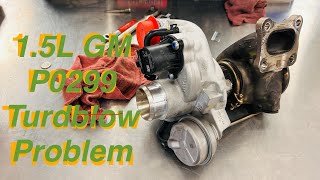
✅ What actually fixed it A new turbocharger fixed the problem. The root cause was a failed oil shaft in the original turbo that was allowing oil and exhaust blow-by into the air (compressor) side of the turbo. - YouTube video by 'everyday tryer' (GMC Terrain with 1.5L Turbo) — P0299 underboost code.
❌ Tried (didn't work) The video focuses on the diagnosis, not prior failed attempts.
✅ What actually fixed it The hole in the turbo wastegate lever where the actuator arm connects was 'wallered out' (worn into an oval shape), causing excessive play and preventing the wastegate from closing properly to build boost. The entire turbocharger was replaced to fix the issue.
"I Checked Everything" — The Actual Cause
- In cold climates, a smoke test may show no leaks, but the actual cause is an internal blockage of the Charge Air Cooler (CAC) due to frozen moisture from the PCV system and ambient air. This requires removing the cooler to confirm the ice blockage.
- A smoke test will not reveal a mechanically failed turbocharger, such as a worn wastegate linkage arm hole or a failed internal oil shaft. If the charge air system is confirmed to be sealed, the turbo itself must be inspected for mechanical integrity.
OEM Part Supersession History
Unknown→84454111— This is the current OEM part number for the Charge Air Cooler. Previous versions may have been more susceptible to the icing issue, though this is not officially stated by GM.
Model Year Variations Within This Range
- 2023-2025: For the 2023 model year, the engine was updated to the 1.5L LSD, replacing the 1.5L LYX used from 2018-2022. The new LSD engine was retuned for slightly higher horsepower (175 hp vs 170 hp) and features a higher-pressure fuel system and an electro-hydraulic braking system.
- 2022: The 2022 model year was a mid-cycle refresh which included updated exterior styling and interior tech. The optional 2.0L turbo engine was discontinued, leaving the 1.5L turbo as the only engine choice.
- 2023+: A GM TechLink report identified a potential issue on 2023 models with the new 1.5L LSD engine where the anti-abrasion sleeve on the charge air inlet pipe can split, causing the hose to swell and leak, triggering P0299.
Helpful Videos
We Have This Part in Stock

The information in this article is provided for general reference and educational purposes only. Vehicle specifications, procedures, and part compatibility can vary by production date, trim level, and region. Always consult your vehicle's factory service manual and verify part numbers before purchasing or performing repairs. Safety-critical components such as airbags, seat belts, and braking systems should be installed by a qualified professional.
- Gmc TERRAIN:
- 🎬 Helpful Videos
- 🛍️ Shop This Part
- What's Unique About the 2018-2025 Gmc TERRAIN
- Diagnostic Flowchart
- Symptoms You May Notice
- Most Likely Causes
- Rare But Worth Checking
- Diagnosis Steps
- Parts You'll Likely Need
- Related Codes That Often Appear With This One
- Technical Service Bulletins (TSBs) & Recalls
- Platform-Specific Known Issues
- Mechanic-Grade Diagnostic Values
- Scan Tool Commands That Help
- Wiring & Ground Locations
- Real Owner Repair Stories
- "I Checked Everything" — The Actual Cause
- OEM Part Supersession History
- Model Year Variations Within This Range
- 🎟️ Get 5% Off