

P0299 on 2016-2021 Ford Explorer: Turbo Underboost Causes and Fixes
On a 2016-2021 Ford Explorer with an EcoBoost engine, code P0299 is most often caused by a faulty turbocharger wastegate actuator, often just a missing e-clip on the actuator rod. Ford has issued multiple Technical Service Bulletins (TSBs) for this exact issue. Checking the wastegate linkage is the first step before attempting more costly repairs. Other common causes include a software glitch on 2020 models requiring a PCM update and a restricted air inlet tube.
- For a 2016-2021 Explorer, P0299 is very frequently caused by a minor mechanical issue with the turbo wastegate actuator, not the turbo itself.
- Before any other diagnosis, visually inspect the wastegate actuator rod and its retaining e-clip. This is a free check that can save hundreds of dollars.
- If you have a 2020 Explorer with the 2.3L engine, be aware that a simple software update (TSB 20-2246) might be the only fix required.
- Another simple check is to inspect the air inlet tube for a dislodged plastic insert that could be blocking airflow to the turbo.
- Do not immediately assume the entire turbocharger needs replacement. The most common fixes are inexpensive parts like an actuator kit, a clip, or a software flash.
What's Unique About the 2016-2021 Ford EXPLORER

The 2016-2021 Explorer, particularly with the 2.3L EcoBoost engine, is well-documented by Ford for having specific issues that trigger a P0299 code. Unlike generic underboost problems, many Explorer cases trace back to a very small, specific part: the e-clip on the turbocharger wastegate actuator rod. Its failure is so common that Ford issued multiple TSBs (like TSB 16-0122) and created special service kits, making this a highly probable and specific first check for any owner. Additionally, some 2020 models can trigger this code due to a simple software glitch requiring a PCM update as outlined in TSB 20-2246. A third unique issue is an internal finned insert in the air inlet tube that can dislodge and block airflow to the turbo.
Diagnostic Flowchart

Tap your situation to follow the diagnostic path that matches what you're seeing on this vehicle.
Generation note: This range covers two Explorer generations. The 5th generation (2016-2019) primarily used the 2.3L EcoBoost I4. The 6th generation (2020-2021) offered both the 2.3L EcoBoost I4 and a 3.0L EcoBoost V6. While many TSBs focus on the 2.3L engine, the underlying wastegate and boost leak issues can affect all EcoBoost variants. The 3.0L V6 uses a twin-turbo setup, so a P0299 code could point to an issue with either turbocharger.
Symptoms You May Notice

- Illuminated Check Engine Light (Malfunction Indicator Lamp)
- Significant loss of engine power and acceleration.
- Vehicle may enter 'limp mode' with reduced performance.
- Unusual whistling, hissing, or siren-like sounds from the engine bay/turbo area.
- Surging or hesitation during acceleration.
- Poor fuel economy.
- Replacing the entire turbocharger when only the wastegate actuator or e-clip has failed. Ford TSBs explicitly advise against this, as the actuator is a serviceable part.
- Assuming the PCM update (TSB 20-2246) is the only fix needed, without checking for underlying mechanical issues like the restricted air inlet tube.
Most Likely Causes

- Faulty Turbocharger Wastegate Actuator (or missing E-Clip) 🔴 High Probability This is a widely documented failure. Ford TSB #SSM 50171, #TSB 16-0122, and #SSM 49427 directly address the actuator rod disconnecting, the actuator failing, or the retaining e-clip simply falling off on 2.3L EcoBoost engines. This issue is common enough that it also affects platform mates like the Ford Ranger.
How to confirm: Visually inspect the turbocharger wastegate actuator. Check if the actuator rod is disconnected from the wastegate arm. Look for a small, missing e-clip 🎬 See how to inspect and fix the wastegate actuator rod. that should secure the rod. Use a scan tool or vacuum pump to test if the actuator holds a vacuum and moves the rod smoothly.
Typical fix: If only the clip is missing, install a new e-clip. If the actuator is faulty, replace the wastegate actuator assembly. Ford has released service kits (Part #LB5Z-9G488-B for Explorer/Ranger) specifically for this repair, which includes the actuator, rod, and clips. The entire turbocharger does not need to be replaced for this issue.
Est. part cost: $5 - $150 - Powertrain Control Module (PCM) Software Issue 🟡 Medium Probability Specifically for 2020 Explorers with the 2.3L engine built on or before July 14, 2020, Ford issued TSB 20-2246. The bulletin states that the P0299 code can be falsely triggered by a software glitch. A diagnostic video confirms that even after this update, the code may persist if another mechanical issue is present.
How to confirm: A Ford dealership or a qualified shop with access to Ford's diagnostic software (FDRS) can check the current PCM software calibration level against the latest available version. The TSB specifies a labor time of 0.4 hours for this service.
Typical fix: Reprogram the PCM to the latest software version. This is a software-only fix and requires no parts replacement. The TSB notes that after the update, the adaptive transmission strategy is reset, which may result in firmer shifts for several days.
Est. part cost: $0 - Restricted Turbocharger Air Inlet Tube 🟡 Medium Probability A plastic, finned insert inside the air inlet tube leading to the turbocharger can become dislodged and turn sideways, creating a severe airflow restriction. This has been documented by technicians on 2020 models in a detailed diagnostic video where it was the ultimate root cause after a PCM update did not fix the issue. 🎬 Watch this technician diagnose the dislodged air inlet tube insert.
How to confirm: Remove the large flexible air tube that runs from the air filter box to the turbocharger inlet. Look inside the tube, especially near the end that connects to the turbo, for a loose or sideways plastic insert. The insert may appear loose even when positioned correctly, indicating it's at risk of failing.
Typical fix: Replace the entire turbocharger air inlet tube. The insert is not typically serviced separately. The technician in the video debates whether the part failed over time due to heat or was installed incorrectly at the factory.
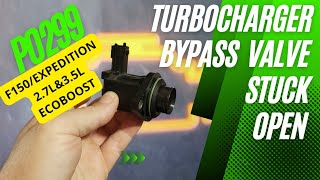
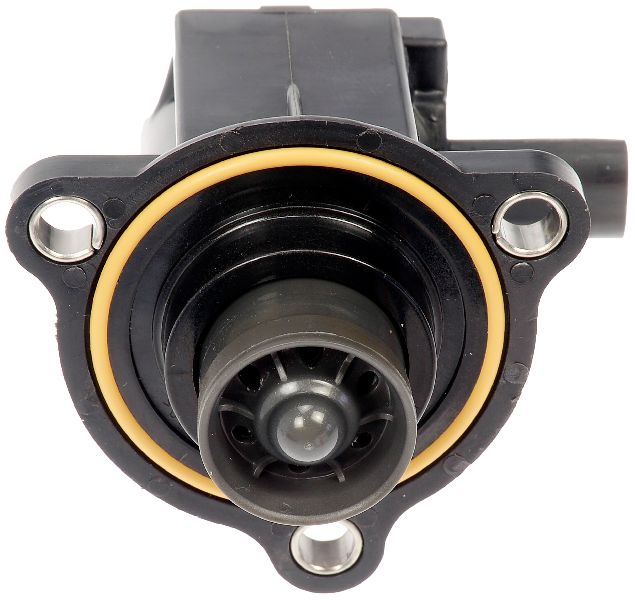
Est. part cost: $50 - $150 - Leaking Turbocharger Bypass/Diverter Valve ⚪ Low Probability The diaphragm in the electronic bypass valve (also called a blow-off valve or TCBY valve) can tear or the valve can get stuck open due to rust on the internal shaft, creating a constant boost leak. This is a common failure point on many EcoBoost engines, leading to a slight underpowered feeling. A Reddit user also mentioned replacing a faulty 'Pressure Relief Valve' to solve their P0299. 🎬 Watch how a faulty bypass valve causes underboost issues.
How to confirm: Remove the valve, which is typically mounted on the intercooler piping. Inspect the rubber diaphragm for tears or holes. Check if the valve piston is stuck in the open position. A smoke test may not find this leak since it's a closed-loop recirculation.
Typical fix: Replace the bypass valve assembly. Some videos suggest it might be possible to temporarily free a stuck valve with penetrating oil, but replacement is the correct long-term repair.
Est. part cost: $40 - $100 - Cracked or Loose Charge Air Pipes ⚪ Low Probability
How to confirm: Visually inspect all the plumbing between the turbocharger, the intercooler (which is in the front bumper area), and the engine's throttle body. Look for loose clamps, disconnected hoses, or cracks in the plastic pipes. A smoke test is the most effective way to find leaks. An owner on ExplorerSTForum.com reported their P0299 was caused by a charge pipe to the intercooler that had come slightly apart.
Typical fix: Tighten loose clamps or replace the damaged pipe section.
Est. part cost: $20 - $300
Rare But Worth Checking
- Complete Turbocharger Failure: While less common than the actuator issue, internal failure of the turbocharger (bearings, turbine/compressor wheels) can cause underboost. This is often accompanied by more severe symptoms like heavy white or blue smoke from the exhaust and a loud grinding or siren-like noise.
- Clogged Catalytic Converter: A failing turbo can shed debris into the exhaust, clogging the catalytic converter. Conversely, a pre-existing clog can increase backpressure and affect turbo performance, though this is less common for causing an underboost code.
- Faulty Boost Pressure Sensor (MAP/TIP): The sensor that measures boost pressure can fail and send incorrect readings to the PCM, causing the code to set even if the turbo is functioning correctly. A user on a Reddit forum suggested this as a likely cause when a restart temporarily fixes the issue.
- Foreign Object in Air Intake: A user on an Explorer ST forum reported finding a plastic bag sucked into the air intake and trapped against the filter, which caused their P0299 code. Always check for simple obstructions.
Diagnosis Steps
- Scan for all DTCs. Note any other codes that appear alongside P0299, as they can provide valuable clues.
- For 2020 2.3L models, check with a dealer if TSB 20-2246 (PCM update) applies to your vehicle's VIN and build date.
- Perform a thorough visual inspection of the turbocharger area. Specifically locate the wastegate actuator and its linkage rod. Check for a disconnected rod and the presence of the small metal e-clip holding it in place. This is the most common failure point. (TSB #SSM 49427, #TSB 16-0122)
- Inspect the air intake tube between the air filter box and the turbocharger. Check for a dislodged internal plastic insert that could be blocking airflow, a known issue on 2020 models.
- Inspect all charge air cooler pipes and hoses for cracks, damage, or loose connections from the turbo to the engine intake. A user on explorerstforum.com found a loose charge pipe was the cause. A smoke test can help identify hard-to-see leaks.
- If no obvious mechanical faults are found, test the wastegate actuator using a vacuum pump to see if it holds vacuum and moves the wastegate arm smoothly.
Parts You'll Likely Need
- Turbocharger Wastegate Actuator Service Kit
(OEM #LB5Z-9G488-B)— This is the most common cause of P0299 on this platform, as documented by multiple Ford TSBs. The kit includes the actuator, rod, and the failure-prone e-clips.
Trusted brands: Motorcraft
OEM price range: $80-$150
Aftermarket price range: $50-$100 - Turbocharger Air Inlet Tube — A dislodged internal baffle in the original tube can cause a significant restriction, leading to an underboost code.
Trusted brands: Motorcraft
OEM price range: $70-$150
Aftermarket price range: $50-$100 - Turbocharger Bypass Valve
(OEM #CJ5G-9U465-BA)— The diaphragm in this valve can tear, causing a boost leak. It's a common failure item on many EcoBoost engines.
Trusted brands: Motorcraft, Bosch
OEM price range: $60-$90
Aftermarket price range: $25-$50
Related Codes That Often Appear With This One
- P25B4 — This code means 'Turbocharger/Supercharger Wastegate 'A' Stuck Closed'. It directly points to a mechanical problem with the wastegate system, corroborating the most common cause of P0299. (NHTSA ODI #11565594)
- P02AB, P0243, P25B3, P2AB7, P2AB8, P2AB9 — These are all various turbocharger/wastegate control circuit or position sensor codes. Ford groups them with P0299 in TSBs #SSM 50171 and #SSM 49427 as being related to wastegate actuator failures. A Ford Ranger owner reported P0299 alongside P29AB ('wastegate position sensor out of range high').
Technical Service Bulletins (TSBs) & Recalls
- TSB 16-0122: Wastegate actuator rod may disconnect on 2016 2.3L models.
- TSB 20-2246: PCM software update needed for P0299 on some 2020 2.3L models.
- SSM 49427: Missing wastegate actuator e-clip on 2020-2021 2.0L/2.3L models.
- SSM 50171: Inoperative wastegate actuator or missing e-clip on 2.0L/2.3L models.
Platform-Specific Known Issues
- TSB 16-0122: Affects some 2016 Explorers with the 2.3L engine, citing the turbocharger wastegate actuator rod disconnecting as the cause for P0299.
- TSB 20-2246: Affects some 2020 Explorers with the 2.3L engine (built on or before 14-Jul-2020), identifying a PCM software issue that requires a reprogram to fix P0299.
- SSM 49427 & SSM 50171: These bulletins cover 2020-2021 Explorers (and other Ford models) with the 2.0L/2.3L EcoBoost, pointing to a missing wastegate actuator e-clip or an inoperative actuator as the cause for P0299 and other related codes.
Mechanic-Grade Diagnostic Values
- P0299 Trigger Condition — expected: Actual Throttle Intake Pressure (TIP) should be within 4 psi of desired pressure.. Failure: Code sets if actual pressure is 4 psi or more below desired for 5 seconds or longer.
- Typical Freeze Frame Data (at time of fault) — expected: Load: 31%, MAP: 85 kPa (12.3 PSI), Vehicle Speed: 66 mph, RPM: 3400.. Failure: These values from a real-world case show the code setting under a light cruise/acceleration condition, not necessarily heavy load.
- Wastegate Control Solenoid Voltage — expected: Battery voltage. Failure: If no voltage is present between the White/Orange and Violet/Brown wires at connector C1672 when the solenoid is commanded on by a scan tool, it indicates a circuit fault.
- Exhaust Backpressure — expected: Below 3 psi at idle, below 8 psi at wide-open throttle.. Failure: Higher readings indicate a restriction (e.g., clogged catalytic converter) that is preventing the turbo from spooling correctly.
Scan Tool Commands That Help
- Ford Diagnostic & Repair System (FDRS) or equivalent: Wastegate Control Solenoid - On/Off Command — This bidirectional control is used to test the function of the wastegate solenoid and its vacuum circuit. When commanded on at idle, engine vacuum should be measurable at the wastegate actuator's vacuum line.
- Ford Diagnostic & Repair System (FDRS): PCM Reprogramming / Software Update — Used to apply fixes for software-related issues, such as the one described in TSB 20-2246 for 2020 models where the P0299 code could be falsely triggered.
Wiring & Ground Locations
- C1672 — Electrical connector for the wastegate control solenoid.. This is the connector where voltage tests are performed to verify power and control signals to the solenoid that manages turbo boost. Key wires are White/Orange and Violet/Brown.
- G100 / G105 — Main engine ground points, typically on the top rear (G100) or top right side (G105) of the engine block/head. (Based on 2011 Explorer data).. A poor engine ground can cause erratic behavior in sensors and actuators controlled by the PCM, including the turbocharger control system, leading to incorrect readings or intermittent faults.
Real Owner Repair Stories
- YouTube channel 'FordTechMakuloco' (2020 Ford Explorer, 2.3L EcoBoost, 14,000 miles) — Check engine light with code P0299, lack of power.
❌ Tried (didn't work) Performing a PCM software update per TSB 20-2246.
✅ What actually fixed it The plastic, finned insert inside the turbocharger air inlet tube had dislodged and turned sideways, blocking airflow. Replacing the entire air inlet tube resolved the underboost condition. - Reddit user in r/FordExplorer (2020 Ford Explorer XLT, 89,000 miles) — Check engine light with code P0299.
❌ Tried (didn't work) Initial diagnosis was uncertain.
✅ What actually fixed it Another user reported their identical issue was fixed by replacing the 'Pressure Relief Valve' which had a hole in it. This is another name for the turbocharger bypass/diverter valve. - YouTube channel 'The Auto-Dis-Mension' (2016 Ford Explorer, 3.5L EcoBoost (twin turbo)) — P0299, P0304 (misfire), heavy white smoke from exhaust, rough/surging idle, low engine oil.
❌ Tried (didn't work) Ruling out coolant leak as cause for white smoke.
✅ What actually fixed it Complete internal failure of the rear turbocharger. Oil was leaking past the failed shaft bearings directly into the exhaust. The fix required replacing the turbocharger, the oil-contaminated catalytic converter, and the downstream oxygen sensor.
"I Checked Everything" — The Actual Cause
- A common scenario where a smoke test of the charge air system reveals no leaks, yet the P0299 code persists, is a failed Turbocharger Bypass Valve (TCBY), also known as a diverter valve. If the valve is stuck open internally, it constantly recirculates boost pressure back to the turbo's inlet instead of sending it to the engine. Because this is a closed loop, a smoke test will not show an external leak. The valve must be physically removed and inspected to confirm if it is stuck in the open position.
When the Usual Fixes Don't Work
- While the most common fixes for P0299 on the 2.3L EcoBoost revolve around the wastegate actuator e-clip and linkage, a well-documented case on a 2020 Explorer showed that these common fixes are not always the solution. In that instance, after a dealership performed the recommended PCM software update (TSB 20-2246) to no effect, the actual cause was found to be a dislodged plastic insert inside the main air intake tube leading to the turbo. This highlights the importance of checking for simple physical obstructions even when TSBs point towards software or common mechanical failures.
Model Year Variations Within This Range
- 2020-2021: The 2020 model year marked the beginning of the 6th generation. The platform switched to a RWD-based architecture with a standard 10-speed automatic transmission. The 2.3L EcoBoost was revised to produce 300 hp, and the 3.0L EcoBoost V6 (365-400 hp) became an option.
- 2020 (built on or before July 14, 2020): These specific 2.3L models may trigger a P0299 code due to a PCM software glitch, which is correctable with a software update per TSB 20-2246.
- 2016-2019: These 5th generation models are FWD-based. The 2.3L EcoBoost was a primary engine option, but issues on these model years are more commonly related to the mechanical wastegate actuator linkage (e.g., disconnected rod per TSB 16-0122) rather than the software or air tube insert issues seen in early 6th gen models.
Helpful Videos


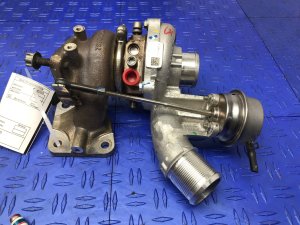
Used OEM Parts in Stock


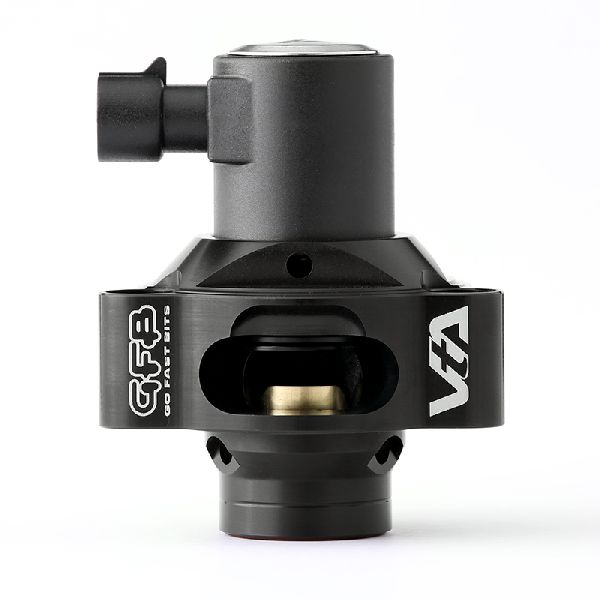
New Aftermarket Parts Available



The information in this article is provided for general reference and educational purposes only. Vehicle specifications, procedures, and part compatibility can vary by production date, trim level, and region. Always consult your vehicle's factory service manual and verify part numbers before purchasing or performing repairs. Safety-critical components such as airbags, seat belts, and braking systems should be installed by a qualified professional.
- Ford EXPLORER:
- 🎬 Helpful Videos
- 🛍️ Shop This Part
- What's Unique About the 2016-2021 Ford EXPLORER
- Diagnostic Flowchart
- Symptoms You May Notice
- Most Likely Causes
- Rare But Worth Checking
- Diagnosis Steps
- Parts You'll Likely Need
- Related Codes That Often Appear With This One
- Technical Service Bulletins (TSBs) & Recalls
- Platform-Specific Known Issues
- Mechanic-Grade Diagnostic Values
- Scan Tool Commands That Help
- Wiring & Ground Locations
- Real Owner Repair Stories
- "I Checked Everything" — The Actual Cause
- When the Usual Fixes Don't Work
- Model Year Variations Within This Range
- 🎟️ Get 5% Off