

P0299 on 2019-2022 Ford Edge: Turbo Underboost Causes and Fixes
On a 2019-2022 Ford Edge, code P0299 is most often caused by a faulty turbocharger wastegate actuator or a missing e-clip on the actuator rod, a known issue covered by Ford's Technical Service Bulletins. This is a relatively inexpensive fix if only the clip or actuator needs replacement, but can be costly if the entire turbocharger is replaced.
- P0299 on a 2019-2022 Edge is very likely a problem with the turbo wastegate actuator.
- Before any expensive repairs, perform a careful visual inspection of the wastegate actuator rod to see if the retaining e-clip has fallen off. This is a very cheap and easy fix.
- If the clip is present, the actuator itself may have failed, which is a more involved but still common repair.
- Always check for simple air leaks in the intake system before assuming the turbocharger itself has failed.
What's Unique About the 2019-2022 Ford EDGE

The 2.0L EcoBoost engine used in the Ford Edge is known for issues related to the turbocharger wastegate. Ford has issued multiple Technical Service Bulletins (TSBs) acknowledging that the electronic wastegate actuator can fail or, more commonly, the small e-clip holding its linkage rod can fall off. This specific, well-documented failure is the most probable cause for a P0299 code on this vehicle, making it a more targeted diagnosis than on many other turbocharged cars. TSB SSM 50485 even introduced a specific service kit (K2GZ-9G488-B) to replace just the actuator, rod, and clips, avoiding the cost of a full turbo replacement.
🎬 Watch: Why you shouldn't replace the entire turbo yet.Diagnostic Flowchart

Tap your situation to follow the diagnostic path that matches what you're seeing on this vehicle.
Symptoms You May Notice

- Illuminated Malfunction Indicator Lamp (MIL) or Check Engine Light
- Significant lack of engine power and poor acceleration.
- Wrench light may appear on the dashboard, indicating a powertrain fault.
- Unusual whistling, rattling, or grinding noises from the engine bay or turbo area.
- Cruise control may be disabled.
- Vehicle may enter a 'reduced power' or 'limp mode'.
- Replacing the entire turbocharger when only the wastegate actuator e-clip was missing or the actuator itself was faulty (a repair now possible with kit K2GZ-9G488-B).
- Replacing boost pressure sensors without first checking for air leaks or wastegate actuator problems.
Most Likely Causes

- Faulty Turbocharger Wastegate Actuator or Missing E-Clip 🔴 High Probability This is a widely documented issue for Ford's 2.0L/2.3L EcoBoost engine family, as confirmed by multiple manufacturer TSBs (SSM 50485, SSM 50171, SSM 49427). The actuator can fail electronically or the retaining clip for the actuator rod can simply fall off. TSB SSM 50485 specifically notes this can also be due to 'non-visible damage to the actuator rod'.
How to confirm: Visually inspect the turbocharger wastegate actuator, located on the turbo itself. Check if the actuator rod is connected to the wastegate arm and if the small metal e-clip is present and secure. A scan tool can also be used to command the wastegate and check for a response. A rattling noise from the turbo area at idle or on light throttle can be an audible symptom of a loose wastegate linkage. 🎬 See how a failed wastegate causes loss of boost.
Typical fix: If the clip is missing, a new one must be installed. If the actuator itself is inoperative, the actuator assembly needs to be replaced. Ford has released a service kit (Part No. K2GZ-9G488-B) which includes the actuator, rod, and clips, allowing for this repair without replacing the entire turbocharger assembly.
Est. part cost: $5 (e-clip) - $250 (actuator kit) - $1500+ (full turbo assembly) - Air Leak in the Intake or Boost System 🟡 Medium Probability Modern engines use many plastic and rubber components in the air intake path. Over time, heat and vibration can cause hoses to crack, clamps to loosen, or the intercooler to develop leaks, allowing pressurized boost air to escape.
How to confirm: Perform a visual inspection of all air intake hoses and the intercooler for cracks, loose connections, or signs of oil residue (which can indicate a leak). A smoke test is the most effective method, where a machine fills the intake system with smoke to reveal the exact location of any leaks. 🎬 Watch: A step-by-step guide to fixing underboost codes. Check all clamps, as a loose clamp is a common and simple cause.
Typical fix: Tighten loose clamps or replace the cracked hose, leaking gasket, or damaged intercooler.
Est. part cost: $20 (hose) - $400 (intercooler) - Faulty Boost Pressure Sensor (MAP Sensor) ⚪ Low Probability
How to confirm: Use a scan tool to monitor the boost pressure reading with the key on and engine off; it should match the barometric pressure. Compare the live data reading to a manual boost gauge during operation. If the sensor's readings are erratic or incorrect, it is likely faulty.
Typical fix: Replace the boost pressure sensor.
Est. part cost: $50-$100 - Cracked Exhaust Manifold / Turbo Housing ⚪ Low Probability The turbocharger housing and exhaust manifold are integrated into a single component on this engine. Extreme heat cycles can cause the manifold to crack, allowing exhaust gas to leak before it can spin the turbine wheel, resulting in an underboost condition.
How to confirm: Visually inspect the exhaust manifold for cracks, often identifiable by black soot trails. A ticking or tapping noise, especially when the engine is cold, can also indicate a leak.
Typical fix: Because the manifold and turbo are integrated, a crack requires the replacement of the entire turbocharger assembly.
Est. part cost: $1200-$1800 (full turbo assembly)
Rare But Worth Checking
- Restricted Air Intake or Exhaust: A severely clogged engine air filter can starve the turbo of air. Similarly, a clogged catalytic converter can prevent exhaust gases from spinning the turbo effectively. Check the air filter first as it's simple.
- Internal Turbocharger Failure: While less common than the actuator issue, the turbo itself can fail due to worn bearings, often from oil starvation or contamination. This is usually accompanied by a loud whining or grinding noise and is a much more expensive repair.
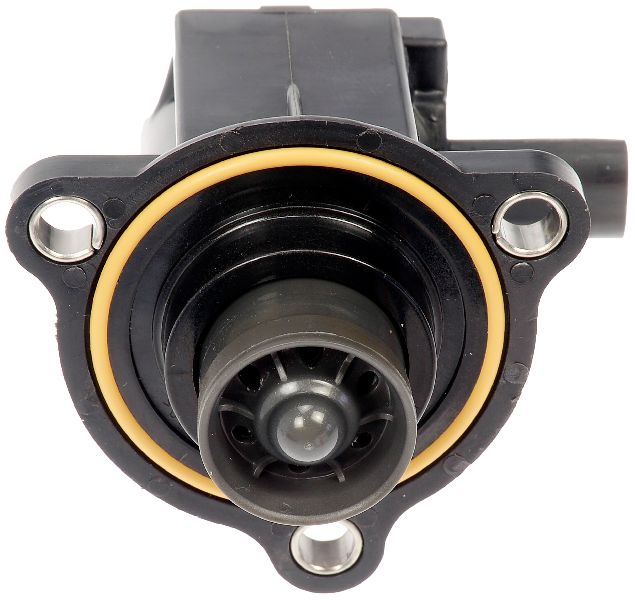
- Faulty Turbocharger Bypass/Diverter Valve: The bypass valve (or diverter valve) recirculates excess boost pressure. If it sticks open or its diaphragm tears, it can create a constant boost leak, leading to a P0299 code. This is a known failure point on many EcoBoost engines and is a relatively inexpensive part to replace.
Diagnosis Steps
- Read all stored DTCs with an OBD-II scanner to see if other codes are present.
- Visually inspect the turbocharger wastegate actuator rod and retaining e-clip. This is the most common point of failure. Check if the rod is disconnected from the wastegate arm.
- Inspect the entire air intake system from the air filter to the throttle body, including all hoses, clamps, and the intercooler, for any signs of cracks, damage, or loose connections.
- If no visual faults are found, perform a smoke test on the intake system to check for hard-to-see leaks.
- Inspect the turbocharger bypass/diverter valve. Check its electrical connector for oil contamination, which can indicate a failed diaphragm.
- Using a capable scan tool, monitor the live data for the boost pressure sensor (MAP) and compare it to desired values while driving.
- If all else fails, inspect the turbocharger for shaft play or signs of internal damage, which would indicate a mechanical failure of the turbo itself.
Parts You'll Likely Need
- Turbocharger Wastegate Actuator Retaining E-Clip
(OEM #W790436-S900 (Verify with VIN))— This is the most common failure point identified in Ford's own Technical Service Bulletins for the P0299 code on this engine.
Trusted brands: Motorcraft
OEM price range: $5-$15
Aftermarket price range: $1-$5 - Turbocharger Wastegate Actuator Service Kit
(OEM #K2GZ-9G488-B)— If the actuator itself has failed electronically or the rod is damaged, this kit allows for its replacement without buying a new turbo. This is the official fix per TSB SSM 50485.
Trusted brands: Motorcraft
OEM price range: $150-$250
Aftermarket price range: N/A - Turbocharger Assembly
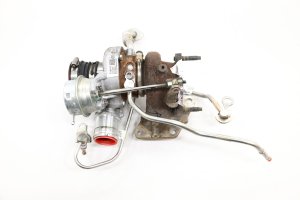
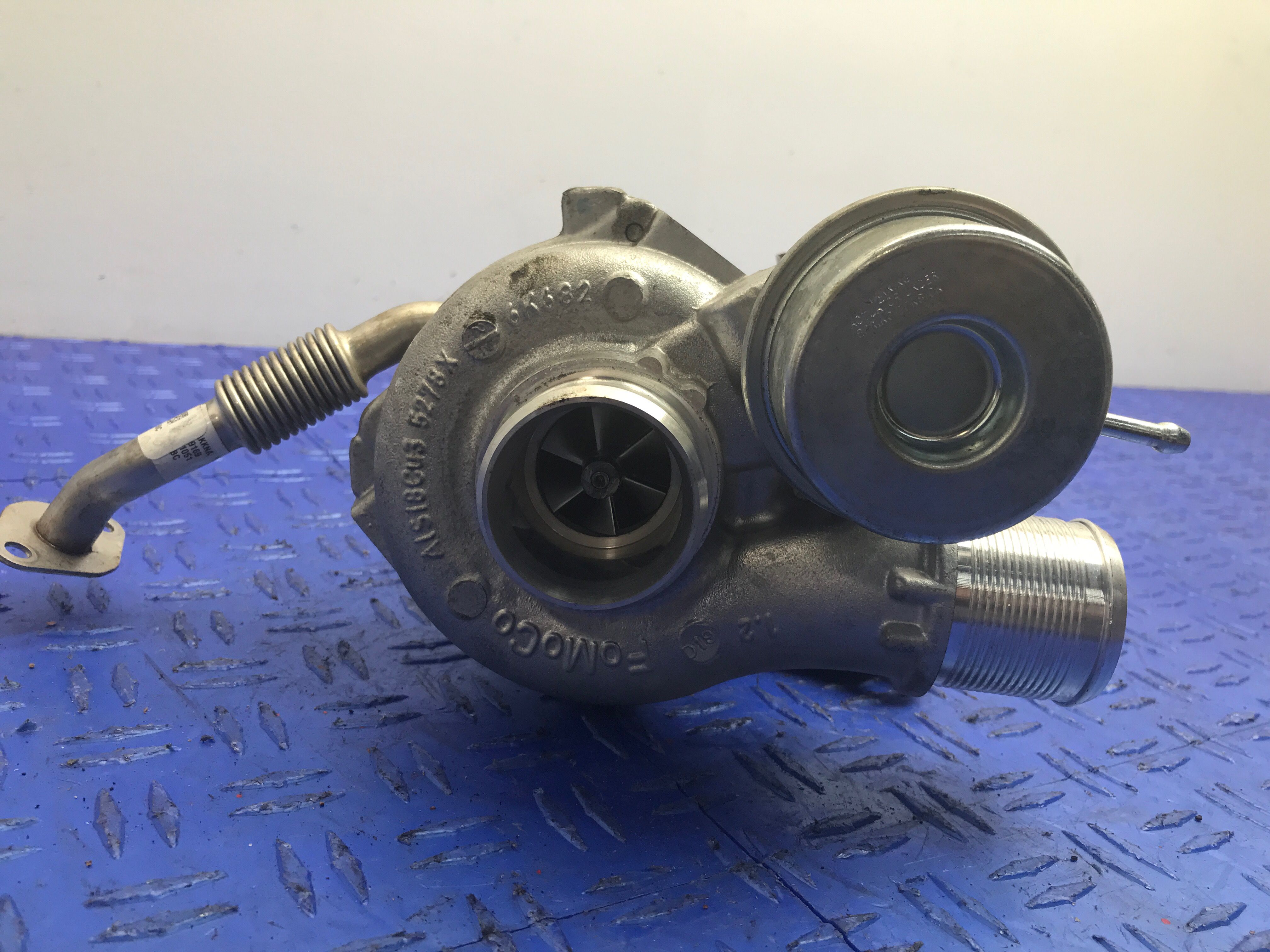
(OEM #K2GZ-6K682-A, K2GZ-6K682-D (Verify with VIN))— Required if the wastegate actuator is not sold separately (on older models/designs), if the turbo has failed internally, or if the integrated exhaust manifold is cracked.
Trusted brands: Motorcraft, BorgWarner
OEM price range: $1200-$1800
Aftermarket price range: $700-$1200
Related Codes That Often Appear With This One
- P0243 — This code for 'Turbocharger Wastegate Solenoid 'A' Malfunction' often appears with P0299 because the wastegate actuator is the component that controls boost. The TSBs confirm they are related.
- P02AB, P25B3, P25B4, P2AB7, P2AB8, P2AB9 — These are various manufacturer-specific codes related to the turbocharger boost control system and actuator, and are listed in the official Ford TSBs alongside P0299 as related codes for the same wastegate actuator fault.
Technical Service Bulletins (TSBs) & Recalls
- SSM 50485: Notes that a lack of power with DTC P0299 may be due to an inoperative wastegate actuator or missing e-clip. It introduces service kit K2GZ-9G488-B to service the actuator, rod, and clips instead of replacing the whole turbo. Applies to Edge, Nautilus, Escape, Corsair, and Bronco Sport.
- SSM 50171: Similar to the above, linking P0299 to a faulty wastegate actuator or missing e-clip. [NHTSA]
- SSM 49427: Specifically calls out a missing wastegate actuator e-clip as a cause for P0299 and other codes, noting a lower-level service component has been released. [NHTSA]
Platform-Specific Known Issues
- TSB #SSM 50485: Explicitly states that for a lack of power with DTC P0299 on 2019-2022 Edges, the cause may be an inoperative wastegate actuator, missing e-clip, or rod damage. Crucially, it announces the availability of service kit K2GZ-9G488-B to replace only the actuator instead of the entire turbocharger.
- Real-World Repair Story: A user on the Ford Edge Forum with a 2020 2.0L EcoBoost experienced P0299 and P0243. The dealer diagnosed a faulty 'wastegate solenoid' and replaced the electronic actuator under warranty, confirming the TSB's prescribed fix.
- Platform-Wide Issue: A Ford Ranger owner on the Ranger5G.com forums reported getting P0299 and P29AB, entered 'reduced power mode', and found the TSB whic
Mechanic-Grade Diagnostic Values
- Electronic Wastegate Actuator Position Voltage (Key On, Engine Off) — expected: 1.26V to 1.43V. Failure: Voltage outside this range indicates the actuator linkage is not adjusted correctly or the sensor is faulty.
Scan Tool Commands That Help
- Ford IDS (Integrated Diagnostic System): Turbocharger Test — This is a guided test that commands the electronic wastegate actuator through its range of motion while monitoring sensor feedback like MAP and exhaust back pressure. It can confirm if the actuator is physically stuck, slow to respond, or if the associated sensors are reading incorrectly.
- Ford IDS (or equivalent advanced scanner): Monitor PID: WGATE_PRES_F — This PID (Parameter Identification) shows the status of the wastegate. It can be monitored during a test drive to see if the PCM's commanded position matches the actual position, which is critical for diagnosing intermittent underboost conditions.
Wiring & Ground Locations
- Turbocharger Wastegate Actuator Connector — On the electronic wastegate actuator itself, mounted to the turbocharger assembly.. This connector is the primary electrical interface for controlling the wastegate. For the 2.0L EcoBoost, this is a 5-lead connector. For the 2.7L V6, it may be a 2-lead connector (Motorcraft WPT-1370). Checking for corrosion, damage, or pushed-out pins is a key diagnostic step. Voltage checks are performed at this connector.
Real Owner Repair Stories
- YouTube Comment on 'How to fix Code P0299 - Turbo Underboost - Ford Ecoboost' (Ford EcoBoost (model not specified, but issue is common)) — P0299 underboost code, clicking sound from engine bay.
❌ Tried (didn't work) A part was replaced (likely the diverter/bypass valve based on video context).
✅ What actually fixed it A loose clamp on a boost hose was found and tightened. This resolved the underboost code.
OEM Part Supersession History
Not specified, but multiple revisions exist.→K2GZ-9G488-B— This part number was released as a service kit to address widespread failures of the original wastegate actuator or loss of the e-clip, as documented in TSB SSM 50485. It allows for the replacement of just the actuator, not the whole turbo.
Heads up: This kit is specifically for certain 2.0L EcoBoost applications and is also listed for the Bronco Sport and Maverick. Always verify fitment with a VIN, as older or different turbo designs may not be compatible.
Model Year Variations Within This Range
- 2019: The 2019 model year was a significant refresh for the Ford Edge. The standard 2.0L EcoBoost engine received a new 8-speed automatic transmission (replacing the previous 6-speed) and a minor 5 horsepower increase. The Edge ST trim was introduced, replacing the Sport, with a 335-horsepower 2.7L twin-turbo V6.
- 2022: For the 2022 model year, Ford discontinued the front-wheel-drive option on the Edge, making all-wheel drive standard across the lineup.
Helpful Videos

Used OEM Parts in Stock

New Aftermarket Parts Available


The information in this article is provided for general reference and educational purposes only. Vehicle specifications, procedures, and part compatibility can vary by production date, trim level, and region. Always consult your vehicle's factory service manual and verify part numbers before purchasing or performing repairs. Safety-critical components such as airbags, seat belts, and braking systems should be installed by a qualified professional.
- Ford EDGE:
- 🎬 Helpful Videos
- 🛍️ Shop This Part
- What's Unique About the 2019-2022 Ford EDGE
- Diagnostic Flowchart
- Symptoms You May Notice
- Most Likely Causes
- Rare But Worth Checking
- Diagnosis Steps
- Parts You'll Likely Need
- Related Codes That Often Appear With This One
- Technical Service Bulletins (TSBs) & Recalls
- Platform-Specific Known Issues
- Mechanic-Grade Diagnostic Values
- Scan Tool Commands That Help
- Wiring & Ground Locations
- Real Owner Repair Stories
- OEM Part Supersession History
- Model Year Variations Within This Range
- 🎟️ Get 5% Off