

P0299 on 2021-2025 Chevrolet Trailblazer: Underboost Causes & Fixes
P0299 on your Trailblazer indicates the turbo isn't making enough boost. The most common causes are specific to this platform: a worn wastegate linkage causing a rattle (TSB 23-NA-058), a restricted wastegate vacuum line (TSB PIP5978), charge air cooler icing in cold weather (TSB 21-NA-293), or outdated engine software. Always check for these manufacturer-documented issues before considering a costly turbo replacement. For some 2022 models, GM has extended the turbo warranty.
- P0299 on a 2021-2025 Trailblazer means the turbo is not providing enough boost, leading to significant power loss.
- Before assuming the turbo has failed, investigate the three most common, vehicle-specific causes: a restricted wastegate vacuum line (TSB #PIP5978), charge air cooler icing in cold weather (TSB #21-NA-293), and outdated engine software (TSB #PIP5903).
- A rattling noise during a cold start is a strong indicator of a worn wastegate linkage, which typically requires a full turbocharger replacement (TSB #23-NA-058).
- An ECM software update at a dealership is a potential, simple fix and should be considered early in the diagnostic process.
- Check for special coverage or extended warranties, as GM has offered programs for turbo-related issues on these engines.
What's Unique About the 2021-2025 Chevrolet TRAILBLAZER

The 2021-2025 Trailblazer and its platform-mate, the Buick Encore GX, with their small-displacement 1.2L and 1.3L turbocharged engines, are particularly susceptible to specific issues that cause P0299. Unlike generic underboost problems, this vehicle has several manufacturer-identified weak points. These include a common failure of the turbocharger's wastegate linkage, manufacturing defects like restricted vacuum lines, a tendency for the charge air cooler to freeze in cold climates, and software calibration issues, all of which have been documented in Technical Service Bulletins (TSBs).
Diagnostic Flowchart

Tap your situation to follow the diagnostic path that matches what you're seeing on this vehicle.
Symptoms You May Notice

- Drastically reduced engine power and sluggish acceleration
- "Reduced Engine Power" message on the dashboard
- Check Engine Light (Malfunction Indicator Lamp) is on
- Engine stalling
- Hissing, whistling, or rattling noise from the engine bay, near the turbocharger
- Cold start rattle noise from the engine compartment, which is a key symptom of wastegate linkage wear
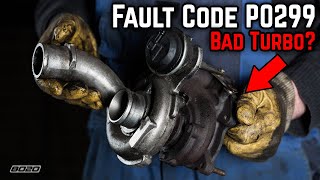
- Replacing the entire turbocharger assembly without first checking for simpler issues like a restricted vacuum line, an outdated ECM calibration, or a boost leak. The TSBs for this vehicle strongly suggest these should be the first checks. 🎬 Watch: Why you shouldn't replace your turbo right away
- Replacing O2 sensors or catalytic converters chasing a lean condition that is actually caused by the unmetered air of an underboost condition.
Most Likely Causes


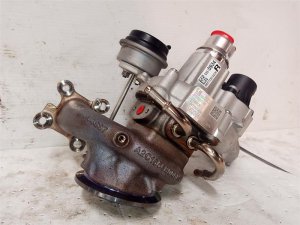
- Worn Turbocharger Wastegate Linkage 🔴 High Probability TSB #23-NA-058 (superseding PIP5829A) points to premature wear in the wastegate linkage arm hole or spindle bushing. This wear creates excessive play, preventing the wastegate from closing properly, leading to a loss of boost and often a distinct rattle. A technician video shows this exact failure mode, with play in the bushing allowing the wastegate to stay open.
How to confirm: A rattling noise on a cold start that can be quieted by touching the wastegate actuator rod with a long screwdriver is a key indicator as per TSB #23-NA-058. A visual inspection may show excessive play in the linkage.
Typical fix: This condition requires the replacement of the entire turbocharger assembly. For some 2022 models, this may be covered under GM's Special Coverage bulletin #N242484750, which extends the warranty to 15 years/150,000 miles.
Est. part cost: $800-$1600 - Charge Air Cooler (CAC) Icing 🔴 High Probability TSB #21-NA-293 explicitly links P0299 to charge air cooler icing during extremely cold weather (typically below 0°F / -18°C), which blocks airflow and reduces boost. Ambient and PCV moisture freezes and accumulates in the CAC.
How to confirm: This is difficult to confirm without disassembly, but it's a primary suspect if the P0299 code appears only during or after a cold snap in freezing temperatures.
Typical fix: The official GM fix involves an updated ECM calibration and adding a baffle to the CAC system to mitigate icing. In the short term, the vehicle may need to be stored in a warm place to thaw.
Est. part cost: $0-$200 (dealer programming and baffle installation) - Restricted Wastegate Vacuum Line 🟡 Medium Probability A specific TSB (#PIP5978) notes that adhesive bonding material can restrict the vacuum supply line from the vacuum pump to the wastegate solenoid, preventing proper turbo control.
How to confirm: Visually inspect the vacuum line between the vacuum pump and wastegate solenoid for kinks, blockages, or restrictions. The TSB implies this is a manufacturing defect.
Typical fix: Clear the restriction or replace the affected vacuum line.
Est. part cost: $10-$50 - Outdated Engine Control Module (ECM) Calibration 🟡 Medium Probability TSB #PIP5903 and #PIP5903A indicate that the ECM's diagnostic sensitivity for P0299 may be too high, causing the code to set erroneously. Another TSB for the icing issue also requires a calibration update.
How to confirm: A GM dealership or qualified shop must check the current calibration version against the latest available software using a scan tool.
Typical fix: Reprogram the ECM with the updated calibration. This must be done by a professional service center.
Est. part cost: $0 (parts), $100-$200 (labor) - Boost/Intake Air Leak 🟡 Medium Probability Loose connections or cracks in the plastic and rubber hoses of the charge air system are a common failure point on all turbocharged vehicles.
How to confirm: Perform a smoke test on the intake and charge air system to reveal leaks from hoses, clamps, or the intercooler itself. 🎬 See this walkthrough on fixing common low boost issues Listen for audible hissing or whistling sounds.
Typical fix: Tighten loose clamps or replace the cracked/leaking component.
Est. part cost: $20-$300 - Faulty Turbocharger Wastegate Solenoid ⚪ Low Probability
How to confirm: Test the solenoid's operation using a vacuum pump and gauge according to the diagnostic procedure outlined in TSB #PIP5829A. This involves checking if the solenoid can hold vacuum and actuate correctly.
Typical fix: Replace the wastegate solenoid valve.
Est. part cost: $50-$150
Diagnosis Steps
- Read the trouble codes with an OBD-II scanner and note all present codes, including pending and history codes.
- Crucially, check for applicable TSBs and Special Coverage. For this vehicle, TSBs #23-NA-058, #21-NA-293, #PIP5978, #PIP5903, and Special Coverage #N242484750 are highly relevant.
- Listen for a cold start rattle. If present, follow the diagnostic steps in TSB #23-NA-058. Use a long screwdriver to gently touch the wastegate actuator rod. If the noise stops, wastegate linkage wear is confirmed, and the turbo needs replacement.
- Consider environmental conditions. If the ambient temperature is near or below freezing (0°F / -18°C), suspect Charge Air Cooler icing as per TSB #21-NA-293.
- Inspect the wastegate vacuum line for restrictions as described in TSB #PIP5978.
- Contact a dealer to verify if the ECM has the latest software calibration, as per TSB #PIP5903.
- Perform a smoke test to check for any leaks in the intake tract, from the air filter to the throttle body, including all charge pipes and the intercooler.
- If no leaks are found, test the wastegate solenoid and actuator with a vacuum pump to ensure they hold vacuum and operate correctly per the procedure in TSB #PIP5829A.
- If all other steps fail to identify the issue, inspect the turbocharger itself for excessive shaft play or visible damage to the turbine wheels.
Parts You'll Likely Need
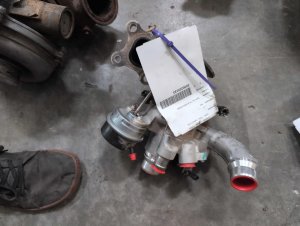
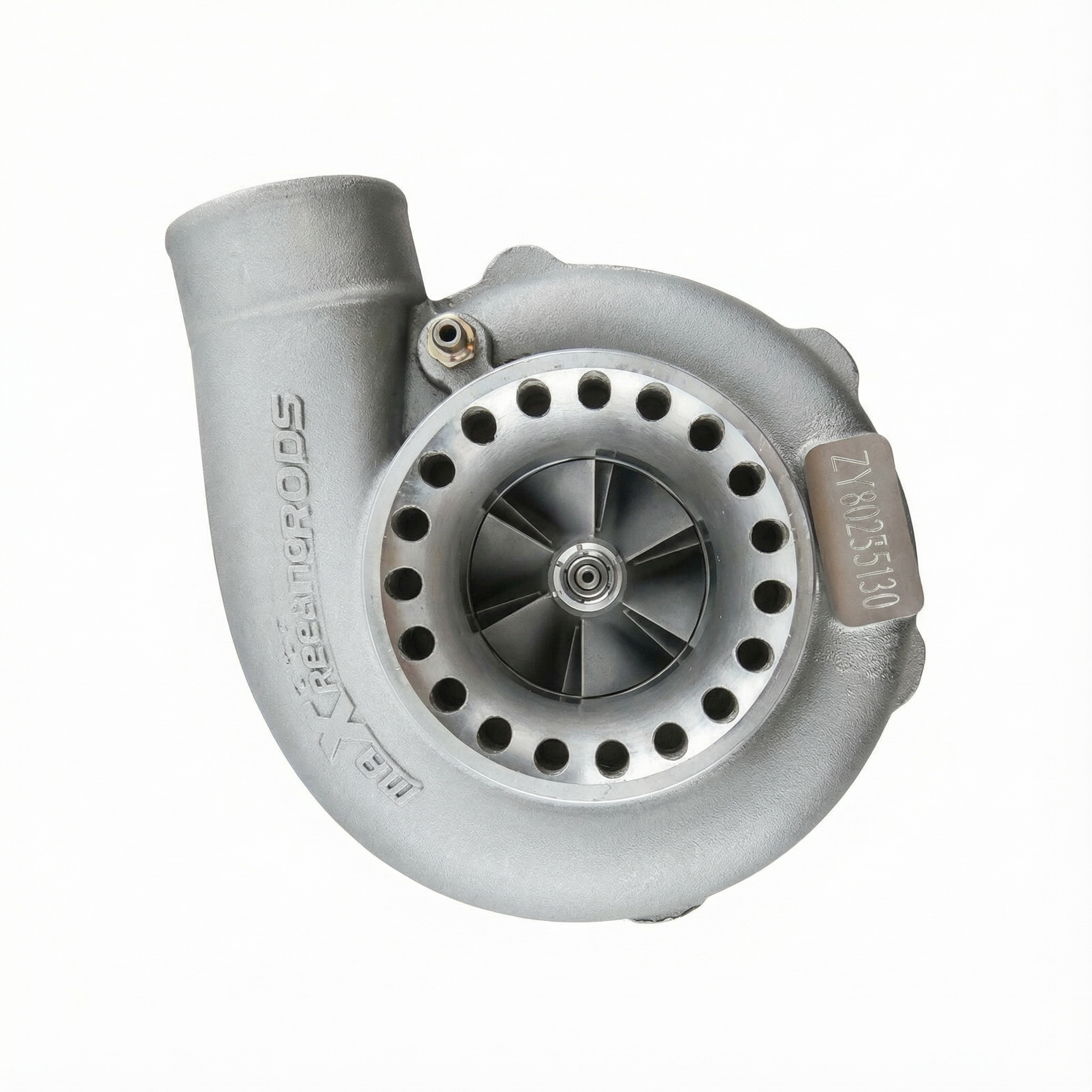
- Turbocharger Assembly (1.3L L3T)
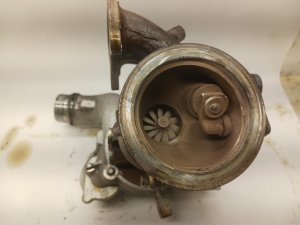
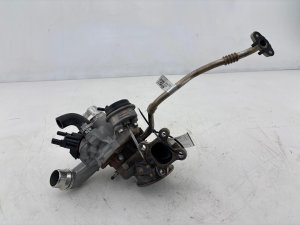
(OEM #25204527)— Required if the wastegate linkage is worn, which is a documented, common failure (TSB #23-NA-058). Also mentioned in an owner complaint (ODI #11727149). This is the most likely high-cost repair for this code. This part number supersedes previous versions 12700584, 12706368, and 12709430.
Trusted brands: ACDelco, General Motors
OEM price range: $1000-$1600
Aftermarket price range: $450-$1200 - Turbocharger Assembly (1.2L LIH)
(OEM #55515934, 25204082)— Required if the wastegate linkage is worn, a common failure on the platform (TSB #23-NA-058).
Trusted brands: ACDelco, General Motors
OEM price range: $1000-$1500
Aftermarket price range: $400-$1100 - Vacuum Hose — May be needed to fix the restricted wastegate vacuum line issue documented in TSB #PIP5978.
Trusted brands: ACDelco, Generic
OEM price range: $20-$50
Aftermarket price range: $10-$30 - Turbocharger Wastegate Solenoid — A potential cause if the solenoid fails diagnostic tests.
Trusted brands: ACDelco
OEM price range: $70-$150
Aftermarket price range: $40-$90
Related Codes That Often Appear With This One
- P0234 — Turbocharger Overboost Condition. Can be set along with P0299 due to erratic turbo control caused by icing or wastegate issues, as noted in TSB #21-NA-293.
- P0236 — Turbocharger Boost Sensor 'A' Circuit Performance. Can be set along with P0299 due to erratic turbo control caused by icing or wastegate issues, as noted in TSB #21-NA-293.
- P00C7 — Charge Air Cooler Coolant Temperature Sensor/Inlet Charge Air Cooler Temperature Sensor Correlation. Can be set along with P0299 due to icing issues, as noted in TSB #21-NA-293.
Technical Service Bulletins (TSBs) & Recalls
- PIE0831A: Gathering information regarding MIL illuminated for DTC P0299.
- 21-NA-293: Addresses poor engine performance and P0299 in cold weather due to charge air cooler icing.
- PIP5978: Details P0299 caused by a restricted wastegate solenoid vacuum line.
- PIP5903: Communicates the need to update ECM calibrations to correct for P0299.
- 23-NA-058 (replaces PIP5829A): Links P0299 and a cold start rattle to turbocharger wastegate linkage wear, often requiring turbo replacement.
Platform-Specific Known Issues
- A restricted wastegate vacuum line due to manufacturing adhesive, as noted in TSB #PIP5978.
- A tendency for the Charge Air Cooler to accumulate ice in freezing temperatures, blocking airflow, as documented in TSB #21-NA-293.
- Premature wear of the turbocharger wastegate linkage, causing a rattle and underboost, as detailed in TSB #23-NA-058.
- Erroneous P0299 codes set due to overly sensitive ECM software, requiring a calibration update per TSB #PIP5903.
Mechanic-Grade Diagnostic Values
- Vacuum at Turbocharger Wastegate Solenoid Vacuum Supply Hose (at idle) — expected: -50 kPa (-0.5 bar, 15 in Hg). Failure: If the desired vacuum cannot be achieved or does not hold steady, the vacuum pump assembly or its hoses may be faulty.
- Vacuum at Turbocharger Wastegate Solenoid Valve Actuator supply port (at idle) — expected: Less than -17 kPa (-0.17 bar, 5 in Hg). Failure: If the reading is -17 kPa (-0.17 bar, 5 in Hg) or greater, the Q42 Turbocharger Wastegate Solenoid Valve is likely faulty.
- Vacuum at Turbocharger Wastegate Solenoid Valve Actuator supply port (at Wide Open Throttle for 2s) — expected: Greater than -50 kPa (-0.5 bar, 15 in Hg). Failure: If the reading is less than -50 kPa (-0.5 bar, 15 in Hg), the Q42 Turbocharger Wastegate Solenoid Valve is likely faulty.
Scan Tool Commands That Help
- GDS2 (or equivalent professional scan tool): Intake System Learned Values Reset — This function is required after replacing the turbocharger assembly to ensure the ECM adapts to the new component correctly, as specified in TSB #PIP5829.
Wiring & Ground Locations
- Engine Control Module (ECM) — Typically located in the passenger side of the engine compartment, near the firewall or battery tray. It is a rectangular metal box with large multi-pin electrical connectors.. The ECM is the source of the P0299 code. All sensor inputs (MAP, Boost Pressure) and control outputs (wastegate solenoid) route to the ECM. Checking for connector integrity and corrosion is a valid diagnostic step.
- Main Engine Ground (e.g., G103) — Typically a large gauge wire from the negative battery terminal connected directly to the engine block, often on the front left (driver's side) of the block.. A poor engine ground can cause erratic behavior in all engine sensors and actuators controlled by the ECM, potentially leading to incorrect readings and fault codes like P0299. The engine block serves as the master ground for the engine management system.
Real Owner Repair Stories
- Reddit user in r/Diesel (2017 Chevrolet Trailblazer 2.8L Diesel (Note: Different platform/engine, but demonstrates a common and simple failure mode applicable to all turbocharged vehicles).) — P0299, intermittent hissing/rattling noise, vehicle 'limping' with fluctuating RPM, oil leak found at the air duct connecting to the turbocharger.
❌ Tried (didn't work) Initial diagnosis pointed towards complex turbo issues.
✅ What actually fixed it The user cleaned the engine bay and inspected all hoses. The fix was finding the air intake hose connecting to the turbocharger inlet was 'misplaced' or loose. After tightening the connection, the problem was resolved.
"I Checked Everything" — The Actual Cause
- In one documented case on a different vehicle (VW/Audi 2.0T), the entire boost system passed a pressure and smoke test, showing no leaks. The P0299 code persisted. The actual root cause was a clogged catalytic converter, which restricted exhaust flow so severely that the turbo's turbine could not spin fast enough to generate the required boost.
OEM Part Supersession History
12700584, 12706368, 12709430→25204527— Standard part revision and consolidation by the manufacturer.
Model Year Variations Within This Range
- 2021-2022: Earlier models are less likely to have the latest ECM software calibration designed to prevent erroneous P0299 codes (per TSB #PIP5903) or the CAC baffle kit to prevent icing (per TSB #21-NA-293) installed from the factory. These may need to be applied by a dealer.
Helpful Videos

We Have This Part in Stock

The information in this article is provided for general reference and educational purposes only. Vehicle specifications, procedures, and part compatibility can vary by production date, trim level, and region. Always consult your vehicle's factory service manual and verify part numbers before purchasing or performing repairs. Safety-critical components such as airbags, seat belts, and braking systems should be installed by a qualified professional.
- Chevrolet TRAILBLAZER:
- 🎬 Helpful Videos
- 🛍️ Shop This Part
- What's Unique About the 2021-2025 Chevrolet TRAILBLAZER
- Diagnostic Flowchart
- Symptoms You May Notice
- Most Likely Causes
- Diagnosis Steps
- Parts You'll Likely Need
- Related Codes That Often Appear With This One
- Technical Service Bulletins (TSBs) & Recalls
- Platform-Specific Known Issues
- Mechanic-Grade Diagnostic Values
- Scan Tool Commands That Help
- Wiring & Ground Locations
- Real Owner Repair Stories
- "I Checked Everything" — The Actual Cause
- OEM Part Supersession History
- Model Year Variations Within This Range
- 🎟️ Get 5% Off