

P0299 on 2020 Chevrolet Sonic: Turbo Underboost Causes and Fixes
On a 2020 Sonic with the 1.4L turbo engine, code P0299 is most often caused by a failed PCV system component, like the check valve in the intake manifold or the diaphragm in the valve cover. Before suspecting a costly turbo failure, thoroughly inspect for boost leaks and PCV system issues, which are much more common and cheaper to fix. This problem is widespread across platform-mates like the Chevy Cruze, Trax, and Buick Encore.
- Do not assume P0299 means you need a new turbo. On the 2020 Sonic, it's more likely a PCV system failure.
- The most critical diagnostic step is to check the PCV system: the valve cover diaphragm and the intake manifold check valve.
- A hissing sound from the engine or a strong vacuum at the oil fill cap are classic signs of a failed valve cover diaphragm.
- If you have codes P0171 or P1101 along with P0299, it strongly points to a vacuum/boost leak within the PCV system.
- A thorough visual inspection and a smoke test can save you hundreds of dollars by identifying a simple leak instead of replacing an expensive part.
What's Unique About the 2020-2020 Chevrolet SONIC

The 1.4L turbocharged engine (RPO LUV) used in the 2020 Sonic and its platform-mates (Cruze, Trax, Encore) is notorious for a specific 'domino effect' failure within its Positive Crankcase Ventilation (PCV) system. A small, inexpensive check valve inside the intake manifold often fails, leading to a cascade of issues including a ruptured valve cover diaphragm and other significant boost/vacuum leaks. This PCV system weakness is a far more common cause for P0299 than the turbocharger itself, a fact supported by GM Technical Service Bulletin #PIP5495N, which cautions against misdiagnosis and unnecessary turbo replacements.
Diagnostic Flowchart
Tap your situation to follow the diagnostic path that matches what you're seeing on this vehicle.
Symptoms You May Notice
- Significant loss of engine power and acceleration
- Check Engine Light is on
- Vehicle may feel sluggish or hesitant, especially under load or up hills
- Possible whistling or hissing noises from the engine bay, especially a loud hiss from the valve cover at idle
- Reduced fuel economy
- High-pitched 'siren' or whining noise from the engine that increases with RPM (classic sign of turbo bearing failure)
- Auto Start/Stop feature may be disabled
- Replacing the turbocharger without first diagnosing the PCV system. The TSB #PIP5495N specifically calls out that many turbos are returned with no trouble found, indicating misdiagnosis is a major issue.
- Replacing the MAP sensor when the root cause is a vacuum leak from the PCV system, which causes identical symptoms.
Most Likely Causes


- Failed PCV Check Valve in Intake Manifold 🔴 High Probability The small, often orange, check valve inside the plastic intake manifold is known to degrade, break, or get sucked into the engine. This creates a major internal boost leak as pressurized air is rerouted from the manifold back to the turbo inlet instead of going into the cylinders, creating a loop of lost pressure.
How to confirm: Remove the PCV hose from the driver's side of the intake manifold. Look inside the port with a flashlight. If you can see straight through or the valve is missing/damaged, it has failed.
Typical fix: The official GM fix is to replace the entire intake manifold. A popular, more permanent aftermarket solution involves installing an external check valve kit (e.g., from CruzeKits) which is serviceable and more durable. 🎬 Watch: How to install this permanent PCV fix kit yourself.
Est. part cost: $150-$300 for an OEM intake manifold, $50-$100 for an external fix kit - Ruptured PCV Diaphragm in Valve Cover 🔴 High Probability When the intake manifold check valve fails, it causes excessive pressure in the crankcase, which often ruptures the rubber diaphragm located under the round cap on the valve cover. This creates a large unmetered vacuum leak.
How to confirm: With the engine running, try to remove the oil cap. If there is extreme suction holding it down, the diaphragm is likely ruptured. You may also hear a loud hissing sound from the valve cover area.
Typical fix: Replace the entire valve cover assembly. Some aftermarket kits (e.g., Dorman 917-064) offer just the diaphragm and cap for a cheaper repair.
Est. part cost: $60-$150 for a full assembly, $20-$40 for a diaphragm kit - Boost/Vacuum Leaks 🟡 Medium Probability Hoses and connections in the charge air system can become loose, cracked, or disconnected over time. Common leak points include the charge pipes to the intercooler and throttle body, and the intake manifold gasket.
How to confirm: Visually inspect all hoses and clamps between the turbo, intercooler, and throttle body. Perform a smoke test to pressurize the system and reveal hard-to-see leaks.
Typical fix: Tighten loose clamps or replace the damaged hose or gasket.
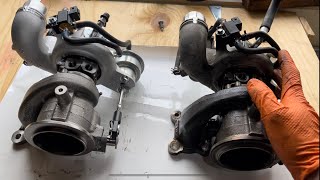
Est. part cost: $20-$100 - Faulty Turbocharger Wastegate or Actuator 🟡 Medium Probability The wastegate actuator arm or the internal linkage can wear out, bind, or get stuck open, allowing exhaust gases to bypass the turbine and preventing the turbo from building sufficient boost. A surprisingly common failure is a small retaining clip (e-clip) on the actuator rod rusting and falling off, disconnecting the actuator from the wastegate arm.
How to confirm: Visually inspect the wastegate actuator and linkage for free movement. Check that the retaining clip is present. 🎬 See how to fix a disconnected wastegate in five minutes. With the engine off and cool, try to move the actuator rod by hand; it should move smoothly but have some spring tension. Excessive play in the linkage points to wear.
Typical fix: The actuator clip can be replaced if missing. The actuator itself can be replaced separately. If the internal wastegate linkage is the issue, the entire turbocharger assembly must be replaced.
Est. part cost: $5 for a clip, $100-$200 for an actuator, $500-$900+ for a turbocharger
Rare But Worth Checking
- Faulty Turbocharger Bypass Valve (Diverter Valve): This valve can get stuck open or its diaphragm can tear, allowing boost pressure to leak. It's controlled by a solenoid that can also fail or get gummed up. Upgraded piston-style valves like the GFB DV+ are a common reliability modification.
- Clogged Catalytic Converter: A severe exhaust restriction can prevent the turbo from spooling up effectively. This is usually accompanied by a more dramatic loss of power at high RPMs and can be diagnosed with an exhaust backpressure test.
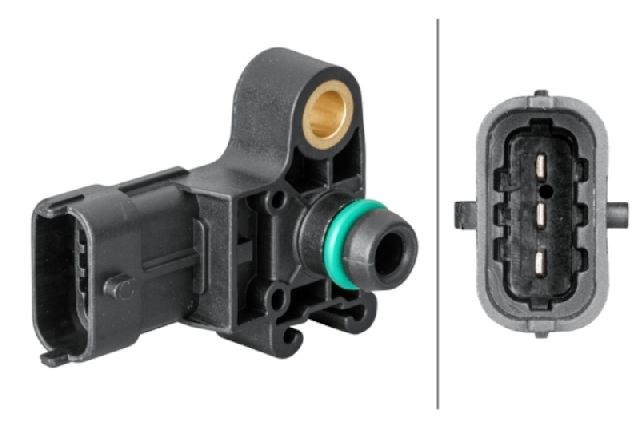
- Faulty Boost Pressure Sensor: The sensor itself could be providing inaccurate readings to the ECM, though this is less common than mechanical failures. A sensor caked in oil or debris can also read incorrectly.
- Charge Air Cooler (CAC) Icing: In cold weather, moisture can freeze inside the intercooler or induction piping, creating a blockage that causes an underboost condition. GM TSBs mention this as a possible cause for intermittent P0299 in cold climates.
Diagnosis Steps

- Read all stored DTCs with an OBD-II scanner. Note any other codes present, especially P0171 or P1101, as they strongly point to a PCV/vacuum leak issue. 🎬 Watch: A simple diagnostic walkthrough for common PCV leak codes.
- With the engine running at idle, check for a strong vacuum at the oil cap. If the cap is difficult to remove, suspect a ruptured valve cover diaphragm.
- Visually inspect the valve cover for cracks and listen for loud hissing sounds, which indicate a vacuum leak.
- Remove the PCV hose from the intake manifold and inspect the internal check valve with a flashlight. If it's missing, damaged, or you can see through the port, the manifold has failed.
- Inspect all charge air hoses and clamps for cracks, damage, or loose connections between the turbo and the throttle body.
- With the engine cool, inspect the turbocharger wastegate actuator rod. Ensure it is connected and the retaining clip is in place. Check for smooth, non-binding movement.
- If no obvious issues are found, perform a smoke test on the intake and charge air system to find hidden leaks.
- If all leaks and PCV issues are ruled out, the problem may be with the wastegate inside the turbocharger (e.g., seized linkage), potentially requiring turbo replacement.
Parts You'll Likely Need
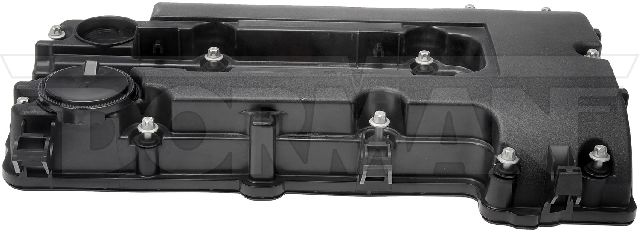
- Engine Valve Cover
(OEM #25205335)— The integrated PCV diaphragm frequently ruptures due to a failed intake manifold check valve, creating a large vacuum leak. The entire cover is typically replaced.
Trusted brands: ACDelco, Dorman
OEM price range: $120-$180
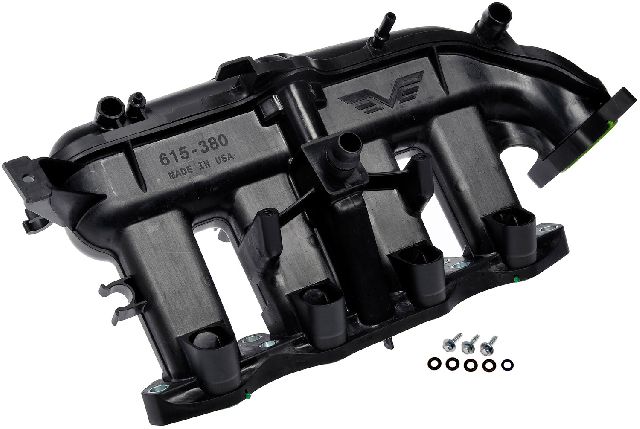
Aftermarket price range: $60-$100 - Intake Manifold
(OEM #25200449)— The internal, non-serviceable PCV check valve fails, creating an internal boost leak and causing a chain reaction of other PCV system failures. This part fits the Sonic, Cruze, Trax, and Encore.
Trusted brands: ACDelco
OEM price range: $200-$300
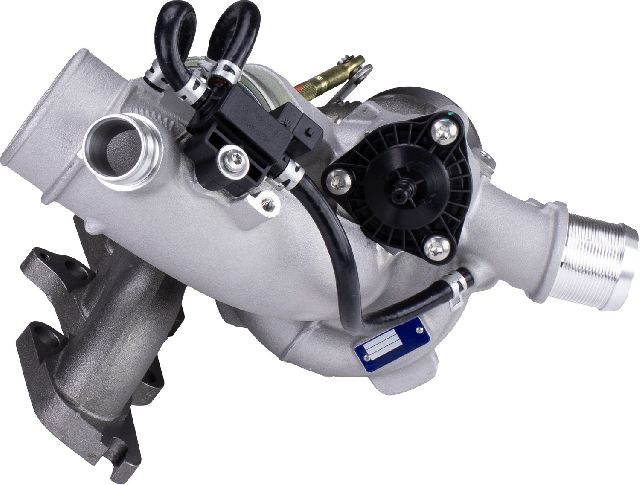
Aftermarket price range: $150-$220 - Turbocharger Assembly
(OEM #781504-5013S (Garrett OEM), 25201063 (GM))— This is the fix for an internal wastegate failure (worn linkage, binding valve) after all other causes like PCV and boost leaks have been ruled out. The Garrett 781504-5013S is the original equipment manufacturer part.
Trusted brands: Garrett (OEM), ACDelco (GM)
OEM price range: $650-$900
Aftermarket price range: $500-$700
Related Codes That Often Appear With This One
- P0171 — System Too Lean. This code is common with P0299 because the same PCV system failures (like a ruptured valve cover) create a massive vacuum leak, allowing unmetered air into the engine and causing a lean fuel mixture.
- P1101 — Intake Air Flow System Performance. This GM-specific code often points to a discrepancy between the MAF sensor and other sensors, frequently caused by the same unmetered air leaks that trigger P0299 and P0171.
- P0234 — Turbocharger Overboost Condition. While the opposite of P0299, it can be caused by related faulty components like a sticking wastegate or a bad boost control solenoid that fails intermittently in either direction. TSB PIP5495N covers both P0299 and P0234.
Technical Service Bulletins (TSBs) & Recalls
- Check Engine Light On With P0299 Or P0234: This Technical Service Bulletin was issued by GM to address the high number of turbochargers being replaced and returned with 'No Trouble Found' (NTF). It explicitly guides technicians to investigate other causes before condemning the turbo, such as a missing wastegate actuator clip, boost/vacuum leaks, PCV system issues, and restrictions in the induction system. It confirms that misdiagnosis is a major issue for this code on the 1.4L engine platform.
Platform-Specific Known Issues
- The PCV 'Domino Effect' Repair Story: Many owners report a cascade of failures starting with the intake manifold's internal check valve. Its failure pressurizes the crankcase, which then ruptures the weaker valve cover diaphragm. This creates a massive vacuum leak, triggering P0299 and often P0171 (System Too Lean). If not addressed, this pressure can also blow out engine seals like the front crankshaft seal, leading to significant oil leaks. A common owner experience involves replacing both the intake manifold and valve cover at the same time to fully resolve the issue.
- Aftermarket PCV Fix Kits: Due to the high failure rate of the non-serviceable check valve in the OEM intake manifold, several aftermarket solutions exist. Companies like 'CruzeKits' offer a popular kit that allows owners to drill out the failed valve and install a more durable, external check valve system. This is often seen by the owner community as a permanent fix rather than replacing the manifold with another OEM part that is prone to the same failure.
Mechanic-Grade Diagnostic Values
- Manifold Absolute Pressure (MAP) Sensor Voltage — expected: Key On, Engine Off (KOEO): ~4.0-4.9 Volts. Engine running at idle: ~1.0-2.0 Volts. Sharp acceleration: Should change to ~4.0-4.5 Volts.. Failure: Voltage that is stuck, does not change with engine load, or is outside the expected ranges.
- Short-Term and Long-Term Fuel Trims — expected: Within -5% to +5% at idle on a warm engine.. Failure: High positive fuel trims (e.g., > +10%) indicate the ECM is adding excess fuel to compensate for unmetered air, a classic symptom of the vacuum leaks that cause P0299.
- Fuel Pressure (1.4L LUV Engine) — expected: 50-94 PSI with the key on and pump commanded on.. Failure: Pressure below 50 PSI can indicate a weak fuel pump or restriction, which could contribute to a perceived lack of power, although it's not a direct cause of P0299.
Scan Tool Commands That Help
- GDS2 (GM Global Diagnostic System 2): Turbocharger Boost Control Test — This is a guided diagnostic procedure to verify if the turbo is underperforming. It involves WOT accelerations while graphing 'Desired Boost Pressure' vs. 'Actual Boost Pressure' to see if they match.
- GDS2 (GM Global Diagnostic System 2): Turbocharger Boost Control Solenoid Valve Test — This bidirectional control commands the wastegate solenoid duty cycle from 5% to 95% to verify the solenoid is mechanically functioning (clicking), helping to isolate a faulty solenoid from a wiring or ECM issue.
- GDS2 (or high-end bidirectional scanner): EVAP Purge/Seal — If P0171 is also present, this command can be used to test the EVAP purge solenoid. A stuck-open solenoid can cause a vacuum leak, contributing to lean conditions and potentially affecting boost readings.
Wiring & Ground Locations
- G105 / G106 — G105 is on the left front of the engine compartment; G106 is on the left rear of the engine block.. These are primary grounds for the engine block and attached sensors. A corroded or loose connection can interfere with signals the ECM uses to calculate expected boost.
- ECM Connector X1, Pin 8 — At the Engine Control Module (ECM).. This is the signal pin for the Barometric Pressure Sensor, which the ECM uses as a baseline for calculating boost targets.
- ECM Connector X1, Pin 9 — At the Engine Control Module (ECM).. This is the signal pin for the Turbo Boost Pressure Sensor. A wiring issue here would directly cause an incorrect boost reading.
- Main Engine Ground — The main engine ground cable attaches to the chassis frame rail beneath the battery tray, near the transmission mount.. A poor main engine ground can cause a host of electrical issues, including erratic sensor readings that could lead to an incorrect P0299 diagnosis.
Real Owner Repair Stories
- Sonic Owners Forum user (Chevrolet Sonic 1.4L Turbo) — Check Engine Light with code P0299, scan gauge showed no boost pressure.
❌ Tried (didn't work) The owner initially suspected a major turbo failure.
✅ What actually fixed it The retaining clip for the wastegate actuator rod had fallen off, leaving the wastegate disconnected and unable to build boost. Re-installing a new clip resolved the P0299 code. - Reddit user in r/cruze (Gen 1 Chevrolet Cruze 1.4L Turbo with 195,000km) — Persistent P0299 underboost code, significant lack of power.
❌ Tried (didn't work) Replaced the turbocharger with an aftermarket unit., Replaced the intake manifold (to fix the internal PCV check valve).
✅ What actually fixed it The discussion concluded that the likely remaining cause was a ruptured diaphragm in the valve cover, a common secondary failure caused by the original intake manifold issue. The user was advised to check for suction at the oil cap to confirm.
"I Checked Everything" — The Actual Cause
- In a detailed diagnostic video for a Chevy Cruze with P0299, a smoke test of the intake system revealed no leaks. The technician then inspected the turbocharger and found significant play in the wastegate linkage rod and pin. The internal wear was causing exhaust to leak past the turbine wheel, preventing proper boost from being built. The final repair was a complete turbocharger replacement.
OEM Part Supersession History
55581014→25200449, which was then superseded by 28289977— Likely to address the common failure of the internal PCV check valve. A parts seller confirmed the updated part is intended to fix the issue.25198874→55565495— This is the Turbocharger Bypass Valve. The reason for supersession is likely a design update for better durability, as the original is prone to diaphragm tears.
Helpful Videos
Used OEM Parts in Stock
New Aftermarket Parts Available


The information in this article is provided for general reference and educational purposes only. Vehicle specifications, procedures, and part compatibility can vary by production date, trim level, and region. Always consult your vehicle's factory service manual and verify part numbers before purchasing or performing repairs. Safety-critical components such as airbags, seat belts, and braking systems should be installed by a qualified professional.
- Chevrolet SONIC:
- 🎬 Helpful Videos
- 🛍️ Shop This Part
- What's Unique About the 2020-2020 Chevrolet SONIC
- Diagnostic Flowchart
- Symptoms You May Notice
- Most Likely Causes
- Rare But Worth Checking
- Diagnosis Steps
- Parts You'll Likely Need
- Related Codes That Often Appear With This One
- Technical Service Bulletins (TSBs) & Recalls
- Platform-Specific Known Issues
- Mechanic-Grade Diagnostic Values
- Scan Tool Commands That Help
- Wiring & Ground Locations
- Real Owner Repair Stories
- "I Checked Everything" — The Actual Cause
- OEM Part Supersession History
- 🎟️ Get 5% Off