

P0299 on 2016-2022 Chevrolet Malibu: Turbo Underboost Causes & Fixes
On a 2016-2022 Malibu, code P0299 is most often caused by the charge air cooler pipe disconnecting from the throttle body. Before buying parts, check this connection. Re-securing it, often with an updated retainer clip, frequently solves the problem.
- P0299 on a 2016-2022 Malibu is most frequently caused by the charge air cooler pipe popping off the throttle body.
- Always perform a visual inspection of the intake piping before purchasing any parts.
- In very cold climates, the issue could be related to frozen components like the wastegate solenoid or the intercooler itself.
- This code is often accompanied by codes P0101, P1101, and P0172, all pointing to a major air leak after the MAF sensor.
- GM has released several TSBs and an updated retainer clip to address the most common cause of this code.
What's Unique About the 2016-2022 Chevrolet MALIBU

The 2016-2022 Malibu, particularly with the 1.5L engine, is well-documented by GM to have issues with its charge air system. Multiple Technical Service Bulletins (TSBs), including PIP5651G and its successor 22-NA-224, point to the charge air cooler (CAC) outlet pipe disconnecting from the throttle body due to a weak clamp design. In cold climates, these vehicles are also prone to moisture freezing inside the charge air cooler (TSB 18-NA-069) or the wastegate control solenoid (TSB PIP5812C), which also triggers a P0299 code.
Diagnostic Flowchart

Tap your situation to follow the diagnostic path that matches what you're seeing on this vehicle.
Symptoms You May Notice

- Check Engine Light illuminated
- "Reduced Engine Power" message on the dash
- Significant loss of acceleration and power (limp mode)
- Sluggish or hesitant performance
- A loud "whooshing" or hissing sound from the engine bay when accelerating, often described by owners as a 'big pop' when the pipe disconnects.
- Rough idle or stalling at low speeds
- High-pitched whistling or chirping sound at idle if the related PCV system has failed. 🎬 Watch: How to replace the PCV valves on this engine.
- Replacing the turbocharger when the actual problem is a disconnected charge air cooler pipe.
- Replacing the Mass Airflow (MAF) or MAP sensor when a boost leak is the root cause of the implausible readings.
Most Likely Causes

- Charge Air Cooler (CAC) Pipe Disconnected from Throttle Body 🔴 High Probability This is a widely recognized issue, addressed by multiple GM Technical Service Bulletins (TSBs like 22-NA-224). The original clip design may not be sufficient to hold the pipe under boost pressure, causing it to pop off.
How to confirm: Visually inspect the large black air duct where it connects to the metal throttle body on the engine. Check if it has popped off or is loose. It is a very common and obvious failure point.
Typical fix: Reconnect the pipe to the throttle body. It should make an audible click. For a permanent fix, GM has a retainer kit (Part No. 12684263) to replace the original clip. In some cases, if the throttle body's retaining lip is damaged from the pipe blowing off, the throttle body itself may need replacement.
Est. part cost: $0 - $50 - Frozen Turbocharger Wastegate Regulator Solenoid Valve 🟡 Medium Probability In cold weather (below 0°F / -18°C), oil and moisture condensate can freeze in the solenoid, causing it to stick. This is documented in TSB #PIP5812C.
How to confirm: This typically occurs only in very cold weather and may resolve on its own when the engine bay warms up. Per TSB PIP5812C, a technician can remove the valve, turn it upside down to drain it, and blow low-pressure air (15-20 PSI) through its ports to check for blockages. One owner on a GM forum reported going through multiple new solenoids that failed this test out of the box.
Typical fix: The solenoid may need to be cleaned as per the TSB procedure or replaced if cleaning doesn't resolve the issue.
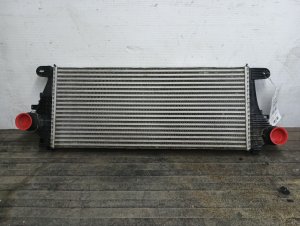
Est. part cost: $40 - $90 - Boost/Vacuum Leak 🟡 Medium Probability Beyond the main CAC pipe, other rubber or plastic hoses in the intake system can crack or loosen over time. The charge air cooler itself can also be damaged by road debris, causing a leak.
How to confirm: A smoke test is the most effective way to find small leaks in the intake tract, intercooler, or vacuum lines.
Typical fix: Replace the cracked hose, faulty gasket, or damaged intercooler.
Est. part cost: $10 - $250 - Faulty Wastegate Actuator or Control Solenoid ⚪ Low Probability
How to confirm: A technician can use a scan tool to command the wastegate and a vacuum pump to test the actuator's physical response. The wastegate arm on the turbocharger housing can also be inspected for binding or excessive play.
Typical fix: Replace the faulty wastegate actuator or the control solenoid.
Est. part cost: $40 - $200
Rare But Worth Checking
- Iced or Clogged Charge Air Cooler (Intercooler): In extremely cold weather (-18°C / 0°F or less), moisture from the PCV system and ambient air can freeze inside the intercooler, blocking airflow. TSB #18-NA-069 describes this issue and recommends installing a new design CAC if more than 100mL (3.4 oz) of water is drained after thawing. For 2016-2018 models, a winter grille cover (Part No. 84541893) is also recommended to prevent recurrence.
- Failed Turbocharger: While this is the most expensive possibility, it's less common than boost leaks or solenoid issues. It should only be considered after all other causes are ruled out. Symptoms include excessive noise (whining, grinding), oil consumption, or a wastegate valve that is physically binding.
- Cracked Piston(s) (2016-2017 1.5L LFV): Early production 1.5L LFV engines were susceptible to piston damage, causing low compression and a variety of codes, including P0299. TSB PIP5421G addresses this, noting that vehicles built after VIN 1G1ZE5ST6HF214702 have updated piston assemblies. This is a major mechanical failure. One owner on Reddit mentioned their P0299 code was ultimately caused by a cracked piston.
- Clogged Catalytic Converter: A restriction in the exhaust creates backpressure that prevents the turbo from spooling up effectively. This is usually accompanied by other symptoms like a sulfur smell or a noticeable drop in overall engine performance.
Diagnosis Steps
- Read all diagnostic trouble codes from the ECM. Note any accompanying codes like P0101, P1101, or P0172, as they strongly suggest a massive air leak.
- Open the hood and perform a thorough visual inspection of the air intake system. Pay extremely close attention to the large black plastic tube connecting the intercooler to the engine's throttle body. Check if it has popped off.
- If the tube is disconnected, inspect the throttle body inlet for gouges or damage and the tube's O-ring seal for tears or absence before reconnecting. TSB 22-NA-224 provides images of normal vs. damaged throttle bodies.
- If the tube is secure and the weather is freezing (below 0°F / -18°C), consider the possibility of a frozen wastegate solenoid as per TSB #PIP5812C or an iced charge air cooler per TSB #18-NA-069.
- To check for an iced CAC, allow the vehicle to thaw in a warm garage and see if more than 100mL (3.4 oz) of water can be drained from it.
- If no obvious issues are found, perform a smoke test to check for smaller, hidden leaks in hoses, gaskets, or the charge air cooler itself.
- Using a capable scan tool, monitor live data for desired vs. actual boost pressure while driving to see the deficit. The values should be very close to each other under load.
- Test the wastegate actuator using a handheld vacuum pump to ensure it moves freely and holds vacuum. Inspect the linkage for any binding.
- If low compression is suspected on a 2016-2017 1.5L model, perform a cylinder compression and leak-down test to rule out internal engine damage like a cracked piston.
Parts You'll Likely Need

- Charge Air Cooler Outlet Tube Retainer Kit
(OEM #12684263)— This is the updated part from GM designed to prevent the charge air cooler pipe from disconnecting from the throttle body, a primary cause of P0299.
Trusted brands: ACDelco, GM Genuine
OEM price range: $20-$40
Aftermarket price range: $15-$30 - Turbocharger Wastegate Regulator Solenoid Valve
(OEM #12655878)— This solenoid can stick due to frozen moisture, especially in cold weather, preventing proper boost regulation as noted in TSB #PIP5812C.
Trusted brands: ACDelco, GM Genuine
OEM price range: $60-$90
Aftermarket price range: $40-$70 - Charge Air Cooler Outlet Tube
(OEM #84353313)— If the tube becomes disconnected repeatedly, the end can become damaged or the internal O-ring seal can be lost, requiring replacement of the entire tube assembly.
Related Codes That Often Appear With This One
- P0101 — Mass Air Flow (MAF) Sensor Performance - A large boost leak from a disconnected pipe means the air measured by the MAF sensor doesn't match what the engine actually receives, triggering this code.
- P1101 — Intake Air Flow System Performance - This is a GM-specific code that also indicates the measured airflow is not what the ECM expects, often due to a large vacuum/boost leak.
- P0172 — System Too Rich (Bank 1) - The ECM sees less air than expected due to the leak and injects a corresponding amount of fuel, which can become too rich for the actual (leaked) air volume.
- P0506 — Idle Air Control System RPM Lower Than Expected - A massive air leak can cause the engine to struggle to maintain a stable idle.
Technical Service Bulletins (TSBs) & Recalls
- PIP5651G / 22-NA-224: Charge air cooler pipe disconnecting from the throttle body.
- PIP5812C: Oil/moisture condensate freezing in the Turbocharger Wastegate Regulator Solenoid Valve in cold weather.
- 18-NA-069: Charge Air Cooler (CAC) icing in extremely cold climates, leading to restricted airflow.
- PIP5421G: Piston damage on early 2016-2017 1.5L LFV engines causing low compression.
Platform-Specific Known Issues
- TSB #PIP5651G / #PIP5710A: These bulletins highlight that the charge air cooler pipe can disconnect from the throttle body, causing P0299 and other codes like P0172, P0101, P0506, and P1101.
- TSB #PIP5812C: This document points to oil/moisture condensate freezing in the Turbocharger Wastegate Regulator Solenoid Valve during cold weather, leading to P0299.
- TSB #18-NA-069: In extremely cold climates, ice can accumulate in the charge air cooler (CAC), restricting airflow and setting P0299. The fix may involve replacing the CAC with a new design and installing a winter grille cover.
- Service Update #N192266090: GM issued this update to install a charge air cooler retainer kit to more securely fasten the outlet duct to the throttle body on certain models.
Mechanic-Grade Diagnostic Values
- Scan Tool Live Data: Desired vs. Actual Boost Pressure — expected: Values should closely match during acceleration.. Failure: A significant gap between desired and actual boost pressure under load confirms an underboost condition.
- Wastegate Actuator Vacuum Test — expected: The actuator should hold vacuum when tested with a handheld pump. Per TSB, it should be tested to -50 kPa (-0.5 bar, 15 in Hg).. Failure: If the actuator fails to hold vacuum or the rod does not move smoothly, it is faulty.
Scan Tool Commands That Help
- GDS2 (GM Dealer Scan Tool): Turbocharger Boost Control Test — This function allows a technician to command the turbocharger wastegate solenoid and observe the system's response, helping to isolate a faulty solenoid, actuator, or mechanical wastegate issue without having to physically remove parts.
- GDS2 (GM Dealer Scan Tool): Turbocharger Wastegate Learn — This procedure may be required after replacing the turbocharger or wastegate actuator to calibrate the new component's position and travel limits to the ECM.
Wiring & Ground Locations
- G103 — Located at the left rear of the engine compartment on the cowl, above the brake booster.. This is a major ground point that serves the Engine Control Module (ECM) and Body Control Module (BCM). A poor connection here can cause a wide range of seemingly unrelated electrical issues and incorrect sensor readings, potentially contributing to false codes.
- ECM Fuse #75 (Underhood Fuse Block) — In the underhood fuse block, on the right side of the engine bay. It is a 25A fuse.. This is a main power fuse for the ECM. An internally shorted ECM can repeatedly blow this fuse, leading to a no-start condition. A P0299 code might be stored from before the final failure.
- ECM Main Ground (Engine) — A wire on the back of the cylinder head held by a 10mm bolt.. This is a primary ground for the ECM itself. A loose or corroded connection here can directly impact the ECM's operation and its ability to correctly control the turbocharger system.
Real Owner Repair Stories
- Reddit user in /r/MechanicAdvice (2016 Chevrolet Malibu) — P0299, P0171 (System Too Lean)
❌ Tried (didn't work) Initial diagnosis pointed towards common boost leaks.
✅ What actually fixed it The final cause was a failed check valve inside the intake manifold, a common failure on the 1.4L/1.5L turbo engines. The valve had been sucked into the engine. The fix was to replace the intake manifold and the valve cover, which contains a diaphragm that also fails as a result. An external PCV check valve kit is also an available aftermarket solution. - YouTube Channel - L1 Automotive Training (2018 Chevrolet Malibu 1.5L) — Car would not run, kept blowing the 25A ECM fuse (#75).
❌ Tried (didn't work) Replacing the fuse repeatedly.
✅ What actually fixed it The Engine Control Module (ECM) was internally short-circuited. A direct connection was found between the main power input pin (Pin 49) and the main ground pin (Pin 73) on the ECM connector. Replacing the ECM resolved the issue. This is an edge case where P0299 might be a historical code before the catastrophic ECM failure.
"I Checked Everything" — The Actual Cause
- A smoke test may show no leaks, but the P0299 code can still be caused by a PCV system failure. Specifically, a check valve in the intake manifold can fail and get sucked into the engine, creating an internal vacuum leak that a smoke test won't always reveal. This can also cause a whistling or chirping noise at idle.
OEM Part Supersession History
12655878→12649146, 12693711— Part revision/update by GM. The design may have been updated to improve resistance to moisture and oil contamination that causes sticking, as addressed in TSB PIP5812C.
Model Year Variations Within This Range
- 2019-2022: The 2019 model year facelift introduced a Continuously Variable Transmission (CVT) paired with the 1.5L Turbo engine, replacing the previous 6-speed automatic. This does not directly affect the cause of P0299 but changes the overall drivetrain configuration. The 2.0L Turbo retained its 9-speed automatic.
Helpful Videos
Used OEM Parts in Stock


New Aftermarket Parts Available

The information in this article is provided for general reference and educational purposes only. Vehicle specifications, procedures, and part compatibility can vary by production date, trim level, and region. Always consult your vehicle's factory service manual and verify part numbers before purchasing or performing repairs. Safety-critical components such as airbags, seat belts, and braking systems should be installed by a qualified professional.
- Chevrolet MALIBU:
- 🎬 Helpful Videos
- 🛍️ Shop This Part
- What's Unique About the 2016-2022 Chevrolet MALIBU
- Diagnostic Flowchart
- Symptoms You May Notice
- Most Likely Causes
- Rare But Worth Checking
- Diagnosis Steps
- Parts You'll Likely Need
- Related Codes That Often Appear With This One
- Technical Service Bulletins (TSBs) & Recalls
- Platform-Specific Known Issues
- Mechanic-Grade Diagnostic Values
- Scan Tool Commands That Help
- Wiring & Ground Locations
- Real Owner Repair Stories
- "I Checked Everything" — The Actual Cause
- OEM Part Supersession History
- Model Year Variations Within This Range
- 🎟️ Get 5% Off