

P0299 on 2018-2025 Chevrolet Equinox: Turbo Underboost Causes & Fixes
On a 2018-2025 Equinox with the 1.5L engine, code P0299 is most often caused by a moisture-contaminated/frozen charge air cooler (CAC), a damaged charge air pipe, or a faulty wastegate actuator. TSBs confirm the CAC issue is prevalent in cold/humid climates. Expect to pay $150-$400 for common parts, with DIY difficulty rated at 3/5.
- For the 2018-2025 Equinox, P0299 is very frequently related to the charge air cooler (CAC) system, not the turbo itself.
- Check for boost leaks using a smoke test before replacing any major components.
- In cold climates, suspect a frozen charge air cooler as described in GM service bulletins.
- Always check for related codes like P2227 or P0300, as they strongly point towards the known moisture issue in the CAC.
- If you live in a cold region, ask a dealer about the ECM calibration update mentioned in TSB 22-NA-002 to help prevent recurrence.
What's Unique About the 2018-2025 Chevrolet EQUINOX

The third-generation Chevrolet Equinox, particularly with the 1.5L LYX turbo engine, is known for issues related to the charge air cooler (CAC) system. Multiple GM Technical Service Bulletins confirm that moisture from the PCV system and humid air can collect inside the charge air cooler. In cold weather (below 32°F / 0°C), this accumulated moisture can freeze, severely restricting airflow and causing a P0299 code. This platform-specific issue is a primary suspect and should be investigated before assuming the turbocharger itself has failed. Owners in online forums frequently discuss this exact problem, especially during the first cold snaps of winter.
Diagnostic Flowchart

Tap your situation to follow the diagnostic path that matches what you're seeing on this vehicle.
Symptoms You May Notice

- Check Engine Light is on
- Significantly reduced engine power and acceleration
- "Reduced Engine Power" message on the driver information center
- Unusual hissing or whistling sounds from the engine bay upon acceleration, indicating a boost leak
- Loud exhaust noise if the wastegate flapper breaks off.
- Poor fuel economy
- Hesitation or stalling in very cold weather.
- Replacing the turbocharger assembly before thoroughly checking for boost leaks from hoses or the charge air cooler.
- Replacing the MAP sensor without verifying its readings against a known good value or barometric pressure.
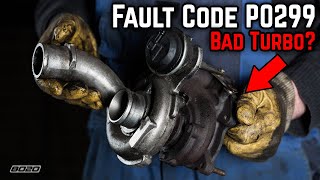
- Assuming a faulty turbo when the actual cause is a worn wastegate actuator 🎬 See why you shouldn't replace your turbo without checking these parts first. pivot point, which can sometimes be repaired separately.
Most Likely Causes

- Moisture-Contaminated or Frozen Charge Air Cooler (CAC) 🔴 High Probability As documented in GM TSBs #18-NA-020 and #22-NA-002, moisture from humidity and the PCV system accumulates inside the charge air cooler. In cold temperatures, this moisture freezes into a blockage, preventing the turbo from pushing air into the engine and triggering P0299. Owners on forums confirm this is a common winter issue.
How to confirm: Inspect the charge air cooler and its connecting pipes for moisture, oil residue, or physical damage. The cooler may need to be removed to drain accumulated water/ice. TSB #18-NA-069 suggests that draining more than 100mL (3.4 oz) of water is a positive confirmation.
Typical fix: In cold weather, thaw the vehicle in a warm garage to melt the ice. For a permanent solution, replace the charge air cooler with the updated design 🎬 Watch this step-by-step walkthrough of the intercooler replacement process. per TSB #18-NA-020. An ECM reflash may also be performed to alter transmission shift patterns to keep engine RPMs higher, reducing moisture buildup.
Est. part cost: $150-$400 - Damaged or Loose Charge Air Hoses/Pipes 🔴 High Probability TSB #PIP5927D specifically points to a damaged Charge Air Inlet Pipe connection at the turbocharger as a cause for P0299. TSB #PIP5716F also notes the CAC outlet tube can separate from the throttle body. The plastic and rubber components can crack, or clamps can loosen over time.
How to confirm: Visually inspect all hoses and pipes between the turbo, intercooler, and throttle body for cracks, loose clamps, or signs of oil spray. A smoke test is the most effective way to find small leaks.
Typical fix: Tighten loose clamps or replace the damaged pipe/hose. The Charge Air Cooler Inlet Air Tube (OEM P/N 84498032) is a frequent failure point.
Est. part cost: $50-$230 - Faulty Turbocharger Wastegate or Actuator 🟡 Medium Probability The wastegate controls boost by diverting exhaust. The actuator that moves it can fail, or the pivot point for the wastegate arm on the turbo housing can wear out, causing excessive play and preventing the wastegate from closing properly. This allows exhaust to bypass the turbine, resulting in underboost.
How to confirm: With the engine off, check if the wastegate actuator arm has excessive free play where it connects to the turbo. A vacuum pump can be used to test a vacuum-operated actuator's function. For electronic actuators, a bi-directional scan tool can command it to move while observing its operation.
Typical fix: Replacement of the wastegate actuator. In some cases, the actuator is integral to the turbocharger and the entire assembly must be replaced.
Est. part cost: $60-$250 for an actuator, $700+ for a turbo - Faulty Boost Pressure Sensor (MAP Sensor) ⚪ Low Probability
How to confirm: Use a scan tool to compare the MAP sensor reading to the Barometric Pressure (BARO) sensor reading with the key on, engine off; they should be nearly identical. Monitor the sensor's readings during a test drive to see if they logically track with desired boost.
Typical fix: Replace the faulty MAP sensor.
Est. part cost: $30-$100
Rare But Worth Checking
- Failing Turbocharger: While this is an expensive possibility, it should be considered after all leaks and actuator issues are ruled out. A mechanic in a detailed YouTube repair found that even after replacing a leaking intercooler and pipe, the underboost condition persisted and a new turbo was required to fix it. Check for excessive shaft play or damaged fins on the turbine wheels.
- Sticking Turbocharger Bypass/Diverter Valve: This solenoid valve redirects boost pressure under certain conditions. If it sticks open, it can create a boost leak. One owner documented this failure with a video, showing the valve failing to operate when commanded by a scan tool until it was tapped with a screwdriver, indicating it was sticking internally.
- Restricted Exhaust System: A clogged catalytic converter can create excessive backpressure, preventing the turbo from spooling up effectively. This is less common but possible, especially on higher mileage vehicles.
Diagnosis Steps
- Check for other stored DTCs that could provide more clues, such as P2227, P0300, or P0234.
- Perform a thorough visual inspection of the entire intake system. Look for loose clamps, disconnected hoses, and cracks in plastic pipes, especially at the charge air cooler connections and the throttle body inlet.
- Conduct a smoke test on the intake and charge air system to pinpoint any leaks that are not visible to the naked eye.
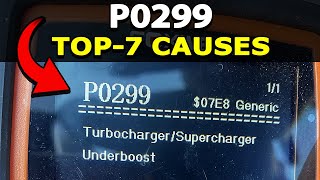
- Using a scan tool, monitor live data PIDs: 'Desired Boost Pressure', 'Manifold Absolute Pressure (MAP)', and 'Boost Pressure Sensor'. During a test drive under load, these values should track each other closely. A large discrepancy where actual boost is lower than desired confirms the underboost condition. 🎬 Watch a breakdown of the top 7 causes for this fault code.
- Inspect the charge air cooler for signs of damage, oil leaks, or evidence of internal moisture/ice as described in GM service bulletins. If cold weather is a factor, allow the vehicle to thaw in a warm shop for several hours and then drain the CAC to check for water.
- Inspect the turbocharger wastegate actuator rod. Check for excessive play in the arm's pivot point on the turbo housing. Use a scan tool to command the wastegate and observe its operation, or use a vacuum pump to test its movement.
- Test the turbocharger bypass/diverter valve solenoid using a bi-directional scan tool to command it on and off, verifying it moves and doesn't stick.
- If all other components are verified to be working, inspect the turbocharger for excessive radial or axial shaft play, or for damaged compressor/turbine fins. An oil-coated charge pipe can be a sign of failing turbo seals.
Parts You'll Likely Need
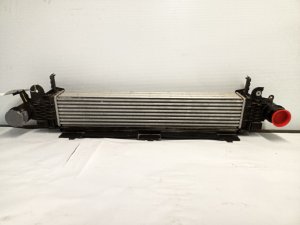
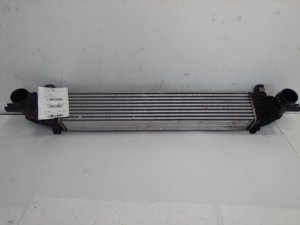
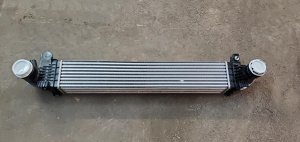
- Charge Air Cooler
(OEM #85046823)— A primary point of failure on this platform due to a design that allows moisture to collect and freeze, as documented in multiple TSBs. Replacement with an updated design is the official fix.
Trusted brands: ACDelco, Dorman, Spectra Premium
OEM price range: $190-$300
Aftermarket price range: $150-$250 - Charge Air Cooler Inlet Air Tube
(OEM #84498032)— TSB #PIP5927D specifically identifies this pipe's connection as a potential failure point causing P0299. The original part can become brittle and fail. Aftermarket silicone upgrades are available.
Related Codes That Often Appear With This One
- P2227 — Barometric Pressure Sensor 'A' Circuit Range/Performance. This code is often seen with P0299 when moisture contamination in the charge air system is the root cause, as noted in TSB #18-NA-020 and owner complaints.
- P0234 — Engine Overboost Condition. While it seems contradictory, a faulty wastegate or actuator can sometimes cause both underboost and overboost conditions at different times. TSB #22-NA-002 mentions them together in the context of CAC freezing and wastegate solenoid issues.
- P0300 — Random/Multiple Cylinder Misfire Detected. Moisture being ingested from the charge air cooler can cause misfires, as mentioned in TSB #18-NA-020.
- P0101 — Mass Air Flow (MAF) Sensor Performance. A large, unmetered air leak after the MAF sensor but before the turbo (a boost leak) can sometimes trigger this code alongside P0299.
Technical Service Bulletins (TSBs) & Recalls
- PIP5927D: Reduced power with DTC P0237 and/or P0299 due to damaged Charge Air Inlet Pipe connection at Turbocharger.
- 18-NA-020: Malfunction indicator lamp illuminated with DTC P0300 and/or P0299/P2227 due to moisture inside the charge air cooler.
- 22-NA-002: Malfunction Indicator Lamp Illuminated with DTCs P0299/P0234 Set During Cold or Freezing Temperatures due to moisture freezing in the charge air cooler.
Platform-Specific Known Issues
- TSB #18-NA-020: Moisture in Charge Air Cooler: Details the procedure to replace the charge air cooler due to internal moisture accumulation from humidity or PCV vapors. This moisture can cause misfires (P0300) or, in cold weather, freeze and cause underboost (P0299) or barometric sensor faults (P2227). The fix involves replacing the CAC with a redesigned part.
- TSB #22-NA-002: Cold Weather Underboost/Overboost: Specifically addresses P0299/P0234 codes in freezing temperatures caused by ice in the charge air cooler. It recommends an updated ECM calibration that changes transmission shift patterns to keep engine RPMs higher, generating more heat to prevent ice formation. This is a software-based approach to mitigate the hardware issue described in 18-NA-020.
- TSB #PIP5927D: Damaged Charge Air Inlet Pipe: This preliminary bulletin points to the connection of the Charge Air Inlet Pipe at the turbocharger as a specific potential failure point that can cause a boost leak and set code P0299.
- Real Owner Experience: Frozen CAC: A 2020 Equinox owner on Reddit described getting a P0299 code and reduced power mode during a cold snap. The dealership diagnosed a frozen charge air cooler due to a broken PCV valve, quoting $2400 for the repair. This highlights the real-world occurrence and high cost of the issue described in the TSBs.
Mechanic-Grade Diagnostic Values
- Manifold Absolute Pressure (MAP) vs. Barometric (BARO) Sensor — expected: With Key On, Engine Off (KOEO), the MAP and BARO sensor readings should be nearly identical, typically around 14.0-14.7 PSI at sea level, and the voltage should be around 3.8V. At idle, MAP should be between 3.8 to 7.5 PSI.. Failure: A significant difference between the MAP and BARO readings at KOEO points to a faulty sensor. If the MAP sensor reading does not change appropriately with engine load, it is likely faulty.
- Throttle Body Idle Air Flow Compensation — expected: Should be less than 90% at idle.. Failure: A value of 100% indicates the ECM is commanding the throttle fully open at idle to compensate for a restriction or incorrect reading, often pointing to a very dirty throttle body.
Scan Tool Commands That Help
- GDS2: Output Control Functions — The GM dealer-level software, GDS2, allows for bidirectional control to test specific components. For P0299, a technician can command the Turbocharger Wastegate Regulator Solenoid Valve and the Turbocharger Bypass Valve to cycle, verifying their mechanical and electrical operation without removal.
- GDS2: Turbocharger Learn — After replacing a turbocharger or wastegate actuator, the 'Turbocharger Learn' procedure should be performed. This function allows the ECM to learn the new component's range of motion and set new adaptive values for precise boost control.
Wiring & Ground Locations
- Engine Ground Straps/Points — Key grounds for the 1.5L LYX engine and its sensors are typically located on the engine block, the cylinder head, and from the engine/transmission to the chassis frame rail. Poor ground connections can cause erratic sensor readings.. A poor ground for the ECM or related sensors (MAP, BARO) can cause incorrect voltage readings, leading the ECM to miscalculate boost pressure and falsely set a P0299 code. While specific diagrams are proprietary, checking major ground points for corrosion and tightness is a valid diagnostic step.
Real Owner Repair Stories
- Reddit user /u/Mike__O (2019 Equinox, 1.5T, 181k miles) — Very intermittent Check Engine Light with limp mode and P0299 code. Would drive fine for hundreds of miles between occurrences. No unusual noises or smoke.
❌ Tried (didn't work) Replacing the air filter, Replacing the MAP sensor
✅ What actually fixed it Replacing the turbocharger. The user later confirmed the original turbo was leaking oil internally, which was discovered by removing the turbo outlet hose and finding it full of oil. - YouTube channel 'Hands On Auto Training' (2018 Equinox 1.5L) — Low power complaint, reduced power message, and codes P0299 and P0101.
❌ Tried (didn't work) Initial visual inspection revealed no obvious issues.
✅ What actually fixed it A smoke test revealed a massive leak from the charge air cooler (intercooler), where the plastic end tank had separated from the aluminum core. Replacing the charge air cooler resolved the boost leak and the codes.
"I Checked Everything" — The Actual Cause
- In cold climates, a smoke test may come back clean if the root cause is an internal blockage from frozen moisture inside the charge air cooler (CAC), as detailed in TSB #22-NA-002. The system is sealed, but airflow is restricted. The fix is to thaw and drain the CAC or replace it.
- A worn wastegate pivot point on the turbocharger housing can cause a leak of exhaust gas, preventing the turbo from spooling correctly. This is an exhaust-side leak and will not be found with a smoke test performed on the intake/charge air system.
OEM Part Supersession History
23270538, 84454110, 85163204→85046823— The original charge air cooler (CAC) design was prone to moisture accumulation, leading to freezing and blockage in cold climates. The updated part number, 85046823, is the current recommended replacement to address this design flaw.
Model Year Variations Within This Range
- 2018-2022: These model years used the 1.5L LYX Turbo engine, which is the primary engine affected by the charge air cooler moisture/freezing issues documented in TSBs.
- 2023+: For the 2023 model year, the Equinox engine was updated to the 1.5L LSD, which included a slight horsepower increase. While the fundamental design is similar, some parts and procedures may differ from the earlier LYX engine.
Helpful Videos

We Have This Part in Stock


The information in this article is provided for general reference and educational purposes only. Vehicle specifications, procedures, and part compatibility can vary by production date, trim level, and region. Always consult your vehicle's factory service manual and verify part numbers before purchasing or performing repairs. Safety-critical components such as airbags, seat belts, and braking systems should be installed by a qualified professional.
- Chevrolet EQUINOX:
- 🎬 Helpful Videos
- 🛍️ Shop This Part
- What's Unique About the 2018-2025 Chevrolet EQUINOX
- Diagnostic Flowchart
- Symptoms You May Notice
- Most Likely Causes
- Rare But Worth Checking
- Diagnosis Steps
- Parts You'll Likely Need
- Related Codes That Often Appear With This One
- Technical Service Bulletins (TSBs) & Recalls
- Platform-Specific Known Issues
- Mechanic-Grade Diagnostic Values
- Scan Tool Commands That Help
- Wiring & Ground Locations
- Real Owner Repair Stories
- "I Checked Everything" — The Actual Cause
- OEM Part Supersession History
- Model Year Variations Within This Range
- 🎟️ Get 5% Off