

P0299 on 2019 Chevrolet Cruze: Turbo Underboost Causes and Fixes
On a 2019 Chevy Cruze, code P0299 is most often caused by a faulty turbocharger wastegate regulator solenoid or icing in the charge air cooler (CAC) during cold weather. Before suspecting a costly turbo failure, check for boost leaks, test the wastegate components per GM service bulletins, and confirm the wastegate actuator arm has no excessive play.
- For a 2019 Cruze, P0299 is strongly linked to cold weather; check for frozen components as described in GM service bulletins.
- The most likely culprits are a faulty wastegate regulator solenoid or a boost leak from a cracked hose, not a failed turbo.
- A thorough visual inspection and a smoke test are critical first steps before replacing any expensive parts.
- Do not confuse this vehicle's issues with the more common PCV/intake manifold problems of the 2011-2016 (Gen 1) Cruze.
- Driving with P0299 will result in poor performance and should be addressed to prevent potential long-term strain on the engine.
What's Unique About the 2019-2019 Chevrolet CRUZE

The 2019 Cruze uses the second-generation 1.4L Turbo (LE2) engine, which is less prone to the widespread PCV and valve cover issues that plagued the first-generation engine (LUJ/LUV). However, this platform is specifically called out in GM Technical Service Bulletins for issues with moisture freezing in the charge air system and wastegate solenoid during extreme cold (below -18°C / 0°F), directly causing P0299. The official GM fix for CAC icing involves an ECM reprogram to alter transmission shift patterns, keeping RPMs higher to prevent ice buildup. Therefore, diagnosis on a 2019 model should prioritize these known cold-weather issues and wastegate control before assuming other failures.
Diagnostic Flowchart

Tap your situation to follow the diagnostic path that matches what you're seeing on this vehicle.
Symptoms You May Notice

- Significant loss of engine power and sluggish acceleration
- Check Engine Light illuminated
- Difficulty maintaining speed, especially on hills
- Reduced fuel economy
- Vehicle may enter a reduced power or "limp mode"
- Whistling or whining noise from the engine bay/turbo area
- Replacing the entire turbocharger assembly when the actual fault is a much cheaper component like the wastegate solenoid, a cracked hose, a loose clamp, or temporary CAC icing.
- Condemning the turbo for wastegate cracks. Minor hairline cracks around the wastegate port are considered normal on this engine and usually not large enough on their own to cause P0299.
Most Likely Causes

- Turbocharger Wastegate Regulator Solenoid Valve (TCV) Malfunction 🔴 High Probability A GM Technical Service Bulletin (PIP5812C) specifically identifies this solenoid as a cause for P0299, especially when oil/moisture condensate freezes inside it during cold weather.
How to confirm: Per TSB PIP5812C, remove the valve, drain any moisture, and blow through the ports with low-pressure (15-20 PSI) air. If air does not pass through port #2, the valve has internal deposits and must be replaced. A scan tool can also be used to command the solenoid and check its response. 🎬 Watch: Diagnostic tips for testing the wastegate solenoid
Typical fix: Cleaning and drying the valve if it passes the air test, or replacement of the wastegate regulator solenoid valve if it is faulty.
Est. part cost: $40-$80 - Charge Air Cooler (CAC) Icing 🔴 High Probability TSB #22-NA-007 directly links P0299 on this vehicle to ice formation in the charge air cooler during extremely cold weather (-18°C / 0°F or colder), which restricts airflow. This typically happens during short trips or low-speed driving cycles.
How to confirm: This is difficult to confirm without disassembly and is diagnosed based on conditions. The issue occurs in freezing temperatures and may resolve on its own as the engine warms up. The TSB advises ruling out other leaks first.
Typical fix: Temporarily, allowing the vehicle to thaw in a warm garage can resolve the issue. The official long-term fix per TSB #22-NA-007 is an ECM reprogram at a dealership to adjust cold-weather transmission shifting. In some cases, a winter front grille cover is also installed.
Est. part cost: $0-$150 (for grille cover and/or dealer programming) - Worn or Sticking Turbocharger Wastegate 🟡 Medium Probability The pivot pin for the wastegate actuator arm can wear out, causing excessive play ('slop'). This prevents the wastegate from closing fully, allowing exhaust gas to constantly bypass the turbine, thus reducing boost. This is a common mechanical failure point.
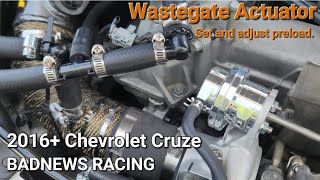
How to confirm: With the engine off and cool, remove the heat shield and attempt to move the wastegate actuator arm by hand. If the arm wiggles significantly at the pivot point without moving the actuator rod, the preload is lost due to wear. A YouTube video by DadsGarage Diagnostic Specialist shows this exact failure. 🎬 Watch: How to install a new wastegate actuator
Typical fix: Because the wastegate arm and pivot are integral to the turbocharger housing, the entire turbocharger assembly must be replaced. Some aftermarket companies offer upgraded wastegate actuator kits as an alternative.
Est. part cost: $100-$1200 (Actuator only vs. full turbo assembly) - Boost/Vacuum Leaks 🟡 Medium Probability The charge air system operates under pressure. Plastic pipes can crack, rubber hoses can split, and clamps can loosen over time, creating leaks that cause the system to not meet its boost target.
How to confirm: Perform a visual inspection of all hoses and pipes from the turbo to the throttle body. A smoke test is the most effective method to pressurize the system and pinpoint the exact location of a leak.
Typical fix: Replace the cracked hose/pipe, tighten the loose clamp, or replace the failed gasket.
Est. part cost: $20-$150
Rare But Worth Checking
- Faulty Boost Pressure Sensor (MAP Sensor): While not common, a faulty sensor can send incorrect low-pressure readings to the ECM, falsely triggering the P0299 code. It's wise to check sensor readings with a scan tool at key-on, engine-off to ensure they are plausible before starting diagnosis.
- Restricted Air Filter or Intake: A severely clogged engine air filter can starve the turbo of air, preventing it from building the required boost. This is a simple but sometimes overlooked check.
- Damaged Turbocharger: While owners often fear the worst, complete turbo failure (e.g., broken shaft, damaged turbine fins) on the Gen 2 Cruze is less common than the wastegate-related causes. This would typically involve checking for excessive shaft play or visible damage to the turbine fins.
Diagnosis Steps
- Check for other DTCs that could point to a related issue (e.g., P0234, P0236).
- If in a cold climate (below -18°C / 0°F), consider the possibility of icing as described in TSBs #22-NA-007 and #PIP5812C. Allow the vehicle to thaw in a warm place and see if the problem persists.
- Perform a thorough visual inspection of the entire air intake system, from the air filter to the throttle body. Look for cracked, disconnected, or collapsed hoses and loose clamps.
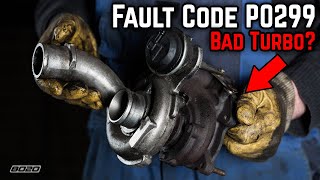
- Conduct a smoke test to pressurize the intake system and identify any hard-to-see leaks. 🎬 See why you shouldn't replace your turbo right away
- Inspect the turbocharger wastegate actuator arm for excessive play. With the engine cool, check if the pivot point is worn, which would indicate a failed wastegate requiring turbo replacement.
- Test the Turbocharger Wastegate Regulator Solenoid Valve (TCV) per TSB PIP5812C by removing it and performing an air-flow test.
- Using a scan tool, monitor desired vs. actual boost pressure during a test drive. A large, consistent discrepancy where actual boost is lower points to a mechanical issue (leak, wastegate) rather than a sensor.
- If all other components check out, inspect the turbocharger for signs of internal failure, such as excessive shaft play or damaged fins.
Parts You'll Likely Need
- Turbocharger Wastegate Regulator Solenoid Valve
(OEM #55587751)— This is a known failure point, especially in cold weather, as cited by GM TSB #PIP5812C. It's a relatively inexpensive part to replace before suspecting a larger issue.
Trusted brands: ACDelco, Dorman
OEM price range: $60-$90
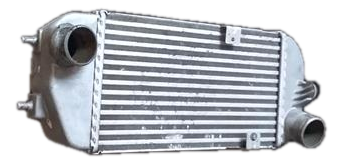
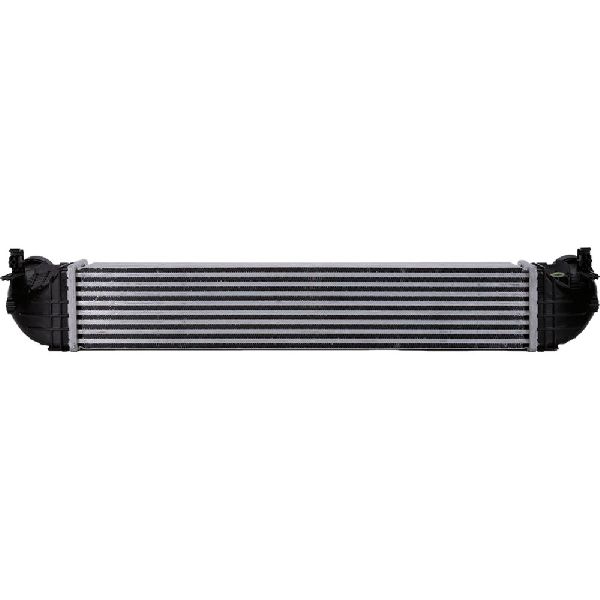
Aftermarket price range: $40-$70 - Charge Air Cooler Hose (Intercooler Pipe) — These hoses carry pressurized air and are prone to developing cracks or splits, which is a very common cause of boost leaks.
Trusted brands: ACDelco, Gates
OEM price range: $80-$150
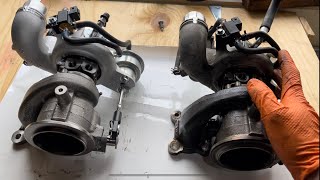
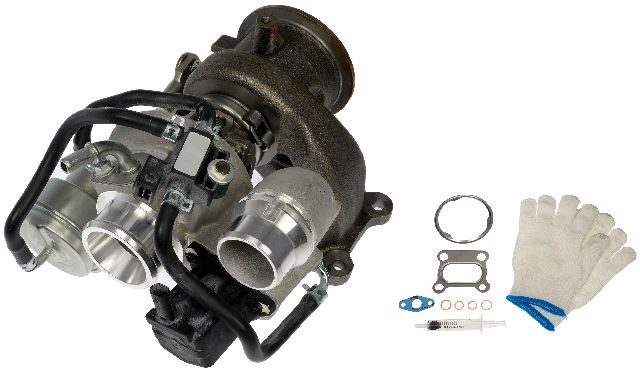
Aftermarket price range: $50-$100 - Turbocharger Assembly — This is the most expensive fix and should only be considered after all other possibilities have been ruled out. It's typically required if the internal wastegate pivot arm has worn excessively or the turbine is damaged.
Trusted brands: ACDelco, Garrett
OEM price range: $900-$1200
Aftermarket price range: $500-$800
Related Codes That Often Appear With This One
- P0234 — This code for Turbo Overboost can appear with P0299, as noted in TSBs 22-NA-007 and PIP5812C. It suggests an erratic wastegate control system, where the wastegate may be sticking closed at times (causing overboost) and sticking open or leaking at other times (causing underboost).
- P0236 — This indicates an issue with the Turbocharger Boost Sensor 'A' Circuit. It is listed in TSB 22-NA-007 as a code that can set alongside P0299 during CAC icing events.
Technical Service Bulletins (TSBs) & Recalls
- 22-NA-007: Poor Engine Performance in Extremely Cold Weather Conditions, Charge Air Cooler (CAC) Icing
- PIP5812C: Diagnostic Tip: Potential For Oil/Moisture Condensate Freezing Up in Turbocharger Wastegate Regulator Solenoid Valve (TCV)
Platform-Specific Known Issues
- Cold Weather Operation: CAC Icing: TSB #22-NA-007 notes that P0299 can be set due to ice forming in the Charge Air Cooler (CAC) during extremely cold conditions (-18°C / 0°F or colder), leading to poor engine performance. The official fix involves an ECM reprogram to change shift patterns and keep engine RPMs higher to prevent ice buildup. The TSB also advises inspecting the Turbocharger Wastegate Regulator Solenoid Valve for frozen contaminants per TSB PIP5812C.
Mechanic-Grade Diagnostic Values
- Desired vs. Actual Boost Pressure on Scan Tool — expected: During hard acceleration, the actual boost pressure should closely track or meet the desired boost pressure reading.. Failure: A significant and consistent gap where actual boost is much lower than desired boost (e.g., Desired: 31 PSI, Actual: 19-25 PSI) confirms an underboost condition.
Scan Tool Commands That Help
- GDS2 / Tech2Win: Engine Control Module (ECM) Reprogramming — This is the official GM-specified fix for P0299 caused by Charge Air Cooler (CAC) icing in extreme cold weather, per TSB #22-NA-007. The updated calibration revises transmission shift patterns to keep engine RPMs higher, preventing ice formation.
- Professional Scan Tool (e.g., GDS2, Snap-on, Autel): Turbocharger Wastegate Solenoid Duty Cycle Command — This bidirectional test is used to verify the functionality of the wastegate solenoid. The technician can command the solenoid to open or close while monitoring the system's response (e.g., change in vacuum, movement of the actuator arm) to see if the solenoid is operating correctly or is stuck.
Wiring & Ground Locations
- Engine Compartment Fuse Box — Located in the engine bay, typically on the driver's side.. This fuse box contains the primary fuses for the Engine Control Module (ECM/PCM). A blown fuse here would result in a no-start or no-communication issue, but a poor connection could potentially cause erratic behavior of engine management systems that control the turbo.
Real Owner Repair Stories
- DadsGarage Diagnostic Specialist on YouTube (Chevrolet Cruze (Gen 2 implied by context)) — Lack of power, slow acceleration, Check Engine Light with code P0299.
❌ Tried (didn't work) Replacing the engine air filter., Correcting an overfilled engine oil condition., Performing a smoke test on the charge air system, which showed no leaks.
✅ What actually fixed it The entire turbocharger assembly was replaced. The root cause was excessive mechanical play ('slop') in the wastegate actuator's pivot pin, which is integrated into the turbo housing. This wear prevented the wastegate from closing properly, causing a constant exhaust leak around the turbine. - Just Another Cruze Channel on YouTube (2016.5 Chevrolet Cruze (Gen 2) with ~70,000-80,000 miles) — Inconsistent boost pressure, dropping from a target of 20 PSI down to 17 PSI under load, especially at altitude.
❌ Tried (didn't work) Living with the weak stock actuator.
✅ What actually fixed it Replaced the OEM wastegate actuator with an upgraded aftermarket unit (MambaTek). The stock actuator was described as weak and prone to failure. The fix required careful adjustment of the new actuator's rod length to achieve the correct preload and target boost pressure (~23-25 PSI).
"I Checked Everything" — The Actual Cause
- In a documented repair, a 2019-era Cruze with P0299 passed a smoke test, indicating no leaks in the charge pipes or intake manifold. The actual cause was found to be a worn-out pivot pin on the turbocharger's internal wastegate arm. This mechanical failure allowed exhaust gas to bypass the turbine, causing underboost, and is a fault that a smoke test cannot detect.
OEM Part Supersession History
55587751 (Incorrect for this vehicle)→55573259 or 55499323 (Correct for Gen 2 1.4L LE2)— Part number 55587751 applies to the first generation (2011-2015) Cruze with the LUV engine. The second generation (2016-2019) with the LE2 engine uses a different solenoid.
Heads up: Part 55587751 will not fit or function correctly on a 2019 Cruze. Use of the incorrect part will not resolve the P0299 code.
Helpful Videos
Used OEM Parts in Stock


New Aftermarket Parts Available


The information in this article is provided for general reference and educational purposes only. Vehicle specifications, procedures, and part compatibility can vary by production date, trim level, and region. Always consult your vehicle's factory service manual and verify part numbers before purchasing or performing repairs. Safety-critical components such as airbags, seat belts, and braking systems should be installed by a qualified professional.
- Chevrolet CRUZE:
- 🎬 Helpful Videos
- 🛍️ Shop This Part
- What's Unique About the 2019-2019 Chevrolet CRUZE
- Diagnostic Flowchart
- Symptoms You May Notice
- Most Likely Causes
- Rare But Worth Checking
- Diagnosis Steps
- Parts You'll Likely Need
- Related Codes That Often Appear With This One
- Technical Service Bulletins (TSBs) & Recalls
- Platform-Specific Known Issues
- Mechanic-Grade Diagnostic Values
- Scan Tool Commands That Help
- Wiring & Ground Locations
- Real Owner Repair Stories
- "I Checked Everything" — The Actual Cause
- OEM Part Supersession History
- 🎟️ Get 5% Off