

P0299 on 2011-2018 Chevrolet Cruze: Turbo Underboost Causes and Fixes
P0299 on a Chevy Cruze with the 1.4L turbo engine most often points to a failed PCV system (check valve in intake, diaphragm in valve cover) or a faulty turbocharger wastegate. A complete turbo replacement can cost over $1,000, while PCV-related fixes are typically under $300.
- P0299 on a 1.4L Cruze is a serious code indicating a lack of turbo boost and a significant loss of power.
- Before suspecting an expensive turbo failure, thoroughly inspect the entire PCV system. A faulty valve cover or intake manifold is a very common and less expensive root cause.
- Boost leaks from cracked hoses are also a frequent culprit and should be checked with a smoke test.
- In cold climates, the problem could be temporary and caused by ice in the intake system or a frozen solenoid, as noted in official GM service bulletins. [⭐ TSB #PIP5812C, ⭐ TSB #22-NA-007]
- This code is often accompanied by P0171 (System Lean) and P1101, which strongly points towards a vacuum/boost leak in the PCV system.
What's Unique About the 2011-2018 Chevrolet CRUZE

The 1.4L turbo engine (LUV/LUJ/LE2) in the Cruze and its platform mates is notorious for a few key weaknesses that directly lead to P0299. A poorly designed Positive Crankcase Ventilation (PCV) system is a primary culprit; a small check valve inside the intake manifold fails, allowing boost pressure to enter the engine's crankcase. This pressurization then ruptures a rubber diaphragm in the valve cover, creating a significant vacuum/boost leak. Additionally, the turbo's wastegate actuator arm pivot point can wear out, or the retaining clip can fall off, causing the wastegate to not close properly and leak boost. Cracks in the turbocharger's exhaust housing around the wastegate are also a known, albeit less direct, cause.
Diagnostic Flowchart

Tap your situation to follow the diagnostic path that matches what you're seeing on this vehicle.
Generation note: This range covers two generations of the Cruze: Gen 1 (2011-2016) and Gen 2 (2016.5-2018). The 2016 model year is a split, with the older design sold as the 'Cruze Limited'. Both generations use a 1.4L turbo engine (Gen 1: LUV/LUJ, Gen 2: LE2), and while the engines were updated, they share similar PCV and turbocharger design principles and are both known to suffer from the issues that cause P0299.
Symptoms You May Notice

- Drastic loss of engine power and sluggish acceleration
- Check Engine Light illuminated
- Vehicle may enter 'limp mode' or 'Reduced Engine Power' mode, limiting RPMs
- Whistling or hissing sounds from the engine bay, especially at idle (indicates a vacuum leak).
- High-pitched chirping sound from the belt area at idle, which stops when the oil dipstick is removed (indicates a failed front crankshaft seal).
- Poor fuel economy
- Increased oil consumption or new oil leaks.
- Rough or unstable idle.
- Replacing only the turbocharger without addressing the underlying PCV system failure. If the intake check valve is missing, it will create a boost leak path that a new turbo cannot fix and may damage the new turbo's seals over time.
- Replacing only the valve cover without checking the intake manifold's internal check valve. If the check valve is missing, the new valve cover diaphragm will likely rupture again.
Most Likely Causes

- Failed PCV System (Intake Manifold Check Valve / Valve Cover Diaphragm) 🔴 High Probability The check valve inside the intake manifold is a small, orange rubber nipple that is known to fail and get sucked into the engine. This allows high-pressure boost to enter the crankcase, which then ruptures a thin rubber diaphragm in the valve cover, creating a massive vacuum/boost leak.
How to confirm: Check for a whistling sound from the engine at idle. Remove the oil cap while the engine is running; if there is strong suction holding it down or the engine idle changes dramatically, the valve cover diaphragm is ruptured. To check the intake manifold valve, remove the PCV hose from the intake manifold and shine a light inside; the orange check valve should be visible. If it's gone, the manifold has failed.
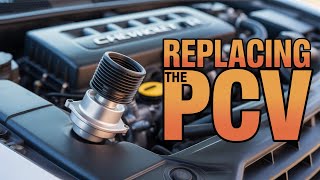
Typical fix: Replace the valve cover (OEM P/N 25198874 for Gen 1). 🎬 See this step-by-step walkthrough for replacing the valve cover. If the intake check valve is missing, the intake manifold must be replaced. Some aftermarket kits, like those from CruzeKits.com, provide an external check valve as a more durable alternative to replacing the entire manifold.
Est. part cost: $50-$150 for a valve cover, $150-$300 for an intake manifold. - Failed Turbocharger (Wastegate or Bypass Valve) 🔴 High Probability The wastegate actuator arm pivot can wear out, causing it to stick or not seal properly. A simple E-clip holding the actuator rod to the wastegate arm can also rust and fall off, leaving the wastegate fully open. Additionally, the turbo housing itself is known to develop cracks around the wastegate port, allowing exhaust gas to bypass the turbine.
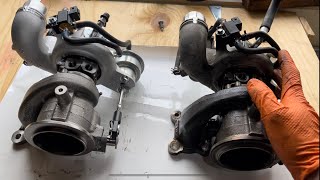
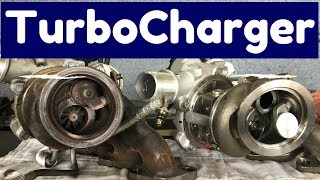
How to confirm: Visually inspect the wastegate actuator arm for free movement. With the engine off and cool, see if the arm moves smoothly without binding and check if the retaining clip is present. Inspecting for cracks often requires removing the turbo heat shield and using a borescope through the O2 sensor port 🎬 Watch: A pro mechanic shows how to check your turbocharger. for a clear view.
Typical fix: If the clip is missing, it can be replaced with a new one. If the wastegate arm is worn or the housing is cracked, the entire turbocharger assembly must be replaced. The OEM turbo part number for Gen 1 is often cited as 55565353.
Est. part cost: $5 for a clip, $300-$800 for an aftermarket turbo, $800+ for an OEM unit. - Boost/Vacuum Leak 🟡 Medium Probability Hoses and connections can become brittle and crack over time. Common leak points are the charge pipes to and from the intercooler, the throttle body connection, and the PCV hose itself.
How to confirm: Perform a visual inspection of all intake and vacuum hoses for cracks or loose connections. A smoke test is the most effective way to pinpoint the location of a leak by forcing pressurized smoke into the intake system and watching where it escapes.
Typical fix: Replace the cracked hose or faulty clamp.
Est. part cost: $20-$100 depending on the specific hose. - Frozen Charge Air Cooler (CAC) or Wastegate Solenoid ⚪ Low Probability In extremely cold weather (below 0°F / -18°C), moisture and oil condensate can freeze inside the charge air cooler (intercooler) or the turbocharger wastegate regulator solenoid valve, causing a restriction or preventing proper operation. This is documented in TSBs #PIP5812C and #22-NA-007.
How to confirm: This issue is specific to cold weather operation, often within the first 10-15 minutes of driving. Diagnosis involves checking for ice blockage or testing the function of the wastegate solenoid per the TSB procedure, which involves blowing low-pressure air through its ports.
Typical fix: Allowing the vehicle to thaw may temporarily resolve the issue. TSB #PIP5812C details a procedure for cleaning and testing the solenoid, and replacing it if it fails the test. TSB #22-NA-007 involves procedural updates for dealers, which may include installing a grille cover in extreme cold.
Est. part cost: $40-$80 for the solenoid valve.
Rare But Worth Checking
- Clogged Catalytic Converter: An exhaust restriction prevents the turbo from spooling up effectively. This is usually accompanied by a more severe loss of power, especially at higher RPMs, and may set a P0420 code.
- Faulty Boost Pressure Sensor (MAP Sensor): The sensor that measures boost pressure could be sending incorrect readings to the ECM, falsely triggering the P0299 code. This is less common than mechanical failures.
- Faulty Turbocharger Bypass Valve Solenoid: A small solenoid connected to the bypass valve (or diverter valve) can get gummed up and stick, allowing boost to leak.
Diagnosis Steps
- Read all fault codes stored in the ECM. Note any other codes besides P0299, especially P0171 and P1101.
- With the engine running at idle, listen for a distinct whistling or sucking noise, which indicates a vacuum leak. Try removing the oil fill cap; if it's held on by strong vacuum or its removal causes a major change in idle, suspect a failed valve cover diaphragm.
- Listen for a high-pitched chirp from the passenger side of the engine. If heard, remove the oil dipstick. If the sound stops, the front crankshaft seal has likely failed due to excessive crankcase pressure.
- Visually inspect all accessible intake hoses, charge pipes, and vacuum lines for obvious cracks, damage, or loose connections.
- Remove the PCV hose from the intake manifold and shine a flashlight into the port. Look for the orange, nipple-shaped check valve. If it is missing, the intake manifold must be replaced or an external kit installed.
- With the engine off and cool, remove the turbo heat shield. Locate the wastegate actuator rod and check if the retaining clip is present and that the arm moves freely without sticking or excessive play.
- If no obvious issues are found, perform a smoke test on the intake system to find hidden leaks. This is the most reliable way to find cracks in hoses, the intercooler, or gaskets.
Parts You'll Likely Need
- Camshaft Valve Cover
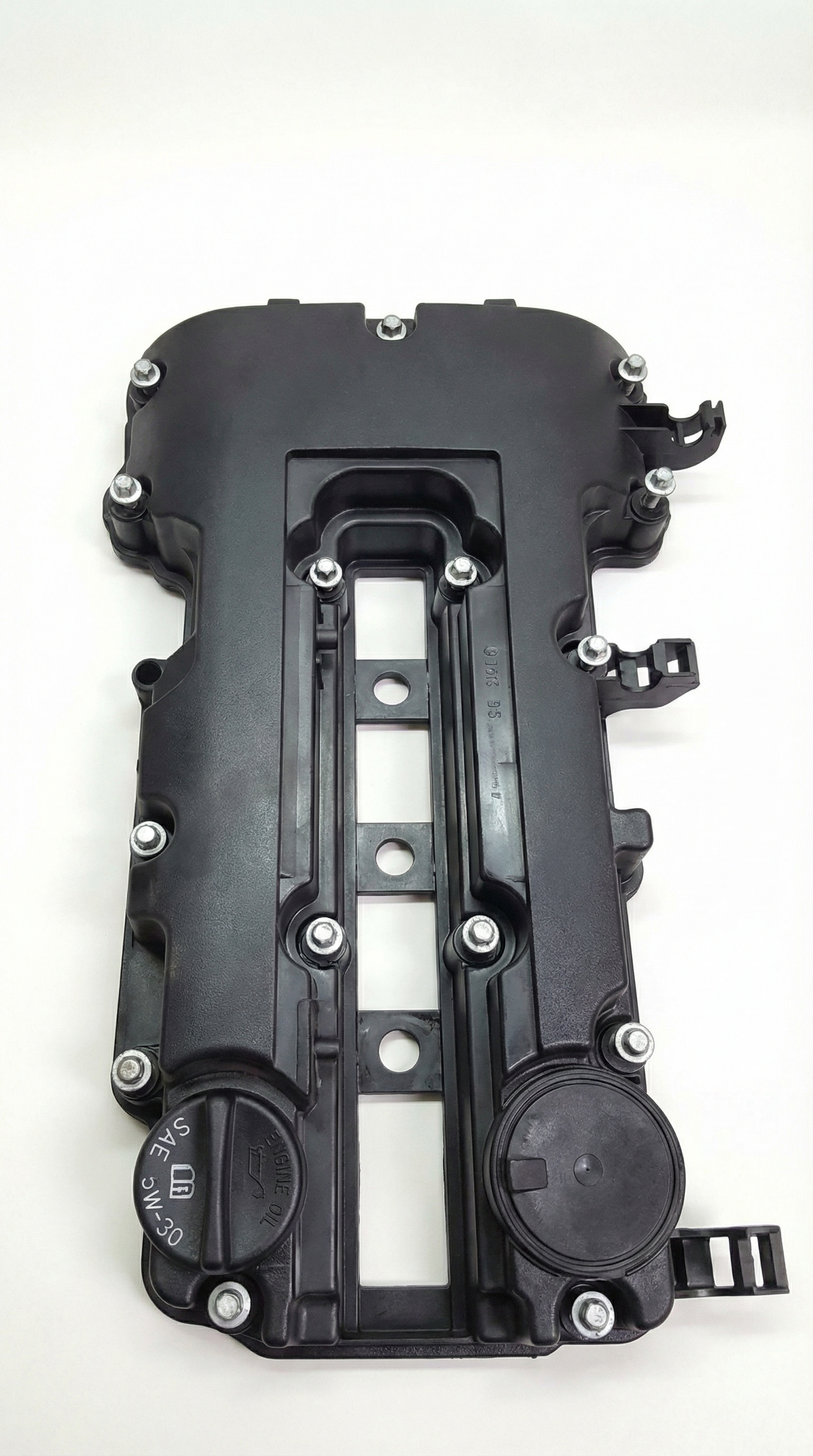
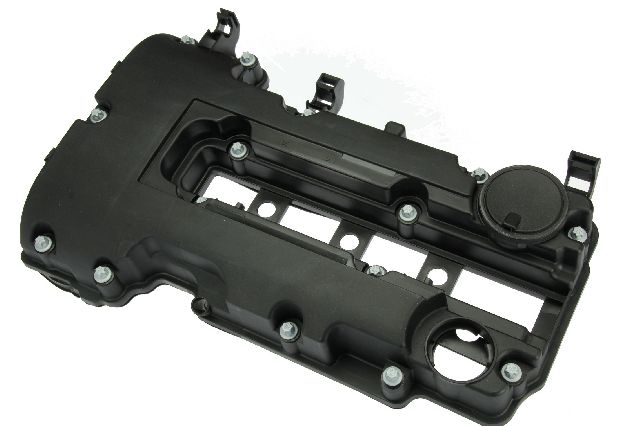
(OEM #25198874)— The integrated PCV diaphragm frequently ruptures due to a failed check valve in the intake manifold, causing a large vacuum leak and triggering P0299 and P0171.
Trusted brands: ACDelco, Dorman (P/N 911-082)
OEM price range: $100-$180
Aftermarket price range: $50-$100 - Turbocharger Assembly
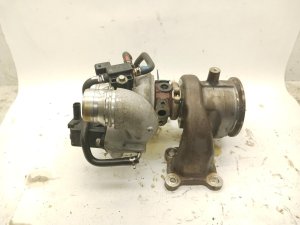
(OEM #55565353)— This is the most common failure point after the PCV system. Wear on the internal wastegate linkage or cracks in the housing are primary causes.
Related Codes That Often Appear With This One
- P0171 — System Too Lean. This code often appears with P0299 because the same vacuum leaks that cause underboost (like a ruptured valve cover diaphragm) also allow unmetered air into the engine, creating a lean fuel mixture.
- P1101 — Intake Air Flow System Performance. This code is often triggered by the same PCV and vacuum leak issues, as the Mass Airflow (MAF) sensor readings don't match what the engine expects due to unmetered air.
Technical Service Bulletins (TSBs) & Recalls
- PIP5812C: Addresses DTC P0299 in cold weather due to the Turbocharger Wastegate Regulator Solenoid Valve (TCV) freezing from oil/moisture condensate.
- 22-NA-007: Pertains to poor engine performance and P0299 in extremely cold conditions due to Charge Air Cooler (CAC) icing.
- PIP5023A (Superseded): An older bulletin related to P0299 from loss of wastegate preload due to wear in the actuator rod linkage.
Platform-Specific Known Issues
- PCV System Domino Effect: The most unique and widespread issue for the 1.4L engine is the chain reaction failure. The intake manifold check valve fails first, which then causes crankcase over-pressurization, which then ruptures the valve cover diaphragm, which can then blow out the front crankshaft seal. This entire sequence commonly sets code P0299.
- Wastegate Retaining Clip: A surprisingly common and simple failure is the small E-clip that holds the wastegate actuator rod to the wastegate arm simply rusting and falling off. This leaves the wastegate permanently open, causing a major underboost condition. This can be fixed in minutes with a new clip if diagnosed correctly.
- GM Extended Warranty Coverage: Due to the prevalence of the PCV issue, GM issued a special extended warranty (10 years / 120,000 miles) covering the replacement of the valve cover and/or intake manifold if they fail in this specific manner. Owners report this must be diagnosed and repaired at a dealership to qualify.
Mechanic-Grade Diagnostic Values
- Desired Boost vs. Actual Boost (Scan Tool Data) — expected: Actual boost pressure should closely track or slightly exceed desired boost pressure under acceleration.. Failure: A significant and consistent gap where actual boost is lower than desired boost. For example, a desired boost of 31.2 PSI with an actual reading of only 17.9 PSI indicates a major underboost problem.
- Mass Air Flow (MAF) Sensor Reading (Scan Tool Data) — expected: On a healthy Gen 1 1.4L engine, peak airflow during a wide-open throttle pull through several gears should be around 100 grams/second or more with a clean air filter.. Failure: Significantly lower readings, such as 80-85 g/s, can indicate a restriction (like a clogged air filter) or a leak, contributing to an underboost condition.
- Turbocharger Wastegate Regulator Solenoid Resistance — expected: Approximately 29-31 ohms when tested with a multimeter.. Failure: A reading significantly outside this range, or an open circuit (infinite resistance), indicates a faulty solenoid coil.
- Wastegate Actuator Opening Pressure — expected: The wastegate should remain fully closed under low pressure. The actuator is commanded by the ECU to open under specific conditions to regulate boost.. Failure: If the wastegate actuator arm begins to move and open the wastegate at a very low pressure (e.g., 5 PSI) during a manual pressure test, it may indicate a weak actuator spring or a faulty control solenoid, leading to premature boost loss.
Scan Tool Commands That Help
- GDS2 / High-End Scan Tool: Turbocharger Learn — After replacing the turbocharger or wastegate actuator, this function may be required to reset learned values and allow the ECM to calibrate control of the new component.
- High-End Scan Tool (e.g., Autel, Snap-on): Live Data Graphing (Desired Boost vs. Actual Boost) — This is the primary diagnostic method for confirming a P0299 condition. It should be used during a road test with several wide-open throttle accelerations to see if the actual boost pressure fails to meet the target set by the ECM.
- External Pressure Tester (e.g., Redline Smoke Pro): Actuate Wastegate for Borescope Inspection — When inspecting the turbo for cracks with a borescope, regulated air pressure can be applied to the wastegate actuator to force it open, allowing for a clear view of the wastegate seat area, which is a common place for cracks to form.
Real Owner Repair Stories
- DadsGarage Diagnostic Specialist YouTube Channel (2016 Chevrolet Cruze) — Lack of power, slow acceleration, P0299 code stored.
❌ Tried (didn't work) Replacing a very dirty air filter (MAF readings improved, but underboost remained)., Correcting an overfilled engine oil level., Performing a smoke test on the intake system (passed with no leaks found).
✅ What actually fixed it The entire turbocharger assembly was replaced. The root cause was excessive play in the wastegate linkage pin, which prevented the wastegate from sealing properly, causing a constant exhaust leak around the turbine wheel. - Reddit user chick3nafff in r/cruze (2012-era Chevrolet Cruze) — P0299 underboost code.
❌ Tried (didn't work) Initial diagnosis pointed towards a full turbo replacement.
✅ What actually fixed it The mechanic found a worn shaft that prevented the wastegate from moving correctly. Instead of replacing the entire turbo, the mechanic was able to drill something and perform a custom repair on the wastegate linkage to restore its function, which resolved the code and saved the cost of a new turbo. - Reddit user Specific-Tooth-1103 in r/cruze (Chevrolet Cruze (year not specified)) — P0299 underboost code.
❌ Tried (didn't work) Replacing the entire turbocharger assembly.
✅ What actually fixed it The user reported that even after replacing the turbo, the P0299 code remained. This strongly implies the root cause was not the turbo itself, but an unaddressed underlying issue like a failed PCV system (intake manifold check valve) or another boost leak that was missed.
"I Checked Everything" — The Actual Cause
- In a detailed diagnostic video, a 2016 Cruze with P0299 passed a full intake smoke test, indicating no boost or vacuum leaks in the hoses, intercooler, or manifold. Despite the clean smoke test, the car still had a significant underboost condition. The actual cause was found to be a worn-out wastegate linkage pin inside the turbocharger assembly. This mechanical failure allowed exhaust gas to bypass the turbine, but it was not a leak that a standard intake smoke test could ever detect. The fix was a complete turbo replacement.
When the Usual Fixes Don't Work
- While replacing the turbocharger is a common fix for P0299, it is not always the solution. Multiple owner reports confirm that replacing the turbo did not resolve the code because the underlying issue was missed. In one case, a user replaced the turbo but still had the code, strongly suggesting the actual problem was a failed PCV check valve in the intake manifold or a cracked valve cover diaphragm, which are known prerequisites to check before condemning the turbo.
Model Year Variations Within This Range
- 2011-2016 (Gen 1) vs. 2016.5-2018 (Gen 2): The Gen 1 Cruze uses the 1.4L LUV engine, while the Gen 2 uses the 1.4L LE2 engine. While they are the same displacement, they are fundamentally different engines and do not share most major parts. The PCV system, valve cover, intake manifold, and turbocharger are all different designs. While both generations are known to set P0299 for similar reasons (PCV and turbo failures), the specific part numbers and repair procedures are not interchangeable.
- 2017-2018 (Select Models): General Motors issued a special coverage extension (N232395330) for turbocharger failures on some 2017-2018 Chevy Trax, Sonic, and Buick Encore models, extending the warranty to 10 years or 120,000 miles. While this doesn't explicitly name the Cruze, it shows GM's acknowledgement of turbo issues on the LE2 engine platform used in the Gen 2 Cruze.
Helpful Videos
Used OEM Parts in Stock



New Aftermarket Parts Available

The information in this article is provided for general reference and educational purposes only. Vehicle specifications, procedures, and part compatibility can vary by production date, trim level, and region. Always consult your vehicle's factory service manual and verify part numbers before purchasing or performing repairs. Safety-critical components such as airbags, seat belts, and braking systems should be installed by a qualified professional.
- Chevrolet CRUZE:
- 🎬 Helpful Videos
- 🛍️ Shop This Part
- What's Unique About the 2011-2018 Chevrolet CRUZE
- Diagnostic Flowchart
- Symptoms You May Notice
- Most Likely Causes
- Rare But Worth Checking
- Diagnosis Steps
- Parts You'll Likely Need
- Related Codes That Often Appear With This One
- Technical Service Bulletins (TSBs) & Recalls
- Platform-Specific Known Issues
- Mechanic-Grade Diagnostic Values
- Scan Tool Commands That Help
- Real Owner Repair Stories
- "I Checked Everything" — The Actual Cause
- When the Usual Fixes Don't Work
- Model Year Variations Within This Range
- 🎟️ Get 5% Off