

P0299 on 2021-2022 Buick Encore: Turbo Underboost Causes and Fixes
On a 2021-2022 Buick Encore, code P0299 is most often caused by a faulty turbocharger wastegate regulator solenoid, especially in cold weather as noted in GM TSB #PIP5812C. This part is relatively inexpensive and easy to replace. Other causes include boost leaks from cracked charge hoses, PCV system failures causing oil contamination, or a failing turbocharger assembly.
- For a 2021-2022 Buick Encore, P0299 is very frequently caused by a faulty Turbocharger Wastegate Regulator Solenoid Valve, as documented in a GM TSB.
- Before considering an expensive turbo replacement, always inspect for boost leaks and strongly consider replacing the wastegate solenoid first, especially if you live in a cold climate.
- Symptoms are a significant loss of power and acceleration, making the car feel sluggish.
- This code can appear with P0420 (catalyst issue) or P0234 (overboost), pointing towards a malfunctioning turbo system.
What's Unique About the 2021-2022 Buick ENCORE

The 1.4L turbo engine in the first-generation Encore is known for this issue. A specific GM Technical Service Bulletin (TSB #PIP5812C) points to the Turbocharger Wastegate Regulator Solenoid Valve freezing in cold weather, causing the P0299 code. [⭐ MANUFACTURER TSB — highest authority] This makes the solenoid a primary suspect on this platform, potentially saving owners from a costly and unnecessary turbo replacement. Furthermore, failures in the PCV system are common on this engine family, leading to oil vapor contamination that can damage both the solenoid and the turbocharger itself over time.
Diagnostic Flowchart

Tap your situation to follow the diagnostic path that matches what you're seeing on this vehicle.
Symptoms You May Notice

- Check Engine Light is on
- Significant loss of engine power and sluggish acceleration, 0-60 times may be drastically slower (e.g., 17 seconds instead of 10).
- Hesitation, especially when trying to accelerate hard or go uphill.
- Unusual whistling or hissing noises from the engine bay, indicating a possible air leak from a charge hose.
- High-pitched whining or siren-like noise from the engine that changes with RPM, indicating worn turbo bearings.
- Excessive grey or blue exhaust smoke, particularly on acceleration, if the turbo seals have failed and are leaking oil.
- Replacing the entire turbocharger when only the inexpensive wastegate solenoid valve is faulty.
- Replacing oxygen (O2) sensors, which are unlikely to be the root cause of an underboost condition.
- Assuming a 'clicking' wastegate solenoid is good. The solenoid can be mechanically functional but still internally stuck or clogged, failing to properly regulate vacuum/pressure.
Most Likely Causes

- Faulty or Freezing Turbocharger Wastegate Regulator Solenoid Valve 🔴 High Probability A GM Technical Service Bulletin (#PIP5812C) specifically identifies this part as a cause for P0299, stating that oil or moisture can freeze inside the valve during cold weather, causing it to malfunction. [⭐ MANUFACTURER TSB — highest authority] It's also a common failure point due to contamination from engine oil vapors from the PCV system, which can cause the internal plunger to stick even in warm weather.
How to confirm: Listen for a 'click' when activating the solenoid with a scan tool; however, a click does not guarantee it's working correctly as it can still be stuck internally. The TSB outlines a specific test: remove the valve and blow low-pressure shop air (15-20 PSI) through port #2. If the air dead-heads and doesn't flow out of ports #1 and #3, the plunger is stuck and the valve must be replaced. 🎬 See how to bench test your boost solenoid for flow.
Typical fix: Replace the turbocharger wastegate regulator solenoid valve.
Est. part cost: $40-$100 - Boost/Intake Air Leaks 🟡 Medium Probability Plastic and rubber components in the charge air system, particularly the charge air cooler inlet hose, can crack, become oil-saturated and soft, or have connections loosen over time, allowing pressurized air to escape.
How to confirm: Perform a visual inspection of all hoses and clamps between the turbo and the throttle body for cracks, oil residue, or loose connections. A smoke test is the most effective way to pinpoint hard-to-see leaks.
Typical fix: Tighten loose clamps or replace cracked/damaged hoses or a leaking intercooler.
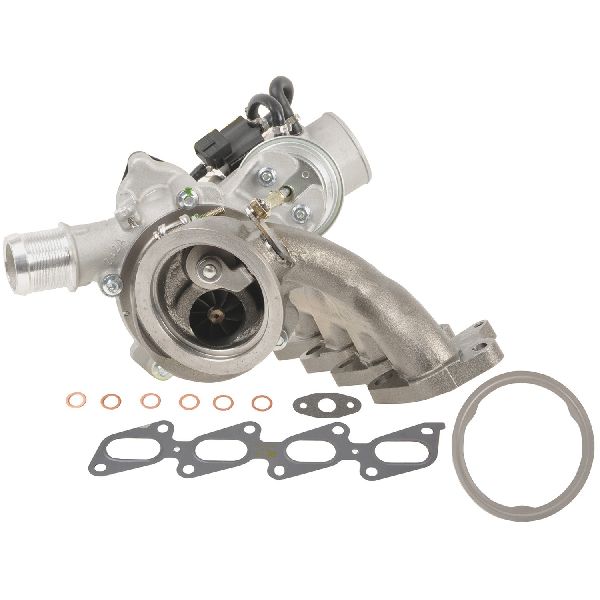
Est. part cost: $20-$300 - Failing Turbocharger Assembly 🟡 Medium Probability These turbos can fail due to issues like a seized wastegate valve, a disconnected or worn wastegate actuator arm, or worn bearings from oil starvation/contamination. An owner complaint to the NHTSA for a 2021 model confirms a P0299 code resulting from a bad turbo. [ OWNER COMPLAINT] PCV system failures are a known root cause of oil contamination that destroys the turbo's seals and bearings.
How to confirm: With the engine off and cool, check the turbo for excessive shaft play (wiggling the turbine shaft). Inspect the wastegate actuator arm to ensure it is connected and moves smoothly. A mechanic can also command the wastegate with a scan tool to check for proper movement. Another TSB, #PIP5495L, lists specific failure criteria like a disconnected wastegate arm or a seized turbine wheel that warrant turbo replacement.
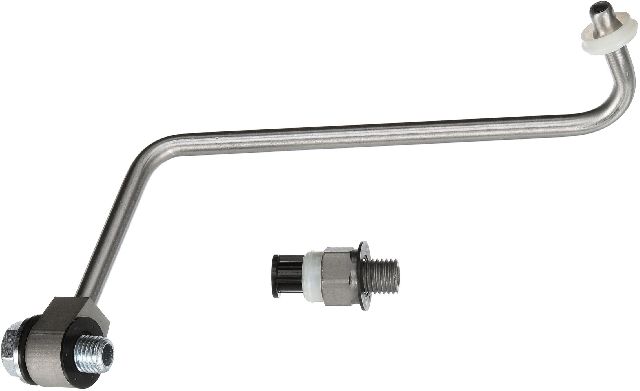
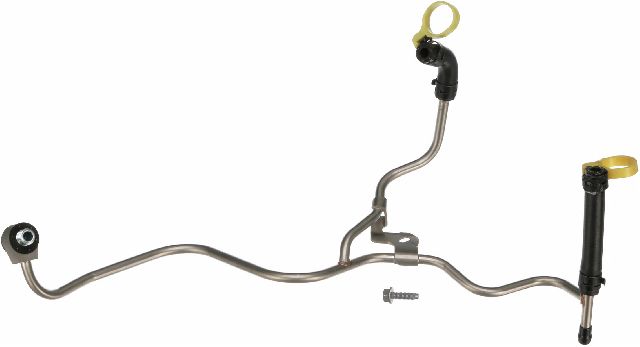
Typical fix: Replace the entire turbocharger assembly. It is critical to also replace the oil feed and return lines and fix any underlying PCV issues to prevent repeat failure.
Est. part cost: $400-$900 - Restricted Air Intake or Exhaust ⚪ Low Probability A severely clogged engine air filter can restrict airflow into the turbo. A clogged catalytic converter can restrict exhaust flow out, preventing the turbo from spooling up correctly. The P0420 code seen in an owner complaint can be related to this, as a failing turbo leaking oil can destroy the catalytic converter. [ OWNER COMPLAINT, 5]
How to confirm: Check the engine air filter and replace if dirty. A mechanic can perform an exhaust backpressure test to check for a clogged catalytic converter.
Typical fix: Replace the air filter or the clogged catalytic converter.
Est. part cost: $25-$600
Rare But Worth Checking
- Faulty Boost Pressure Sensor (MAP Sensor): This sensor tells the ECM how much boost is being produced. If it sends incorrect low readings, it can trigger P0299 even if the turbo is healthy. This is less common than mechanical faults but can be diagnosed by comparing its readings at idle and with the engine off to known-good values.
- Failed PCV System Check Valve: A failed check valve inside the intake manifold can create an internal boost leak, where pressurized air is routed back to the turbo inlet instead of going into the cylinders. This is a well-documented issue on the 1.4L engine family and can be a root cause for P0299.
Diagnosis Steps
- Read all fault codes with an OBD-II scanner. Note any other codes like P0234, P0420, or P1101 as they provide important clues.
- Inspect the engine air filter for clogs or restrictions.
- Visually inspect all intake and charge air piping for obvious cracks, loose connections, or oil saturation, especially the hose from the turbo to the intercooler.
- Perform a smoke test on the entire intake and charge air system to find any leaks that are not visually apparent.
- Test the Turbocharger Wastegate Regulator Solenoid Valve per TSB #PIP5812C. Remove the valve and use low-pressure air to check for flow through port #2. Replace if it's blocked, as this is the most common vehicle-specific fault.
- Inspect the PCV system. Check for a torn diaphragm in the valve cover and a missing/damaged check valve in the intake manifold, as these are known failure points that cause boost leaks and oil contamination.
- Inspect the turbocharger for physical damage, oil leaks, and excessive turbine shaft play (in-and-out and side-to-side). Check that the wastegate actuator arm is connected and moves freely.
- Using a scan tool, monitor desired vs. actual boost pressure during a test drive. A large discrepancy confirms the underboost condition. A peak reading of only ~5 PSI can indicate the system is only running on mechanical wastegate spring pressure.
- If all else fails, check for exhaust restrictions by performing a backpressure test on the catalytic converter.
Parts You'll Likely Need
- Turbocharger Wastegate Regulator Solenoid Valve
(OEM #55573259)— This is the most likely culprit according to GM's own Technical Service Bulletin #PIP5812C and a common failure point on the 1.4L engine due to freezing or oil contamination. [⭐ MANUFACTURER TSB — highest authority, 20, 22, 27]
Related Codes That Often Appear With This One
- P0234 — Turbocharger Overboost Condition. The TSB #PIP5812C mentions this code can set along with P0299, indicating an erratic wastegate control issue where the solenoid may be sticking in both open and closed positions. [⭐ MANUFACTURER TSB — highest authority]
- P0420 — Catalyst System Efficiency Below Threshold. A failing turbo leaking oil into the exhaust will quickly contaminate and destroy the catalytic converter. Conversely, a clogged converter can cause backpressure that leads to underboost. [ OWNER COMPLAINT, 7, 17]
- P1101 — MAF Sensor Out of Self-Test Range. This code often appears with P0299 when there is a significant air leak, such as from a failed PCV system or a cracked charge pipe, as the measured airflow is inconsistent with what the engine expects.
Technical Service Bulletins (TSBs) & Recalls
- PIP5812C: Addresses DTC P0299 or P0234 setting due to oil/moisture freezing in the Turbocharger Wastegate Regulator Solenoid Valve in cold weather. [⭐ MANUFACTURER TSB — highest authority, 16, 33]
- PIP5495L: Provides detailed diagnostic steps to prevent misdiagnosis and unnecessary turbocharger replacement for P0299.
- PIP5829A: Pertains to the Encore GX (different platform), but highlights wastegate linkage wear as a cause for P0299 on other GM small displacement turbo engines.
Platform-Specific Known Issues
- TSB #PIP5812C: General Motors has identified that oil and/or moisture condensate can freeze inside the Turbocharger Wastegate Regulator Solenoid Valve during cold weather, causing it to stick and trigger a P0299 or P0234 code. The fix involves removing, cleaning, and testing the valve, or replacing it if it fails the test. [⭐ MANUFACTURER TSB — highest authority, 16, 33]
- TSB #PIP5495L: This bulletin provides technicians with a detailed diagnostic tree for P0299 to avoid unnecessarily replacing turbochargers. It lists specific criteria for replacement, such as a disconnected wastegate arm or seized turbine, and what conditions (like minor cracks near the wastegate port) are considered normal.
Mechanic-Grade Diagnostic Values
- MAP Sensor Reading (Key On, Engine Off) — expected: ~100 kPa (should match atmospheric pressure). Failure: A reading significantly different from ambient pressure.
- MAP Sensor Reading (Engine at Idle) — expected: ~35-40 kPa. Failure: Significantly higher or lower readings can indicate a vacuum leak or sensor fault.
- Desired vs. Actual Boost Pressure (Hard Acceleration) — expected: Actual pressure should closely track desired pressure.. Failure: A large, sustained gap where actual pressure is much lower than desired (e.g., desired 137 kPa, actual 35 kPa) confirms an underboost condition. Peak actual boost of only 120-133 kPa (2.7-4.6 PSI) is a clear sign of a problem.
Scan Tool Commands That Help
- GDS2 (GM Global Diagnostic System): Turbocharger Learn — This function can be used to test the range of motion and response of the electronic wastegate actuator. It helps determine if the actuator is physically sticking or if the control module is functioning correctly.
- GDS2 (GM Global Diagnostic System): Solenoid Valve Drive Tests — Allows a technician to command the Turbocharger Wastegate Regulator Solenoid and the Bypass Solenoid on and off to listen for a 'click'. While a click doesn't guarantee function, its absence confirms an electrical or component failure.
Wiring & Ground Locations
- G101 — Located at the front of the engine, on the lower block.. This ground serves the Engine Control Module (ECM) and Transmission Control Module (TCM). A poor connection here can cause erratic ECM behavior and incorrect sensor readings, potentially leading to a false P0299 code.
- G103 — Located at the left rear of the engine compartment on the cowl, above the brake booster.. This is a major ground point for the Body Control Module (BCM), Instrument Panel Cluster (IPC), and the Data Link Connector (DLC). A fault here can disrupt communication between modules and the scan tool, complicating diagnosis.
- Engine Compartment Fuse Block — Located near the battery in the engine bay.. Contains the primary fuses and relays for the engine management system, including power to the ECM and turbo control solenoids. A corroded or blown fuse here would be a primary point of failure.
Real Owner Repair Stories
- Reddit user on r/BuickEncore (2017 Buick Encore) — Recurring P0299 code, Check Engine Light returning within 100-200 miles of each repair.
❌ Tried (didn't work) Replaced turbo solenoid., Replaced a valve requiring head gasket replacement., Replaced O2 sensors and catalytic converters., Told it was a 'glitch' in the computer., Repaired a hairline crack in the exhaust flex tube.
✅ What actually fixed it The user was advised that both P0299 and the subsequent P0420 code are symptoms covered under a specific GM service bulletin for the turbocharger and that the diagnosis and repair should be done at a Buick dealer under that bulletin. - Forum user on a Chevrolet Trax forum (shared 1.4L engine) (2019 model with 25,000 miles) — P0299, low power (0-60 in 17 seconds), grey smoke on hard acceleration, high positive fuel trims (+12.5%).
❌ Tried (didn't work) Cleaned MAP sensor., Pressure tested the charge air system (passed)., Pinched off wastegate actuator control hose (no change in low boost)., Verified wastegate actuator movement and arm tension were good.
✅ What actually fixed it The initial problem of high fuel trims was fixed by replacing a failed internal PCV check valve in the intake manifold (even though the external 'nub' was still present). The P0299 code returned a week later, and the ultimate resolution was not posted in the thread, but the detailed diagnostic data (peak boost only 2.7-4.6 PSI) strongly pointed toward a failed turbo or wastegate despite passing visual checks.
"I Checked Everything" — The Actual Cause
- A very common scenario for the 1.4L engine is for a smoke test and pressure test to pass, but a P0299 is still present. The root cause is often the internal PCV check valve located inside the intake manifold. When this valve fails, it creates a boost leak that routes pressurized air from the intake manifold directly back to the turbo inlet. This internal leak loop will not be detected by a standard smoke test performed at the throttle body or turbo inlet.
When the Usual Fixes Don't Work
- In one documented case on a similar 1.4L engine, a user replaced the turbocharger to fix a P0299 code, but the code and underpowered condition persisted. After verifying the wastegate actuator was functioning, the issue remained unresolved, suggesting that even a full turbo replacement is not a guaranteed fix if the root cause lies elsewhere (e.g., a persistent leak, sensor issue, or exhaust restriction).
OEM Part Supersession History
55559239→55573259, 55574902— GM regularly updates service parts to integrate new materials or design improvements.
Heads up: Part 55573259 is listed as a 'Turbo wastegate valve' and also as a 'Secondary Air Injection Bypass Valve' by GM, indicating it is used in multiple systems. Ensure the application is correct for the turbo system.
Helpful Videos

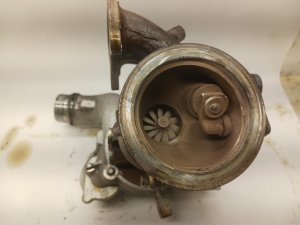
Used OEM Parts in Stock
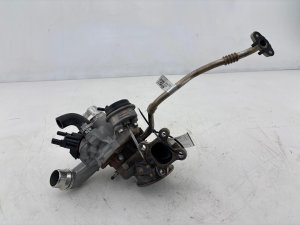
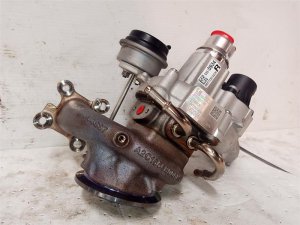
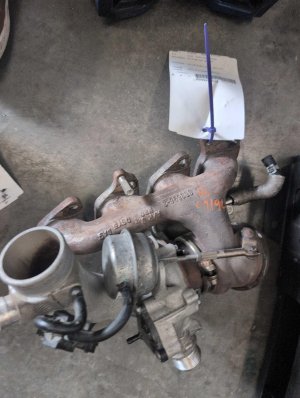
New Aftermarket Parts Available
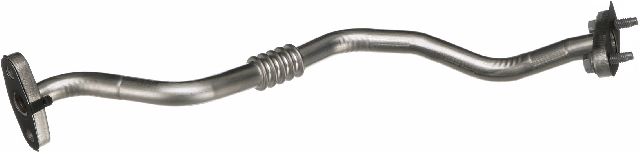
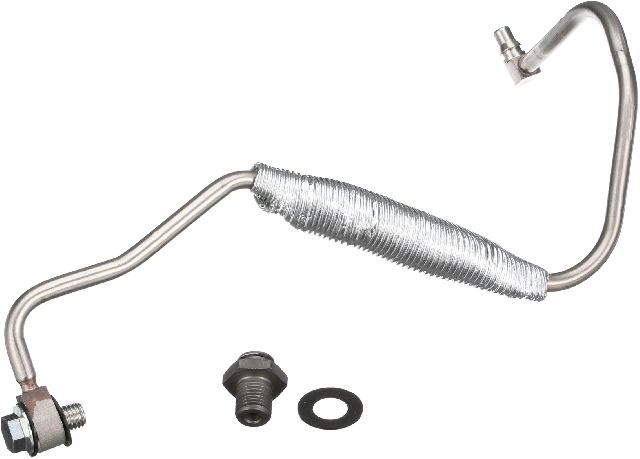


The information in this article is provided for general reference and educational purposes only. Vehicle specifications, procedures, and part compatibility can vary by production date, trim level, and region. Always consult your vehicle's factory service manual and verify part numbers before purchasing or performing repairs. Safety-critical components such as airbags, seat belts, and braking systems should be installed by a qualified professional.
- Buick ENCORE:
- 🎬 Helpful Videos
- 🛍️ Shop This Part
- What's Unique About the 2021-2022 Buick ENCORE
- Diagnostic Flowchart
- Symptoms You May Notice
- Most Likely Causes
- Rare But Worth Checking
- Diagnosis Steps
- Parts You'll Likely Need
- Related Codes That Often Appear With This One
- Technical Service Bulletins (TSBs) & Recalls
- Platform-Specific Known Issues
- Mechanic-Grade Diagnostic Values
- Scan Tool Commands That Help
- Wiring & Ground Locations
- Real Owner Repair Stories
- "I Checked Everything" — The Actual Cause
- When the Usual Fixes Don't Work
- OEM Part Supersession History
- 🎟️ Get 5% Off