

P0299 on 2009-2013 Audi Q5 2.0T: Turbo Underboost Causes and Fixes
For a 2009-2013 Audi Q5 with the 2.0T engine, code P0299 is most often caused by a worn turbocharger wastegate flap, a failed diverter valve, or a bad PCV valve. Replacing the diverter valve is a common, inexpensive first step (~$80), but a worn wastegate, confirmed by a TSB, often requires turbocharger replacement (~$1000-$2500 for the part). Some owners have found success with cheaper wastegate fixes like an actuator clip or rod adjustment.
- P0299 on the 2.0T Q5 means the turbo is not making enough boost.
- Always check the inexpensive Diverter Valve (DV) first; a torn diaphragm is a very common cause and an easy DIY fix.
- Be aware that a manufacturer TSB confirms a worn turbo wastegate is a known issue on this engine that also causes P0299, which requires a much more expensive turbo replacement.
- A failed PCV valve is another possible cause and can be identified by a squealing noise or strong suction at the oil cap when the engine is running.
- Do not immediately approve a turbo replacement without first ruling out the diverter valve and PCV system.
What's Unique About the 2009-2013 Audi Q5

The 2.0T TFSI (EA888 Gen 2) engine in this generation Q5 is known for specific weak points that directly lead to a P0299 code. Audi issued a Technical Service Bulletin (TSB 2031245) acknowledging that the turbocharger's internal wastegate flap and linkage can wear out, causing a rattle and allowing boost to leak, triggering the code. Additionally, the original factory diverter valve uses a rubber diaphragm that is notorious for tearing, creating a significant boost leak. The PCV valve is another common failure item that can cause incorrect crankcase pressure and contribute to boost regulation faults.
Diagnostic Flowchart
Tap your situation to follow the diagnostic path that matches what you're seeing on this vehicle.
Generation note: The 2009-2013 year range covers the first generation (Typ 8R) of the Audi Q5. This includes the initial models (2009-2012) and the first year of the facelift (2013). The primary 2.0T TFSI engine (EA888 Gen 2) and its common failure points related to P0299 are consistent across this entire period and shared with other Audi/VW models like the A4, A5, and VW Tiguan.
Symptoms You May Notice
- Noticeable loss of engine power and sluggish acceleration
- Check Engine Light illuminated on the dashboard
- Vehicle may enter a reduced-power "limp mode"
- Hissing or whistling sounds from the engine bay during acceleration (indicating a boost leak)
- A metallic rattling noise from the turbo area, especially when letting off the throttle, indicating a loose wastegate flap.
- A loud, high-pitched squealing or howling noise at idle, often pointing to a failed PCV valve.
- Replacing the entire turbocharger when the actual fault is a simple, inexpensive torn diverter valve.
- Replacing the diverter valve when the root cause is a worn wastegate flap, as noted in owner complaints and the TSB.
- Assuming a boost leak in a hose when the leak is actually from the torn diaphragm of the PCV valve or diverter valve.
Most Likely Causes

- Worn Turbocharger Wastegate Flap/Actuator 🔴 High Probability Audi released a Technical Service Bulletin (TSB #2031245, with multiple revisions) stating that the wastegate linkage and flap can develop excessive wear. This creates play, prevents the flap from sealing properly, and allows boost pressure to escape, triggering P0299. This is a very common failure on the IHI turbocharger used in this engine, often after 70,000 miles.
How to confirm: A mechanic can physically inspect the wastegate actuator rod for excessive play (rattling when shaken). A borescope can be used to view the internal flap, but the best confirmation is often gained by removing the catalytic converter for a direct view. Using diagnostic software like VCDS to log specified vs. actual boost pressure during a drive will show a clear deviation.
Typical fix: The official Audi fix is to replace the entire turbocharger assembly. However, several aftermarket solutions exist. An inexpensive wastegate actuator clip (OEM part 06J145220A or 06J145220B) 🎬 Watch: How to install the wastegate rattle clip fix. can be installed to add tension to the rod and reduce play. Some owners have also had success by carefully bending the actuator rod to tighten it, or using a specialized tool like the 'Turbo-Bend'. These are considered repairs, not permanent fixes, but can often resolve the code.
Est. part cost: $15 (clip) - $2500 (new OEM turbo) - Failed Diverter Valve (DV) 🔴 High Probability The original factory diverter valve (often revision 'C' or earlier) uses a rubber diaphragm that is well-known for tearing, creating a significant boost leak. Audi later issued an updated, more durable piston-style valve (Revision 'D' or newer) to correct this.
How to confirm: Remove the three T30 (or 5mm Allen) bolts holding the valve to the turbocharger (located underneath the engine). Visually inspect the rubber diaphragm for any rips or tears. The valve may fall apart upon removal if it has failed. This is often the first part owners replace when troubleshooting P0299.
Typical fix: Replace the old diaphragm-style valve with the updated OEM piston-style valve (Revision 'D' or newer, part #06H145710D). 🎬 Watch: Step-by-step guide to installing the updated diverter valve. Aftermarket solutions like the GFB DV+ (T9351) are also popular, which retain the factory solenoid but replace the failure-prone plastic valve mechanism with metal parts.
Est. part cost: $70 - $160 - Failed PCV Valve / Oil Separator 🟡 Medium Probability The PCV system on the 2.0T engine is a common failure point. The diaphragm inside the PCV valve can tear, causing incorrect crankcase pressure, which can lead to various boost-related fault codes, including P0299.
How to confirm: A classic sign of a failed PCV is a loud squealing or howling noise from the engine bay at idle. Another test is to try to remove the oil cap while the engine is running; extreme suction making it difficult to remove indicates a failed PCV diaphragm. A smoke test of the intake system may also show smoke emerging from the PCV assembly.
Typical fix: Replace the PCV valve assembly with a new, updated OEM part. This is a relatively simple replacement located on top of the engine. 🎬 See how to diagnose and replace a failing PCV valve.
Est. part cost: $150 - $250 - Boost/Vacuum Leak ⚪ Low Probability All turbocharged vehicles rely on a sealed network of hoses. While less common than the specific component failures above, rubber and plastic hoses (like those for the intercooler) can become brittle and crack over time, causing leaks.
How to confirm: A professional smoke test is the most effective way to identify leaks in the intake and charge pipe system. A visual inspection may also reveal cracked or disconnected hoses. Pay attention to the charge pipe connections at the intercooler.
Typical fix: Replace the specific hose, clamp, or gasket that is leaking.
Est. part cost: $20 - $200
Rare But Worth Checking
- Faulty Boost Pressure Sensor (MAP Sensor): While less common than mechanical failures, a faulty sensor can send incorrect data to the ECM, causing it to believe there is an underboost condition when there isn't one. Owners sometimes replace this early in diagnostics, but it is rarely the root cause.
- Clogged Catalytic Converter: A severe restriction in the exhaust system can prevent the turbo from spooling up effectively, leading to an underboost code. This is usually accompanied by a more significant, bogging loss of power at higher RPMs and may be preceded by other exhaust-related codes.
- Failed N75 Wastegate Frequency Control Valve: This solenoid controls the vacuum sent to the wastegate actuator. If it fails, it can prevent the wastegate from closing properly, causing a constant leak of boost pressure. It's a possible but less frequent cause than DV or wastegate wear.
Diagnosis Steps

- Read the fault codes with an OBD-II scanner to confirm P0299 is present. Use a tool like VCDS to check for the specific fault description 'Negative Pressure Deviation' or 'Turbocharger Underboost'.
- Inspect the Diverter Valve (DV). This is the most common and cheapest potential fix. Remove it and check the diaphragm for tears. If it's the original diaphragm style, replace it with the updated piston version (06H145710D) regardless of its condition.
- Check the PCV system. With the engine running, listen for a high-pitched squeal and check for strong vacuum at the oil cap. A failed PCV is a known issue and should be ruled out early.
- Inspect the turbocharger wastegate. Get under the car to access the turbo. Check the actuator rod for excessive looseness or a rattling sound when shaken. If significant play is found, it confirms the TSB and points to a worn internal wastegate.
- Perform a smoke test. Pressurize the intake system with smoke to find any leaks in hoses, the intercooler, or gaskets that aren't obvious visually.
- Log Data. Use a capable scan tool (VCDS/OBDeleven) to log requested vs. actual boost pressure during a test drive. A large, consistent gap between the two values under load points away from intermittent sensor issues and towards a mechanical problem like a wastegate or DV leak.
- If all other components are confirmed to be in good working order, the turbocharger itself is likely the cause of the underboost condition.
Parts You'll Likely Need

- Turbocharger Diverter Valve (Piston-Style Update)
(OEM #06H145710D)— The original diaphragm-style valve is a very common failure point. This updated piston-style part is the permanent OEM fix for the boost leak it causes. One owner reported this part fixed their P0299 code.
Trusted brands: Pierburg (OEM), Bosch, Audi Genuine
OEM price range: $120-$160
Aftermarket price range: $70-$100 - Turbocharger Assembly
(OEM #06H145702L)— Required when the internal wastegate flap is worn out, a common issue confirmed by a manufacturer TSB. The wastegate is not typically serviced separately.
Trusted brands: IHI (OEM supplier), BorgWarner, Audi Genuine
OEM price range: $2000-$2500
Aftermarket price range: $800-$1500 - PCV Valve / Oil Separator
(OEM #06H103495AK)— The internal diaphragm is a common failure point causing a massive vacuum leak, which can be misinterpreted as a boost regulation problem. The part has been revised multiple times; 'AK' is a recent version.
Trusted brands: Audi Genuine, Vaico
OEM price range: $150-$200
Aftermarket price range: $80-$120 - Wastegate Actuator Clip
(OEM #06J145220B)— An official Audi part designed to reduce the play in the wastegate actuator rod, which is a direct cause of P0299 as per a TSB. This is a cheap first attempt at a fix before turbo replacement.
Trusted brands: Audi Genuine
OEM price range: $15-$50
Aftermarket price range: $10-$25
Technical Service Bulletins (TSBs) & Recalls
- Bulletin #2031245 (also cited as 21 13 14, 21 12 10, etc., with multiple revisions): Describes how excessive wear in the turbocharger wastegate flap leads to play and a loss of boost, setting code P0299. Later revisions discuss the installation of a clip (06J 145 220 B) as part of the service procedure.
Platform-Specific Known Issues
- NHTSA TSB #131420312455: States that the wastegate actuation linkage can encounter excessive wear, leading to play at the wastegate flap. This allows boost to escape and sets DTC P0299.
- NHTSA Owner Complaint ODI #11339525: An owner reported that after experiencing high oil consumption, they replaced the diverter valve but the P0299 code persisted, ultimately requiring a turbo replacement due to the underlying issue.
- NHTSA Owner Complaint ODI #11218764: A 2012 Q5 owner experienced P0299 due to "excessive wastegate play" at 68,000 miles, which required a new turbocharger.
Mechanic-Grade Diagnostic Values
- N75 Wastegate Frequency Control Valve Coil Resistance — expected: 25 - 35 Ohms. Failure: A reading outside this range indicates a faulty internal coil in the solenoid.
- G31 Boost Pressure Sensor Signal Voltage (Key On, Engine Off) — expected: ~0.5 V (at atmospheric pressure). Failure: A significantly different voltage at rest can indicate a biased or failed sensor.
- G31 Boost Pressure Sensor Power Supply — expected: 4.5 - 5.0 Volts. Failure: Lack of 5V reference signal from the ECU points to a wiring or ECU fault, not a sensor failure.
- PCV Crankcase Vacuum (Original Black Cap) — expected: 20 mbar (0.6 inHg). Failure: Excessive vacuum (17-22 inHg) indicates a torn internal diaphragm.
- PCV Crankcase Vacuum (Updated White Cap) — expected: 100 mbar (3.0 inHg). Failure: Excessive vacuum (17-22 inHg) indicates a torn internal diaphragm, allowing full manifold vacuum into the crankcase.
Scan Tool Commands That Help

- VCDS or OBDeleven: Live Data - Measuring Block 115 — To log 'Engine Speed', 'Engine Load', 'Boost Pressure (Specified)', and 'Boost Pressure (Actual)' during a test drive. A significant and prolonged deviation between specified and actual boost under load confirms the underboost condition mechanically.
- VCDS or OBDeleven: Output Test Sequence — To manually cycle components like the N75 valve. The user can listen for an audible click from the N75 solenoid to confirm it is receiving a signal and is not seized. Note that some modules only allow the sequence to be run once per key cycle.
Wiring & Ground Locations
- 12 — In engine compartment, on the left suspension strut tower.. This is a primary engine ground connection. A loose or corroded ground at this point can cause erratic behavior from sensors and solenoids, including the N75 valve and boost pressure sensor.
- 671 — Ground Connection 1 on left front long member (frame rail).. Another critical chassis ground point for engine electronics. Poor connection here can lead to intermittent sensor readings and fault codes.
- N75 Valve Connector — A 2-pin female connector on the N75 valve body, typically mounted on or near the turbocharger.. This is where resistance and voltage tests are performed for the N75 valve. The wiring to this connector can become brittle from heat and should be inspected for damage.
Real Owner Repair Stories
- AudiWorld Forums user (2012 Audi Q5, ~75,000 miles) — Check Engine Light with P0299 code.
❌ Tried (didn't work) Dealer diagnosed as bad wastegate and quoted $3600 for a new turbo without inspecting other components.
✅ What actually fixed it The owner first tried replacing the diverter valve, which restored boost temporarily, but the CEL returned, indicating the underlying issue was likely the wastegate as the dealer initially (though poorly) diagnosed. - YouTube video by NaptownTuner (Audi 2.0T (A4/A5/Q5 platform)) — P0299 underboost code, audible wastegate rattle.
❌ Tried (didn't work) Replacing the N75 valve and diverter valve did not solve the problem.
✅ What actually fixed it The final fix was to remove the catalytic converter to access the wastegate actuator rod, then use a torch to heat and slightly bend the rod to increase tension on the wastegate flap, stopping the leak. The creator also shows how to install the 06J145220B clip for added firmness. - Reddit user in r/Audi (2014 Audi Q5, 115,000 miles) — P0299 CEL would appear when accelerating up a hill, but with no noticeable lack of power or strange noises.
❌ Tried (didn't work) Visual inspection of hoses showed no leaks.
✅ What actually fixed it The owner, an engineer, determined the turbo had likely lost minor efficiency over time, causing boost to drop just below the ECU's threshold. Instead of replacing the turbo, they built a small signal amplifier for the boost pressure sensor. This device slightly increased the voltage sent to the ECU, making the reported boost appear 1-5% higher and preventing the P0299 code from triggering. This is an unconventional electronic workaround to a mechanical wear issue.
"I Checked Everything" — The Actual Cause
- In some cases, a smoke test will not reveal a leak because the fault is not in the charge pipes. The issue can be a torn diaphragm in the PCV valve, which is technically a vacuum leak, not a boost leak, but can still trigger P0299. Another common cause missed by a smoke test is a torn diaphragm in the original diverter valve, which only leaks under specific pressure conditions.
- A more obscure cause is coolant migration from a leaking water pump into the vacuum lines that control the turbo wastegate system, which can clog or damage vacuum-operated solenoids like the N75 valve.
OEM Part Supersession History
06F145710B, 06F145710C, 06F145710G→06H145710D— The original parts used a rubber diaphragm that was prone to tearing. The updated 'D' revision uses a more durable piston-style design to prevent this common boost leak failure.06H103495 (and various early revisions like E, J)→06H103495AE, now 06H103495AK— The PCV valve has been updated multiple times. As part of an oil consumption recall, a 'white cap' version (06H103495AE) was introduced that increased crankcase vacuum from 20 mbar to 100 mbar. Using the wrong version can cause running issues or fail to address oil consumption.
Heads up: It is critical to replace a black cap PCV with another black cap version, or a white cap with a white cap (currently part number ending in AK), unless an associated ECU software update is also performed.06J145220A→06J145220B— Minor revision to the wastegate actuator clip. Both are designed to add tension to the wastegate rod and mitigate rattling and boost loss from wear.
Model Year Variations Within This Range
- 2009-2010: The initial Q5 in the US market launched with a 3.2L V6 engine. The 2.0T engine was introduced for the 2011 model year, paired with a new 8-speed automatic transmission, replacing the previous 6-speed.
- 2013: The 2013 model year marked a facelift for the Q5. While the 2.0T engine carried over, there were cosmetic updates and changes to the MMI system. The PCV system also saw revisions around this time as part of ongoing efforts to address oil consumption.
Helpful Videos

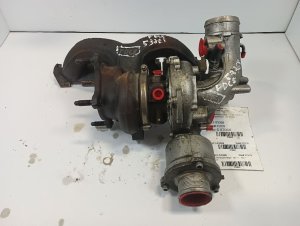
Used OEM Parts in Stock



New Aftermarket Parts Available


The information in this article is provided for general reference and educational purposes only. Vehicle specifications, procedures, and part compatibility can vary by production date, trim level, and region. Always consult your vehicle's factory service manual and verify part numbers before purchasing or performing repairs. Safety-critical components such as airbags, seat belts, and braking systems should be installed by a qualified professional.
- Audi Q5:
- 🎬 Helpful Videos
- 🛍️ Shop This Part
- What's Unique About the 2009-2013 Audi Q5
- Diagnostic Flowchart
- Symptoms You May Notice
- Most Likely Causes
- Rare But Worth Checking
- Diagnosis Steps
- Parts You'll Likely Need
- Technical Service Bulletins (TSBs) & Recalls
- Platform-Specific Known Issues
- Mechanic-Grade Diagnostic Values
- Scan Tool Commands That Help
- Wiring & Ground Locations
- Real Owner Repair Stories
- "I Checked Everything" — The Actual Cause
- OEM Part Supersession History
- Model Year Variations Within This Range
- 🎟️ Get 5% Off