

P0299 on 2009-2013 Audi A4: Turbo Underboost Causes and Fixes
For a 2009-2013 Audi A4 with the 2.0T engine, code P0299 is most often caused by a failed diverter valve, a worn turbocharger wastegate, or a failed PCV valve. The diverter valve is a common DIY fix for under $150, while the wastegate issue is more complex, often signaled by a rattle, and may require turbocharger replacement. The PCV valve is another key failure point that can create a significant vacuum leak.
- P0299 on this Audi A4 almost always points to a physical loss of boost pressure.
- Always inspect the diverter valve first. It's a cheap, easy-to-access part and a very common point of failure.
- If the diverter valve is good, check for excessive play in the turbo wastegate actuator rod, which is another common, well-documented issue for this engine. [⭐, 9]
- A failed PCV valve can also cause this code and typically presents with a loud whistling noise or strong suction at the oil cap when the engine is running.
- Do not replace the entire turbocharger until you have ruled out the diverter valve, PCV valve, and boost leaks with a smoke test.
What's Unique About the 2009-2013 Audi A4

The 2.0T TFSI (EA888) engine in the B8 generation A4 is known for specific weak points that directly lead to code P0299. The original factory diverter valve (DV) uses a rubber diaphragm that is notorious for tearing, causing an immediate boost leak. Furthermore, Audi issued Technical Service Bulletin (TSB) #131420312455 acknowledging that the wastegate flap and its actuator linkage inside the IHI RHF5 turbocharger can wear out. This wear creates excessive play, preventing the wastegate from sealing properly and allowing boost pressure to escape, often causing a distinct rattle when letting off the throttle. A failed PCV valve is also extremely common, creating a large vacuum leak that disrupts the air-fuel mixture and can trigger an underboost code.
Diagnostic Flowchart

Tap your situation to follow the diagnostic path that matches what you're seeing on this vehicle.
Symptoms You May Notice

- Significant loss of engine power and sluggish acceleration
- Check Engine Light is on
- Audible hissing or "whooshing" sound from the engine bay during acceleration, indicating a boost leak
- A metallic rattling noise from the turbo area, especially when letting off the throttle or at idle (a classic sign of a loose wastegate flap).
- A loud whistling, squealing, or howling sound at idle (a strong indicator of a failed PCV valve diaphragm).
- Increased oil consumption.
- Rough idle or engine misfires, especially if the PCV valve has failed.
- Replacing the turbocharger without first thoroughly checking the diverter valve, PCV system, or performing a comprehensive boost leak test. The DV and PCV are much cheaper and more common points of failure.
- Replacing the diverter valve and still having the code, then assuming the turbo is bad without checking for other boost leaks or a faulty N75 valve.
Most Likely Causes

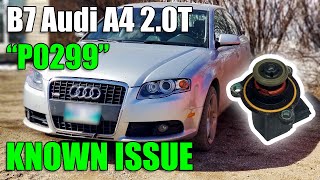
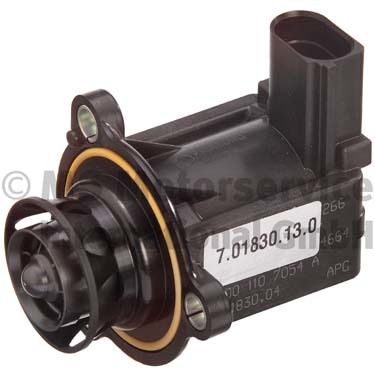
- Failed Turbocharger Diverter Valve (DV) 🔴 High Probability The original factory DV (often revision 'G' or older) uses a rubber diaphragm that is known to tear, creating a significant boost leak that may not be found with a smoke test. It's often the first and cheapest part to check.
How to confirm: Remove the valve (held by three T30 bolts underneath the turbo) and visually inspect the diaphragm for rips or brittleness. If it's the original diaphragm style, it is highly suspect and should be replaced preventatively. The updated part is a more robust piston-style design.
Typical fix: Replace the old diaphragm-style valve with the updated piston-style OEM valve 🎬 Watch: How to identify and replace a failed diverter valve. (Revision 'D' or newer). Aftermarket options like the GFB DV+ are also popular upgrades.
Est. part cost: $50-$150 - Worn Turbocharger Wastegate Flap/Actuator 🔴 High Probability As cited in Audi TSB #131420312455, the wastegate linkage wears where the actuator rod connects to the flap arm, creating excessive play. This prevents the wastegate flap from sealing properly, allowing exhaust gas to bypass the turbine wheel, thus failing to generate the required boost.
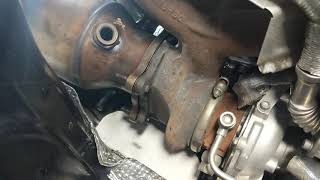
How to confirm: With the engine cool, reach down and attempt to move the wastegate actuator rod by hand. If there is significant free play or a rattling sound when wiggled, the linkage or internal flap bushing is worn. A borescope inspection through the O2 sensor port can also visually confirm a loose flap, though some mechanics note that removing the catalytic converter provides the best view.
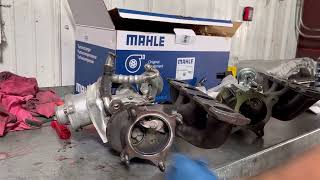
Typical fix: A special clip (Part #06J145220A or updated version 06J145220B) can be installed on the actuator rod to reduce play as a temporary fix. 🎬 See how to install the wastegate clip to stop rattles. Some owners have attempted to shorten the actuator rod by heating and bending it. However, if the wear is internal to the turbo housing, the official fix is to replace the entire turbocharger assembly, as the wastegate is not sold as a separate part.
Est. part cost: $15 (clip) to $800-$2000 (new turbocharger) - Failed PCV Valve / Oil Separator 🟡 Medium Probability The diaphragm inside the PCV valve assembly is made of rubber and is prone to rupturing. This creates a large unmetered air leak (vacuum leak) that the ECU may interpret as an underboost condition, and it's a major cause of increased oil consumption.
How to confirm: With the engine running, try to remove the oil filler cap. If there is extreme suction holding it down, the PCV valve has failed. A loud whistling or howling noise at idle is also a strong symptom. A smoke test will often show smoke billowing from the PCV assembly if it has failed.
Typical fix: Replace the entire PCV valve assembly, which is located on top of the valve cover. 🎬 Watch: Step-by-step PCV valve diagnosis and replacement guide. Be sure to get the correct revision for your vehicle (e.g., 06H103495AC, 06H103495AE, etc.).
Est. part cost: $150-$250 - Boost/Vacuum Leak 🟡 Medium Probability Over time, rubber and plastic hoses in the intake and vacuum system can become brittle and crack. Common leak points include the turbo inlet/outlet seals, intercooler connections, and various vacuum lines.
How to confirm: Perform a smoke test on the intake system. Pressurize the system with low-pressure smoke and look for smoke emerging from any cracked hoses, loose clamps, or a leaking intercooler.
Typical fix: Replace the specific hose, clamp, or component that is leaking.
Est. part cost: $20-$300
Rare But Worth Checking
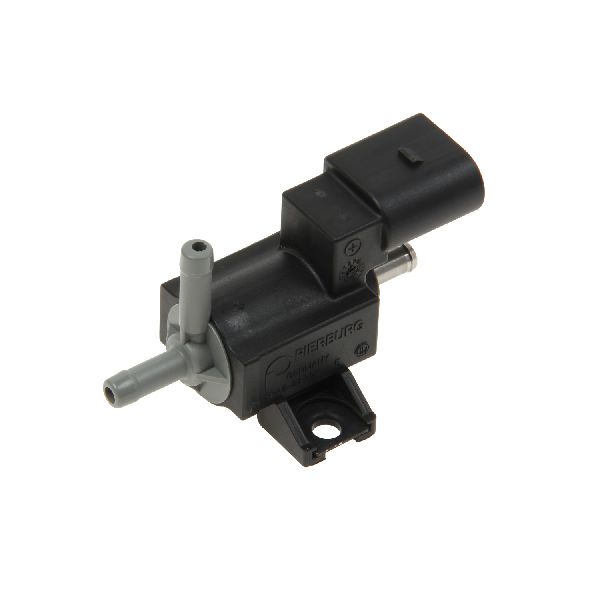
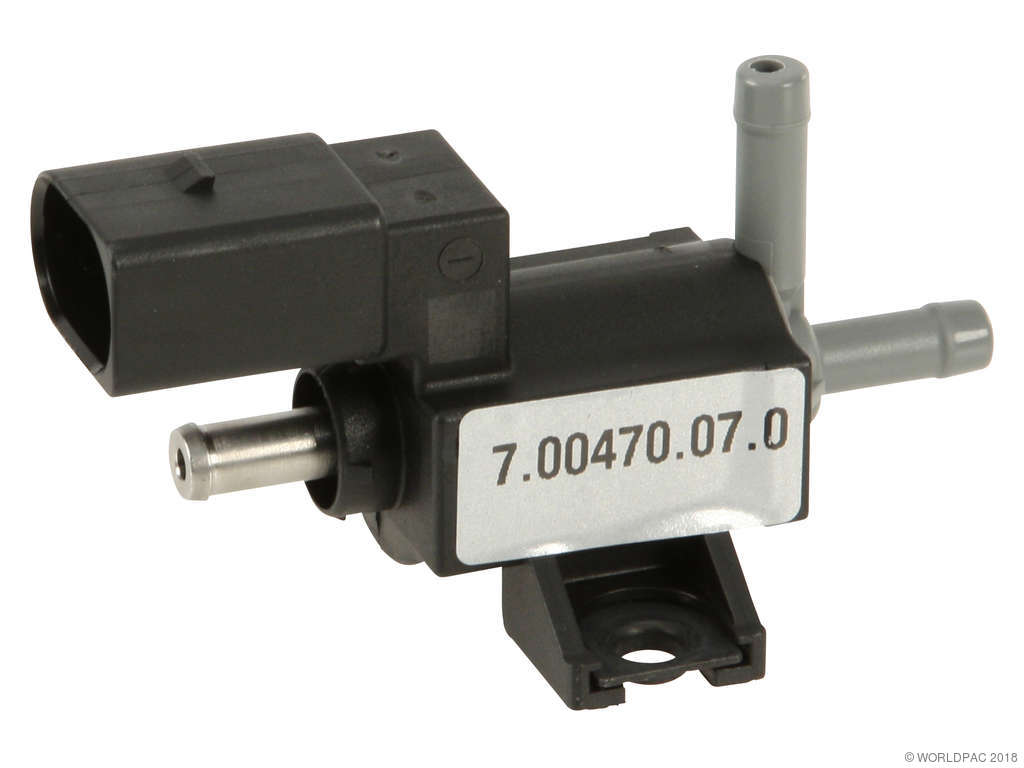
- Faulty N75 Valve (Boost Pressure Control Valve): This solenoid controls the vacuum sent to the wastegate actuator. If it fails or becomes weak, it can't command the wastegate to close properly, causing underboost. It can be tested with a vacuum gauge to see if it holds vacuum and actuates correctly when voltage is applied. The electrical resistance across its terminals should be around 24 Ohms.
- Clogged Catalytic Converter: A restriction in the exhaust can create backpressure that prevents the turbo from spooling up effectively. This can be checked by measuring backpressure at the upstream oxygen sensor port; pressure should be near zero at idle and steady RPM. There are owner accounts of this being the root cause after other parts were replaced.
- Faulty Boost Pressure Sensor (MAP Sensor): While less common, the sensor that measures boost pressure can fail and send incorrect readings to the ECU, falsely triggering the P0299 code. An owner on a forum reported fixing their issue by replacing this sensor.
Diagnosis Steps
- Read fault codes with an OBD-II scanner. Use a VAG-specific tool like VCDS to log requested vs. actual boost pressure in Measuring Block 115. A large, consistent gap confirms the underboost condition.
- Inspect the Diverter Valve (DV). Remove the three T30 bolts holding it to the turbo and check for a torn diaphragm. If it is the original diaphragm style (often black plastic with a red/orange diaphragm), replace it with the updated piston style (Revision D or later) regardless of visible failure.
- Check for wastegate play. With the engine cool, reach down to the turbo's wastegate actuator rod and check for excessive looseness or a rattling sound. This is a primary indicator of the TSB-documented failure.
- Test the PCV system. With the engine idling, check for strong suction at the oil cap. A loud whistle from the engine bay is also a key indicator of failure.
- Perform a smoke test. Pressurize the intake system with low-pressure smoke to identify any leaks from hoses, the intercooler, or gaskets. Pay close attention to the PCV area and intercooler end tanks.
- Test the N75 valve. Use a vacuum gauge to ensure the valve is holding vacuum and actuating correctly when commanded by the scan tool or by applying 12V. Check the resistance across the pins, expecting ~24 Ohms.
- Check for exhaust restrictions. If all else fails, measure backpressure at the pre-catalyst O2 sensor port to rule out a clogged catalytic converter. Pressure should be near zero at idle.
- If all other components are confirmed to be working, the issue is almost certainly internal wear of the turbocharger's wastegate, requiring turbo replacement.
Parts You'll Likely Need
- Turbocharger Diverter Valve (Piston Style Upgrade)
(OEM #06H145710D)— This is the most common failure point. The original diaphragm valve tears, causing a boost leak. The 'D' revision is an updated piston design that is far more durable.
Trusted brands: Pierburg (OEM), Bosch, GFB (Go Fast Bits) DV+
OEM price range: $70-$120
Aftermarket price range: $50-$150 - PCV Valve / Oil Separator
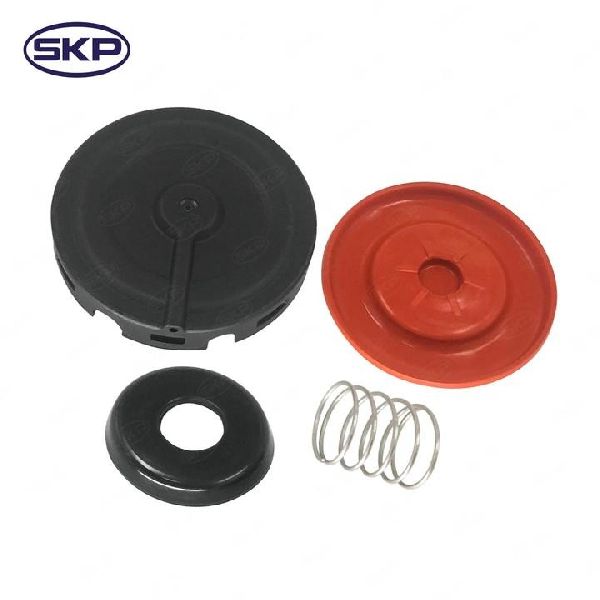
(OEM #06H103495E, 06H103495AC, 06H103495AH)— The internal diaphragm is a common failure item, causing a massive vacuum leak and oil consumption issues. Part numbers have been superseded multiple times; always verify with VIN.
Trusted brands: Audi (OEM), Vaico, Febi
OEM price range: $150-$250
Aftermarket price range: $80-$180 - Turbocharger Assembly
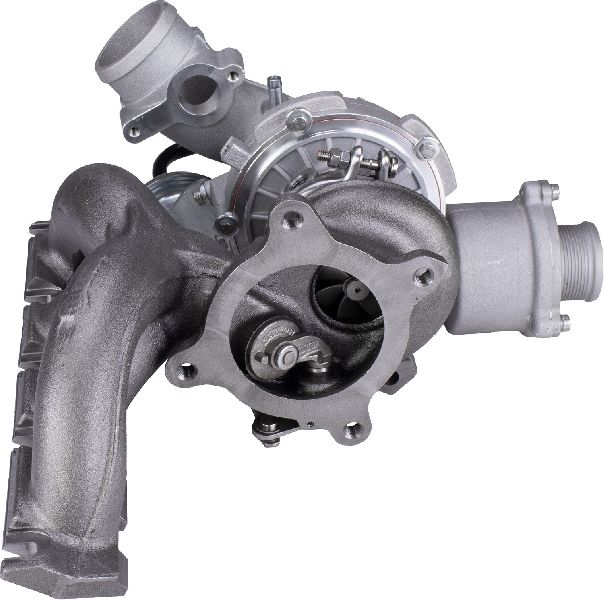
(OEM #06H145702L (and others))— Required when the internal wastegate flap or bushing wears out, which is a common, well-documented failure on the IHI RHF5 turbo. The wastegate is not serviced separately.
Trusted brands: IHI (OEM), BorgWarner (aftermarket upgrade), Rebuilt units
OEM price range: $1200-$2000
Aftermarket price range: $600-$1500 - Wastegate Actuator Clip
(OEM #06J145220B)— A low-cost attempt to fix wastegate rattle and minor boost loss by reducing play between the actuator rod and the wastegate arm. Often considered a temporary fix.
Trusted brands: Audi (OEM), Dorman
OEM price range: $15-$30
Aftermarket price range: $10-$20
Related Codes That Often Appear With This One
- P0300, P0301, P0302, P0303, P0304 — Random or specific cylinder misfire codes can occur alongside P0299 if a major vacuum leak (like a failed PCV valve) is causing the engine to run lean.
- P0234 — An overboost condition code can sometimes appear intermittently if the wastegate or N75 valve is sticking, leading to erratic and uncontrolled boost.
- P0236 — This code for Turbocharger Boost Sensor 'A' Circuit Range/Performance may appear if the sensor itself is failing or if a non-standard modification has been made to alter its signal.
Technical Service Bulletins (TSBs) & Recalls
- source — This is one of the later revisions of the key TSB regarding P0299. It details how to identify 'excessive wastegate play' on the 2.0T engine and confirms this as a known cause for the underboost code. It applies to A4, A5, and Q5 models from 2009-2012.
- source — An earlier revision of the same TSB, also confirming that excessive wear on the wastegate linkage leads to a loose flap, escaping boost, and the P0299 code.
Platform-Specific Known Issues
- NHTSA Technical Service Bulletin #131420312455 states that the turbocharger wastegate actuation can encounter excessive wear, leading to play at the wastegate flap. This allows boost to escape, setting DTC P0299. [⭐]
- The original equipment diverter valve (DV) with a rubber diaphragm is a known weak point and was superseded by a more robust piston-style valve (part number 06H145710D). Many owners replace this as a first step or preventative measure.
Mechanic-Grade Diagnostic Values
- N75 Valve (Charge Pressure Control Solenoid) Resistance — expected: Approximately 24-25 Ohms. Failure: A significantly higher or lower reading indicates a faulty solenoid coil.
- N75 Valve System Vacuum at Idle — expected: Approximately 24-25 inHg (inches of Mercury). Failure: Low or no vacuum indicates a leak in the supply lines or a faulty vacuum pump. If the vacuum reading drops when testing the actuator, the actuator diaphragm is split.
- Catalytic Converter Backpressure — expected: Near 0 PSI at idle and steady 2500 RPM. Failure: Any significant positive pressure indicates a blockage in the catalytic converter.
- ECU Boost Request vs. Actual Boost (VCDS Block 115) — expected: Actual boost should closely track specified boost under load.. Failure: A sustained gap of more than 2 PSI (approx. 140 mbar) between specified and actual boost for several seconds will trigger the P0299 code.
Scan Tool Commands That Help
- VCDS (VAG-COM): Live Data Logging - Measuring Block 115 — This is the primary method for confirming a P0299 fault. It allows you to graph 'Charge Pressure Specified' vs. 'Charge Pressure Actual' during a test drive to visualize the boost deviation in real-time.
- VCDS (VAG-COM): Output Test - N75 Valve (Charge Pressure Control Solenoid Valve) — This allows the technician to manually cycle the N75 valve. While listening or using a vacuum gauge, you can confirm if the valve is physically actuating (clicking) and controlling vacuum as commanded by the ECU.
Real Owner Repair Stories
- AudiWorld Forums user (2011 Audi A4) — P0299 code, unable to pass emissions.
❌ Tried (didn't work) Replaced diverter valve., Pressure tested the intake system., Tested N75 valve resistance (was OK at 24 Ohms)., Applied vacuum to wastegate actuator (it moved correctly).
✅ What actually fixed it Replaced the entire turbocharger with a rebuilt unit. The wastegate flap on the old turbo was confirmed to be excessively loose. - YouTube - Premier Automotive Diagnostics (2012 Audi Q5 2.0T (similar engine/turbo setup)) — P0299 code, specified boost much higher than actual boost on scan tool.
❌ Tried (didn't work) Borescope inspection of the wastegate linkage, which did not reveal significant play initially.
✅ What actually fixed it Removed and replaced the turbocharger. Once removed, the wastegate flap was found to have 'gobs of slack' and excessive movement, preventing it from sealing. The mechanic noted the best way to confirm this is to remove the catalytic converter for a direct view. - AudiWorld Forums user (2009 Audi A4) — P0299 code.
❌ Tried (didn't work) Replacing the diverter valve., Pressure testing the intake path from turbo to throttle body., Blocking off the PCV to isolate leaks., Replacing the turbo with a refurbished unit.
✅ What actually fixed it The final diagnosis was a clogged catalytic converter. The user suggests testing backpressure at the front O2 sensor port to identify this.
"I Checked Everything" — The Actual Cause
- A clogged catalytic converter was the root cause. A smoke test pressurizes the intake side and will not detect an exhaust restriction downstream of the turbo. This can be diagnosed by measuring exhaust backpressure.
- A faulty N75 boost pressure control valve. This is an electronic/vacuum issue, not a physical leak, so a smoke test will come back clean. The valve fails to properly command the wastegate via vacuum, but the system itself has no leaks.
- A faulty boost pressure (MAP) sensor. The sensor itself provides incorrect data to the ECU, making the ECU believe there is an underboost condition even if the mechanical system is holding pressure perfectly.
- A cracked plastic intercooler end tank. These can sometimes pass a low-pressure smoke test but will leak significantly under the higher pressures of real-world driving and boosting.
When the Usual Fixes Don't Work
- In cases of minor, age-related turbo inefficiency where there is no catastrophic failure (like a loose wastegate rattle) but the P0299 code is triggered under specific conditions (e.g., high altitude, hot weather), some owners have opted against a costly turbo replacement. One documented case involved building a simple electronic amplifier circuit for the boost pressure sensor. This circuit slightly increases the sensor's output voltage (e.g., by 5%), making the ECU read a pressure that is within its expected range and preventing the P0299 code from being set. This is an unconventional fix that addresses the symptom (the CEL) rather than the mechanical wear, but highlights that for a marginal underboost condition without other symptoms, replacing the entire turbo may not be the only option for some owners.
OEM Part Supersession History
06H103495A, 06H103495B, 06H103495E→06H103495AC, 06H103495AH, and later revisions— The internal diaphragm of the PCV / oil separator was prone to tearing. Later revisions aimed to improve the durability of the diaphragm and valve assembly.
Heads up: While many are physically interchangeable, it is critical to use a part number specified for the vehicle's VIN to ensure correct crankcase pressure regulation.06H145710C (and earlier diaphragm types)→06H145710D (piston style)— The original rubber diaphragm in the diverter valve was prone to tearing, causing a major boost leak. The 'D' revision and later use a much more durable piston design.
Model Year Variations Within This Range
- 2009-2012 (B8) vs 2013 (B8.5): The core 2.0T TFSI engine (CAEB) and the primary causes for P0299 (DV, PCV, Wastegate) are consistent across the 2009-2013 range. However, the 2013 'B8.5' facelift included some part updates. It is always critical to verify part numbers like the PCV valve by VIN, as rolling changes were made throughout production, not just at the facelift year.
Helpful Videos


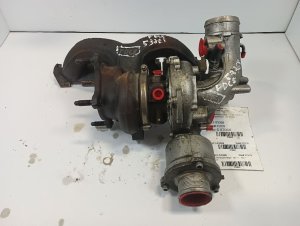
Used OEM Parts in Stock



New Aftermarket Parts Available


The information in this article is provided for general reference and educational purposes only. Vehicle specifications, procedures, and part compatibility can vary by production date, trim level, and region. Always consult your vehicle's factory service manual and verify part numbers before purchasing or performing repairs. Safety-critical components such as airbags, seat belts, and braking systems should be installed by a qualified professional.
- Audi A4:
- 🎬 Helpful Videos
- 🛍️ Shop This Part
- What's Unique About the 2009-2013 Audi A4
- Diagnostic Flowchart
- Symptoms You May Notice
- Most Likely Causes
- Rare But Worth Checking
- Diagnosis Steps
- Parts You'll Likely Need
- Related Codes That Often Appear With This One
- Technical Service Bulletins (TSBs) & Recalls
- Platform-Specific Known Issues
- Mechanic-Grade Diagnostic Values
- Scan Tool Commands That Help
- Real Owner Repair Stories
- "I Checked Everything" — The Actual Cause
- When the Usual Fixes Don't Work
- OEM Part Supersession History
- Model Year Variations Within This Range
- 🎟️ Get 5% Off