

P0284 on 2016-2019 Chevrolet Silverado 1500: Cylinder 8 Balance Fault Causes and Fixes
P0284 on a 2016-2019 Silverado means cylinder 8 isn't producing enough power. The most common cause is a faulty fuel injector, which is a moderately priced DIY fix. However, it can also indicate a more serious internal engine problem like a failed AFM/DFM lifter, a known and potentially expensive issue on these trucks.
- P0284 means cylinder 8 is underperforming.
- Start your diagnosis with the simple and common culprits: the spark plug, ignition coil, and fuel injector for cylinder 8.
- Use the component swapping method (coil-for-coil, injector-for-injector) to confirm a failed part before buying a new one.
- Be aware that on this specific truck, this code can be an early warning of a failing AFM/DFM lifter, which is a much more serious and expensive repair.
- If simple swaps don't solve the problem, a compression test is the next critical step to check for internal engine health.
What's Unique About the 2016-2019 Chevrolet SILVERADO 1500
On the 2016-2019 Silverado with the 5.3L or 6.2L V8 engines, this code can be more than just a simple injector problem. These engines feature Active or Dynamic Fuel Management (AFM/DFM), which deactivates cylinders to save fuel. The hydraulic lifters used in this system are a known weak point and can fail, leading to a loss of compression and causing contribution/balance faults. A specific GM Technical Service Bulletin (TSB #PIP-5400) directly links this code to a lack of lubrication in the valvetrain, which is often related to these lifter issues.
Diagnostic Flowchart
Tap your situation to follow the diagnostic path that matches what you're seeing on this vehicle.
Symptoms You May Notice
- Rough or vibrating engine idle
- Noticeable loss of power and sluggish acceleration
- Engine hesitation or stumbling under load
- Reduced fuel economy
- Check Engine Light is on and may be flashing in severe cases
- Audible ticking or tapping noise from the engine, especially if related to a lifter issue.
- Replacing the oxygen sensors. While a bad O2 sensor can cause fuel trim issues, it will not typically cause a contribution/balance fault for a single cylinder.
- Replacing the catalytic converter. A clogged converter will typically cause random misfire codes (P0300) or catalyst efficiency codes (P0420/P0430), not a single-cylinder balance code.
Most Likely Causes
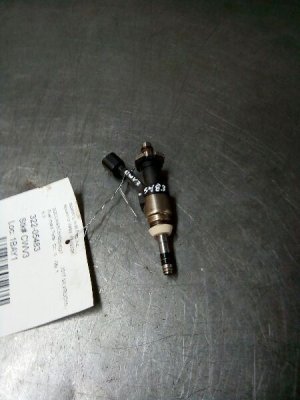
- Faulty Fuel Injector (Cylinder 8) 🔴 High Probability Direct injection systems operate under high pressure and can be sensitive to fuel quality and deposits, leading to injector failure or clogging.
How to confirm: Swap the cylinder 8 fuel injector with another cylinder (e.g., cylinder 6). Clear the codes and drive. If the trouble code changes to P0278 (Cylinder 6 Contribution/Balance), the injector is faulty. A mechanic can also perform a fuel injector balance test with a capable scan tool.
Typical fix: Replace the faulty fuel injector. It's often recommended to replace the injector seals at the same time. Some owners choose to replace all 8 injectors as a preventative measure.
Est. part cost: $50-$150 - Failed AFM/DFM Lifter 🟡 Medium Probability As noted in TSB #PIP-5400, valvetrain lubrication issues can cause this code. The AFM/DFM lifters on the EcoTec3 V8s are a well-documented failure point that can collapse or get stuck, causing a loss of valve function and cylinder contribution. This is often attributed to the design of the lifters and their reliance on clean oil and consistent oil pressure.
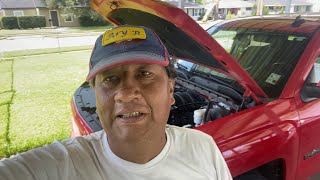
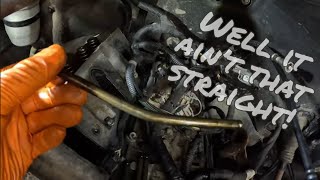
How to confirm: Perform a compression test and cylinder leak-down test on cylinder 8. Low compression often points to a valvetrain or internal engine problem. A distinct ticking noise is also a strong indicator. Definitive diagnosis 🎬 See how a mechanic diagnoses these infamous AFM lifter failures. requires removing the valve cover and potentially the cylinder head to inspect the lifters and camshaft.
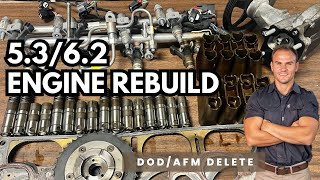
Typical fix: Requires significant engine work. All AFM/DFM lifters are typically replaced, along with the camshaft if it shows wear. Many owners opt for an AFM/DFM delete kit, which replaces the specialized lifters with standard LS7-style lifters, 🎬 Watch this walkthrough on installing a complete DOD delete kit. requiring a new camshaft and an ECM tune to disable the system.
Est. part cost: $400-$1500 - Ignition System Fault (Cylinder 8) 🟡 Medium Probability Spark plugs and ignition coils are regular wear items. A weak or inconsistent spark can lead to incomplete combustion, causing a contribution fault that the ECM flags before it registers as a full misfire (P0308).
How to confirm: Swap the cylinder 8 ignition coil and then the spark plug with another cylinder. If the code follows the part, that component has failed.
Typical fix: Replace the faulty spark plug and/or ignition coil. It is best practice to replace all spark plugs at the same time.
Est. part cost: $10-$80 - Engine Control Module (ECM) Anomaly ⚪ Low Probability TSB #17-NA-171 notes that an anomaly in the ECM software can cause P0284 among a long list of other codes, sometimes accompanied by hesitation or stalling. This is typically a software glitch rather than a hardware failure.
How to confirm: This should only be considered after all mechanical, fuel, and ignition causes have been ruled out. A GM dealership can check for available software updates against the vehicle's VIN.
Typical fix: Reprogramming (reflashing) the ECM with the latest software from the manufacturer. TSB #17-NA-171 specifies that both the ECM and TCM (Transmission Control Module) should be updated together.
Est. part cost: $0 (if under warranty) - $200 (dealer labor)
Rare But Worth Checking
- Low Compression (Piston/Ring/Valve Issue): Beyond the common lifter issue, a worn piston ring, a burnt valve, or a damaged cylinder head can also cause low compression and trigger this code. A compression and leak-down test will help diagnose this.
- Wiring Harness Issue: A damaged wire or poor connection to the fuel injector or ignition coil for cylinder 8 can cause an intermittent fault that mimics a failed component. Inspect the harness for any signs of chafing, melting, or corrosion near the cylinder.
Diagnosis Steps
- Read the code from the ECM using an OBD-II scanner and check for any other accompanying codes. Note any pending or history codes.
- Check live data on the scanner for misfire counts on cylinder 8. Even if P0308 is not present, the misfire counter can show intermittent issues.
- Inspect the wiring and connector for the cylinder 8 fuel injector and ignition coil for any visible damage, corrosion, or loose connections.
- To rule out the ignition system, swap the cylinder 8 ignition coil with another cylinder (e.g., cylinder 2). Clear the codes and drive. If the code changes to P0266 (Cylinder 2 Contribution/Balance), the coil is bad. If not, repeat the process with the spark plug.
- To rule out the fuel injector, swap the cylinder 8 injector with another cylinder (e.g., cylinder 4). Clear codes and drive. If the code changes to P0272 (Cylinder 4 Contribution/Balance), the injector is bad.
- If the code remains on cylinder 8 after swapping components, perform a compression test on that cylinder. A variance greater than 10-15% compared to other cylinders indicates a mechanical problem.
- If compression is low, perform a cylinder leak-down test to determine if the leak is from piston rings, intake valves, or exhaust valves. This will point towards a serious mechanical issue like a failed lifter, bent pushrod, or damaged piston ring.
- If all tests pass, the issue may be a rare wiring problem or an ECM software anomaly that requires a dealer visit for a potential reflash, as suggested by TSB #17-NA-171.
Parts You'll Likely Need
- Fuel Injector
(OEM #12668390 (superseded by 12681212, 12710481))— This is the most common cause of a single-cylinder contribution fault.
Trusted brands: ACDelco, Bosch
OEM price range: $90-$150
Aftermarket price range: $40-$90 - Ignition Coil
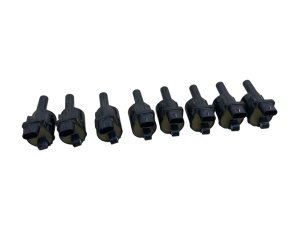
(OEM #12713668 (superseded by 12723610))— A failed ignition coil provides weak or no spark, leading to incomplete combustion and a contribution fault.
Trusted brands: ACDelco, Delphi, DENSO
OEM price range: $30-$80
Aftermarket price range: $25-$50 - Spark Plug
(OEM #12622441 (ACDelco Iridium))— A fouled or worn-out spark plug is a simple but common cause of misfires and contribution faults.
Trusted brands: ACDelco, NGK
OEM price range: $11-$20
Aftermarket price range: $5-$15 - AFM/DFM Lifter Kit — For deeper mechanical failures related to TSB #PIP-5400, the hydraulic lifters for the Active Fuel Management system are the likely culprit.
Trusted brands: ACDelco, General Motors, Texas Speed & Performance (for delete kits)
OEM price range: $300-$600
Aftermarket price range: $200-$500 (for delete kits)
Related Codes That Often Appear With This One
- P0308 — P0308 is a specific misfire code for cylinder 8. A contribution/balance fault is often the result of the same underlying conditions that cause a misfire, so these codes frequently appear together.
- P0300 — If the underlying issue, such as a failing fuel pump or a major vacuum leak, begins to affect multiple cylinders, a P0300 (Random/Multiple Cylinder Misfire) may accompany P0284.
- P0263, P0266, P0269, P0272, P0275, P0278, P0281 — These are the contribution/balance fault codes for cylinders 1-7. Seeing P0284 with one or more of these codes is mentioned in multiple TSBs (#PIP5468F, #17-NA-171, #PIP-5400) and could point to a systemic issue like an ECM software anomaly or widespread mechanical problem.
Technical Service Bulletins (TSBs) & Recalls
- PIP5468F: Mentions P0284 in a list of codes that may set without a clear root cause, requiring technicians to follow standard diagnostics first.
- 17-NA-171: Identifies an ECM/TCM software anomaly as a potential cause for P0284 and many other codes, recommending a software update as the fix.
- PIP-5400: Links cylinder contribution/balance codes (P0263-P0284) and misfire codes (P0300-P0308) to a lack of lubrication in the valvetrain, a known precursor to AFM lifter failure.
Platform-Specific Known Issues
- The AFM/DFM Lifter Failure Dilemma: Owners who experience P0284 alongside engine ticking noises are likely facing the common and costly AFM/DFM lifter failure. This system, designed to improve fuel economy, is the truck's most significant weak point. When a lifter collapses, it fails to open the valve, leading to a complete loss of contribution from that cylinder. Repair involves significant labor to access the lifters and often the camshaft. Many owners choose to perform an 'AFM/DFM delete' at this time, replacing the complex, failure-prone lifters with simpler, more robust components and reprogramming the ECM to permanently disable the system.
Mechanic-Grade Diagnostic Values
- Low-Pressure Fuel System (Lift Pump) — expected: 40-90 psi, averaging 46-55 psi. Must be capable of 45 gph at 72 psi.. Failure: Pressure below this range can starve the high-pressure pump, causing issues across all cylinders, but can sometimes manifest on one first.
- High-Pressure Fuel System (Direct Injection) — expected: 425 to 2200 psi, varying with engine load.. Failure: Inability to reach or maintain pressure under load points to a failing high-pressure fuel pump (HPFP).
- Injector Balance Test (Pressure Drop) — expected: The pressure drop for each injector should be within 1.5 to 3 psi (20 kPa) of the average of all cylinders.. Failure: An injector with a significantly smaller pressure drop is clogged or not opening correctly. An injector with a much larger drop may be leaking.
- Cylinder Power Balance (RPM Drop) — expected: A consistent and significant drop in engine RPM when each cylinder is deactivated via scan tool.. Failure: Little to no RPM drop when cylinder 8 is deactivated indicates it was not contributing power.
Scan Tool Commands That Help
- GDS2 / Tech 2: Cylinder Power Balance Test — This is a primary diagnostic function used after checking for codes. It actively disables each cylinder one by one to measure the corresponding drop in RPM, quickly identifying a non-contributing cylinder without swapping parts.
- GDS2 / Tech 2: Fuel Injector Balance Test — This test measures the pressure drop in the fuel rail as each injector is pulsed. It's used to confirm if an injector is clogged (low drop) or leaking (high drop) after a weak cylinder has been identified by the power balance test.
Wiring & Ground Locations
- Cylinder 8 Fuel Injector Connector — On the fuel rail, at the cylinder 8 position (rear passenger side of the engine). The intake manifold must be removed for access.. The connector or its wiring can be damaged by heat or vibration, causing an intermittent open or short in the injector circuit. One wire should have battery voltage with the key on.
- G103 (Engine Ground) — On the front of the passenger side cylinder head, a nut on a stud holding two ground wires.. Poor engine grounds can cause a host of erratic electrical problems, including incorrect sensor readings and module behavior that could potentially trigger contribution faults.
- Engine-to-Chassis Ground Strap — Typically runs from the rear of the engine block on the passenger side to the firewall/chassis.. This is a critical ground path. Corrosion or breakage is a very common issue on K2XX trucks and can cause flickering lights, no-start conditions, and unpredictable module behavior.
Real Owner Repair Stories
- Reddit user SoDakLifeHack (2019 Chevrolet Silverado with 5.3L L84 (DFM) engine) — Collapsed lifter on cylinder #8 exhaust.
❌ Tried (didn't work) The user went straight to mechanical diagnosis after identifying the issue.
✅ What actually fixed it The user planned a DFM delete. A key finding from the discussion was that for the L84 DFM engine, the camshaft does not need to be replaced during a delete if it is not damaged by the failed lifter, unlike the older L83 AFM engines which require a cam swap due to different lobe profiles.
OEM Part Supersession History
12668390→12681212, 12710481— Standard part revision and updates by the manufacturer.
Heads up: While some injectors are marketed as 'low', 'nominal', or 'high' flow, there is no functional difference as long as all eight injectors are the same part number. Do not mix and match.
Model Year Variations Within This Range
- 2016-2018 (5.3L L83 & 6.2L L86): These model years primarily use the Active Fuel Management (AFM) system, which deactivates cylinders 1, 4, 6, and 7. A lifter failure will only occur on these four cylinders. An AFM-delete repair requires replacing the camshaft because the lobes for AFM and non-AFM cylinders are different.
- 2019 (5.3L L84 & 6.2L L87): The 2019 model year introduced the Dynamic Fuel Management (DFM) system. DFM can deactivate any of the 8 cylinders using 17 different firing patterns. Therefore, a lifter failure can occur on any cylinder, including cylinder 8. A DFM-delete repair may not require a new camshaft if the original cam is not damaged by the failed lifter, as all lobes are the same profile.
Helpful Videos
Used OEM Parts in Stock



New Aftermarket Parts Available


The information in this article is provided for general reference and educational purposes only. Vehicle specifications, procedures, and part compatibility can vary by production date, trim level, and region. Always consult your vehicle's factory service manual and verify part numbers before purchasing or performing repairs. Safety-critical components such as airbags, seat belts, and braking systems should be installed by a qualified professional.
- Chevrolet SILVERADO 1500:
- 🎬 Helpful Videos
- 🛍️ Shop This Part
- What's Unique About the 2016-2019 Chevrolet SILVERADO 1500
- Diagnostic Flowchart
- Symptoms You May Notice
- Most Likely Causes
- Rare But Worth Checking
- Diagnosis Steps
- Parts You'll Likely Need
- Related Codes That Often Appear With This One
- Technical Service Bulletins (TSBs) & Recalls
- Platform-Specific Known Issues
- Mechanic-Grade Diagnostic Values
- Scan Tool Commands That Help
- Wiring & Ground Locations
- Real Owner Repair Stories
- OEM Part Supersession History
- Model Year Variations Within This Range
- 🎟️ Get 5% Off