

OBD-II Code P0284: Cylinder 8 Contribution/Balance
The Ultimate Guide to diagnosing and fixing P0284
- Code P0284 indicates cylinder 8 is underperforming, most often caused by a clogged fuel injector, a melted wiring connector, or a failed ignition coil.
- Expect a rough idle, a 5-15% drop in fuel economy, and sluggish acceleration, often accompanied by a flashing Check Engine Light.
- On 2017-2019 GM 6.6L Duramax engines, inspect the cylinder 8 injector connector for corrosion before replacing the injector, as this is a known $40 fix for a $600 problem.
- Stop driving immediately if the Check Engine Light flashes; unburnt fuel destroys a catalytic converter or DPF within miles, adding $1,500 to $4,000 to your repair bill.
What Does P0284 Mean?

P0284 means the Powertrain Control Module (PCM) detects cylinder 8 is producing less power than the other cylinders. The PCM constantly monitors crankshaft rotational speed. When it detects smaller-than-expected acceleration during cylinder 8's power stroke, it registers an imbalance and triggers the code.
Technical definition: The official SAE/OBD-II definition for P0284 is "Cylinder 8 Contribution/Balance Fault." The engine control module (ECM) uses the crankshaft position (CKP) sensor to monitor minute variations in crankshaft rotational speed. When the power contribution from cylinder 8 falls below a calibrated threshold compared to the other cylinders, the ECM sets this diagnostic trouble code.
Can I Drive With P0284?
Yes, But With Caution. Yes, but only for a short trip to a repair shop. Your engine runs rough, has poor acceleration, and gets bad gas mileage. Continuing to drive causes unburnt fuel to overheat and destroy the catalytic converter (a $1,000-$2,500+ repair) or clog the Diesel Particulate Filter (DPF) (a $1,500-$4,000+ repair). It is safe for a few miles, but prolonged driving risks thousands in additional costs.
Common Causes

- Faulty or Clogged Fuel Injector (Very Common) — The cylinder 8 fuel injector is clogged with carbon, restricting flow, or has failed electrically (stuck open/closed), preventing proper fuel delivery.
- Fuel Injector Circuit/Wiring Issue (Common) — The wiring harness or electrical connector for the cylinder 8 fuel injector is damaged, corroded, loose, or melted. This creates a poor electrical connection, causing intermittent or total loss of injector function.
- Ignition System Problem (Less Common) — On gasoline engines, a failing spark plug, weak ignition coil, or damaged coil wire on cylinder 8 causes an incomplete burn. This weak combustion results in a power loss the PCM interprets as a contribution fault.
- Low Cylinder Compression (Less Common) — Internal mechanical engine damage prevents adequate power generation. A worn piston ring, burnt valve, leaking head gasket, or worn camshaft lobe on cylinder 8 causes a critical loss of compression.
- Vacuum Leak (Uncommon) — A cracked intake manifold gasket near cylinder 8 introduces unmetered air. This leans out the air/fuel mixture for that specific cylinder, reducing its power output.
- Fuel Contamination or Low Fuel Pressure (Uncommon) — Water or debris damages the fine mesh filter inside the fuel injector. Alternatively, a weak fuel pump causes a system-wide pressure drop that affects cylinder 8 most prominently if it sits at the end of the fuel rail.
- Fuel Injection Control Module (FICM) Failure (Rare) — On specific diesel engines (like the Ford 6.0L Powerstroke), a failing FICM provides insufficient voltage to the injectors, causing weak injection events and triggering contribution codes.
- Powertrain Control Module (PCM) Issue (Very Rare) — The PCM has a failed injector driver circuit or requires a software update to correct monitoring logic anomalies. Consider this only after exhaustively ruling out all other hardware.
Symptoms

- Reduced Power and Poor Acceleration — The vehicle feels sluggish and hesitates during acceleration because it is operating with a weak cylinder.
- Decreased Fuel Economy — Gas mileage drops by 5-15% as engine efficiency decreases and the PCM dumps extra fuel to compensate for the imbalance.
- Check Engine Light is On — The Malfunction Indicator Lamp (MIL) illuminates. If the light flashes, it indicates a severe, catalyst-damaging misfire.
- Engine Misfire with Popping/Sputtering — Audible popping or sputtering sounds emit from the engine bay or exhaust tailpipe.
- Strong Fuel Smell — A raw fuel odor emits from the exhaust if the injector is stuck open, indicating a rich condition that rapidly degrades the catalytic converter.
- Rough Idle and Engine Vibration (also visible on scanner) 🎬 See how to perform a cylinder power balance test. — The engine shakes or vibrates noticeably, especially when the vehicle is stopped and idling.
Diagnostic Flowchart
Tap your situation to follow the diagnostic path that matches what you're seeing on this code.
Common Fixes & Costs
- Replace Cylinder 8 Fuel Injector — Parts: $150-$450, Labor: $200-$500, ~2.5 hr book time (Intermediate)
- Repair or Replace Fuel Injector Wiring/Connector — Parts: $20-$80, Labor: $100-$250, ~1.5 hr book time (Intermediate)
- Replace Ignition Coil and/or Spark Plug — Parts: $50-$150, Labor: $50-$150, ~0.8 hr book time (DIY)
- Professional Fuel System Cleaning — Parts: $0, Labor: $100-$250, ~1.0 hr book time (Professional)
- Replace Powertrain Control Module (PCM) — Parts: $800-$2,000+, Labor: $150-$300 (plus programming), ~1.5 hr book time (Professional)
Used vs. New Parts: Buying Guide
When a used part is worth it: For budget repairs on vehicles over 150k miles, a 'remanufactured' injector from a reputable supplier balances cost and reliability. Avoid 'used' salvage yard injectors, as their history is unknown and failure rates are high.
Donor-vehicle mileage cap: roughly under 100000 miles for the part to have meaningful remaining life.
Donor quality checklist:
- Buy 'remanufactured' over 'used'. Remanufactured injectors are fully disassembled, cleaned, and have wear parts replaced.
- Verify the exact part number. Diesel injectors have dozens of non-interchangeable variations.
- Ensure the remanufacturer flow-tests injectors to meet OEM specifications.
Decision logic:
- If Vehicle is newer or has under 80k miles → Buy a new OEM or high-quality remanufactured injector. Cost savings on used parts are negated by premature failure and repeat labor costs.
- If Budget is the primary concern and the vehicle is old → A remanufactured injector is the best value. Avoid raw 'used' injectors.
- If The part is for a performance-modified engine → Buy new or performance-remanufactured injectors as a matched set to ensure balanced flow rates.
Warranty tradeoff: Used parts offer 30-90 day warranties. Reputable remanufactured injectors include 1-3 year, unlimited mileage warranties, comparable to new OEM parts.
Worst-case if a used part fails: 400-1000. If a cheap used injector fails, you pay labor twice plus the cost of a replacement injector.
What Happens If You Wait — Timeline
- 0-1 month: Code P0284 sets. A solid Check Engine Light appears. You notice a slightly rough idle on cold starts. Drivability remains mostly normal. (MPG impact: 3-5%% · Added cost: $0-50 in wasted fuel)
- 1-3 months: Symptoms become consistent. The rough idle persists when warm, and hesitation occurs during acceleration. Fuel economy drops noticeably. (MPG impact: 5-15%% · Added cost: $50-200 in wasted fuel)
- 3-6 months: The Check Engine Light flashes during acceleration, indicating a severe misfire. Unburnt fuel overheats the catalytic converter or DPF. Exhaust smells like raw fuel. (MPG impact: 15-25%% · Added cost: $1,200 - $2,800 (Catalytic converter/DPF replacement required))
- 6+ months: Catastrophic emissions failure. The catalytic converter melts and clogs the exhaust. A stuck-open injector washes oil from cylinder walls, causing scoring or hydro-locking the engine. (MPG impact: >25%% · Added cost: $2,500 - $8,000+ (Converter/DPF plus major engine repair))
Cost of Not Fixing It
- Short-Term (0-1 month): Noticeable drop in fuel economy (5-15%), rough idle, and poor acceleration. Minimal risk of secondary damage, but drivability is compromised. (Added cost: 50-150 in wasted fuel)
- Mid-Term (1-6 months): Unburnt fuel entering the exhaust overheats and damages the catalytic converter. This is guaranteed if the Check Engine Light is flashing. (Added cost: 1200-2800 for catalytic converter replacement.)
- Long-Term (6+ months): Severe and permanent damage to the catalytic converter or Diesel Particulate Filter (DPF). A stuck-open injector washes oil from cylinder walls, causing scoring, or hydro-locks the engine, leading to catastrophic failure. (Added cost: 2500-8000+ for emissions and engine repairs.)
Diagnosis Steps

- Scan for Codes and Review Freeze Frame Data
Use an OBD-II scanner to confirm P0284 and check for related codes (e.g., P0308, P0208, P0087). Analyze the freeze-frame data to view engine RPM, load, and fuel trims at the exact moment the code triggered.
Tools: OBD-II Scanner (Beginner) - Visually Inspect Wiring and Components
Inspect the wiring harness and electrical connector at the cylinder 8 fuel injector and ignition coil. Look for fraying, melting, corrosion, or loose pins. Check for vacuum leaks around the intake manifold near cylinder 8.
Tools: Flashlight, Inspection Mirror (Beginner) - Perform a Component Swap
Swap the cylinder 8 fuel injector (or ignition coil on gas engines) with an adjacent cylinder (e.g., cylinder 6). Clear the codes and drive. If the code moves to the new cylinder (e.g., P0278), the swapped component is definitively faulty.
Tools: Basic hand tools (sockets, wrenches) (Intermediate) - Check Injector Circuit with a Noid Light
Disconnect the cylinder 8 injector wiring and plug in a noid light. Start the engine. A steady, bright flash confirms the PCM is sending the proper pulse signal. No light or an erratic flash isolates the problem to the wiring or PCM.
Tools: Noid Light Set (Intermediate) - Test Fuel Injector Resistance
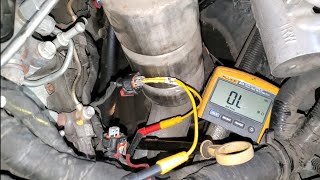
Measure the electrical resistance across the fuel injector terminals with a multimeter. Compare the reading to factory specs (typically 11-18 Ohms for gas; 0.4-3.5 Ohms for diesel). An open circuit or short confirms a failed injector coil.
Tools: Multimeter (Intermediate) - Perform a Cylinder Compression Test
If fuel and ignition check out, test cylinder pressure. A reading in cylinder 8 that is 15-25% lower than the highest cylinder confirms internal engine damage (rings, valves, or head gasket). Healthy gas engines typically exceed 130 PSI.
Tools: Compression Tester Kit (Advanced) - Advanced: Test FICM Voltage (Ford Powerstroke)
For Ford 6.0L engines, test voltage at the FICM with the key on. A healthy FICM outputs a steady 47-49 volts. A reading below 45V during a cold start buzz test confirms a failing FICM power supply.
Tools: Multimeter, Torx T20 driver (Advanced) - Advanced: Check Fuel Pressure
Connect a fuel pressure gauge to the fuel rail test port. Compare key-on/engine-off (KOEO) and idle readings to factory specs. Low pressure confirms a weak pump, clogged filter, or faulty regulator starving the injector.
Tools: Fuel Pressure Gauge Kit (Advanced) - Pro Tip: Perform a Relative Compression Test
Use a lab scope with a high-amp clamp around the battery cable. Disable fuel and crank the engine. A cylinder with low compression draws less starter current, appearing as a clear dip in the waveform, identifying mechanical faults without teardown.
Tools: Lab Scope, High-Amp Current Probe (Professional) - Pro Tip: Analyze Injector Waveform
Connect a lab scope to the cylinder 8 injector control wire. The waveform must show a sharp voltage drop followed by a distinct inductive kick (pintle hump) as the injector closes. A missing pintle hump proves the injector is mechanically stuck.
Tools: Lab Scope, Back-Probe Pins (Professional)
When This Code Triggers (Freeze-Frame Conditions)
- Engine Coolant Temp: 180-210°F (Fully warmed up engine.)
- Engine RPM: 1500-3000 RPM (Light to moderate acceleration or steady cruise.)
- Engine Load: 30-70% (The PCM is most sensitive to cylinder imbalances under moderate load.)
- Vehicle Speed: 45-65 mph (Often triggered during highway cruising speeds.)
Related Codes
- P0308 — P0308 means 'Cylinder 8 Misfire Detected.' P0284 is the precursor, indicating cylinder 8 is underperforming. P0308 means it has failed to fire completely. A severe contribution fault escalates directly to P0308.
- P0208 — P0208 means 'Cylinder 8 Injector Circuit Malfunction,' pointing specifically to an electrical open or short in the wiring or injector coil. P0208 sets alongside P0284 if the root cause is purely electrical.
- P0174 — P0174 indicates a 'System Too Lean' condition on Bank 2. A clogged cylinder 8 injector reduces fuel delivery, causing the bank's oxygen sensor to detect excess air. P0284 is the cylinder-specific cause for the bank-wide P0174 code.
- P0087 — P0087 means 'Fuel Rail/System Pressure - Too Low.' While a system-wide fault, the cylinder furthest from the fuel pump (often cylinder 8) shows starvation symptoms first, triggering P0284 before the system code sets.
Climate & Environmental Factors
- Cold Weather: Cold, thick engine oil causes 'stiction' (static friction) in the spool valves of HEUI injectors (like the Ford 6.0L Powerstroke). This leads to hard starts, rough cold idling, and triggers P0284. Switching to 5W-40 synthetic oil mitigates this.
- High Humidity: Humid environments accelerate corrosion on electrical connectors, specifically the fuel injector harness plug. This increases circuit resistance, causing intermittent injector failure. The L5P Duramax injector connector is highly susceptible to this.
- High Altitude: High altitude thins the air, affecting the engine's air/fuel mixture calculations. This exacerbates pre-existing, marginal injector issues, pushing them over the threshold to trigger the code.
How to Talk to a Mechanic About This Code
Say this: "I have a P0284 code on my [Vehicle Year, Make, Model]. The engine idles rough and lacks power. I need a diagnostic to isolate the cause. Please test the cylinder 8 wiring and connector before quoting an injector replacement. If it's a diesel, please check for relevant TSBs or stiction issues."
This proves you understand common causes. It forces the mechanic to perform logical, cost-effective diagnostics first, preventing them from jumping straight to an expensive injector replacement.
Avoid saying:
- 'My check engine light is on, can you look at it?' (Invites a wide-ranging, expensive diagnostic).
- 'I need a new fuel injector.' (Diagnosing the problem for them guarantees you pay for a part you might not need).
- 'Just fix it.' (Gives the shop a blank check to replace parts without approval).
Questions to ask before authorizing the repair:
- Did you swap the injector or coil with another cylinder to see if the code moved?
- Did you test the injector wiring and check for a pulse with a noid light?
- Can you show me the failed test results (e.g., resistance reading, power balance graph)?
- What were the compression test results for cylinder 8 compared to the others?
- What is the warranty on the recommended parts and labor?
Where to Take It: Dealer vs Independent vs Chain
- Dealer:
Recommended only for specific TSB/software issues or if the vehicle is under warranty. Otherwise, a specialist independent shop is more cost-effective.
Best for: Vehicles under warranty., Complex, manufacturer-specific issues (e.g., GM L5P software TSBs, BMW Valvetronic problems)., When you require OEM parts and a nationwide warranty.
Downsides: Highest labor rates (often 1.5-2x independent shops)., Quick to recommend expensive OEM part replacement over simpler repairs (e.g., replacing a whole harness instead of a $40 pigtail). (Typical cost: +50% vs. baseline) - Independent Shop:
Best overall fit. Find a reputable shop specializing in your vehicle type (diesel trucks, European cars) equipped to handle electrical and mechanical testing.
Best for: Out-of-warranty vehicles where cost is a factor., Finding a shop that specializes in your vehicle type (e.g., a dedicated diesel shop for a Powerstroke or Cummins)., Building a long-term relationship with a trusted mechanic.
Downsides: Quality varies widely. Vet shops based on reviews, ASE certifications, and word-of-mouth., May lack the latest manufacturer-specific bidirectional diagnostic tools. (Typical cost: +0% vs. baseline) - Chain Shop:
AVOID. The risk of misdiagnosis is extremely high. They will likely read the code and blindly replace the injector without testing wiring or compression.
Best for: Simple, routine maintenance like oil changes, tires, and brakes.
Downsides: Technicians lack the diagnostic tools and training for complex contribution codes., High pressure to meet sales targets leads to misdiagnosis and upselling unnecessary parts. (Typical cost: -10% vs. baseline)
When to Walk Away From the Repair
If the estimated repair cost exceeds 40-50% of your car's private-party value, seriously consider selling or trading it in.
- Car worth $15000, fix is $800: Fix it. The repair cost for a new injector is well below the threshold.
- Car worth $5000, fix is $2500: Borderline. This repair is 50% of the vehicle's value. Get a second opinion and evaluate other pending maintenance needs.
- Car worth $3000, fix is $3500: Walk away. The repair (likely for low compression) costs more than the car is worth.
What Scan Tool You Need for This Code
Minimum: A scanner that reads manufacturer-specific codes and displays live data streams (RPM, fuel trims, misfire data). A basic $20 code reader is insufficient.
A cheap reader only shows the P0284 code. It cannot display live engine data or perform power balance tests required to isolate fuel, spark, or mechanical faults.
Budget: BlueDriver Pro (~$90) — Reads/clears codes and displays live data for all engine parameters to watch for cylinder 8 anomalies. It reads Mode 6 data for misfire counts.
Mid-range: FORScan with OBDLink Adapter (Ford) / Foxwell NT510 Elite (~$120-200) — FORScan software runs OEM-level diagnostics like the injector 'buzz test' and cylinder contribution tests, pinpointing bad Powerstroke injectors from a laptop. Foxwell offers similar bidirectional control for other brands.
Professional: Autel MaxiCOM MK808 / XTOOL D7 (~$400-600) — True bidirectional scan tools. They perform 'power balance tests' to manually disable cylinder 8 and watch for RPM drops, definitively proving if the cylinder is dead without removing parts.
Rent vs buy: Auto parts stores loan basic scanners for free, but these lack the live data or bidirectional features needed for P0284. Buying a tool like BlueDriver is a mandatory investment for diagnosis.
How to Clear the Code After You Fix It
- Use an OBD-II scan tool to clear the diagnostic trouble code (DTC).
- Perform a complete drive cycle to allow the vehicle's readiness monitors to run.
- Rescan the vehicle to ensure the code does not return.
Drive cycle (~30 minutes): A generic drive cycle includes a cold start (after sitting for 8+ hours), 2-3 minutes of idling, followed by mixed city driving (stop-and-go) and several minutes of steady highway speed (55 mph). This allows the onboard computer to run its self-tests.
Readiness monitors affected: Misfire Monitor, Fuel System Monitor, Catalyst Monitor, Oxygen (O2) Sensor Monitor
Before emissions retest: drive at least 50-100 miles to fully set monitors.
Watch out for:
- Disconnecting the battery clears the code but resets all readiness monitors to 'Not Ready,' causing an automatic emissions test failure.
- The code returns immediately if the underlying mechanical or electrical fault is not repaired.
Will This Fail Emissions / State Inspection?
Yes — this code typically fails an OBD-II emissions inspection.
- California: An active P0284 code is an automatic smog check failure. All required readiness monitors must be 'Ready.' After repair, drive 50-100 miles to complete the drive cycle before retesting.
- New York: The NYS DMV inspection includes an OBD-II scan. An illuminated Check Engine Light from P0284 results in an automatic emissions failure.
- Texas: In the 17 counties requiring emissions testing, P0284 fails the OBD-II inspection. The Check Engine Light must be off and monitors set.
Most Commonly Affected Vehicles
- Ford F-250/F-350 Super Duty (1999-2007) — Extremely common on 7.3L and 6.0L Powerstroke diesels. On the 7.3L, a recalled gray Camshaft Position Sensor (CPS) causes 'phantom' P0284 codes; replacing it with a black OEM sensor fixes it. On the 6.0L, this code indicates injector 'stiction' in cold weather.
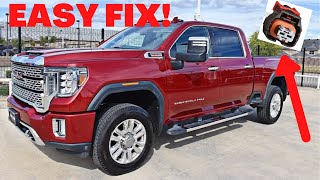
- Chevrolet Silverado 2500/3500 HD (2017-2019) — On 6.6L L5P Duramax engines, this code is frequently caused by a faulty fuel injector wiring connector at cylinder 8. GM also issued TSB #17-NA-171 for a software anomaly that falsely triggers the code, requiring a dealer reflash.
- GMC Sierra 2500/3500 HD (2017-2019) — Shares the 6.6L L5P Duramax engine and identical issues as the Silverado, including injector connector failures and TSB #17-NA-171. Always check for software updates and inspect the connector before replacing the injector.
- Dodge Ram 2500/3500 (2007-2018) — Cummins diesel engines log P0284 due to injector failure from contamination or solenoid burnout. Monitoring cylinder balance rates with a scan tool is mandatory for diagnosis.
- Ford Expedition (2005-2014) — The 5.4L 3V Triton V8 is notorious for fuel injector clogging and electrical failure. The firewall location of cylinder 8 makes access difficult.
- BMW 5 Series, 7 Series, X5 (2003-2010) — N62 V8 engines are prone to injector failures. However, vacuum leaks from a deteriorated Crankcase Ventilation (CCV) system or Valvetronic system faults perfectly mimic injector failures and must be ruled out first.
- Cadillac Escalade (2007-2014) — The 6.2L V8 engine experiences failures of the fuel injector or the injector wiring harness, which becomes brittle from heat cycles.
- Mercedes-Benz E-Class, S-Class, ML-Class (2006-2011) — M273 V8 engines log P0284 from injector or ignition failures. Technicians must also inspect the plastic intake manifold for broken tumble flaps, which restrict airflow to specific cylinders.
Manufacturer-Specific Notes

- Ford: On 1999-2003 7.3L Powerstrokes, a gray replacement Camshaft Position Sensor (CPS) installed during a recall causes 'phantom' P0284 codes with no actual engine problem. Swapping to a black OEM sensor resolves this. On 6.0L engines, Ford released updated FICM software to preheat injector oil to combat cold-start stiction.
- General Motors (Chevy/GMC): For 2017-2019 6.6L L5P Duramax trucks, GM issued TSB #17-NA-171 because an ECM software glitch falsely triggers P0284. A dealer reflash is required. The injector wiring connector is also a highly documented failure point.
- Dodge/Ram: On Cummins engines, extreme vibration and heat damage the wiring harness leading to the injector. A visual inspection and 'wiggle test' of the harness while the engine runs pinpoints connection issues before replacing expensive injectors.
- BMW: On N62 V8 engines, a failing Crankcase Ventilation (CCV) valve creates a massive vacuum leak, and Valvetronic variable valve lift issues cause uneven performance. The DME misinterprets both as a cylinder 8 contribution fault.
Real Owner Stories
2006 Ford F-250 6.0L Powerstroke at 150K miles
Truck had a rough idle and hesitated when accelerating in cold weather. Code P0284 was active.
What they tried:
- Suspected a bad injector due to 6.0L engine reputation.
- Before replacing parts, added a 'stiction eliminator' oil treatment (Archoil) during an oil change.
Outcome: After 50 miles, the idle smoothed out and hesitation vanished. The P0284 code was cleared and did not return. The issue was cold-oil stiction, not a failed injector.
Lesson: On HEUI diesels (6.0L/7.3L Powerstroke), always treat for stiction first during cold-weather symptoms. A $50 oil additive saves a $400 injector replacement.
2002 Ford F-550 7.3L Powerstroke
Truck shook at all RPMs and set P0284 during a cylinder contribution test, but had no smoke or other codes.
What they tried:
- Noted the truck had a gray Camshaft Position Sensor (CPS) from a past recall.
- Replaced the gray CPS with a new, black OEM sensor.
Outcome: Replacing the CPS immediately smoothed the idle. The 'phantom' P0284 code disappeared. The injector was perfectly fine.
Lesson: On 7.3L Powerstrokes, a gray CPS causes false contribution codes. Check the sensor color before diagnosing injectors; a $25 sensor solves the problem.
2018 GMC Sierra 2500 6.6L L5P Duramax
Check engine light illuminated with P0284. The truck ran fine empty but lost power when towing.
What they tried:
- Mechanic inspected the wiring harness and found the cylinder 8 injector electrical connector was loose and corroded.
- Replaced the connector pigtail instead of the injector.
Outcome: The $40 pigtail restored the connection, solved the power loss, and permanently cleared P0284.
Lesson: For 2017-2019 GM Duramax trucks, inspect the cylinder 8 injector connector first. It is a known weak point and a much cheaper fix than an injector.
2011 Ford F-150 5.0L at 120K miles
Engine developed a rough idle with P0284 and a pending P0308 (Cylinder 8 Misfire).
What they tried:
- Swapped the cylinder 8 ignition coil with cylinder 7. The misfire code moved to P0307, proving the fuel injector was fine.
- Swapped the coils back, then swapped the spark plugs. The code moved again.
- Replaced the faulty spark plug.
Outcome: A $10 spark plug resolved the misfire and P0284 code.
Lesson: On gasoline engines, cheap ignition components cause P0284. Use the component swap trick to isolate the fault before buying expensive fuel injectors.
How to Prevent This Code From Triggering
- Use a quality fuel system cleaner periodically (Every 6,000-10,000 miles) — Additives with Polyether Amine (PEA) remove carbon and varnish from injector tips, ensuring a proper spray pattern and preventing clogging.
- Use an anti-stiction oil additive (for HEUI diesel engines) (Every oil change) — On Ford 6.0L/7.3L engines, oil additives dissolve sticky varnish on the injector's oil control valve, preventing rough cold starts and contribution codes.
- Use Top Tier certified gasoline or quality diesel fuel (Every fill-up) — Top Tier fuels contain higher detergent concentrations than EPA minimums, keeping injectors clean and preventing performance-robbing deposits.
- Replace fuel filters at recommended intervals (Per manufacturer schedule (e.g., every 15,000-30,000 miles)) — Clean filters protect injectors from debris and ensure adequate fuel pressure. Clogged filters starve the fuel rail, causing lean conditions.
- Inspect and clean electrical connectors (During routine maintenance) — Checking injector harness connectors for corrosion prevents resistance buildup. Applying dielectric grease blocks moisture intrusion.
Frequently Asked Questions
Where is cylinder 8 located?
On most domestic V8 engines (Ford, GM, Dodge), cylinder 8 is the rearmost cylinder on the passenger's side (Bank 2). For European V8s (BMW, Mercedes), it is often the rearmost cylinder on the driver's side. Always consult your vehicle's firing order diagram to confirm.
Can a fuel injector cleaner additive fix P0284?
If the injector is only slightly dirty, a high-concentration fuel system cleaner with PEA might restore flow. However, additives cannot fix a severely clogged injector or an electrical failure. For diesel 'stiction' issues, specific oil additives like Archoil AR9100 are highly effective.
Why does the code say 'contribution/balance' instead of 'misfire'?
A misfire code (P0308) means the cylinder failed to fire completely. A contribution code (P0284) means the cylinder is firing, but producing less power than the others. The PCM detects this imbalance by monitoring minute fluctuations in crankshaft speed.
What are the most common misdiagnoses for P0284?
The most common mistake is replacing the fuel injector without testing the wiring connector or ignition system first. Technicians also frequently overlook software glitches (like GM TSB #17-NA-171) or faulty sensors (like the Ford 7.3L CPS) that falsely trigger the code.
Should I replace all fuel injectors if one is bad?
It is not strictly necessary, but highly recommended on high-mileage vehicles or diesels where labor is intensive. Injectors wear evenly; if one fails from age or contamination, the others will likely fail soon.
Can a bad O2 sensor cause a P0284 code?
No, a bad O2 sensor cannot directly cause a P0284 code. The PCM uses the crankshaft position sensor, not the O2 sensor, to measure cylinder contribution. However, a faulty injector causing P0284 often triggers a secondary lean or rich O2 sensor code like P0174.
How do you perform an injector 'buzz test'?
An injector buzz test is a diagnostic function for Ford Powerstroke diesels accessed via a bidirectional scan tool. The tool commands the PCM to rapidly cycle each injector's solenoid, creating an audible buzz. A weak or silent buzz isolates an electrical or mechanical fault in that specific injector.
Key Takeaways
- Code P0284 indicates cylinder 8 is underperforming, most often caused by a clogged fuel injector, a melted wiring connector, or a failed ignition coil.
- Expect a rough idle, a 5-15% drop in fuel economy, and sluggish acceleration, often accompanied by a flashing Check Engine Light.
- On 2017-2019 GM 6.6L Duramax engines, inspect the cylinder 8 injector connector for corrosion before replacing the injector, as this is a known $40 fix for a $600 problem.
- Stop driving immediately if the Check Engine Light flashes; unburnt fuel destroys a catalytic converter or DPF within miles, adding $1,500 to $4,000 to your repair bill.
Helpful Videos


The information in this article is provided for general reference and educational purposes only. Vehicle specifications, procedures, and part compatibility can vary by production date, trim level, and region. Always consult your vehicle's factory service manual and verify part numbers before purchasing or performing repairs. Safety-critical components such as airbags, seat belts, and braking systems should be installed by a qualified professional.
- 🎬 Helpful Videos
- What Does P0284 Mean?
- Can I Drive With P0284?
- Common Causes
- Symptoms
- Diagnostic Flowchart
- Common Fixes & Costs
- Used vs. New Parts: Buying Guide
- What Happens If You Wait — Timeline
- Cost of Not Fixing It
- Diagnosis Steps
- When This Code Triggers (Freeze-Frame Conditions)
- Related Codes
- Climate & Environmental Factors
- How to Talk to a Mechanic About This Code
- Where to Take It: Dealer vs Independent vs Chain
- When to Walk Away From the Repair
- What Scan Tool You Need for This Code
- How to Clear the Code After You Fix It
- Will This Fail Emissions / State Inspection?
- Most Commonly Affected Vehicles
- Manufacturer-Specific Notes
- Real Owner Stories
- 2006 Ford F-250 6.0L Powerstroke at 150K miles
- 2002 Ford F-550 7.3L Powerstroke
- 2018 GMC Sierra 2500 6.6L L5P Duramax
- 2011 Ford F-150 5.0L at 120K miles
- How to Prevent This Code From Triggering
- Frequently Asked Questions
- Where is cylinder 8 located?
- Can a fuel injector cleaner additive fix P0284?
- Why does the code say 'contribution/balance' instead of 'misfire'?
- What are the most common misdiagnoses for P0284?
- Should I replace all fuel injectors if one is bad?
- Can a bad O2 sensor cause a P0284 code?
- How do you perform an injector 'buzz test'?
- Key Takeaways
- 🎟️ Get 5% Off