

P0281 on 2016-2019 GMC Sierra 1500: Cylinder 7 Contribution/Balance Fault Guide
On a 2016-2019 GMC Sierra 1500, code P0281 most often points to a faulty or clogged fuel injector on cylinder 7. However, it can also be a symptom of a more serious mechanical issue like a failed AFM lifter. Expect to pay between $50 and $150 for a replacement injector, with DIY difficulty rated at 3/5.
- P0281 means cylinder 7 isn't pulling its weight, most likely due to a fuel injector problem.
- The easiest way to confirm a bad injector is to swap it with another cylinder and see if the code follows.
- Don't immediately assume it's an injector; inspect the wiring and connector first for a quick, free check.
- Be aware of the TSBs for this truck; if an injector swap doesn't solve it, the cause could be a more complex ECM or mechanical engine issue.
- Ignoring this code can lead to a rough ride, bad gas mileage, and expensive catalytic converter damage down the road.
What's Unique About the 2016-2019 Gmc SIERRA 1500
For the 2016-2019 Sierra 1500, P0281 is not just a simple injector code. GM has issued several Technical Service Bulletins (TSBs) that link this code to a wide array of issues. These range from straightforward fuel injector failures to more complex problems like ECM software anomalies requiring an update, and even serious mechanical issues such as lack of lubrication in the valve train or failed Active Fuel Management (AFM) lifters. Cylinder 7 is one of the cylinders deactivated by the AFM system, making it prone to lifter failure. This makes a thorough diagnosis more critical than on other vehicles where P0281 might only point to an injector.
Diagnostic Flowchart
Tap your situation to follow the diagnostic path that matches what you're seeing on this vehicle.
Generation note: This year range includes the end of the third generation (K2XX, 2016-2018) and the start of the fourth generation (T1XX, 2019). While the fundamental causes are similar, be aware of engine differences (5.3L L83, 6.2L L86) and potential part number variations between these generations. The AFM lifter issue is prevalent across these model years.
Symptoms You May Notice
- Check Engine Light is on
- Rough or shaking idle.
- Noticeable loss of power and poor acceleration.
- Engine hesitation or misfiring.
- Reduced fuel economy.
- Engine running rich, noticeable fuel smell from exhaust.
- Replacing the spark plug and ignition coil on cylinder 7. While these can cause a misfire (P0307), the P0281 code is more specifically related to the relative power contribution, which is more often a fuel delivery or compression issue. A user on Tahoe Yukon Forum reported a P0281 and P0307, suspecting a lifter before considering the injector. 🎬 Watch: A simple guide to diagnosing a Cylinder 7 misfire.
Most Likely Causes
- Faulty or Clogged Fuel Injector 🔴 High Probability Direct injection systems on the L83 and L86 engines can be sensitive to fuel quality and carbon deposits, leading to injector clogs or failure. This is the most common initial cause for this specific code.
How to confirm: The most effective method is to swap the cylinder 7 fuel injector with another cylinder (e.g., cylinder 1). Clear the codes and run the engine. If the trouble code moves to the new cylinder (e.g., P0263 for cylinder 1), the injector is confirmed to be faulty. A professional scanner can also run a cylinder balance test to confirm the power loss in cylinder 7.
Typical fix: Replace the faulty fuel injector. It is often recommended to replace all injectors on that bank or all eight at once for consistent performance and to prevent future failures. The high-pressure fuel lines are typically one-time use and should also be replaced.
Est. part cost: $50-$150 per injector - Fuel Injector Circuit Fault 🟡 Medium Probability Engine heat and vibration can cause the wiring pigtail connector at the injector to become brittle, corroded, or develop high resistance over time. This is a known issue on GM trucks, particularly for cylinders 4 and 7.
How to confirm: Inspect the wiring harness and connector at the cylinder 7 injector for any signs of damage, corrosion, or a loose connection. Use a multimeter to check for proper voltage and ground at the connector. Wiggle the connector while the engine is running to see if it induces a misfire.
Typical fix: Repair the damaged wiring or replace the connector pigtail. Aftermarket pigtails are readily available for this common repair.
Est. part cost: $15-$40 - Mechanical Engine Issue (AFM Lifter Failure) 🟡 Medium Probability The Active Fuel Management (AFM) system deactivates cylinders 1, 4, 6, and 7 under light loads. The special lifters used for this system are a known failure point, prone to collapsing, sticking, or causing damage to the camshaft. TSBs #PIP-5400 and #15-06-01-002F directly address this.
How to confirm: Perform a compression test on cylinder 7 and compare it to other cylinders. A significant drop indicates a mechanical problem. A ticking or chirping noise from the top of the engine is a strong indicator. Further diagnosis requires removing the valve cover to inspect the valve train for a collapsed lifter, bent pushrod, or worn camshaft lobe.
Typical fix: This is a complex and expensive repair. At a minimum, it involves replacing the failed AFM lifter and the lifter guide. Often, the camshaft is also damaged and requires replacement. Many owners opt to perform an "AFM delete," replacing all AFM components with standard, more robust lifters and a new camshaft, which also requires an ECM tune to disable the system.
Est. part cost: $800-$2500+ for parts (lifters, gaskets, camshaft) - Engine Control Module (ECM) Anomaly ⚪ Low Probability TSB #17-NA-171 specifically mentions that an anomaly in the ECM can cause this code to set, along with a host of other drivability issues.
How to confirm: This must be confirmed by a GM dealership or a qualified shop with access to GM's service software (TIS2Web). They will check if the vehicle's ECM and TCM calibrations are up to date.
Typical fix: Reprogramming (reflashing) the ECM and TCM with the latest software update from the manufacturer. According to the TSB, no parts are required for this fix.
Est. part cost: $0 (if under warranty) - $200
Diagnosis Steps
- Read the code using an OBD-II scanner and confirm P0281 is present. Note any other codes, especially P0307 or P0300.
- Check the freeze-frame data to see the engine conditions when the code was set.
- Visually inspect the wiring and connector for the cylinder 7 fuel injector. Ensure it's secure and free of damage or corrosion.
- Listen for a distinct ticking or tapping sound from the engine, which could indicate a mechanical valve train problem like a failed lifter.
- If your scanner has a cylinder balance test, run it to confirm the power deficit in cylinder 7.
- The most definitive DIY step: Swap the fuel injector from cylinder 7 with one from another cylinder (e.g., cylinder 1). Clear the codes and drive the vehicle. If the code returns as P0263 (Cylinder 1 Contribution/Balance), the fuel injector is the problem.
- If the code remains P0281 after the swap, the issue is likely with the wiring to cylinder 7 or a mechanical problem with that cylinder.
- Perform a compression test on cylinder 7. A significant loss of compression compared to other cylinders points towards a mechanical issue (bad rings, valves, or a failed AFM lifter).
- If compression is low, remove the valve cover for the corresponding bank to visually inspect the pushrods, rocker arms, and valve springs for cylinder 7. Check if the lifter has collapsed.
- If wiring and compression are good, the issue may be with the ECM, as noted in TSB #17-NA-171. Consult a professional shop for an ECM reflash.
Parts You'll Likely Need
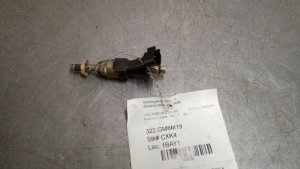
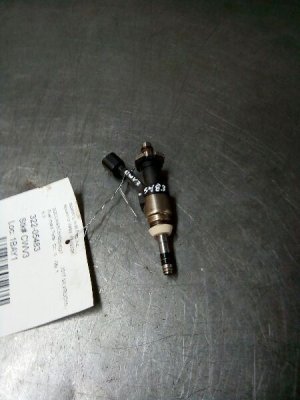
- Fuel Injector
(OEM #12668390)— This is the most frequent cause of a P0281 code, either due to clogging or electrical failure.
Trusted brands: ACDelco, Bosch, Delphi, Standard Motor Products
OEM price range: $90-$150
Aftermarket price range: $50-$100 - AFM Lifter Kit
(OEM #12680871 (Active Lifter))— If diagnosis points to a mechanical failure, the AFM lifters are the most likely culprit on cylinder 7. Kits often include all lifters (AFM and standard), guides, and necessary gaskets.
Trusted brands: ACDelco/GM Genuine, Delphi, Michigan Motorsports
OEM price range: $400-$600 (for a full set)
Aftermarket price range: $250-$450
Related Codes That Often Appear With This One
- P0307 — This code means "Cylinder 7 Misfire Detected." It often appears with P0281 because the underlying condition causing the power imbalance (like a bad injector or collapsed lifter) also causes the cylinder to misfire.
- P0300 — This is a "Random/Multiple Cylinder Misfire Detected" code. It may appear if the issue causing P0281, especially a failing AFM lifter, is beginning to affect other cylinders or if there's a more widespread problem.
- P050D — This code for "Cold Start Rough Idle" is often associated with failing direct injectors on these engines. Several owner videos show a P050D diagnosis leading to a full injector replacement.
- P0263, P0266, P0269, etc. — These are contribution/balance codes for other cylinders. Seeing them alongside P0281 could point to a systemic issue like a failing ECM (as noted in TSB 17-NA-171), widespread fuel contamination, or a mechanical problem affecting an entire engine bank.
Technical Service Bulletins (TSBs) & Recalls
- PIP5468F: Lists P0281 among many other codes and advises following standard diagnostics first.
- 17-NA-171: Cites a possible ECM/TCM software anomaly as a cause for P0281 and other codes, recommending a reflash as the fix.
- PIP-5400: Links P0281 to a potential lack of lubrication in the valve train.
- 19-NA-219: Details various mechanical engine issues like worn cams or sticking valves that can cause misfires and related codes.
- 15-06-01-002F: Describes issues with failed AFM lifters leading to misfires (P0300) and noises. It notes that a collapsed or stuck AFM lifter is a primary cause.
Platform-Specific Known Issues
- TSB #17-NA-171 notes that an ECM anomaly can cause this code, potentially requiring a software update.
- TSB #PIP-5400 indicates that a lack of lubrication to valve train components can lead to contribution/balance codes like P0281.
- TSB #15-06-01-002F (and its predecessors) is a critical document discussing how failed Active Fuel Management (AFM) lifters can cause this code.
Mechanic-Grade Diagnostic Values
- High-Pressure Fuel Rail Pressure (at idle) — expected: 1.9-5.0 MPa (276-725 PSI). Failure: Pressure that is unstable or significantly outside this range can indicate a problem with the high-pressure fuel pump or its sensor.
- Low-Pressure Fuel System Pressure (Key On, Pump Running) — expected: 320-580 kPa (46-84 PSI). Failure: Low pressure suggests a weak in-tank fuel pump or a clogged filter, which can starve the high-pressure pump.
- Fuel Injector Resistance (Direct Injection) — expected: Approximately 1.2 - 1.6 Ohms. Failure: A reading that is significantly higher (open circuit) or lower (shorted) than the other injectors. Note: DI injectors have very low resistance compared to PFI injectors (10-18 Ohms).
- Scan Tool Injector Balance Test — expected: The pressure drop for each injector should be roughly equal.. Failure: The pressure drop for cylinder 7 is more than 20% different from the average of the other cylinders, indicating it's flowing more or less fuel than commanded.
Hidden / Shadow Codes Worth Checking
- Mode 6, Test ID $A2-$AB: These Test IDs correspond to misfire counts for each cylinder (Cylinder 1 = $A2, Cylinder 2 = $A3, etc.). For cylinder 7, a technician would monitor Test ID $A8. (see via A professional OBD-II scanner capable of displaying Mode $06 data. This data can reveal intermittent misfires on cylinder 7 that haven't yet met the threshold to set a P0307 trouble code.)
Scan Tool Commands That Help
- GDS2, Tech2, or equivalent professional scanner (Xtool, Autel, Snap-on): Fuel Injector Balance Test — This is a primary diagnostic step for P0281. The tool commands the ECM to shut off each injector sequentially while the engine is running and measures the drop in fuel rail pressure. It directly compares the performance of the cylinder 7 injector against the others to confirm a fuel delivery imbalance.
- GDS2, Tech2, or equivalent professional scanner: Fuel Pump Enable — Used with the engine off to run the in-tank fuel pump. This allows a technician to check the low-side fuel pressure and verify it holds steady, ruling out a weak pump or leaks before moving to high-pressure system diagnosis.
Wiring & Ground Locations
- Cylinder #7 Location — Passenger side of the engine (Bank 1), the rearmost cylinder closest to the firewall.. Correctly identifying cylinder 7 is the first step for any physical inspection, wiring check, or component swap. The GM V8 cylinder numbering is 1-3-5-7 on the passenger side and 2-4-6-8 on the driver side, from front to back.
- Injector Connector Access — The connector for the #7 injector is located under a plastic heat shield/cover on the passenger side valve cover area. This cover must be unbolted and removed to gain access to the injector wiring.. Knowing that a cover must be removed saves diagnostic time and prevents damage when trying to access the connector for testing or replacement.
Real Owner Repair Stories
- YouTube channel 'Don's Life' (GMC Sierra AT4 (likely 2019+ with 5.3L or 6.2L V8)) — Felt a misfire. Scanned and found a P0307 (Cylinder 7 Misfire) code, which later cleared itself and was followed by a pending P0300 (Random Misfire) code.
❌ Tried (didn't work) The owner did not attempt repairs himself but proactively took the vehicle to the dealership for diagnosis even after the specific cylinder code cleared.
✅ What actually fixed it The dealership service center performed a "fuel injector replacement bank one," which includes cylinder 7. After the repair, the misfire codes were gone and the truck ran fine.
OEM Part Supersession History
12668390→12681212— Standard part evolution for design or manufacturing improvements.
Heads up: A parts supplier notes that while there are 'low', 'nominal', and 'high' flow versions, there is no functional difference, but it is critical that all eight injectors match.Multiple (e.g., 12623116, 12628422, 12656005)→12668390— Part consolidation and updates over the production run.
Heads up: When searching for replacements, mechanics may encounter several older part numbers. 12668390 and its successors are the correct modern replacements for the L83 engine.
Model Year Variations Within This Range
- 2016-2018: These K2XX platform trucks use Active Fuel Management (AFM), which deactivates a fixed set of cylinders: 1, 7, 4, and 6. Cylinder 7 is therefore highly susceptible to the well-documented AFM lifter failures.
- 2019: The new T1XX platform trucks with the 5.3L and 6.2L V8 engines feature Dynamic Fuel Management (DFM). DFM is a more advanced system that can deactivate any number of cylinders in various patterns, not just a fixed set. While lifter issues can still occur, the failure pattern may not be as consistently focused on cylinder 7 as it is in the earlier AFM-equipped models.
Helpful Videos
Used OEM Parts in Stock
New Aftermarket Parts Available


The information in this article is provided for general reference and educational purposes only. Vehicle specifications, procedures, and part compatibility can vary by production date, trim level, and region. Always consult your vehicle's factory service manual and verify part numbers before purchasing or performing repairs. Safety-critical components such as airbags, seat belts, and braking systems should be installed by a qualified professional.
- Gmc SIERRA 1500:
- 🎬 Helpful Videos
- 🛍️ Shop This Part
- What's Unique About the 2016-2019 Gmc SIERRA 1500
- Diagnostic Flowchart
- Symptoms You May Notice
- Most Likely Causes
- Diagnosis Steps
- Parts You'll Likely Need
- Related Codes That Often Appear With This One
- Technical Service Bulletins (TSBs) & Recalls
- Platform-Specific Known Issues
- Mechanic-Grade Diagnostic Values
- Hidden / Shadow Codes Worth Checking
- Scan Tool Commands That Help
- Wiring & Ground Locations
- Real Owner Repair Stories
- OEM Part Supersession History
- Model Year Variations Within This Range
- 🎟️ Get 5% Off