

P0281 on 2016-2019 Chevrolet Silverado 1500: Cylinder 7 Balance Fault Causes & Fixes
Code P0281 on a 2016-2019 Silverado indicates a contribution/balance fault in cylinder 7. The most common cause is a faulty or clogged direct fuel injector. However, GM Technical Service Bulletins and owner forums frequently point to more serious mechanical engine problems like collapsed Active Fuel Management (AFM) lifters or general valvetrain lubrication failure. An injector replacement is a manageable DIY job, but mechanical issues are costly and require professional repair.
- P0281 means cylinder 7 isn't pulling its weight, most likely due to a bad fuel injector.
- Before buying parts, perform a diagnostic swap: move the cylinder 7 injector to another cylinder and see if the code follows it.
- Be aware of the TSBs for this truck; if it's not the injector, it could be a more serious internal engine issue related to oil lubrication.
- Replacing a direct fuel injector requires removing the intake manifold and is a moderately difficult DIY job.
What's Unique About the 2016-2019 Chevrolet SILVERADO 1500
For this generation of Silverado (primarily the K2XX platform with 5.3L L83 and 6.2L L86 engines), P0281 is frequently traced to a failing direct fuel injector. However, what makes this platform unique is the documented prevalence of more severe underlying mechanical issues. General Motors has issued service bulletins, like #PIP-5400, specifically linking these cylinder balance codes to a lack of lubrication in the valvetrain. Furthermore, these engines are known for failures of the Active Fuel Management (AFM) system, where a lifter for cylinder 7 can collapse, leading to a loss of compression and setting this code. This means that while an injector is a likely culprit, a deeper mechanical problem related to the valvetrain or AFM system cannot be ruled out without proper diagnosis.
Diagnostic Flowchart
Tap your situation to follow the diagnostic path that matches what you're seeing on this vehicle.
Generation note: This year range covers the third generation (K2XX; 2016-2018 and 2019 'LD' models) and the start of the fourth generation (T1XX; 2019). The cited TSBs and common issues with fuel injectors and valvetrain/AFM lifters are primarily associated with the K2XX platform and its EcoTec3 V8 engines (5.3L L83 and 6.2L L86).
Symptoms You May Notice
- Rough or shaking idle.
- Noticeable loss of engine power.
- Hesitation or stumbling during acceleration.
- Solid or flashing Check Engine Light.
- Reduced fuel economy.
- Engine vibration that can be felt in the cabin.
- Replacing the spark plug and ignition coil for cylinder 7. While these parts can cause a misfire (P0307), the P0281 code is specifically for a contribution/balance issue detected by the crankshaft sensor, which is more often related to fuel delivery or mechanical compression, not ignition.
Most Likely Causes
- Faulty or Clogged Fuel Injector 🔴 High Probability Direct injection systems operate under very high pressure, making the injectors susceptible to electronic failure or clogging from carbon deposits. This is the most common cause for a single-cylinder contribution code.
How to confirm: Use a scan tool with a cylinder balance test to confirm cylinder 7 is the issue. The definitive test is to swap the cylinder 7 fuel injector with another cylinder (e.g., cylinder 1, which is on the same bank and relatively accessible). If the code changes to P0263 (Cylinder 1 Contribution/Balance), the injector is faulty.
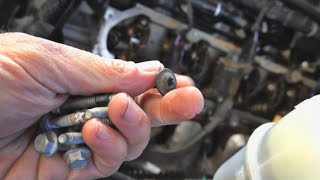
Typical fix: Replace the fuel injector for cylinder 7. 🎬 Watch: A mechanic diagnoses P0281 and tests the cylinder 7 injector. It is critical to also replace the one-time-use high-pressure fuel line associated with that injector and the injector's seals. GM recommends rebuilding all injectors if one is removed.
Est. part cost: $60-$150 for a single injector. The high-pressure fuel line can add $30-$50. - Mechanical Engine Failure (AFM Lifter / Valvetrain) 🟡 Medium Probability The 5.3L and 6.2L engines in these trucks use an Active Fuel Management (AFM) system with special lifters that can fail, collapse, or get stuck. This is a widely documented problem. TSB #PIP-5400 also explicitly links cylinder balance codes to a lack of lubrication to rocker arms and valvetrain components, leading to damage.
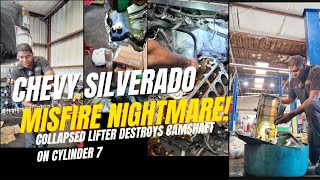
How to confirm: After ruling out the fuel system, perform a compression test on cylinder 7. A reading of zero or very low pressure strongly suggests a collapsed lifter or other valvetrain failure. The next step is to remove the valve cover to visually inspect the rocker arms and pushrods 🎬 See how a collapsed lifter on cylinder 7 destroys the camshaft. for looseness or damage.
Typical fix: This is a major repair. At a minimum, it involves replacing the collapsed lifter, the lifter guide, and often the camshaft if it has been damaged by the failed lifter. Many owners opt for an 'AFM delete' at this time, replacing the problematic components with standard lifters and a new camshaft, which requires ECM reprogramming. This should be done by a professional.
Est. part cost: $500-$2500+. A Reddit user reported a dealer quote of $4800 for a lifter repair and $11,000 if the camshaft was also damaged. - Engine Control Module (ECM) Anomaly ⚪ Low Probability TSB #17-NA-171 suggests that a software anomaly in the ECM can cause P0281 and other codes to be set erroneously, sometimes accompanied by various driveability issues like hesitation or harsh shifting.
How to confirm: This is a last resort after all fuel and mechanical causes have been definitively ruled out. A GM dealership can check the vehicle's VIN against their service records to see if a software update is available and applicable.
Typical fix: Update or re-flash the ECM and TCM with the latest software from the manufacturer. The TSB notes that both modules must be updated together.
Est. part cost: $0 if under warranty, or $100-$250 for labor at a dealership.
Rare But Worth Checking
- Low Cylinder Compression: While related to mechanical failure, low compression due to worn piston rings or a poor valve seal (unrelated to a collapsed lifter) can also cause P0281. A cylinder leak-down test can help differentiate this from a valvetrain issue.
- Wiring Harness Issue: Damage or corrosion on the wiring or connector for the cylinder 7 fuel injector can cause it to function intermittently, leading to a balance fault. This should be visually inspected before replacing parts.
Diagnosis Steps
- Read the code from the ECM using an OBD-II scanner and check for any other stored codes. Note any misfire (P030X) or system-wide codes.
- Use a scan tool with live data to perform a cylinder balance test to confirm that cylinder 7 is underperforming.
- Inspect the wiring and connector at the cylinder 7 fuel injector for any visible damage, corrosion, or loose connections. Cylinder 7 is the second cylinder from the front on the driver's side.
- To isolate the fuel injector, swap it with an injector from another cylinder (e.g., cylinder 1, the front-most on the driver's side). Clear the codes and run the engine. If the code moves to P0263 (Cylinder 1 Contribution/Balance), the injector is faulty and must be replaced.
- If the code remains on cylinder 7 after the injector swap, perform a wet and dry compression test on cylinder 7. A significant drop in pressure (e.g., below 100 PSI or more than 20% lower than a healthy cylinder) points to a mechanical problem.
- If compression is low, remove the driver-side valve cover and inspect the valvetrain for cylinder 7. Check for a loose rocker arm, bent pushrod, or broken valve spring, which are all signs of a collapsed AFM lifter or other valvetrain damage as noted in TSB #PIP-5400.
- If all fuel and mechanical tests come back normal, contact a GM dealership to check for any available ECM software updates as per TSB #17-NA-171.
Parts You'll Likely Need
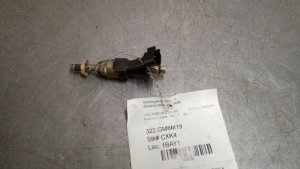
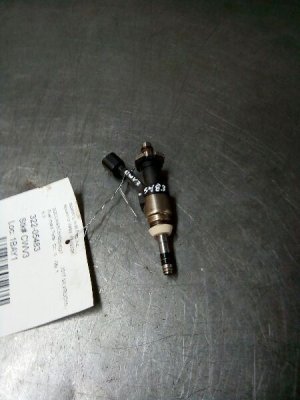
- Direct Fuel Injector
(OEM #12668390)— This is the most frequent cause of a single-cylinder contribution fault on these direct-injection engines.
Trusted brands: ACDelco, GM Genuine
OEM price range: $100-$175
Aftermarket price range: $60-$120 - High-Pressure Fuel Injector Line
(OEM #12679933 (Example, verify by VIN))— These fuel lines are one-time use only per GM service procedures. Attempting to reuse a line can result in dangerous high-pressure fuel leaks. 🎬 Watch: Step-by-step guide to replacing fuel injectors on the 5.3L engine.
Trusted brands: GM Genuine
OEM price range: $30-$50
Aftermarket price range: $20-$40
Related Codes That Often Appear With This One
- P0307 — This code indicates a "Cylinder 7 Misfire." A cylinder that is not contributing its share of power will often misfire as a direct symptom.
- P050D — This code for "Cold Start Rough Idle" is often caused by failing or leaky direct fuel injectors on this platform, which can also lead to the P0281 balance fault.
- P0263, P0266, P0269, etc. — If multiple cylinder contribution codes are present, it points towards a systemic problem like the valvetrain lubrication issue mentioned in TSB #PIP-5400, a charge air cooler leak as per TSB #PIP5468F, or a widespread fuel contamination issue.
Technical Service Bulletins (TSBs) & Recalls
- PIP5468F: General diagnostic procedure for multiple engine performance codes, including P0281, often pointing to charge air cooler leaks.
- 17-NA-171: Points to a potential ECM/TCM software anomaly causing the code.
- PIP-5400: Links cylinder balance codes to lack of valvetrain lubrication.
Platform-Specific Known Issues
- TSB #PIP-5400: Warns that cylinder contribution codes (P0263-P0284) can be the result of a lack of lubrication to the rocker arms and valvetrain components, indicating a potential mechanical engine problem beyond just a fuel injector.
- TSB #17-NA-171: Notes that an anomaly within the Engine Control Module (ECM) can cause a host of diagnostic trouble codes, including P0281, to be set. The recommended fix is an ECM/TCM software update.
- Active Fuel Management (AFM) Lifter Failure: A widely discussed issue on forums where the special lifters used for cylinder deactivation collapse or become stuck. This is a common cause of P0281 when it's not a fuel injector. A detailed repair video showed a collapsed lifter on a 2017 5.3L had also destroyed the camshaft, requiring a major engine-out repair.
Mechanic-Grade Diagnostic Values
- Low-Pressure Fuel System Pressure (at HPFP inlet) — expected: ~72-73 PSI (500-505 kPa). Failure: Pressure significantly below 73 PSI may indicate a failing in-tank pump, though this is not the primary cause of P0281.
- High-Pressure Fuel Rail Pressure (Scan Tool, at idle) — expected: ~290 - 700 PSI. Failure: While P0281 is a balance code, not a pressure code, erratic readings or pressure that doesn't respond to RPM changes could indicate a failing HPFP or sensor affecting overall performance.
Scan Tool Commands That Help
- GDS2 (or equivalent professional scanner): Cylinder Balance Test / Injector Balance Test — This is a primary diagnostic step to visually confirm which cylinder is underperforming. The scan tool displays the relative power contribution of each cylinder, and a significant negative deviation for cylinder 7 confirms the fault location before swapping any parts.
Wiring & Ground Locations
- Cylinder 7 Injector — On the driver's side of the engine (Bank 2), it is the second fuel injector from the front (radiator).. This is the component directly referenced by the code. The wiring connector at this location is a primary point of failure due to heat and vibration and should be inspected for damage or corrosion.
- G102 — Located at the left (driver's) rear of the engine.. This ground point is for all 8 ignition coils. While P0281 is not an ignition code, a poor ground here can cause erratic engine behavior that could be misdiagnosed.
- G103 / G104 — Located on the rear of the passenger side and driver side cylinder heads, respectively.. These are major engine block grounds. Poor grounding at these points can cause a wide range of electrical issues and sensor reading errors for the ECM, potentially leading to incorrect fault calculations.
- ECM (Engine Control Module) — Located in the left front of the engine compartment, near the fan shroud.. This is the module that sets the code. Knowing its location is necessary for inspecting its connectors or for replacement/reprogramming as suggested by TSB #17-NA-171.
Real Owner Repair Stories
- Brilliant Auto Care YouTube Channel (2017 Chevrolet Silverado 5.3L V8) — Misfire on cylinder 7 and 8.
❌ Tried (didn't work) The video focuses on the correct diagnosis from the start, so no failed attempts were detailed.
✅ What actually fixed it The root cause was a collapsed AFM lifter on cylinder 7, which was so severe it had damaged the corresponding lobe on the camshaft. The fix required removing the cylinder heads and replacing the camshaft, all lifters (AFM and standard), and associated gaskets and seals. - c farmer YouTube Channel (2018 Silverado 2500 L5P (Duramax Diesel)) — Dead miss, reduced power, and code P0207 (Cylinder 7 Injector Circuit Fault).
❌ Tried (didn't work) Initial hope was a disconnected butt connector from a previous repair, but it was intact.
✅ What actually fixed it The entire injector wiring pigtail for cylinder 7 was faulty. Replacing the pigtail (GM Part #19368140 / ACDelco PT3739) resolved the code and restored engine power. The video provides a useful guide for accessing the #7 injector by removing the passenger-side front wheel and inner fender liner.
OEM Part Supersession History
12668390→12681212— Standard part revision and consolidation by the manufacturer.
Heads up: There is no functional difference between injectors sometimes marked as 'low', 'nominal', or 'high' flow rates; however, it is critical that all eight injectors in the engine match.
Model Year Variations Within This Range
- 2019: The 2019 model year was a split. The 'Silverado 1500 LD' is a carryover of the K2XX platform with the 5.3L L83 engine using Active Fuel Management (AFM). The all-new body style 'Silverado 1500' (T1XX platform) introduced the 5.3L L84 engine with Dynamic Fuel Management (DFM). While both are cylinder deactivation systems, AFM deactivates a fixed set of cylinders (1, 4, 6, 7), whereas DFM can deactivate any cylinder, making the hardware and software controls different. A lifter failure on a 2019 T1XX truck involves the DFM system, not the older AFM system.
Helpful Videos
Used OEM Parts in Stock
New Aftermarket Parts Available


The information in this article is provided for general reference and educational purposes only. Vehicle specifications, procedures, and part compatibility can vary by production date, trim level, and region. Always consult your vehicle's factory service manual and verify part numbers before purchasing or performing repairs. Safety-critical components such as airbags, seat belts, and braking systems should be installed by a qualified professional.
- Chevrolet SILVERADO 1500:
- 🎬 Helpful Videos
- 🛍️ Shop This Part
- What's Unique About the 2016-2019 Chevrolet SILVERADO 1500
- Diagnostic Flowchart
- Symptoms You May Notice
- Most Likely Causes
- Rare But Worth Checking
- Diagnosis Steps
- Parts You'll Likely Need
- Related Codes That Often Appear With This One
- Technical Service Bulletins (TSBs) & Recalls
- Platform-Specific Known Issues
- Mechanic-Grade Diagnostic Values
- Scan Tool Commands That Help
- Wiring & Ground Locations
- Real Owner Repair Stories
- OEM Part Supersession History
- Model Year Variations Within This Range
- 🎟️ Get 5% Off