

OBD-II Code P0273: Cylinder 5 Injector Circuit Low
The Ultimate Guide to Diagnosing and Fixing P0273
- Code P0273 flags an electrical short-to-ground in the cylinder 5 fuel injector circuit, not a mechanical fuel flow issue.
- Inspect the wiring harness first; chafed wires rubbing against the intake manifold cause over 50% of P0273 codes, especially on 2009-2014 GM 3.6L V6 engines.
- Never replace the fuel injector without testing resistance; a healthy high-impedance injector should read between 10 and 16 Ohms.
- Driving with an active P0273 code dumps unburnt fuel into the exhaust, which destroys a $1,500 catalytic converter in under 50 miles.
What Does P0273 Mean?
P0273 indicates your car's Powertrain Control Module (PCM) detects a low voltage condition in the electrical circuit controlling the cylinder 5 fuel injector. The PCM uses a transistor to pulse a ground signal to open the injector. When the injector is off, the PCM expects to see a specific high voltage on the circuit. Code P0273 triggers when this voltage drops below the expected threshold, confirming a short to ground, a dead injector coil, or severed wiring.
Technical definition: The SAE/OBD-II definition is "Cylinder 5 Injector 'A' Circuit Low". This means the Powertrain Control Module (PCM) detects voltage in the cylinder 5 fuel injector control circuit is below the specified threshold when commanded off. The PCM disables the injector to prevent electrical damage and logs the fault.
Can I Drive With P0273?
Yes, But With Caution. Yes, but only to a safe stopping point or repair shop. Driving with P0273 means cylinder 5 is misfiring, causing a rough ride, poor fuel economy, and hesitation. Driving more than a few miles sends unburnt fuel into the exhaust, rapidly destroying the catalytic converter—a repair costing upwards of $1,500. If the Check Engine Light flashes, pull over immediately to prevent catastrophic engine damage.
Common Causes
- Damaged or Chafed Wiring Harness (Very Common) — The wires routing to the injector are frayed, broken, or rubbing against an engine part (like the intake manifold), causing a direct short circuit to ground. This is the leading cause on GM 3.6L V6 engines.
- Faulty Cylinder 5 Fuel Injector (Very Common) — The injector suffers an internal electrical failure, such as a shorted coil winding or degraded internal return spring, resulting in near-zero resistance.
- Corroded or Loose Electrical Connector (Common) — The plug connecting the wiring to the fuel injector is loose, dirty, or suffers from water intrusion. This creates high resistance or an intermittent short across the pins.
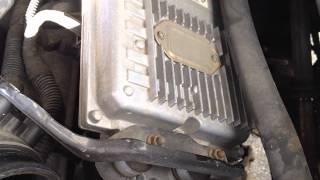
- Faulty Fuel Injection Control Module (FICM) (Common On Diesel) — On diesel engines like the Ford 6.0L Power Stroke, a dedicated FICM provides 48 volts to fire the injectors. Internal power supply failure within this module triggers low voltage codes.
- Blown Injector Fuse or Faulty Relay (Rare) — The main fuse or relay supplying power to the fuel injector bank fails. This typically triggers codes for multiple injectors simultaneously, not just cylinder 5.
- Faulty Powertrain Control Module (PCM) (Very Rare) — The internal driver circuit (transistor) within the PCM that controls the cylinder 5 injector burns out. Consider this only after exhaustively ruling out wiring and injector failures.
Symptoms
- Rough Idle and Engine Misfire — The engine shakes violently at idle. You hear a distinct popping or tapping sound from the engine bay indicating a dead cylinder.
- Reduced Engine Power and Hesitation — The vehicle feels sluggish, struggles to accelerate, and stumbles when pressing the gas pedal under load.
- Poor Fuel Economy — Gas mileage drops 10-20% as the PCM enriches the fuel mixture to other cylinders to compensate for the dead one.
- Strong Raw Fuel Smell — You smell raw gasoline from the exhaust because unburnt fuel from cylinder 5 is passing straight through the exhaust system.
- Check Engine Light is On or Flashing (also visible on scanner) — The light illuminates steadily, or flashes rapidly if the misfire is severe enough to melt the catalytic converter.
Diagnostic Flowchart
Tap your situation to follow the diagnostic path that matches what you're seeing on this code.
Common Fixes & Costs
- Repair Fuel Injector Wiring Harness — Parts: $15-$40, Labor: $150-$400, ~1.5 hr book time (Intermediate)
- Replace Cylinder 5 Fuel Injector — Parts: $50-$250, Labor: $100-$500, ~2.5 hr book time (Intermediate)
- Clean or Replace Fuel Injector Connector — Parts: $10-$50, Labor: $80-$150, ~0.8 hr book time (DIY)
- Replace Fuel Injection Control Module (FICM) — Parts: $300-$800, Labor: $150-$300, ~1.2 hr book time (Intermediate)
- Replace Powertrain Control Module (PCM) — Parts: $800-$1500, Labor: $150-$300, ~1.0 hr book time (Professional)
Used vs. New Parts: Buying Guide
When a used part is worth it: A used salvage injector is never recommended due to unknown internal wear. A professionally remanufactured injector is a reliable, cost-effective alternative to new.
Donor-vehicle mileage cap: roughly under 75000 miles for the part to have meaningful remaining life.
Donor quality checklist:
- Buy remanufactured parts from reputable suppliers offering warranties.
- Verify the part number exactly; injectors are precisely calibrated.
- Avoid 'refurbished' injectors, which are often just cleaned without internal component replacement.
Decision logic:
- If The vehicle is high-value and you plan to keep it long-term → Buy a new OEM or high-quality aftermarket injector for maximum reliability.
- If The vehicle has over 150,000 miles and the budget is tight → A remanufactured injector from a trusted source is an acceptable compromise.
Warranty tradeoff: Remanufactured injectors often come with a 1-year warranty. New OEM parts carry at least a 1-year warranty.
Worst-case if a used part fails: $500 if a faulty remanufactured part requires repeat labor costs.
What Happens If You Wait — Timeline
- 0-2 weeks: Check Engine Light illuminates. Noticeable rough idle and slight hesitation during acceleration. Misfire is present. (MPG impact: 10%% · Added cost: $20-$50 in wasted fuel.)
- 2 weeks - 2 months: Engine runs consistently rough. Power loss is significant. Unburnt fuel enters the exhaust, rapidly raising the temperature of the catalytic converter. (MPG impact: 20%% · Added cost: $100 in wasted fuel. Catalytic converter degradation begins.)
- 2-6 months: The catalytic converter substrate melts from raw fuel exposure, causing a major exhaust restriction. The Check Engine Light flashes. (MPG impact: 30%% · Added cost: $1,500-$2,500 for catalytic converter replacement.)
- 6+ months: Raw fuel washes lubricating oil from the cylinder walls ('cylinder washdown'), causing severe scoring of the cylinder and piston rings. (MPG impact: 40%% · Added cost: $4,000-$8,000 for engine rebuild or replacement.)
Cost of Not Fixing It
- 0-1 month: Noticeable drop in fuel economy (10-20%), rough idle, and poor acceleration. Failed emissions test. (Added cost: $50-$100 in wasted fuel.)
- 1-3 months: Unburnt fuel from the misfiring cylinder overheats and destroys the catalytic converter substrate. (Added cost: $1,500-$2,500 for catalytic converter replacement.)
- 3+ months: Raw fuel washes lubricating oil from the cylinder walls, causing accelerated wear on piston rings and loss of compression. (Added cost: $4,000-$8,000 for major engine repair.)
Diagnosis Steps
- Read Codes and Freeze Frame Data
Use an OBD-II scanner to confirm P0273 is active. Look for related codes like P0305 (Cylinder 5 Misfire). Write down freeze frame data to see engine conditions when the fault occurred, then clear codes to see what returns immediately.
Tools: OBD-II Scanner (Beginner) - Visual Inspection of Wiring and Connector
Inspect the wiring harness and connector for the cylinder 5 fuel injector. Look for chewed wires, melted insulation, or corrosion on the pins. Pay close attention to areas where the harness touches engine brackets.
Tools: Flashlight, Inspection Mirror (Beginner) - Listen to the Injector
With the engine running, place a mechanic's stethoscope against the cylinder 5 injector. It should make a consistent, rhythmic clicking sound. If it is silent compared to adjacent injectors, the circuit is dead.
Tools: Mechanic's Stethoscope or long screwdriver (Beginner) - Test Injector Resistance
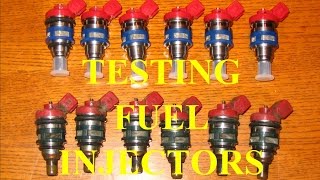
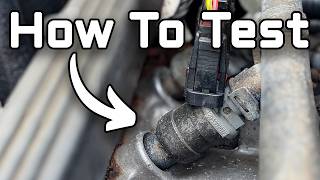
Disconnect the fuel injector's electrical connector. Set a multimeter to Ohms (Ω) and probe the two pins on the injector. High-impedance injectors should read 10-16 Ohms. A reading near zero confirms an internal short, requiring replacement.
Tools: Multimeter (Intermediate) - Check for Voltage and Short to Ground
Turn the ignition 'On' (engine off). Set a multimeter to DC Volts and probe the harness connector. One wire must have battery voltage (12V). Next, turn the key off, set the multimeter to Ohms, and check for continuity between the control wire pin and chassis ground. Near 0 Ohms confirms a short to ground in the harness.
Tools: Multimeter (Intermediate) - Perform a Noid Light Test
Plug a noid light into the cylinder 5 injector harness and start the engine. A steady flash indicates the PCM is sending the correct signal. If the light stays on constantly, the control wire is shorted to ground. If it remains off, the wire is broken or the PCM driver is dead.
Tools: Noid Light Set (Intermediate) - Perform an Injector Swap Test
Swap the cylinder 5 fuel injector with an adjacent cylinder (e.g., cylinder 3). Clear codes and run the engine. If the code changes to P0267 (Cylinder 3 Injector Circuit Low), the injector is faulty. If P0273 returns, the issue is strictly in the wiring or PCM.
Tools: Basic hand tools, New injector O-rings/seals (Advanced) - Test FICM Voltage (Ford 6.0L Power Stroke Only)
Using a scan tool or multimeter at the FICM test point, verify voltage with the key on, while cranking, and while running. Voltage must remain above 45V. Drops below 45V confirm a failing FICM power supply.
Tools: Multimeter or Advanced Scan Tool, Torx T20 driver (Advanced)
When This Code Triggers (Freeze-Frame Conditions)
- Engine Coolant Temp: 180-205°F (Fully warmed up and in closed-loop operation.)
- RPM: 1200-2800 RPM (Light acceleration or steady-state cruise.)
- Engine Load: 25-60% (The engine is working but not under heavy demand.)
Related Codes
- P0305 — Cylinder 5 Misfire Detected. P0273 is the electrical cause, and P0305 is the resulting mechanical effect. Fix P0273 first.
- P0205 — Injector Circuit/Open - Cylinder 5. P0273 (Low) specifies a short to ground, while P0205 is a generic code that includes open circuits.
- P0274 — Cylinder 5 Injector Circuit High. P0273 points to a short to ground, while P0274 points to a short to power or an open circuit.
How to Talk to a Mechanic About This Code
Say this: "I have a P0273 code for the cylinder 5 injector circuit. I'd like to book a diagnostic appointment. Based on my vehicle, please check for common issues like a chafed wiring harness or FICM voltage before quoting an injector replacement."
Directs the technician to check the most likely (and cheaper) causes first, preventing them from defaulting to an expensive injector replacement.
Avoid saying:
- 'My check engine light is on, can you just fix it?'
- 'I read online it's the injector, please just replace it.'
Questions to ask before authorizing the repair:
- Did you perform a continuity test on the wiring harness to check for a short to ground?
- If recommending an injector replacement, did you swap the injector to confirm the fault moved?
- Can you show me the damaged section of the wiring harness?
Where to Take It: Dealer vs Independent vs Chain
- Dealer:
Best for: Vehicles under powertrain warranty., Complex issues like BMW injector coding., Repairs covered by a known Technical Service Bulletin (TSB).
Downsides: Highest labor rates., May replace a full harness instead of performing a simple wire repair. (Typical cost: +50% vs. baseline) - Independent Shop:
Excellent fit. An experienced independent mechanic diagnoses and repairs wiring or injector faults more affordably than a dealer.
Best for: Out-of-warranty vehicles., Common problems like GM 3.6L harness chafing or Ford 6.0L FICM failure.
Downsides: Diagnostic skill varies; look for ASE certifications. (Typical cost: +0% vs. baseline) - Chain Shop:
Avoid for initial diagnosis of an electrical fault like P0273, which requires specialized multimeter testing.
Best for: Reading the initial code for free.
Downsides: Technician skill for electrical diagnosis is inconsistent., High pressure to sell parts leads to misdiagnosis. (Typical cost: -10% vs. baseline)
When to Walk Away From the Repair
If the total estimated repair cost exceeds 50% of the car's private-party value, seriously consider selling the car as-is.
- Car worth $4000, fix is $2200: Walk away. The repair cost is over 50% of the car's value.
- Car worth $12000, fix is $900: Fix it. The repair cost is well under the threshold and restores performance.
What Scan Tool You Need for This Code
Minimum: A basic code reader that reads codes, clears codes, and displays live freeze frame data.
A $20 reader only gives you the code. You need a scanner with bidirectional controls to perform an injector balance test and confirm if the injector responds to PCM commands.
Budget: Motopower MP69033 (~$25) — Reads the P0273 code and freeze frame data to understand conditions when the fault occurred.
Mid-range: Foxwell NT510 Elite (~$180) — Offers bidirectional control to command the injector on and off, differentiating a bad injector from a wiring problem.
Professional: Autel MaxiCOM MK808 (~$500) — Provides full OE-level diagnostics, advanced bidirectional controls, and the ability to code new injectors to the ECU on brands like BMW.
Rent vs buy: Auto parts stores read codes for free, but diagnosing P0273 requires testing. Buying a midrange scanner is a worthwhile investment for DIYers.
How to Clear the Code After You Fix It
- Use an OBD-II scan tool to clear all fault codes.
- Perform a complete OBD-II drive cycle to run all readiness monitors.
- Rescan the vehicle to confirm no codes return.
Drive cycle (~30 minutes): Start the engine cold and idle for 3 minutes. Drive in stop-and-go city traffic for 10 minutes, varying speeds up to 45 mph. Finish with 10 minutes of steady highway driving at 55-60 mph to allow all readiness monitors to complete their self-tests.
Readiness monitors affected: Catalyst Monitor, Misfire Monitor, Fuel System Monitor
Before emissions retest: drive at least 50 miles to fully set monitors.
Watch out for:
- Clearing codes resets all readiness monitors to 'Not Ready', guaranteeing an emissions test failure until driven.
- Disconnecting the battery does not clear codes on modern vehicles.
- The code returns instantly upon startup if the short-to-ground was not properly isolated.
Will This Fail Emissions / State Inspection?
Yes — this code typically fails an OBD-II emissions inspection.
- California: An illuminated Check Engine Light is an automatic failure. All readiness monitors must be 'Ready' before re-testing.
- New York: Automatically fails the OBD-II inspection if the Check Engine Light is on. The vehicle must complete a drive cycle after clearing codes.
- Texas: An active P0273 code causes an automatic failure in emissions-testing counties. The vehicle cannot pass until repaired and monitors are set.
Most Commonly Affected Vehicles
- GMC Acadia (2009-2014) — Extremely prone to a chafed wiring harness near the intake manifold (GM TSB #PIP4924D). Accessing cylinder 5 requires removing the upper intake manifold.
- Chevrolet Traverse (2009-2014) — Shares the 3.6L V6 and high likelihood of wiring harness chafing covered by GM TSB #PIP4924D.
- Buick Enclave (2009-2014) — Susceptible to the exact same wiring harness rubbing issue detailed in TSB #PIP4924D.
- Cadillac CTS (2009-2014) — The 3.6L V6 models are known for the fuel injector wiring harness rubbing through, causing this code.
- Ford F-Series (Power Stroke) (2003-2007) — On 6.0L diesels, P0273 frequently points to a failing Fuel Injection Control Module (FICM) or harness connectors under the valve cover.
- Ford F-150 (2004-2024) — On 5.4L V8 and EcoBoost models, this code often points directly to a failed fuel injector coil.
- Hyundai Santa Fe (2006-2015) — Intermittent faults are often traced to poor pin contact in the injector or ECM connectors.
- Honda Accord / Odyssey (2003-2017) — Typically points directly to a failing fuel injector due to age and wear, rather than a widespread wiring issue.
- BMW Various Models (N54/N55) (2007-2018) — Direct-injection 'piezo' injectors must be electronically coded to the engine computer using a diagnostic tool after installation.
Manufacturer-Specific Notes
- General Motors (GM): On 3.6L V6 engines, P0273 is overwhelmingly caused by the wiring harness rubbing against the intake manifold. GM issued TSB #PIP4924D to address this, making a harness inspection the mandatory first step.
- Ford: On 6.0L Power Stroke diesels, this code points to a failing Fuel Injection Control Module (FICM) rather than the injector. A voltage test confirming output drops below 45 volts verifies FICM failure.
- BMW: Replacing an injector requires electronic coding to the Digital Motor Electronics (DME) unit. Each injector has a unique calibration value that must be programmed with a specialized scan tool.
Real Owner Stories
2011 Chevy Traverse (GM 3.6L V6) with P0273
Check Engine Light illuminated with code P0273. The owner experienced severe hesitation and a rough idle.
What they tried:
- Removed the engine cover and visually inspected the wiring harness leading to the rear bank of cylinders.
- Found the harness rubbing against a sharp metal bracket near the intake manifold.
- Discovered the insulation on the cylinder 5 control wire was completely worn through, shorting to ground.
Outcome: The owner repaired the damaged wire using a butt connector and heat shrink tubing, then protected the area with plastic wire loom. The repair cost $10 and permanently cleared the code.
Lesson: For any 2009-2014 GM 3.6L V6, visually inspect the wiring harness for chafing first (TSB #PIP4924D). This saves hundreds of dollars by avoiding unnecessary injector replacements.
2005 Ford F-250 6.0L Power Stroke with intermittent misfire
Owner noticed a slight miss at low RPM and bogging when accelerating. The truck threw code P0273.
What they tried:
- Suspected either the FICM or the injector itself based on forum research.
- Performed a 'wiggle test' on the FICM connectors while the engine was running.
- Wiggling the middle connector caused the engine's idle to bog down and run rough, pinpointing a harness issue.
Outcome: The problem was isolated to a faulty connection at the Fuel Injection Control Module (FICM). Replacing the FICM harness connector pigtail resolved the low voltage code.
Lesson: On a Ford 6.0L Power Stroke, perform a wiggle test on the FICM connectors before replacing expensive injectors. Loose pins are a frequent root cause.
Land Rover Discovery 4 TDV6 with P0273 and P0200
Vehicle went into 'restricted performance' mode and threw codes P0273 and P0200.
What they tried:
- Tested resistance of all injectors and found a low reading.
- Replaced the injector at physical cylinder #5, but the code immediately returned.
- Replaced it a second time with another new injector, and the fault persisted.
Outcome: A forum member pointed out that on this specific engine, the OBD-II cylinder numbering does not match the physical firing order. The owner had been replacing the wrong injector. Swapping the correct injector resolved the issue.
Lesson: Always verify the physical location and firing order for your specific engine using a service manual. Do not assume OBD-II cylinder numbers directly correspond to physical layout.
How to Prevent This Code From Triggering
- Inspect and Secure Wiring Harnesses (Every 30,000 miles or during major under-hood work) — Ensures injector wiring harnesses are secure in their clips and not rubbing against engine brackets, preventing the chafing that causes 'Circuit Low' codes.
- Use High-Quality, Top-Tier Fuel (Every fill-up) — Top-tier gasolines contain detergents that prevent deposit buildup on injector internals, maintaining proper electrical and mechanical function.
- Replace Fuel Filter at Recommended Intervals (Per manufacturer schedule (typically 30,000-50,000 miles)) — Prevents rust and dirt from reaching the fuel injectors. Contaminants cause internal scoring, leading to premature electrical and mechanical failure.
Frequently Asked Questions
I replaced the cylinder 5 injector, but the P0273 code came back. What's next?
If a new injector doesn't fix the code, the problem is in the wiring or PCM. Perform a continuity test on the control wire from the injector connector back to the PCM to check for a short to ground. Thoroughly re-inspect the harness for any signs of chafing.
What's the difference between P0273 and P0305?
P0273 is a specific electrical code stating the control circuit for the cylinder 5 injector has low voltage. P0305 is a general performance code for a misfire detected in cylinder 5. Think of P0273 as the cause (bad signal) and P0305 as the effect (dead cylinder).
Can a dirty fuel injector cause P0273?
No, P0273 is a purely electrical fault code. A dirty or clogged fuel injector causes identical performance symptoms like a misfire (P0305), but it will not trigger a 'Circuit Low' code. If you only have performance issues without an electrical code, injector cleaning is a solution.
How much does it cost to fix P0273?
A DIY wiring repair costs under $40 for supplies. Replacing a single injector yourself costs between $50 and $250 for the part. A professional repair at a shop typically ranges from $250 to $900, depending heavily on intake manifold removal labor.
Will my car fail an emissions test with a P0273 code?
Yes, your vehicle automatically fails an emissions or smog test with an active P0273. The illuminated Check Engine Light is an automatic failure in all regions. The underlying misfire also significantly increases harmful hydrocarbon emissions.
Will P0273 clear itself?
No, P0273 indicates a persistent electrical or mechanical fault that requires physical repair. After completing the repair, clear the code with an OBD-II scanner. The code returns immediately if the short circuit remains.
What is a FICM and how does it relate to P0273?
A Fuel Injection Control Module (FICM) is a secondary computer used on diesel engines like the Ford 6.0L Power Stroke. It steps battery voltage up to 48 volts to power the injectors. If the FICM fails, it triggers 'circuit low' codes like P0273.
Key Takeaways
- Code P0273 flags an electrical short-to-ground in the cylinder 5 fuel injector circuit, not a mechanical fuel flow issue.
- Inspect the wiring harness first; chafed wires rubbing against the intake manifold cause over 50% of P0273 codes, especially on 2009-2014 GM 3.6L V6 engines.
- Never replace the fuel injector without testing resistance; a healthy high-impedance injector should read between 10 and 16 Ohms.
- Driving with an active P0273 code dumps unburnt fuel into the exhaust, which destroys a $1,500 catalytic converter in under 50 miles.
Helpful Videos


The information in this article is provided for general reference and educational purposes only. Vehicle specifications, procedures, and part compatibility can vary by production date, trim level, and region. Always consult your vehicle's factory service manual and verify part numbers before purchasing or performing repairs. Safety-critical components such as airbags, seat belts, and braking systems should be installed by a qualified professional.
- 🎬 Helpful Videos
- What Does P0273 Mean?
- Can I Drive With P0273?
- Common Causes
- Symptoms
- Diagnostic Flowchart
- Common Fixes & Costs
- Used vs. New Parts: Buying Guide
- What Happens If You Wait — Timeline
- Cost of Not Fixing It
- Diagnosis Steps
- When This Code Triggers (Freeze-Frame Conditions)
- Related Codes
- How to Talk to a Mechanic About This Code
- Where to Take It: Dealer vs Independent vs Chain
- When to Walk Away From the Repair
- What Scan Tool You Need for This Code
- How to Clear the Code After You Fix It
- Will This Fail Emissions / State Inspection?
- Most Commonly Affected Vehicles
- Manufacturer-Specific Notes
- Real Owner Stories
- 2011 Chevy Traverse (GM 3.6L V6) with P0273
- 2005 Ford F-250 6.0L Power Stroke with intermittent misfire
- Land Rover Discovery 4 TDV6 with P0273 and P0200
- How to Prevent This Code From Triggering
- Frequently Asked Questions
- I replaced the cylinder 5 injector, but the P0273 code came back. What's next?
- What's the difference between P0273 and P0305?
- Can a dirty fuel injector cause P0273?
- How much does it cost to fix P0273?
- Will my car fail an emissions test with a P0273 code?
- Will P0273 clear itself?
- What is a FICM and how does it relate to P0273?
- Key Takeaways
- 🎟️ Get 5% Off