

P0272 on 2016-2019 Chevrolet Silverado 1500: Cylinder 4 Balance Fault Causes and Fixes
P0272 on a 2016-2019 Silverado indicates cylinder 4 is underperforming. The most common causes are a faulty fuel injector, a bad spark plug, or a failing ignition coil for that cylinder. A more serious, but known, issue for these trucks is a failed AFM/DFM lifter. Expect to pay $50-$150 for a new injector and another $100-$200 in labor if you don't DIY.
- P0272 means cylinder 4 isn't pulling its weight, most likely due to a bad fuel injector, ignition coil, or spark plug.
- Start your diagnosis with the simple and cheap parts first: inspect the spark plug, then swap the ignition coil with another cylinder to see if the problem moves.
- If the simple swaps don't isolate the issue, the next likely culprit is the fuel injector.
- Be aware of the TSBs for this truck; this code can, in rare cases, point to serious mechanical engine problems or an ECM fault.
- Do not ignore this code. Driving for an extended period can cause expensive damage to your catalytic converter.
What's Unique About the 2016-2019 Chevrolet SILVERADO 1500
For the 2016-2019 Silverado, particularly those with the 5.3L (L83) and 6.2L (L86) V8 engines, a P0272 code can be more than just a simple injector or spark plug issue. These engines are known for issues with their Active Fuel Management (AFM) or Dynamic Fuel Management (DFM) systems, which can lead to lifter and camshaft problems. A manufacturer TSB (#PIP-5400) specifically links this code to a potential lack of lubrication in the valvetrain, which is a more severe mechanical problem than on many other vehicles. A class-action lawsuit was filed concerning these lifter failures in GM vehicles from 2014 and newer, alleging the systems are defective.
Diagnostic Flowchart
Tap your situation to follow the diagnostic path that matches what you're seeing on this vehicle.
Generation note: This range covers the end of the 3rd generation (K2XX, 2016-2018) and the first year of the 4th generation (T1XX, 2019). The 2019 model year also included a 'Limited' or 'LD' version, which was a carryover of the 3rd gen K2XX platform. While the fundamental causes are similar, part numbers for injectors or sensors may differ between generations. The AFM/DFM lifter issue is prevalent across these model years.
Symptoms You May Notice
- Rough or shaking idle.
- Noticeable loss of power and poor acceleration.
- Check Engine Light is on and may be flashing.
- Engine misfiring, which may feel like a shudder or a 'fish bite' under acceleration.
- Reduced fuel economy.
- A hissing or whistling sound from the air filter area (as noted in TSB #PIP-5400).
- A metallic ticking or tapping noise from the engine, which may get faster with RPM, indicating a possible lifter issue.
- Replacing oxygen sensors. While a rich or lean condition might be present, the O2 sensors are usually reporting the problem, not causing the single-cylinder fault.
- Replacing the mass airflow (MAF) sensor. A faulty MAF sensor would typically affect all cylinders and set different codes, like P0101 or system lean/rich codes (P0171/P0174).
Most Likely Causes
- Faulty or Clogged Fuel Injector 🔴 High Probability The direct injection systems (EcoTec3 engines) are sensitive to fuel quality and carbon deposits, which can clog injectors or cause them to fail electrically.
How to confirm: Swap the cylinder 4 fuel injector with another cylinder (e.g., cylinder 2). Clear the codes and drive. If the code changes to P0266 (Cylinder 2 Contribution/Balance), the injector is the problem. A professional can also perform a fuel injector balance test with a scan tool.
Typical fix: Replace the faulty fuel injector. It's often recommended to replace all injectors on that bank (or all 8) for balanced performance and to prevent future failures.
Est. part cost: $50-$150 per injector - Ignition System Fault (Spark Plug or Coil) 🟡 Medium Probability Standard wear and tear items. The heat cycles of V8 engines can lead to premature failure of ignition coils located on the valve covers.
How to confirm: First, inspect the spark plug for wear, fouling, or damage. Then, swap the cylinder 4 ignition coil with another cylinder (e.g., cylinder 6 on the same bank). If the misfire code follows the coil (e.g., becomes P0306), the coil is bad.
Typical fix: Replace the spark plug and/or ignition coil.
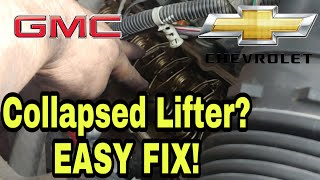
Est. part cost: $10-$25 for a spark plug, $40-$80 for an ignition coil - Internal Engine Mechanical Failure (AFM/DFM Lifter) ⚪ Low Probability TSB #PIP-5400 points to a lack of lubrication for valvetrain components. More commonly, the Active/Dynamic Fuel Management lifters are a known major failure point on the 5.3L and 6.2L engines. A lifter can collapse or get stuck, preventing the valve from opening, which leads directly to a contribution code.
How to confirm: Perform a compression test and a cylinder leak-down test on cylinder 4. Compare the results to other cylinders. Low compression indicates a mechanical problem. A visual inspection with the valve cover removed may show a rocker arm that is not moving while the engine is cranked, confirming a collapsed lifter. 🎬 See how to diagnose and replace a collapsed AFM lifter.
Typical fix: This is a major repair that involves replacing the failed lifter and often the camshaft, which can be damaged by the failed lifter. Many owners opt for a full AFM/DFM delete kit at this time to prevent recurrence. This requires professional service.
Est. part cost: $500-$2000+
Rare But Worth Checking
- Engine Control Module (ECM) Anomaly: TSB #17-NA-171 explicitly mentions that an anomaly in the ECM can cause this code, along with many others. The fix is to reprogram the ECM and TCM with the latest software. This should be considered after all other mechanical and electrical possibilities have been ruled out.
- Wiring Harness or Connector Issue: A damaged wire or corroded connector pin for the fuel injector or ignition coil circuit can cause an intermittent signal, leading to the code. Rodent damage to wiring harnesses is also a possible cause. A visual inspection of the harness to cylinder 4 is warranted.
Diagnosis Steps
- Read all stored DTCs with an OBD-II scanner and check freeze frame data to understand the conditions when the code was set.
- Use a scan tool with live data to monitor cylinder misfire counts. Confirm that cylinder 4 is the primary offender.
- Inspect the spark plug in cylinder 4 for signs of wear, oil fouling, or damage. Replace if necessary.
- Swap the ignition coil from cylinder 4 with another cylinder (e.g., cylinder 6). Clear the codes and drive the vehicle. If the code moves to P0278 (Cylinder 6 Contribution/Balance), the ignition coil is faulty.
- If the code remains on cylinder 4, swap the fuel injector from cylinder 4 with another cylinder. If the code follows the injector, the injector is faulty.
- If fuel and ignition components are good, perform a compression test on cylinder 4. A reading significantly lower than other cylinders points to a mechanical issue.
- If compression is low, perform a cylinder leak-down test to determine if the leak is from intake valves, exhaust valves, or piston rings.
- For a suspected lifter issue, remove the passenger side valve cover and crank the engine, observing the rocker arms for cylinder 4. If one or both are not moving, a lifter has collapsed.
- Inspect the wiring and connector for the cylinder 4 injector and ignition coil for any damage, corrosion, or loose connections.
- If all tests pass, the issue may be with the ECM, as suggested by TSB #17-NA-171. This step should be performed by a professional who can verify and update the module software.
Parts You'll Likely Need
- Fuel Injector
(OEM #12720122 (supercedes 12669384, 12681212, and others))— This is the most frequent cause of a cylinder contribution fault, either from being clogged or failing electrically.
Trusted brands: ACDelco, Bosch, GM Genuine
OEM price range: $100-$180
Aftermarket price range: $50-$120 - Ignition Coil
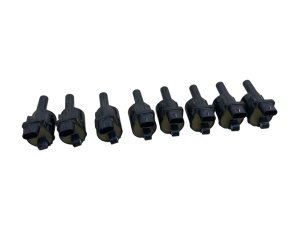
(OEM #12611424 (ACDelco D521C - Square Coil))— A weak or failed ignition coil cannot provide enough spark, leading to incomplete combustion and power loss in the cylinder.
Trusted brands: ACDelco, Delphi, NGK
OEM price range: $60-$100
Aftermarket price range: $40-$80 - Spark Plug
(OEM #41-123 (ACDelco Iridium))— A worn, fouled, or damaged spark plug is a simple but common cause for misfires and contribution faults.
Trusted brands: ACDelco, NGK
OEM price range: $15-$30
Aftermarket price range: $10-$20 - AFM/DFM Lifter Kit — In case of mechanical failure, the AFM lifters are the most likely culprit. A kit is needed for replacement, and often a new camshaft as well.
Related Codes That Often Appear With This One
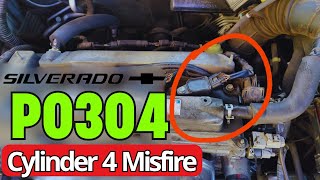
- P0304 — P0304 is a specific 'Cylinder 4 Misfire Detected' code. P0272 is a performance/balance code, while P0304 indicates a complete or partial lack of combustion. They often appear together because the underlying cause (bad plug, injector, collapsed lifter, etc.) can lead to both conditions.
- P0171 or P0174 — If the injector is clogged, it creates a lean condition. While P0272 is cylinder-specific, a significant enough issue might contribute to a bank-wide lean code (P0171 for Bank 1, P0174 for Bank 2).
- P050D — This code indicates 'Cold Start Rough Idle'. If the P0272 is caused by a sticky injector or early-stage mechanical issue, it may be most apparent during a cold start, triggering this companion code.
Technical Service Bulletins (TSBs) & Recalls
- PIP5468F: Mentions P0272 in a long list of DTCs and advises following standard Service Information diagnostics first.
- 17-NA-171: Cites P0272 as a code that can be set by an anomaly in the ECM/TCM, recommending a software reprogram as the fix if no other cause is found.
- PIP-5400: Links P0272 and other contribution codes to a lack of lubrication in the valvetrain, causing noise and mechanical issues.
Platform-Specific Known Issues
- TSB #PIP-5400 warns that P0272 on these trucks can be related to a lack of lubrication to valvetrain components, potentially causing a hissing or whistling sound from the air filter. This indicates a serious mechanical problem.
- TSB #17-NA-171 suggests that an anomaly within the Engine Control Module (ECM) itself can trigger P0272, which may require a software update or module replacement. The bulletin advises updating both the ECM and TCM.
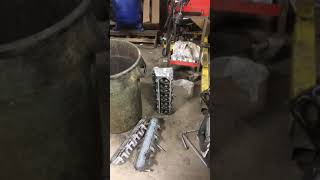
- The V8 engines (5.3L, 6.2L) in this generation are known for potential issues with the Active Fuel Management (AFM) or Dynamic Fuel Management (DFM) system lifters, which can fail and cause misfires and contribution codes like P0272. Owners on forums frequently discuss lifter failure, with some experiencing it at relatively low mileage. This can be a costly repair requiring cylinder head removal.
Mechanic-Grade Diagnostic Values
- Low-Pressure Fuel System — expected: 50-72 PSI (345-500 kPa), controlled by the Fuel Pump Control Module (FPCM).. Failure: Pressure below this range indicates a weak in-tank fuel pump or FPCM issue.
- High-Pressure Fuel System (Direct Injection) — expected: ~500 PSI at idle, increasing to over 2,000 PSI under load.. Failure: Significantly low pressure at idle or failure to build pressure with RPM can indicate a failing high-pressure fuel pump (HPFP).
- Fuel Injector Resistance (Direct Injector) — expected: 1-2 Ohms. Note: Direct injectors are low impedance and should be tested with a specialized tool, not a standard multimeter, to avoid damage.. Failure: Open circuit (infinite resistance) or short (near zero ohms).
- Scan Tool Cylinder Power Balance — expected: All cylinders should show a relatively even RPM drop when individually disabled.. Failure: Disabling cylinder 4 results in little to no RPM drop, while other cylinders cause a significant drop.
Scan Tool Commands That Help
- GDS2 (GM Dealer Software): Cylinder Power Balance Test — This is the primary diagnostic function to confirm which cylinder is underperforming. The tool automatically disables each injector sequentially and graphs the RPM drop, making it easy to spot the weak cylinder.
- GDS2 (GM Dealer Software): Fuel Injector Balance Test — Used to test the flow characteristics of the injectors. The AFIT (Active Fuel Injector Tester) tool is used in conjunction with GDS2 to measure pressure drops for each injector. A variance of 10% or more indicates a faulty injector.
- GDS2 (GM Dealer Software): AFM Cylinder Deactivation — This command allows a technician to manually activate and deactivate the AFM solenoids to test their electrical function and observe the effect on the engine, helping to diagnose issues with the AFM system.
Wiring & Ground Locations
- K20 ECM Connector X1 — The Engine Control Module (ECM) is located at the left front of the engine compartment, near the fan shroud.. The cylinder 4 fuel injector circuit runs through this connector. Pin 76 (Dark Green/White wire) is the control circuit, and Pin 56 (shared high voltage supply) are the specific pins to test for continuity or voltage signals.
- G103 / G104 — Bolted to the front of the driver's side (G104) and passenger's side (G103) cylinder heads.. These are primary engine block grounds. A loose or corroded ground here can cause erratic behavior from sensors, the ECM, and ignition components, potentially leading to misfire or contribution codes.
- G110 — Located on the rear of the driver's side cylinder head.. This ground is critical for the ECM and various sensors. Poor contact can lead to incorrect sensor readings and misdiagnosis.
- Injector Harness Chafe Point — The wiring harness section in the driver's side fender well area.. There are documented cases of the harness rubbing through on the inner fender skirt, causing an open or short in an injector control circuit, which can directly cause a P02xx code.
Real Owner Repair Stories
- Chevrolet Forum User (2016 Silverado, 5.3L V8, 56,000 miles) — Engine ticking noise in V8 mode, which then stopped and was replaced by a rough run condition and flashing check engine light with code P0304.
❌ Tried (didn't work) Initial diagnosis with a stethoscope pointed to cylinder 4.
✅ What actually fixed it A failed AFM valve lifter on cylinder #4 was confirmed by the dealership. The repair involved replacing the lifter and broken push rods.
OEM Part Supersession History
12669384→12681212, then 12720122— GM often updates part numbers to reflect minor improvements in design or materials for better reliability and performance.
Heads up: The newer part numbers are direct, backward-compatible replacements for the older numbers.
Model Year Variations Within This Range
- 2016-2018 and 2019 'Limited' (K2XX Platform): These models primarily use the 5.3L L83 engine with Active Fuel Management (AFM), which deactivates cylinders 1, 7, 4, and 6. Lifter failures are a known issue with this system.
- 2019 (T1XX Platform): The new 2019 platform introduced the 5.3L L84 engine with Dynamic Fuel Management (DFM). DFM is a more complex system that can deactivate cylinders in various patterns. While intended to be an improvement, early DFM systems also experienced lifter-related issues. Parts like ignition coils and some sensors may differ from the K2XX platform.
Helpful Videos
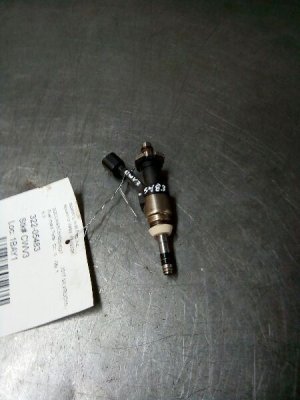
Used OEM Parts in Stock



New Aftermarket Parts Available


The information in this article is provided for general reference and educational purposes only. Vehicle specifications, procedures, and part compatibility can vary by production date, trim level, and region. Always consult your vehicle's factory service manual and verify part numbers before purchasing or performing repairs. Safety-critical components such as airbags, seat belts, and braking systems should be installed by a qualified professional.
- Chevrolet SILVERADO 1500:
- 🎬 Helpful Videos
- 🛍️ Shop This Part
- What's Unique About the 2016-2019 Chevrolet SILVERADO 1500
- Diagnostic Flowchart
- Symptoms You May Notice
- Most Likely Causes
- Rare But Worth Checking
- Diagnosis Steps
- Parts You'll Likely Need
- Related Codes That Often Appear With This One
- Technical Service Bulletins (TSBs) & Recalls
- Platform-Specific Known Issues
- Mechanic-Grade Diagnostic Values
- Scan Tool Commands That Help
- Wiring & Ground Locations
- Real Owner Repair Stories
- OEM Part Supersession History
- Model Year Variations Within This Range
- 🎟️ Get 5% Off