

P0270 on 2009-2010 Saturn VUE: Cylinder 4 Injector Circuit Low Causes and Fixes
P0270 indicates a low voltage problem in the cylinder 4 fuel injector circuit. On 2009 V6 models, this is frequently caused by a faulty fuel injector wiring harness, as documented in GM Technical Service Bulletin #PIP4924D. Inspecting the wiring for damage, especially where it might rub against the intake plenum or cylinder head, is a critical first step before replacing the injector.
- P0270 on a 2009-2010 Saturn VUE points to an electrical fault in the cylinder 4 fuel injector circuit, most often a short to ground.
- Always inspect the wiring harness for damage before buying a new fuel injector, especially on 2009 V6 models, as this is a known failure point documented by GM TSB #PIP4924D.
- Common symptoms include a rough idle, engine misfire, and reduced power.
- A simple way to test the injector is to swap it with one from a neighboring cylinder and see if the fault code follows the injector, though this requires removing the intake on V6 models.
What's Unique About the 2009-2010 Saturn VUE
The 2009-2010 Saturn VUE, particularly the 2009 model with the 3.6L V6 engine, shares a well-documented issue with its GM Lambda platform mates (Acadia, Traverse, etc.). General Motors issued Technical Service Bulletin #PIP4924D that specifically points to the fuel injector wiring harness rubbing through or having internal wire breaks. Common chafe points are against the intake plenum, valve cover bolts, fuel lines, and the side of the cylinder head. This makes a thorough harness inspection more critical on this vehicle than on others, as it's a more likely culprit than the injector itself.
Diagnostic Flowchart
Tap your situation to follow the diagnostic path that matches what you're seeing on this vehicle.
Symptoms You May Notice
- Check Engine Light is on
- Engine runs rough or has a noticeable misfire, especially at idle.
- Hesitation or stumbling during acceleration.
- Reduced engine power.
- Poor fuel economy.
- Engine may stall.
- Replacing the spark plug or ignition coil for cylinder 4. While these parts can cause a misfire (P0304), they will not cause an injector circuit code like P0270.
Most Likely Causes
- Faulty Fuel Injector Wiring Harness or Connector 🔴 High Probability GM issued TSB #PIP4924D for 2009 models, which specifically identifies the fuel injector wiring harness as a common point of failure. Engine vibration causes the harness to rub against components like the intake plenum, valve cover bolts, or the side of the cylinder head, wearing through the insulation and causing a short.
How to confirm: Visually inspect the wiring harness leading to the cylinder 4 fuel injector. Peel back the plastic loom to check individual wires for chafing, melting, or corrosion. Check the connector for damage or loose pins. Use a multimeter to check for continuity to ground on the control wire between the PCM and the injector connector (with both ends disconnected).
Typical fix: Repair the damaged section of wire with a new piece of wire and heat-shrink tubing. Protect the repaired area with a new wire loom or re-route it away from sharp edges. If the connector is damaged, replace the pigtail.
Est. part cost: $10-$30 - Failed Fuel Injector 🟡 Medium Probability
How to confirm: Check the injector's internal resistance with a multimeter; it should typically be between 11-18 ohms. An easier method is to swap the cylinder 4 injector with an adjacent one (e.g., cylinder 2). If the code changes to P0264 (Cylinder 2 Injector Circuit Low), the injector is faulty. Accessing the injectors on the V6 requires removing the upper intake manifold.
Typical fix: Replace the failed fuel injector. It is often recommended to replace all injectors on the same bank at the same time.
Est. part cost: $35-$120
Rare But Worth Checking
- Faulty Powertrain Control Module (PCM): This is the least likely cause. The injector driver circuit within the PCM can fail, but this should only be considered after the injector and all related wiring have been thoroughly tested and proven to be good.
Diagnosis Steps
- Scan for all stored trouble codes. Note if P0304 or other injector codes (P0201, P0261, etc.) are present.
- For the 3.6L V6, locate cylinder 4. The cylinders against the firewall are Bank 1 (1, 3, 5, from passenger to driver side) and the cylinders near the radiator are Bank 2 (2, 4, 6). Cylinder 4 is the middle cylinder on the front (radiator side) bank.
- Carefully inspect the fuel injector wiring harness for cylinder 4. Pay close attention to the specific chafe points mentioned in TSB #PIP4924D: where it might rub against the intake plenum, valve cover bolts, fuel lines, or the side of the cylinder head.
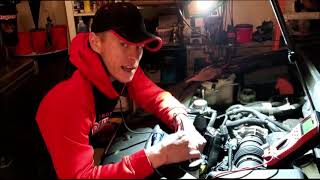
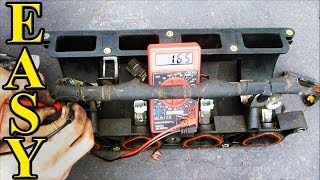
- Disconnect the injector and measure its resistance with a multimeter. Compare the reading to the manufacturer's specification (typically 12-18 ohms for a port-injected engine). A reading of 0 or infinity 🎬 See how to check fuel injector resistance with a multimeter indicates a failed injector.
- Use a 'noid light' to test the injector connector. The light should flash when the engine is cranked, indicating the PCM is sending a signal. If it doesn't flash, the problem is in the wiring or PCM.
- If the wiring and signal appear good, swap the cylinder 4 fuel injector with one from another cylinder (e.g., cylinder 2). This requires removing the intake manifold on V6 models.
- Clear the codes and run the engine. If the code returns for the new cylinder (e.g., P0264), the fuel injector is the faulty component.
- If the P0270 code returns for the same cylinder, the problem is in the wiring harness or, rarely, the PCM.
Parts You'll Likely Need
- Fuel Injector Wiring Connector Pigtail
(OEM #ACDelco PT2183)— Due to the known issue documented in TSB #PIP4924D, repairing a damaged harness connector is a very common fix for this code on this vehicle. The connector itself can become brittle or damaged.
Trusted brands: ACDelco, Dorman
OEM price range: $25-$45
Aftermarket price range: $10-$25 - Fuel Injector
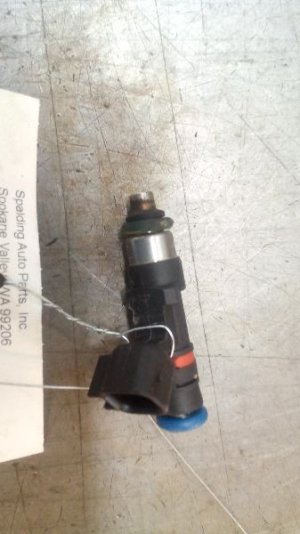
(OEM #12638530 (superseded by 12669384))— If the injector's internal coil has failed (shorted or open), it must be replaced. This is the second most common cause after wiring issues.
Trusted brands: ACDelco, Bosch, Standard Motor Products
OEM price range: $70-$120
Aftermarket price range: $35-$75
Related Codes That Often Appear With This One
- P0304 — This code means 'Cylinder 4 Misfire Detected.' It is commonly seen with P0270 because an electrical problem with the injector prevents proper fueling, leading directly to a misfire in that cylinder.
- P0201, P0202, P0203, etc. — If the wiring harness is damaged at a point that affects multiple injectors, you may see several injector circuit codes at once, as noted in TSB #PIP4924D.
Technical Service Bulletins (TSBs) & Recalls
- PIP4924D: Addresses engine misfires and various fuel injector DTCs (including P0270) caused by a faulty fuel injector wiring harness on a wide range of GM vehicles with the 3.6L V6 engine.
Platform-Specific Known Issues
- GM Technical Service Bulletin #PIP4924D specifically calls out that a misfire accompanied by various injector codes, including P0270, may be due to the fuel injector wiring harness rubbing through or having internal wire opens on 2009 models with the 3.6L V6. The bulletin advises technicians to inspect common chafe spots against the intake plenum, valve cover bolts, fuel lines, and the side of the cylinder head under the plenum before replacing parts.
Mechanic-Grade Diagnostic Values
- Fuel Injector Coil Resistance (3.6L V6) — expected: 11-18 Ohms. Failure: A reading of 0 Ohms (shorted), infinity/OL (open), or a value significantly different from the other injectors.
- Fuel Pressure (Key On, Engine Off) — expected: 345-414 kPa (50-60 psi). Failure: Pressure below 345 kPa (50 psi) could indicate a weak fuel pump or a leak. Pressure above 414 kPa (60 psi) suggests a faulty fuel pressure regulator.
- Injector Control Circuit Voltage (at connector, key on) — expected: Battery Voltage (approx. 12V) on the power wire, 0V on the control wire.. Failure: No voltage on the power wire indicates a problem with the fuse or supply circuit. Voltage present on the control wire with the key on (engine off) suggests a short to power in the harness.
Scan Tool Commands That Help
- GM Tech 2 / GDS2: Injector Test (Bi-directional Control) — This command allows a technician to activate the cylinder 4 injector with the engine off. Listening for an audible 'click' from the injector confirms the PCM driver, wiring, and injector solenoid are all capable of functioning. It's a quick way to verify the entire circuit's integrity before performing resistance tests.
- GM Tech 2 / GDS2: Fuel Injector Balance Test — This test individually fires each injector for a set time while monitoring the drop in fuel pressure. If P0270 is intermittent or accompanied by performance issues, this test can determine if the injector is mechanically sticking or clogged, which an electrical test might miss. The pressure drop for cylinder 4 should be similar to the other cylinders.
Wiring & Ground Locations
- G101 — At the left front of the engine compartment.. This is a primary engine harness ground. A poor or corroded connection at G101 can introduce electrical noise and voltage drops, potentially causing the ECM to misinterpret the injector circuit's status and set a false P0270 code.
- Engine Control Module (ECM) — Left front of the engine compartment for the 3.6L V6.. This is the location of the computer that controls the fuel injectors. All wiring tests for the injector circuit will originate or terminate at the ECM's connectors. The TSB-identified harness chafing often occurs between the ECM and the injectors.
- Underhood Fuse Block — Left side of the engine compartment.. This fuse block contains the fuses that supply ignition voltage to the fuel injector banks. A corroded terminal or a faulty fuse in this block could cut power to the injector, although this would typically affect an entire bank of injectors rather than just one.
OEM Part Supersession History
12638530→12669384— Standard part revision or supplier change. This is a common supersession for the GM 3.6L LLT port-injection engine.
Heads up: The 2009-2010 V6 models use the LLT engine. Ensure the replacement injector is specified for the LLT engine, as injectors for the later LFX engine (2012+) are different.
Model Year Variations Within This Range
- 2009-2010: The 2009 and 2010 Saturn VUE models with the 3.6L V6 engine are largely identical and both use the LLT version of the engine. No significant variations affecting the diagnosis of P0270 have been noted between these two years.
Helpful Videos
Used OEM Parts in Stock

New Aftermarket Parts Available


The information in this article is provided for general reference and educational purposes only. Vehicle specifications, procedures, and part compatibility can vary by production date, trim level, and region. Always consult your vehicle's factory service manual and verify part numbers before purchasing or performing repairs. Safety-critical components such as airbags, seat belts, and braking systems should be installed by a qualified professional.
- Saturn VUE:
- 🎬 Helpful Videos
- 🛍️ Shop This Part
- What's Unique About the 2009-2010 Saturn VUE
- Diagnostic Flowchart
- Symptoms You May Notice
- Most Likely Causes
- Rare But Worth Checking
- Diagnosis Steps
- Parts You'll Likely Need
- Related Codes That Often Appear With This One
- Technical Service Bulletins (TSBs) & Recalls
- Platform-Specific Known Issues
- Mechanic-Grade Diagnostic Values
- Scan Tool Commands That Help
- Wiring & Ground Locations
- OEM Part Supersession History
- Model Year Variations Within This Range
- 🎟️ Get 5% Off