

P0267 on 2009-2014 Chevrolet Traverse: Cylinder 3 Injector Circuit Low Causes and Fixes
This code indicates a low voltage problem in the cylinder 3 fuel injector circuit. The most common causes are a faulty fuel injector or a damaged wiring harness leading to it. Expect to pay $150-$450 for a professional repair, which often involves replacing the single injector.
- P0267 on a 2009-2014 Traverse means there's an electrical fault in the cylinder 3 fuel injector circuit.
- The most likely culprits are a bad fuel injector or damaged wiring leading to it, with specific harness chafe points being a known issue on GM platforms.
- A definitive way to diagnose a bad injector is to swap it with another cylinder and see if the trouble code follows.
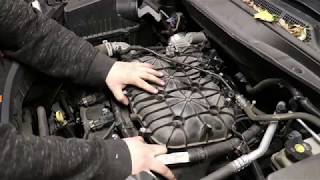
- Repair is moderately difficult for DIYers because the upper intake manifold must be removed to access the injectors.
- Do not ignore this code, as the resulting misfire can lead to costly catalytic converter damage.
What's Unique About the 2009-2014 Chevrolet TRAVERSE
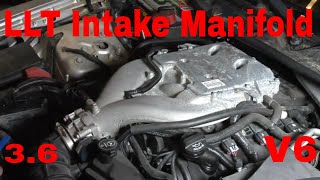
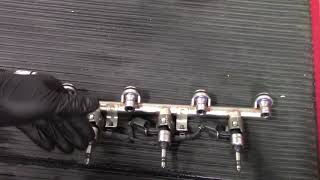
On the 3.6L V6 engine used in the Traverse, the fuel injectors are Gasoline Direct Injection (GDI) units located underneath the upper intake manifold. This means that accessing them for testing or replacement is more labor-intensive than on many port-injected four-cylinder engines. A General Motors Technical Service Bulletin (TSB) directly links this code to the need to inspect the fuel injectors, confirming it's a known issue on this platform. Furthermore, other GM bulletins for similar platforms describe potential for the engine wiring harness to chafe on components like the ECM/TCM bracket or upper control arm, which can cause this code. A key difference within this generation is the switch from the LLT engine (2009-2011) to the LFX engine (2012-2014), which use different injectors and ECMs, affecting part numbers and some diagnostic values.
Diagnostic Flowchart
Tap your situation to follow the diagnostic path that matches what you're seeing on this vehicle.
Symptoms You May Notice
- Check Engine Light is on
- Engine running rough or vibrating (misfire)
- Rough or uneven idle
- Hesitation or lack of power during acceleration
- Reduced fuel economy
- Engine may stall
- Strong fuel smell from the exhaust
- Replacing the spark plug or ignition coil on cylinder 3. While these can cause a misfire (P0303), they do not cause an injector circuit code like P0267.
Most Likely Causes
- Faulty Cylinder 3 Fuel Injector 🔴 High Probability The injector's internal coil windings can short out or fail over time, causing a low resistance/voltage condition. These are high-pressure GDI injectors which operate under more stress than traditional port injectors.
How to confirm: Swap the fuel injector from cylinder 3 with another cylinder (e.g., cylinder 1). If the code changes to P0261 (Cylinder 1 Injector Circuit Low), the injector is confirmed to be faulty. Alternatively, test the injector's resistance with a multimeter. For the LLT/LFX GDI injectors, a typical reading is between 1.2 and 2.5 ohms; 🎬 Watch: How to diagnose a fuel injector circuit malfunction a reading near zero indicates a short. Compare the reading to an adjacent injector to confirm.
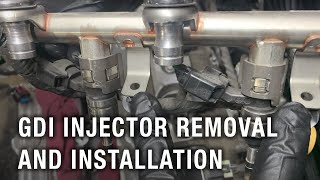
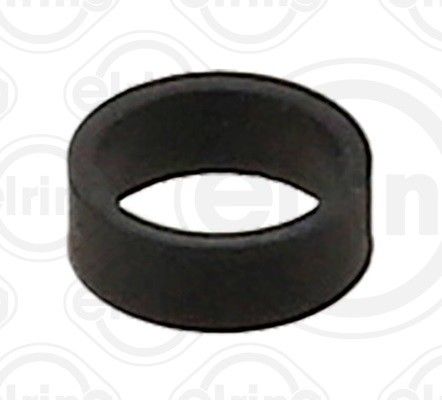
Typical fix: Replace the faulty fuel injector. It is highly recommended to replace the Teflon injector seal and any associated O-rings at the same time. 🎬 Watch: Professional guide for GDI injector removal and installation Many technicians recommend replacing all injectors on one bank if they are high-mileage.
Est. part cost: $60-$280 - Wiring Harness or Connector Issue 🟡 Medium Probability The wiring harness leading to the fuel injector can become frayed, corroded, or shorted to ground. GM has noted on similar platforms that the engine harness can chafe against the ECM/TCM bracket, the upper control arm, or the shock tower, causing wires to short out. The connector pins can also become loose, corroded, or bent.
How to confirm: Visually inspect the wiring harness for any signs of damage, chafing, or melting, paying close attention to the areas where it routes near metal brackets and suspension components. Check the electrical connector at the injector for corrosion or bent/loose pins. Use a noid light to verify that the injector is receiving a pulse signal from the PCM.
Typical fix: Repair the damaged section of wiring or replace the pigtail connector. If chafing is found, re-route and secure the harness with anti-abrasion tape and zip ties to prevent recurrence.
Est. part cost: $15-$50 - Powertrain Control Module (PCM) Failure ⚪ Low Probability
How to confirm: This should only be considered after the fuel injector and wiring have been definitively ruled out. A professional shop can perform advanced diagnostics to confirm if the injector driver circuit inside the PCM has failed.
Typical fix: Replace and reprogram the Powertrain Control Module.
Est. part cost: $600-$900
Rare But Worth Checking
- Weak internal fuel injector return spring:
Diagnosis Steps
- Verify the code P0267 with an OBD-II scanner and check for any other related codes, such as P0303.
- Perform a thorough visual inspection of the cylinder 3 fuel injector's electrical connector and wiring harness. Look for any obvious signs of damage, corrosion, or loose connections. Pay special attention to known chafe points near the driver's side shock tower and control arm.
- Listen to the injector with a mechanic's stethoscope while the engine is running. A healthy injector will make a consistent clicking sound.
- To definitively test the injector, swap it with an injector from another cylinder (e.g., cylinder 1). Clear the codes and run the engine. If the code returns as P0261, the injector is faulty and needs to be replaced.
- If the code remains P0267 after the swap, the problem is in the wiring or the PCM. Test the injector's internal resistance with a multimeter. It should be between 1.2 and 2.5 ohms.
- Test for a pulse signal at the cylinder 3 injector connector using a noid light. If the light flashes, the PCM is sending a signal.
- If there is no signal, use a multimeter to check for continuity and shorts to ground in the wiring between the injector connector and the PCM. A resistance value greater than 0.5 ohms in the circuit suggests a problem.
- If the wiring and injector are confirmed to be good, the fault likely lies with the PCM's injector driver circuit.
Parts You'll Likely Need
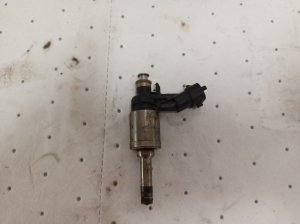
- Fuel Injector
(OEM #12638530 (supersedes 12632255, 12611545))— This is the most common component to fail electrically, causing the 'Circuit Low' condition. Part numbers have been superseded over time. Note: Part numbers differ between LLT (2009-11) and LFX (2012-14) engines.
Trusted brands: ACDelco, GM Genuine Parts, Bosch
OEM price range: $150-$280
Aftermarket price range: $50-$150 - Upper Intake Manifold Gasket Set — Required for reassembly, as the intake manifold must be removed to access the fuel injectors on the 3.6L V6 engine.
Trusted brands: ACDelco, Fel-Pro, Mahle
OEM price range: $40-$70
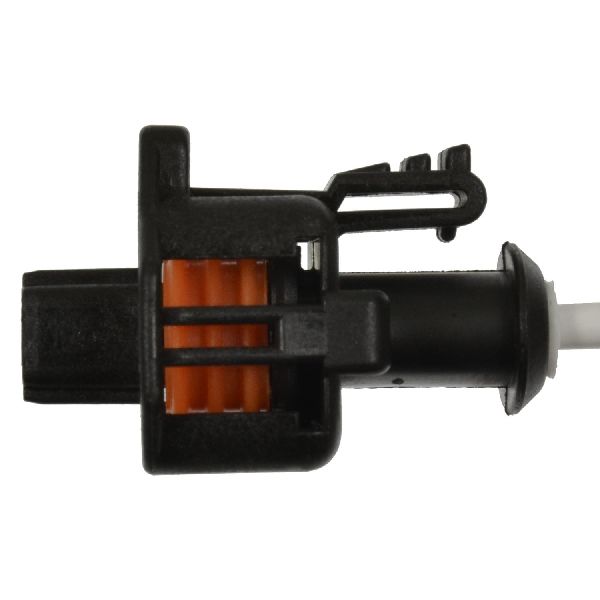
Aftermarket price range: $20-$40 - Fuel Injector Connector Pigtail
(OEM #Standard Motor Products S-1024 (example))— If the connector at the injector is corroded, melted, or damaged, replacing the pigtail is the correct repair.
Trusted brands: ACDelco, Standard Motor Products (SMP), Dorman
OEM price range: $25-$50
Aftermarket price range: $15-$30
Related Codes That Often Appear With This One
- P0303 — P0303 means 'Cylinder 3 Misfire Detected'. Since P0267 indicates a fuel delivery problem for cylinder 3, it directly causes a misfire in that cylinder.
- P0261, P0264, P0270, etc. — If other 'Circuit Low' codes for different injectors appear at the same time, it strongly points towards a widespread wiring harness issue (like chafing) or a failing PCM rather than a single bad injector.
Technical Service Bulletins (TSBs) & Recalls
- PIP4924D: Check Engine Light on and a misfire.
- 21-NA-149: Engine Wiring Harness Chafing Repairs (While for different models, describes a relevant and common GM issue).
- PIP5029C: Engine Misfire Due To Major Carbon Deposits On The Intake And Or Exhaust Valves.
Platform-Specific Known Issues
- Technical Service Bulletin #PIP4924D was issued by GM for these vehicles, noting that codes like P0267 could be set due to a fuel injector issue, requiring inspection and potential replacement.
- A separate service bulletin (#21-NA-149) for similar GM trucks highlights common wiring harness chafe points on the driver's side of the engine bay, specifically near the ECM bracket, upper control arm, and shock tower, which can cause various electrical faults including injector circuit codes.
- GM TSB #PIP5029C notes that the direct-injected 3.6L LLT/LFX engines are prone to heavy carbon buildup on the intake valves, which can cause misfires (P030x codes) that may be diagnosed alongside injector circuit faults.
Mechanic-Grade Diagnostic Values
- Fuel Injector Resistance (LLT/LFX GDI) — expected: 1.2 - 2.5 Ohms. Failure: A reading near 0 Ohms (short) or OL/infinity (open).
- Injector Pulse Width (at warm idle) — expected: 2.0 - 4.0 milliseconds (ms). Failure: A value of 0 ms on cylinder 3 while others are pulsing, or a value significantly different from other cylinders.
- Injector Pulse Width (during cold start first ~60 seconds) — expected: Nearly double the normal warm idle pulse width (e.g., 4.0 - 8.0 ms). Failure: This is normal operation due to the dual-pulse strategy for catalyst heating. Do not misdiagnose this as a fault.
- Injector Circuit Wiring Resistance (harness side) — expected: Less than 0.5 Ohms. Failure: Resistance greater than 0.5 Ohms indicates excessive resistance in the wiring between the PCM and the injector connector.
Scan Tool Commands That Help
- GDS2 / Tech 2: Injector Balance Test — Used to identify a mechanically failing or clogged injector. The tool disables injectors one by one and measures the drop in fuel rail pressure or change in crankshaft speed. While P0267 is an electrical code, this test can help confirm if the injector is the root cause before disassembly.
- GDS2 / Tech 2: Cylinder Power Balance — This function deactivates one cylinder at a time to see the effect on engine RPM. If deactivating cylinder 3 causes no change in engine speed or feel, it confirms that cylinder is not contributing, which is expected with a P0267 code.
Wiring & Ground Locations
- Cylinder 3 Location — The middle cylinder on the rear bank of the V6 engine, closest to the firewall.. This is the physical location of the injector and circuit in question. Access requires removing the upper intake manifold.
- G112 — Rear of the engine, mounted to the rear of the cylinder head (firewall side).. This is a primary engine ground. A poor connection at G112 can cause various running issues and electrical faults for components on that cylinder head, including the injectors on bank 1 (cylinders 1, 3, 5).
- ECM (Engine Control Module) — Left side of the engine compartment (driver's side).. The ECM is the source of the control signal for the injector. The wiring harness runs from this module to the injector, and chafing can occur on the ECM bracket itself.
- Injector #3 Control Wires (2011 LLT Example) — The control wires for the injectors are a twisted pair running from the ECM to the injector connector. For injector #3, the wires connect to specific pins on the ECM's X1 connector.. Knowing the specific pins allows for continuity and short-to-ground testing directly from the ECM connector, which can isolate a wiring fault from a PCM fault without accessing the injector itself.
OEM Part Supersession History
12632255, 12611545→12638530— Likely an updated design for improved reliability or performance.
Heads up: This part is for the LLT engine and is not compatible with the 2012+ LFX engine.12638530→12669384— Further design revision. Some sources list this as a supersession for the LLT injector.
Heads up: Verify application by VIN. Not for LFX engines.Unknown factory part→12669384 (or ACDelco 217-3445)— Original part for the LFX engine.
Heads up: This part is for the 2012-2014 LFX engine and is not compatible with the earlier LLT engine.
Model Year Variations Within This Range
- 2009-2011: These models use the 3.6L LLT V6 engine. This engine has an aluminum intake manifold, separate exhaust manifolds, and uses a Bosch ECM. The fuel injectors are specific to this engine (e.g., P/N 12638530).
- 2012-2014: These models use the updated 3.6L LFX V6 engine. It features a lighter composite intake manifold, cylinder heads with integrated exhaust manifolds, and uses a Delphi ECM. The fuel injectors are a different part number (e.g., P/N 12669384) and are not interchangeable with the LLT.
Helpful Videos

Used OEM Parts in Stock


New Aftermarket Parts Available


The information in this article is provided for general reference and educational purposes only. Vehicle specifications, procedures, and part compatibility can vary by production date, trim level, and region. Always consult your vehicle's factory service manual and verify part numbers before purchasing or performing repairs. Safety-critical components such as airbags, seat belts, and braking systems should be installed by a qualified professional.
- Chevrolet TRAVERSE:
- 🎬 Helpful Videos
- 🛍️ Shop This Part
- What's Unique About the 2009-2014 Chevrolet TRAVERSE
- Diagnostic Flowchart
- Symptoms You May Notice
- Most Likely Causes
- Rare But Worth Checking
- Diagnosis Steps
- Parts You'll Likely Need
- Related Codes That Often Appear With This One
- Technical Service Bulletins (TSBs) & Recalls
- Platform-Specific Known Issues
- Mechanic-Grade Diagnostic Values
- Scan Tool Commands That Help
- Wiring & Ground Locations
- OEM Part Supersession History
- Model Year Variations Within This Range
- 🎟️ Get 5% Off