

P0267 on 2009-2011 Cadillac STS: Cylinder 3 Injector Circuit Low Causes and Fixes
This code indicates a low voltage problem in the cylinder 3 fuel injector circuit. The most common causes are a faulty fuel injector or a damaged wiring harness. Expect to pay $75-$150 for a new injector and consider replacing it yourself if you have moderate experience.
- P0267 on your Cadillac STS points directly to an electrical problem with the cylinder 3 fuel injector, not a spark or compression issue.
- The most likely culprit is either the fuel injector itself or the wiring leading to it.
- A definitive DIY test is to swap the cylinder 3 injector with one from another cylinder and see if the code 'moves' to the new cylinder.
- Check the wiring harness carefully for chafing against the engine, as this is a known issue documented by GM.
What's Unique About the 2009-2011 Cadillac STS
For the 2009-2011 Cadillac STS with the 3.6L V6 LLT engine, this code is part of a well-documented pattern of fuel injector circuit issues across many GM vehicles using this engine family. General Motors issued Technical Service Bulletin (TSB) #PIP4924D, which covers a wide range of injector codes including P0267. The TSB specifically advises technicians to inspect the fuel injector wiring harness for chafing or internal wire breaks at common rub spots, such as against the intake plenum, valve cover bolts, and fuel lines. This indicates a known vulnerability in the harness design or routing for this engine platform.
Diagnostic Flowchart
Tap your situation to follow the diagnostic path that matches what you're seeing on this vehicle.
Symptoms You May Notice
- Check Engine Light is on.
- Engine misfire, which may feel like a stumble or shudder, especially under load.
- Rough or unstable idle.
- Reduced engine power and poor acceleration.
- Decreased fuel economy.
- A distinct smell of unburnt fuel from the exhaust.
- Engine may stall or hesitate.
- Replacing the spark plug or ignition coil for cylinder 3. While these can cause a misfire (P0303), they will not cause a P0267 code, which is specific to the injector's electrical circuit. A user on a Camaro forum confirmed swapping plugs and coils did not resolve their P0267 code.
Most Likely Causes
- Faulty Cylinder 3 Fuel Injector 🔴 High Probability The direct-injection injectors on the LLT engine operate under high pressure and can fail internally. An internal short circuit is a common failure mode that causes a low resistance reading, triggering the P0267 code.
How to confirm: Measure the injector's internal resistance with a multimeter; it should be within the manufacturer's specified range (typically 1.5-1.6 ohms for a new OEM injector on the 3.6L LLT engine). Compare it to an adjacent injector. A reading near zero indicates a short. The most definitive test is to swap the cylinder 3 injector with one from another cylinder (e.g., cylinder 1). Clear the codes and run the engine. If the code changes to P0261 (Cylinder 1 Injector Circuit Low), the injector is bad.
Typical fix: Replace the faulty fuel injector. It is often recommended to replace the injector seals at the same time. Some owners choose to replace all six injectors, especially on higher mileage vehicles, as others may be prone to fail soon after.
Est. part cost: $75-$150 - Wiring Harness or Connector Issue 🟡 Medium Probability TSB #PIP4924D specifically calls out inspecting the wiring harness for rubbing or open circuits, indicating a known vulnerability. Common chafe points are against the intake plenum, valve cover bolts, fuel lines, and the side of the cylinder head.
How to confirm: Visually inspect the wiring harness leading to the cylinder 3 injector for any signs of damage, melting, or chafing, paying close attention to the areas mentioned in the TSB. Check the connector for corrosion, backed-out, or bent pins. Use a multimeter to perform a continuity test from the injector connector back to the ECM to check for breaks or shorts. Testing can be performed at the multi-way harness connectors (X160 or X161) at the rear of the intake manifold.
Typical fix: Repair the damaged section of wire or replace the pigtail connector. In a documented case on a related platform, a full engine wiring harness replacement was required to solve persistent injector circuit codes after individual parts were replaced.
Est. part cost: $15-$50 for a pigtail, $200+ for a full harness - Faulty Powertrain Control Module (PCM) ⚪ Low Probability
How to confirm: This should be the last resort after confirming the injector and wiring are good. A specialized scan tool can monitor the injector driver output from the PCM. If the PCM is not sending the correct signal despite good wiring and a good injector, its internal driver transistor for that circuit has likely failed. The ECM for the LLT engine uses internal boost capacitors to generate up to 250V and 20A to fire the injectors; a failure in this specific high-voltage generation circuit can cause injector codes.
Typical fix: Replace and reprogram the Powertrain Control Module. This must be programmed to the vehicle's VIN.
Est. part cost: $600-$900
Rare But Worth Checking
- Improperly Seated or Oriented Fuel Injector:
Diagnosis Steps
- Read the trouble codes with an OBD-II scanner and confirm P0267 is present. Note any other codes, especially P0303 or P2149.
- Visually inspect the cylinder 3 fuel injector, its electrical connector, and the wiring harness. Pay close attention to the areas identified in TSB PIP4924D: against the intake plenum, valve cover bolts, and fuel lines.
- Disconnect the injector and measure its resistance with a multimeter. Compare the reading to the OEM specification (typically 1.5-1.6 ohms). A very low reading (near zero) indicates a shorted injector.
- Use a 'noid light' to test the injector connector. The light should flash when the engine is cranked, indicating the ECM is sending a pulse signal. If it doesn't flash, the problem is likely in the wiring or the ECM.
- If the noid light flashes, the injector is the prime suspect. To confirm, swap the cylinder 3 injector with another one (e.g., cylinder 1). Clear the codes and run the engine. If the code moves to P0261 (Cylinder 1 Injector Circuit Low), the injector is faulty. This is a very common and effective diagnostic step mentioned in forums.
- If the code P0267 returns after the swap, the problem is in the wiring harness or the ECM.
- Perform a continuity test on the power and ground wires from the injector connector to the ECM connector to rule out any breaks or shorts to ground in the harness. Check for a short between the two wires as well. This can be done from the multi-way harness connectors (X160/X161) at the rear of the intake manifold to avoid removing the plenum initially.
- If all wiring and the injector test good, the fault likely lies with the injector driver inside the ECM. This is the least likely cause and should be the final diagnostic step.
Parts You'll Likely Need
- Fuel Injector
(OEM #12638530)— This is the most common failure point for a P0267 code, where the injector's internal coil shorts out.
Trusted brands: ACDelco, Bosch, GB Remanufacturing
OEM price range: $120-$180
Aftermarket price range: $75-$120 - Fuel Injector Connector Pigtail
(OEM #ACDelco PT2183 (example, verify fitment))— If the wiring is damaged right at the connector, or the connector itself is corroded or broken, replacing the pigtail is the standard repair.
Trusted brands: ACDelco, Dorman
OEM price range: $25-$40
Aftermarket price range: $15-$30 - Engine Wiring Harness — In rare cases where a short is difficult to locate or multiple wires are damaged, replacing the entire engine harness may be necessary to resolve the issue permanently.
Trusted brands: ACDelco (OEM)
OEM price range: $200-$400
Related Codes That Often Appear With This One
- P0303 — P0303 means 'Cylinder 3 Misfire Detected'. Since P0267 causes the cylinder 3 injector to malfunction, a misfire on that cylinder is a direct consequence.
- P0203 — P0203 is a more general 'Injector Circuit/Open - Cylinder 3' code. It often appears with P0267 as they both point to an electrical fault in the same circuit.
- P2149 — This code means 'Fuel Injector Group 'B' Supply Voltage Circuit/Open'. On the 3.6L LLT, injectors are often grouped into two banks (A and B). A problem that triggers P0267 can sometimes be part of a larger issue affecting the entire bank, also setting P2149.
Technical Service Bulletins (TSBs) & Recalls
- PIP4924D
Platform-Specific Known Issues
- A known issue documented in TSB #PIP4924D involves a range of fuel injector circuit codes, including P0267. The bulletin directs technicians to inspect the fuel injector wiring harness for chafing or internal wire breaks, indicating a potential design or routing issue that makes the harness vulnerable to damage.
- Specific chafe locations mentioned in the TSB are: against the intake plenum, at valve cover bolts, against the fuel line, and on the side of the head under the plenum.
Mechanic-Grade Diagnostic Values
- Fuel Injector Internal Resistance — expected: 1.5 - 1.6 ohms. Failure: A reading near 0 ohms indicates a short circuit. A significantly higher reading indicates an open circuit.
- Injector Circuit Voltage (Live Data) — expected: Typically 5V on the low-side circuit or 12V on the high-side circuit.. Failure: Readings consistently below 4V can trigger a 'Circuit Low' code.
- Low-Side Fuel Pressure (Key On, Engine Off) — expected: 55-60 psi. Failure: Pressure below this range indicates a potential issue with the in-tank fuel pump or filter, which can cause drivability issues but will not directly set P0267.
Hidden / Shadow Codes Worth Checking
- Injector Circuit Status (Parameter ID): This is not a DTC, but a live data parameter on a professional scan tool. It displays the real-time status of each injector circuit as 'OK', 'Open', 'Fault', etc. It provides a more immediate and specific confirmation of a circuit fault than a standard trouble code. (see via GM's GDS2/Tech2 software or a compatible high-end professional scan tool.)
Scan Tool Commands That Help
- GDS2 / Tech2: Injector Test / Buzz Test — This bidirectional command manually cycles a specific fuel injector. It's used when the engine is off to audibly confirm the injector's solenoid is activating and to check the integrity of the electrical circuit from the ECM to the injector.
- GDS2 / Tech2: Fuel Injector Disable — This function allows a technician to turn off individual injectors while the engine is running. It is used to isolate a misfiring cylinder; if disabling cylinder 3 has no effect on the engine's idle, it confirms that cylinder was not contributing, pointing to a fault in that cylinder's fuel or ignition system.
Wiring & Ground Locations
- G103 — On the top right side of the 3.6L engine, fastened directly to the ECM case.. This is a primary ground for the Engine Control Module (ECM). A loose or corroded connection here can cause a host of erratic electrical issues, including false injector circuit codes.
- G100 / G106 — On the rear side of the right cylinder head (Bank 1).. These are critical grounds for components on Bank 1 of the engine. Since cylinder 3 is on Bank 1, a poor connection at this point could affect the injector circuit's return path.
- ECM (Engine Control Module) — Located on the front of the 3.6L engine, mounted to the right (Bank 1) valve cover.. This is the source of the injector command signal. Knowing its location is essential for testing the injector circuit wiring directly at the ECM connector pins.
- Injector Harness Connectors X160 / X161 — Located at the rear of the intake manifold.. These multi-way connectors are intermediate test points for the fuel injector harness. Testing here can help isolate whether a wiring fault is in the main engine harness (towards the ECM) or the injector-specific harness under the intake manifold, potentially saving diagnostic time.
Real Owner Repair Stories
- Camaro5 Forums user 'jski73' (2011 Chevrolet Camaro V6 (3.6L LLT engine, same family as the STS)) — Vehicle started to shutter at highway speeds, lost power, and displayed 'reduced engine power' message.
❌ Tried (didn't work) Replaced all 6 spark plugs., Replaced all ignition coils., Cleaned all electrical connectors and applied dielectric grease.
✅ What actually fixed it The owner first replaced all 6 fuel injectors, after which the code moved from cylinder 5 to cylinder 3 (P0267). To confirm the fault, they physically swapped the new cylinder 3 injector with the new cylinder 1 injector. The trouble code followed the injector, moving to cylinder 1 (P0261). This proved that one of the brand-new injectors was faulty out of the box. Replacing that specific injector a second time resolved the injector circuit code.
OEM Part Supersession History
12638530→12669384— Standard part revision by the manufacturer.
Heads up: None. Part number 12669384 is the direct OEM replacement for 12638530. The ACDelco equivalent part number is 217-3445.
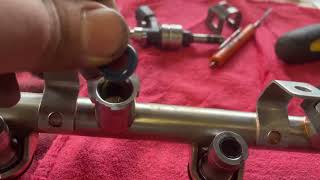
Helpful Videos
We Have This Part in Stock

The information in this article is provided for general reference and educational purposes only. Vehicle specifications, procedures, and part compatibility can vary by production date, trim level, and region. Always consult your vehicle's factory service manual and verify part numbers before purchasing or performing repairs. Safety-critical components such as airbags, seat belts, and braking systems should be installed by a qualified professional.
- Cadillac STS:
- 🎬 Helpful Videos
- 🛍️ Shop This Part
- What's Unique About the 2009-2011 Cadillac STS
- Diagnostic Flowchart
- Symptoms You May Notice
- Most Likely Causes
- Rare But Worth Checking
- Diagnosis Steps
- Parts You'll Likely Need
- Related Codes That Often Appear With This One
- Technical Service Bulletins (TSBs) & Recalls
- Platform-Specific Known Issues
- Mechanic-Grade Diagnostic Values
- Hidden / Shadow Codes Worth Checking
- Scan Tool Commands That Help
- Wiring & Ground Locations
- Real Owner Repair Stories
- OEM Part Supersession History
- 🎟️ Get 5% Off