

P0265 on 2011-2016 Chevrolet Camaro: Cylinder 2 Injector Circuit High Causes & Fixes
On a 2011-2016 Camaro, code P0265 almost always points to a wiring issue at the #2 fuel injector, as noted in GM Technical Service Bulletins. The wiring harness is known to chafe or break right at the connector. The fix involves inspecting and repairing the injector's wiring harness pigtail, which requires removing the intake manifold for access on both V6 and V8 engines.
- P0265 on a 2011-2016 Camaro indicates a 'Circuit High' fault for the cylinder #2 fuel injector.
- Before replacing the injector, thoroughly inspect the wiring harness and connector at cylinder #2, as this is a known failure point according to GM service bulletins.
- This repair is moderately difficult for a DIYer because the intake manifold must be removed to access the injector and its wiring.
- Always replace the intake manifold gaskets when performing this repair to prevent vacuum leaks.
- Driving with this code can lead to catalytic converter damage, so it should be addressed promptly.
What's Unique About the 2011-2016 Chevrolet CAMARO
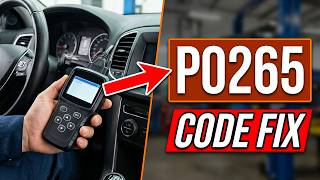
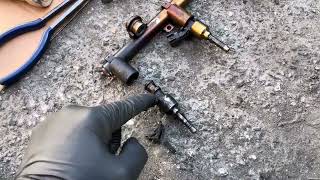
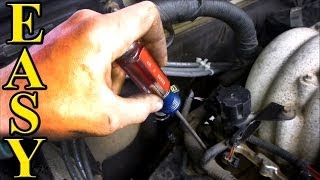
For the fifth-generation (2010-2015) and early sixth-generation (2016) Camaro, this code is frequently not a failed injector but a specific wiring problem. General Motors has issued multiple Technical Service Bulletins (TSBs) 🎬 Watch: This video shows the common V6 injector wiring failure., like #PIP5386A, that point directly to a wiring harness concern right at the #2 fuel injector connector. Forum posts from owners confirm this, with many reporting the wire breaks inside the insulation right at the connector due to engine movement and heat, making it a well-documented pattern failure on this platform.
Diagnostic Flowchart
Tap your situation to follow the diagnostic path that matches what you're seeing on this vehicle.
Generation note: This year range covers the end of the 5th generation (2011-2015) and the start of the 6th generation (2016). The cited TSBs apply to models across this range, indicating the wiring issue can occur on both generations, affecting both V6 (LFX/LLT) and V8 (LS3/L99) engines. The issue is also common on platform-mate vehicles that share these engines.
Symptoms You May Notice
- Check Engine Light is on
- Engine misfire, creating a rough or shaky idle.
- Hesitation or stumbling during acceleration.
- Reduced engine power and performance.
- Increased fuel consumption.
- Noticeable fuel smell from the exhaust due to unburnt fuel.
- Replacing the spark plug or ignition coil for cylinder #2. A misfire is a primary symptom, which often leads people to suspect ignition components first, but P0265 is specifically a fuel injector electrical circuit code, not an ignition system code.
Most Likely Causes
- Wiring Harness Issue at Fuel Injector #2 🔴 High Probability As documented in GM TSBs #PIP5386 and #PIP5386A, the wiring or connector for the #2 injector is a known failure point. The harness is routed tightly and can chafe or break from engine vibration and heat cycles, typically right at the connector.
How to confirm: Visually inspect the wiring and connector for cylinder #2. This will require removing the intake manifold. Wiggle the wire at the connector; it may be broken internally even if the insulation looks intact. Use a multimeter to test for continuity and for a short to voltage in the harness.
Typical fix: Repair the damaged section of the wiring harness by splicing in a new fuel injector connector pigtail. Ensure the repair includes enough slack to prevent future stress on the wire.
Est. part cost: $15-$40 - Failed Fuel Injector #2 🟡 Medium Probability Injectors can fail over time due to internal coil winding shorts or becoming clogged. While less common than the wiring issue for this specific code, it is still a possibility.
How to confirm: Swap the fuel injector from cylinder #2 with one from another cylinder (e.g., cylinder #4). Clear the codes and drive the vehicle. If the code changes to P0268 (Cylinder 4 Injector Circuit High), the injector is faulty. You can also measure the injector's internal resistance with a multimeter; compare it to the manufacturer's specification (typically 12-16 ohms). A reading of infinity indicates an open coil.
Typical fix: Replace the faulty fuel injector. It is often recommended to replace all injectors as a set if the vehicle has high mileage, especially on GDI engines (V6 LFX).
Est. part cost: $50-$250 - Contaminated Fuel ⚪ Low Probability
How to confirm: This is difficult to confirm without extensive testing and is usually considered after other causes are ruled out. TSB #PIP4924D suggests inspecting the fuel as a diagnostic step for a wide range of injector codes. This is unlikely to cause a 'Circuit High' code, which is electrical in nature.
Typical fix: Drain the fuel system and refill with high-quality fuel. A fuel system cleaning may also be necessary.
Est. part cost: $50-$150
Rare But Worth Checking
- Powertrain Control Module (PCM) Failure: A failure of the internal injector driver circuit inside the PCM is rare but possible. This should only be considered after thoroughly testing the wiring and the injector itself. Forum discussions occasionally mention PCM issues, but it's almost always after replacing other parts first.
Diagnosis Steps
- Scan the vehicle's computer for any other stored trouble codes. Note if P0302 or P0300 are present.
- Use a scan tool to observe live data and perform a cylinder balance test to confirm the misfire on cylinder #2.
- Listen to the #2 injector with a mechanic's stethoscope or a long screwdriver. A healthy injector will make a consistent clicking sound. A silent injector points to an electrical issue or failed injector.
- If accessible, disconnect the injector and use a multimeter to check the resistance across its two pins. Compare the reading to the other injectors or the factory spec (usually 12-16 ohms). An infinite reading means the injector coil is open.
- Use a 'noid' light on the injector connector. Crank the engine. A properly functioning circuit will cause the noid light to flash. If it does not light up at all, or if it stays on continuously, this points to a wiring or PCM problem. A continuously lit noid light confirms the 'Circuit High' condition.
- Swap the #2 fuel injector with another cylinder's injector (e.g., cylinder #4). Clear the codes and drive the vehicle. If the code returns as P0268, the injector is the problem.
- If the P0265 code returns after the swap, the issue is in the wiring or the PCM. Gain access to the #2 injector connector, which requires removing the intake manifold.
- Thoroughly inspect the wiring harness and connector for any signs of damage, corrosion, chafing, or loose pins, as indicated by GM TSBs. Pay close attention to the point where the wires enter the connector.
- If a wiring fault is found, repair it by splicing in a new pigtail connector. If no fault is visible, perform a continuity test and a voltage test on the control wire back to the PCM.
Parts You'll Likely Need
- Fuel Injector Connector Pigtail
(OEM #ACDelco PT2183 (or equivalent))— This is used to repair the wiring harness at the injector, which is the most common cause of P0265 according to GM TSBs and owner forums.
Trusted brands: ACDelco, Dorman, Standard Motor Products (S-2018)
OEM price range: $30-$50
Aftermarket price range: $15-$30 - Fuel Injector
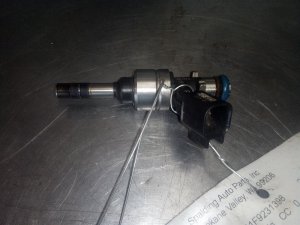
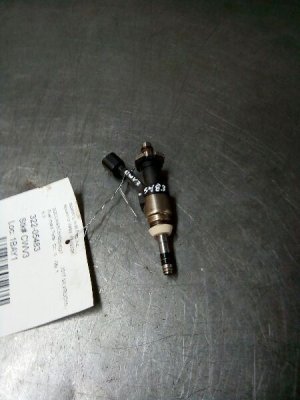
(OEM #V8 (LS3/L99): 12634126; V6 (LFX/LLT): 12638530)— If the injector itself has failed (confirmed by swapping cylinders), it will need to be replaced. Part numbers are specific to the engine type.
Trusted brands: ACDelco, Bosch, Standard Motor Products
OEM price range: $105-$170
Aftermarket price range: $50-$100 - Intake Manifold Gasket Set
(OEM #V8 (LS3/L99): Fel-Pro MS 96974; V6 (LFX/LLT): Fel-Pro MS 97214)— These must be replaced anytime the intake manifold is removed to access the fuel injectors and wiring. Using new gaskets is critical to prevent vacuum leaks.
Trusted brands: Fel-Pro, ACDelco
OEM price range: $40-$70
Aftermarket price range: $20-$40
Related Codes That Often Appear With This One
- P0302 — This code means 'Cylinder 2 Misfire Detected,' which is a direct consequence of the fuel injector for that cylinder not functioning correctly.
- P0300 — This code for 'Random/Multiple Cylinder Misfire' is specifically mentioned in TSBs #PIP5386 and #PIP5386A as often appearing alongside P0265.
- P0264 — This code for 'Cylinder 2 Injector Circuit Low' may appear intermittently if the wiring fault alternates between a short to voltage (high) and a short to ground (low) or an open circuit.
Technical Service Bulletins (TSBs) & Recalls
- PIP5386A: Communicates diagnostic and repair steps for P0264 or P0265 with P0300, pointing to a wiring concern at the #2 injector.
- PIP5386: Notes that P0264/P0265 with P0300 may be due to a wiring concern at the #2 fuel injector, requiring intake manifold removal for access.
- PIP4924D: Lists P0265 among many other injector codes and advises technicians to inspect the fuel, though this is a less likely cause for a circuit-specific fault.
- 21-NA-149: A broader TSB covering engine wiring harness chafing on various GM models, which describes the general nature of these faults and repair procedures.
Platform-Specific Known Issues
- A known issue, documented in TSBs #PIP5386 and #PIP5386A, is a wiring problem at the #2 fuel injector. This makes a thorough inspection of the harness essential before replacing parts.
- Accessing the fuel injectors and their wiring on both the V6 and V8 engines requires the removal of the upper intake manifold. This adds several hours to the repair time.
- Owners on Camaro5 forums report that the wire for injector #2 is often stretched taut over the intake manifold, leading to stress and eventual breakage at the connector. When repairing, it's advised to leave a small amount of slack.
Mechanic-Grade Diagnostic Values
- Fuel Injector Coil Resistance (Port Injection) — expected: 12 to 17 ohms for high-impedance injectors, which are common on these engines.. Failure: A reading of infinite ohms (OL) indicates an open coil, while a reading significantly lower than the others (e.g., under 10 ohms) suggests a short. All injectors should be within 0.5 ohms of each other.
- Fuel Injector Coil Resistance (Direct Injection - V6 LFX) — expected: GDI injectors have very low resistance, typically between 0.5 and 2.0 ohms.. Failure: A reading outside this range, or one that is inconsistent with the other injectors, indicates a faulty injector.
- Injector Connector Voltage (Key On, Engine Off) — expected: One of the two pins on the connector should show battery voltage (approx. 12V) when tested against a known good ground.. Failure: No voltage or low voltage points to a problem in the power supply side of the circuit (fuse, relay, or wiring).
- Injector Control Circuit Voltage (Engine Running) — expected: When back-probing the control wire (the non-power wire), a multimeter should show a fluctuating voltage, or a lab scope will show a square wave pattern as the ECM pulses the ground. A noid light should flash consistently.. Failure: A steady high voltage (near battery voltage) on the control wire indicates the ECM is not grounding the circuit, which is the definition of a 'Circuit High' fault.
Scan Tool Commands That Help
- GM GDS2 (or equivalent professional scanner): Fuel Injector Balance Test — This automated test disables one injector at a time and measures the corresponding drop in fuel rail pressure (for GDI) or change in engine RPM. It's used to confirm if cylinder #2 is contributing less than the others, pointing to a flow or control problem. GM specifies that any injector causing a pressure drop that varies by more than 20% from the average of the others should be replaced.
Wiring & Ground Locations
- Cylinder 2 Injector Control Wire — On some GM V8 ECMs (like the E38), the cylinder 2 injector control wire is a Light Blue/White wire located at Pin J2-16 of the ECM connector. This can be used for continuity testing from the ECM to the injector connector.. If the injector and its pigtail are good, a continuity test on this specific wire is the next step to find a break or short in the main engine harness.
- Engine Block Grounds — The main ECM and sensor grounds are attached directly to the engine block and cylinder heads. On LS3/L99 V8 engines, common ground points are on the back of the cylinder heads and on the side of the block, sometimes sharing a bolt with the oil dipstick tube.. A poor engine ground can cause floating voltages and erratic sensor readings, potentially leading to incorrect diagnostic codes. While not a direct cause of a single injector circuit high code, ensuring all engine grounds are clean and tight is a foundational step in any electrical diagnosis.
Real Owner Repair Stories
- Camaro5 Forums (2010 Camaro SS (L99 V8)) — Check Engine Light with codes P0265 and P0302 (Cylinder 2 Misfire).
❌ Tried (didn't work) The owner initially suspected a bad injector.
✅ What actually fixed it The problem was a broken wire right at the #2 fuel injector connector, consistent with the known TSB issue. The owner repaired the wire, which resolved both the P0265 and P0302 codes.
OEM Part Supersession History
12638530→12669384— Standard part lifecycle update by the manufacturer.
Heads up: While the parts are often listed as interchangeable for the specified years, it is always recommended to verify the correct part number by VIN. Aftermarket suppliers note that mixing original and aftermarket injectors is not recommended due to potential differences in flow and atomization.
Model Year Variations Within This Range
- 2011-2012 (V6): The 2011 model year used the LLT 3.6L V6 engine, while the 2012 model year introduced the updated LFX 3.6L V6. While they share a platform, some parts, including fuel injectors and their corresponding part numbers (LLT: 12638530, LFX: 12634126), are different. The fundamental wiring issue causing P0265 can still occur on both.
Helpful Videos
Used OEM Parts in Stock




New Aftermarket Parts Available


The information in this article is provided for general reference and educational purposes only. Vehicle specifications, procedures, and part compatibility can vary by production date, trim level, and region. Always consult your vehicle's factory service manual and verify part numbers before purchasing or performing repairs. Safety-critical components such as airbags, seat belts, and braking systems should be installed by a qualified professional.
- Chevrolet CAMARO:
- 🎬 Helpful Videos
- 🛍️ Shop This Part
- What's Unique About the 2011-2016 Chevrolet CAMARO
- Diagnostic Flowchart
- Symptoms You May Notice
- Most Likely Causes
- Rare But Worth Checking
- Diagnosis Steps
- Parts You'll Likely Need
- Related Codes That Often Appear With This One
- Technical Service Bulletins (TSBs) & Recalls
- Platform-Specific Known Issues
- Mechanic-Grade Diagnostic Values
- Scan Tool Commands That Help
- Wiring & Ground Locations
- Real Owner Repair Stories
- OEM Part Supersession History
- Model Year Variations Within This Range
- 🎟️ Get 5% Off