

OBD-II Code P0265: Cylinder 2 Injector Circuit High
A Comprehensive Guide to Diagnosing and Fixing P0265
- Swap the cylinder 2 fuel injector with cylinder 4; if the trouble code changes to P0271, you have definitively proven the injector is faulty.
- Inspect the wiring harness for chafing before buying parts, especially on 2009-2016 GM 3.6L V6 engines covered by TSB #PIP4924D.
- Stop driving the vehicle immediately if the Check Engine Light flashes, as raw fuel dumping into the exhaust will destroy a $2,000 catalytic converter within miles.
- Test the injector's internal resistance using a multimeter; a reading outside the standard 12-16 Ohm range for port injection confirms an electrical failure.
What Does P0265 Mean?

The P0265 code means the Powertrain Control Module (PCM) detects a voltage in the cylinder 2 fuel injector control circuit that exceeds the normal operational range. The PCM controls injectors by grounding the circuit; a constant high voltage indicates a short-to-power, an open circuit, or an internal injector fault preventing fuel delivery.
Technical definition: The SAE/OBD-II definition for P0265 is "Cylinder 2 Injector Circuit High". This indicates the PCM's driver transistor, which grounds the circuit to activate the injector, cannot properly control the circuit's voltage. This is typically caused by a short to a voltage source or an internal open circuit within the injector coil.
Can I Drive With P0265?
Yes, But With Caution. You can drive for short, essential trips, but immediate repair is required. A persistent 'Circuit High' fault means the injector is not firing, causing a constant misfire. This dumps unburned fuel into the exhaust, rapidly destroying the catalytic converter—a repair costing $800 to $2,500. The engine will run rough, lack power, and stall unexpectedly.
Common Causes

- Faulty Cylinder 2 Fuel Injector (Very Common) — An internal short circuit, a damaged coil winding, or an open circuit inside the fuel injector itself is the most frequent cause of this code.
- Damaged Wiring Harness (Short to Power or Chafing) (Common) — The wiring connecting the injector to the PCM can fray, melt, or suffer rodent damage. If the exposed control wire touches a power source, it triggers a constant high-voltage reading.
- Loose or Corroded Injector Connector (Less Common) — A loose plastic connector, bent pins, or corrosion creates a poor electrical connection, which the PCM interprets as an open circuit or high voltage fault.
- Powertrain Control Module (PCM) Failure (Rare) — The internal driver transistor in the PCM that switches the injector on and off can fail. If it leaks current or fails to ground the circuit, it directly causes a 'Circuit High' fault.
Symptoms

- Rough Idle and Noticeable Misfire — The engine runs unevenly and shakes violently at idle because cylinder 2 is dead. This is almost always accompanied by a P0302 misfire code.
- Reduced Engine Power and Sluggish Acceleration — The vehicle struggles to accelerate and lacks power, especially when climbing hills, as it operates on one less cylinder.
- Strong Fuel Odor or Black Exhaust Smoke — If the circuit fault causes the injector to stick open, raw fuel dumps into the exhaust, creating a strong gas smell and black smoke.
- Engine Stalling — The engine stalls unexpectedly at low speeds or when coming to a stop due to the severe cylinder imbalance.
- Decreased Fuel Economy — Fuel efficiency drops significantly as the engine runs inefficiently and wastes unburned fuel.
- Illuminated or Flashing Check Engine Light (also visible on scanner) — The Malfunction Indicator Lamp (MIL) illuminates. A flashing light indicates a severe misfire actively damaging the catalytic converter.
Diagnostic Flowchart
Tap your situation to follow the diagnostic path that matches what you're seeing on this code.
Common Fixes & Costs
- Replace Cylinder 2 Fuel Injector — Parts: $60-$250, Labor: $150-$500, ~2.5 hr book time (Intermediate)
- Repair Wiring Harness or Connector — Parts: $10-$50, Labor: $150-$600, ~3.5 hr book time (Intermediate)
- Replace or Reprogram Powertrain Control Module (PCM) — Parts: $600-$1200, Labor: $200-$450, ~1.5 hr book time (Professional)
Used vs. New Parts: Buying Guide
When a used part is worth it: Used injectors carry significant risk. A 'remanufactured' injector—fully disassembled, cleaned, and rebuilt with new O-rings and filters—is a much safer alternative to a salvage yard part.
Donor-vehicle mileage cap: roughly under 50000 miles for the part to have meaningful remaining life.
Donor quality checklist:
- Favor 'remanufactured' over 'used' or 'refurbished'.
- Verify the remanufacturing process includes new nozzles and internal filters.
- Ensure the part number exactly matches your OEM injector.
- Ask if the injectors are flow-matched as a set.
Decision logic:
- If Labor cost is high (e.g., intake manifold removal) → Buy new OEM or high-quality remanufactured parts to avoid paying labor twice.
- If Vehicle has over 150k miles and budget is tight → A quality remanufactured injector is the best compromise between cost and reliability.
- If The injector is easily accessible on top of the engine → A new aftermarket part provides the best value and warranty.
Warranty tradeoff: Used parts offer 30-day warranties. Remanufactured and new aftermarket parts offer 1-year to lifetime warranties. OEM parts carry 1-2 year warranties.
Worst-case if a used part fails: $400-$1500 if a used part fails prematurely, requiring repeat labor and a new part purchase.
What Happens If You Wait — Timeline
- 0-1 month: Code P0265 sets. The engine idles roughly and hesitates. The vehicle is safe for short trips, but fuel economy drops. (MPG impact: 5-10%% · Added cost: $20-$80 in wasted fuel)
- 1-3 months: Unburned fuel consistently enters the exhaust, overheating the catalytic converter. A strong fuel smell develops. (MPG impact: 10-15%% · Added cost: $800-$2,500 (Catalytic converter damage begins))
- 3-6 months: The catalytic converter melts or clogs from raw fuel exposure. Engine power is severely restricted, and the Check Engine Light flashes. (MPG impact: 15-25%% · Added cost: $1,200-$2,800 (Catalytic converter replacement is mandatory))
- 6+ months: Excess fuel washes oil from the cylinder walls, accelerating wear on piston rings and the cylinder itself. (MPG impact: 20-30%+% · Added cost: $3,000+ (Engine rebuild required))
Cost of Not Fixing It
- Immediate (0-1 month): Fuel economy drops 5-15%, accompanied by rough idle and poor acceleration. Guaranteed emissions test failure. (Added cost: $50-$150 in wasted fuel)
- Short-Term (1-6 months): Unburned fuel overheats and melts the catalytic converter substrate. This is the most severe financial risk of ignoring the code. (Added cost: $1200-$2800 for catalytic converter replacement)
- Long-Term (6+ months): Excess fuel washes oil from cylinder walls, causing severe piston ring and cylinder wear. (Added cost: $3000+ for engine rebuild)
Diagnosis Steps

- Read Codes and Review Freeze Frame Data
Use an OBD-II scanner to confirm P0265 is active. Note secondary codes like P0302 (Cylinder 2 Misfire). Review freeze-frame data to identify the engine conditions when the fault occurred.
Tools: OBD-II Scanner (Beginner) - Visually Inspect Wiring and Connector
Locate the cylinder 2 fuel injector. Inspect the electrical connector and surrounding wires for melting, corrosion, rodent damage, or frayed insulation. On GM vehicles, check where the harness rubs against the intake or valve covers (TSB #PIP4924D).
Tools: Flashlight (Beginner) - Perform an Injector Swap
If accessible, swap the cylinder 2 injector with an adjacent cylinder (e.g., cylinder 4). Clear codes and run the engine. If the code moves to the new cylinder (e.g., P0271), the injector is definitively faulty. If P0265 returns, the issue is wiring or the PCM.
Tools: Basic Hand Tools, Socket Set (Intermediate) - Test Injector Resistance
Disconnect the injector connector. Set a multimeter to Ohms (Ω) and measure resistance across the injector's two pins. Port Fuel Injection (PFI) systems typically read 12-16 Ohms. Gasoline Direct Injection (GDI) systems read 0.5-3.0 Ohms. A reading of infinity (Open Loop) or zero confirms internal failure.
Tools: Multimeter (Intermediate) - Check Injector Pulse
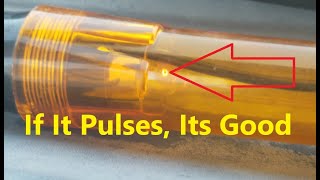
Plug a noid light into the disconnected injector harness. Crank the engine. The light must flash rhythmically. If it stays solid, you have a short-to-power or a stuck PCM driver. If it remains off, you have an open circuit.
Tools: Noid Light Set (Intermediate) - Test Wiring for Shorts to Power
If the noid light stays solid, disconnect the PCM connector. Use a multimeter to test for voltage on the injector control wire with the key ON. Any voltage reading confirms a short-to-power in the harness.
Tools: Multimeter, Vehicle Wiring Diagram (Advanced) - Analyze Live Data PIDs
Using a professional scan tool, monitor the 'Injector Pulse Width' for cylinder 2. If the PCM detects a hard fault, it disables the driver, resulting in a 0 ms pulse width while other cylinders show 1-10 ms.
Tools: Professional OBD-II Scan Tool (Advanced) - Perform Injector Waveform Analysis
Back-probe the injector control wire with an oscilloscope. A healthy waveform drops to near zero volts, stays flat during injection, and spikes (30-70V) upon closing. A flat line at battery voltage confirms the PCM is not grounding the circuit.
Tools: Automotive Oscilloscope, Back-probe Pins (Professional)
When This Code Triggers (Freeze-Frame Conditions)
- Engine Coolant Temp: 176-203°F (The code often sets when the engine reaches normal operating temperature, as heat increases electrical resistance in failing coils.)
- RPM: 600-1200 RPM (The fault is frequently detected at idle or low RPMs shortly after starting, where the cylinder imbalance is most noticeable.)
- Engine Load: 20-40% (Triggers under light to moderate load, such as steady-state cruising, where the PCM actively monitors injector performance.)
- Battery Voltage: 10-16.5 Volts (The PCM only runs this diagnostic test when the system voltage is within the normal operational range.)
Related Codes
- P0302 — Cylinder 2 Misfire Detected. P0265 is the specific electrical fault causing the cylinder to misfire. Fixing P0265 resolves P0302.
- P0264 — Cylinder 2 Injector Circuit Low. The opposite of P0265. P0264 indicates a short to ground, whereas P0265 indicates a short to power or an open circuit.
- P0202 — Injector Circuit/Open - Cylinder 2. A broader code. P0265 is more specific, indicating the voltage is too high. Focus diagnosis on P0265.
- P0300 — Random/Multiple Cylinder Misfire. A severe P0265 electrical fault can disrupt engine timing enough to trigger this general misfire code.
Climate & Environmental Factors
- High Humidity / Water Exposure: Pressure washing the engine bay forces water into connectors, causing corrosion that increases resistance and triggers intermittent 'Circuit High' faults.
- Extreme Heat: Prolonged engine heat degrades plastic wire insulation, making it brittle. Exposed copper wires easily short to nearby power sources.
- Extreme Cold: Freezing temperatures make aged plastic connectors brittle. Attempting repairs in the cold often breaks locking tabs, requiring full connector replacement.
How to Talk to a Mechanic About This Code
Say this: "I have a P0265 code and a rough idle. I need a diagnosis to determine if the cause is the fuel injector, the wiring, or the PCM. Please inspect the wiring harness and test the injector's resistance before recommending a part replacement."
This proves you understand the common causes of P0265. It directs the technician to follow a logical diagnostic process instead of blindly replacing the most expensive part.
Avoid saying:
- 'My check engine light is on, can you just fix it?'
- 'I think I need a new fuel injector.'
- 'Just do whatever you think is best.'
Questions to ask before authorizing the repair:
- What were the exact results of the injector resistance test?
- Did you perform a noid light test, and what was the result?
- Did you check for Technical Service Bulletins (TSBs) related to the wiring harness?
- If recommending an injector, do you guarantee it will fix the P0265 code?
- What is the warranty on parts and labor?
Where to Take It: Dealer vs Independent vs Chain
- Dealer:
Best for: Vehicles under powertrain or emissions warranty., Complex diagnostics requiring PCM replacement and programming., Known manufacturer issues covered by TSBs.
Downsides: Labor rates are typically $150-$250/hour., Often recommend replacing entire harnesses instead of repairing a single wire. (Typical cost: +50% vs. baseline) - Independent Shop:
Best overall fit. A reputable independent shop is perfectly equipped to diagnose and repair P0265, providing better value than a dealer.
Best for: Out-of-warranty vehicles., Standard electrical diagnostics and injector replacement., Cost-effective wiring repairs.
Downsides: Diagnostic capabilities vary; ensure the shop has modern electrical testing tools. (Typical cost: +0% vs. baseline) - Chain Shop:
Not recommended. P0265 requires specific electrical diagnosis beyond the scope of a typical chain shop.
Best for: Routine maintenance like oil changes and tires.
Downsides: Lack advanced diagnostic tools for complex electrical codes., High risk of misdiagnosis and unnecessary parts replacement. (Typical cost: -10% vs. baseline)
When to Walk Away From the Repair
If the estimated repair cost for the P0265 fault exceeds 50% of your car's private-party market value, pause and consider alternatives.
- Car worth $4000, fix is $1200: Borderline. The repair is 30% of the car's value. Get a second opinion and evaluate other pending maintenance.
- Car worth $12000, fix is $800: Fix it. The repair cost is well below the threshold and restores full function.
- Car worth $2500, fix is $1500: Walk away. The repair is 60% of the car's value. It is time to sell or scrap the vehicle.
What Scan Tool You Need for This Code
Minimum: A tool that reads codes, clears codes, and views live data PIDs (specifically injector pulse width).
A $20 code reader only confirms P0265 exists. It cannot show live data to verify if the PCM is commanding the injector off, leaving you guessing at the cause.
Budget: BlueDriver Pro (~$120) — Connects to a smartphone to read codes, view freeze frame data, and graph live data to compare injector performance across cylinders.
Mid-range: Foxwell NT510 Elite / Autel MaxiCOM MK808 (~$180-380) — Offers bidirectional control. This allows you to command the injector on and off directly from the scanner, powerfully testing the circuit without complex wiring tests.
Professional: Autel MaxiSys MS906Pro (~$500-1200) — Provides OEM-level diagnostics, advanced bidirectional controls, ECU coding, and oscilloscope integration for definitive waveform analysis.
Rent vs buy: Auto parts stores read codes for free, but diagnosing P0265 requires live data. If you plan to DIY the diagnosis, purchasing a budget or mid-range tool is mandatory.
How to Clear the Code After You Fix It
- Use an OBD-II scan tool to clear the P0265 code.
- Ensure the fuel tank is between 15% and 85% full.
- Perform a complete OBD-II drive cycle to allow readiness monitors to run.
Drive cycle (~30 minutes): Start the engine cold (coolant below 122°F) and idle for 3 minutes. Drive for 20 minutes mixing stop-and-go city traffic with steady highway speeds (55-60 mph). Coast down without braking when possible. Let the vehicle cool completely and repeat.
Readiness monitors affected: Catalyst Monitor, Evaporative System Monitor, Oxygen Sensor Monitor, Comprehensive Component Monitor
Before emissions retest: drive at least 100 miles to fully set monitors.
Watch out for:
- Disconnecting the battery clears the code but resets all readiness monitors to 'Not Ready', guaranteeing an emissions test failure.
- The code returns immediately upon startup if the root electrical fault was not repaired.
- Fuel levels outside the 15-85% range prevent the EVAP monitor from running.
Will This Fail Emissions / State Inspection?
Yes — this code typically fails an OBD-II emissions inspection.
- California: An active P0265 code causes an automatic failure. All readiness monitors (except EVAP) must be 'Ready' before a re-test. Drive 50-100 miles after repair.
- New York: An illuminated Check Engine Light for any fault, including P0265, results in an automatic OBD-II inspection failure.
- Texas: In emissions-testing counties, an illuminated Check Engine Light is an automatic failure. Readiness monitors must be set to 'Ready' to pass.
Most Commonly Affected Vehicles

- Chevrolet Traverse, Malibu, Equinox, Camaro (2009-2016) — Highly prone to wiring harness chafing against the intake plenum (TSB #PIP4924D). Injector replacement requires expensive intake manifold removal.
- GMC Acadia, Terrain (2009-2016) — Shares the same 3.6L V6 wiring chafing issues as Chevrolet. Labor costs for injector replacement frequently exceed $700.
- Ford F-150, Focus (2001-2024) — Commonly caused by internal injector failure on 5.0L and 5.4L V8 engines. Injectors are generally accessible for DIY replacement.
- Buick Enclave (2009-2014) — Affected by the GM wiring harness chafing TSB. Labor-intensive repair due to the intake manifold covering the injectors.
- Honda Accord (2003-2024) — Typically traces directly to a failed fuel injector rather than widespread wiring harness issues.
- Toyota Camry (2007-2024) — Often caused by a faulty injector or rodent damage to the soy-based wiring harness insulation.
- Volkswagen Golf, Passat, Tiguan (2003-2016) — Frequently caused by a failed injector or a break in the wiring within the main engine harness.
- BMW 3 Series, 5 Series, X3, X5 (2000-2015) — Commonly points to an internal electrical failure of the fuel injector itself.
- Mercedes-Benz C-Class, E-Class, Sprinter (1998-2012) — Typically related to the injector failing electrically or severe corrosion inside the injector connector.
Manufacturer-Specific Notes
- General Motors (3.6L V6 & others): TSBs #PIP4924D and #PIP5386A instruct technicians to inspect the fuel injector wiring harness for rub-through against the intake plenum and valve cover bolts before replacing any parts.
- Ford (Power Stroke Diesel): On 6.0L and 7.3L diesels, this code is often caused by a failing Fuel Injection Control Module (FICM) providing erratic 48V power, rather than the injector itself.
- General Motors (Warranty): Special Policy N182198000 extended warranty coverage to 10 years/150,000 miles for injectors on certain 2016-17 trucks in states following California emissions standards.
- All Manufacturers (Emissions Warranty): Fuel injectors are emissions components covered by federal warranty for 2 years/24,000 miles, and sometimes up to 8 years/80,000 miles. Check your warranty before paying for repairs.
Real Owner Stories
2012 Chevy Malibu with 115K miles
Check Engine Light came on with P0265 and a P0302 misfire code. The engine ran very rough at idle.
What they tried:
- Initially suspected a bad fuel injector.
- Found GM TSB #PIP4924C pointing to wiring harness chafing.
- Inspected the harness and found a wire rubbed through near the intake plenum.
Outcome: Repaired the single damaged wire with a splice and anti-abrasion tape for under $20. The codes cleared and did not return.
Lesson: Always check Technical Service Bulletins (TSBs). For GM vehicles, a wiring inspection is the mandatory first step and saves you from buying an unnecessary $150 injector.
2015 Ford F-150 5.0L at 85K miles
P0265 code appeared constantly. The truck hesitated heavily when accelerating.
What they tried:
- Swapped the cylinder 2 injector with the cylinder 3 injector.
- Cleared the codes and drove the truck.
- The code returned as P0268 (Cylinder 3 Injector Circuit High).
Outcome: The swap confirmed the injector was faulty. Replaced the single bad injector for $75. The repair took 2 hours, restoring smooth performance.
Lesson: An injector swap is a definitive, zero-cost diagnostic step. If the trouble code moves to the new cylinder, the injector is the proven culprit.
2010 GMC Acadia 3.6L at 130K miles
Vehicle ran rough with a flashing Check Engine Light and a strong fuel smell. Codes P0265 and P0302 present.
What they tried:
- Mechanic diagnosed a failed fuel injector in cylinder 2.
- Because replacing the injector required removing the intake manifold, the mechanic advised replacing all three front bank injectors.
Outcome: Replaced all three front bank injectors (cylinders 2, 4, 6). Total cost was $1,100 ($450 parts, $650 labor).
Lesson: When injector replacement requires heavy labor (like removing an intake manifold), replace all injectors in that bank to avoid paying the same labor charge again when the next one fails.
2013 VW Passat with 95K miles
P0265 code appeared after the car sat for a week. The engine had a rough idle.
What they tried:
- Checked the injector connector and found it secure.
- Tested the injector resistance with a multimeter and got a reading of infinity (open circuit).
- Other injectors measured a healthy 14 ohms.
Outcome: The open circuit reading confirmed internal electrical failure. Replaced the single injector for $120, resolving the code.
Lesson: A multimeter is your best tool for P0265. Testing resistance takes 15 minutes and definitively condemns the injector if the reading is open or shorted.
How to Prevent This Code From Triggering
- Use Top-Tier Gasoline (Every fill-up) — Top-Tier fuels contain detergents that prevent deposits. Clean injectors avoid mechanical binding, which prevents the electrical stress that leads to circuit failures.
- Replace Fuel Filter (Per manufacturer schedule (e.g., every 30,000 miles)) — A clean filter stops debris from reaching the injectors, preventing internal damage and sticking.
- Apply Dielectric Grease to Connectors (During any injector repair) — A thin coat of dielectric grease seals out moisture, preventing the corrosion that causes high resistance and circuit codes.
- Prevent Rodent Damage (Ongoing) — Rodents chew soy-based wire insulation. Using repellent tape prevents the exposed wires that cause short-to-power faults.
Frequently Asked Questions
What are the most common misdiagnosis mistakes for P0265?
The biggest mistake is replacing the fuel injector without testing the wiring, especially on GM vehicles prone to harness chafing. Another error is replacing spark plugs or ignition coils, which cause misfires (P0302) but never trigger an injector circuit code. Always swap the injector to another cylinder first to confirm the fault follows the part.
My P0265 code comes and goes. What could be the cause?
An intermittent P0265 code usually stems from a loose connector pin or a chafed wire that only shorts under specific vibrations or heat. It also indicates an injector coil beginning to fail under thermal load. Perform a 'wiggle test' on the harness while the engine idles to pinpoint the loose connection.
How much does it cost to fix a P0265 code?
A professional wiring repair costs $150 to $300, while replacing a single accessible fuel injector ranges from $200 to $500. If the engine requires intake manifold removal (like many V6s), labor pushes the total to $700-$1,200. PCM replacement is the most expensive scenario, often exceeding $1,000.
What's the difference between P0265 and a misfire code like P0302?
P0265 specifically identifies an electrical high-voltage fault in the cylinder 2 fuel injector circuit. P0302 is a general misfire code for cylinder 2, which has dozens of potential mechanical or ignition causes. P0265 is the root electrical cause that triggers the secondary P0302 misfire code.
If one injector is bad, should I replace all of them?
It is not strictly necessary, but highly recommended if the injectors are difficult to access. On engines requiring intake manifold removal, replacing all injectors in that bank saves you from paying the $300-$600 labor charge again when the next aging injector fails.
Can I fix P0265 myself?
Yes, if the cylinder 2 injector is easily accessible on top of the engine. You can perform definitive DIY diagnostics using a $20 multimeter to check resistance or by swapping the injector to another cylinder. Stop and consult a professional if the repair requires removing the intake manifold or tracing complex wiring shorts.
Will P0265 clear itself?
No, P0265 indicates a hard electrical fault and will not clear on its own. The Check Engine Light remains illuminated until the circuit problem is repaired. You must use an OBD-II scanner to clear the code after fixing the issue.
Can bad fuel cause a P0265 code?
Contaminated fuel does not directly cause an electrical circuit code, but it is a contributing factor. Water or heavy debris in the fuel corrodes internal injector components, causing them to stick. This mechanical binding increases electrical resistance and current draw, eventually triggering a circuit fault.
Key Takeaways
- Swap the cylinder 2 fuel injector with cylinder 4; if the trouble code changes to P0271, you have definitively proven the injector is faulty.
- Inspect the wiring harness for chafing before buying parts, especially on 2009-2016 GM 3.6L V6 engines covered by TSB #PIP4924D.
- Stop driving the vehicle immediately if the Check Engine Light flashes, as raw fuel dumping into the exhaust will destroy a $2,000 catalytic converter within miles.
- Test the injector's internal resistance using a multimeter; a reading outside the standard 12-16 Ohm range for port injection confirms an electrical failure.
Helpful Videos

The information in this article is provided for general reference and educational purposes only. Vehicle specifications, procedures, and part compatibility can vary by production date, trim level, and region. Always consult your vehicle's factory service manual and verify part numbers before purchasing or performing repairs. Safety-critical components such as airbags, seat belts, and braking systems should be installed by a qualified professional.
- 🎬 Helpful Videos
- What Does P0265 Mean?
- Can I Drive With P0265?
- Common Causes
- Symptoms
- Diagnostic Flowchart
- Common Fixes & Costs
- Used vs. New Parts: Buying Guide
- What Happens If You Wait — Timeline
- Cost of Not Fixing It
- Diagnosis Steps
- When This Code Triggers (Freeze-Frame Conditions)
- Related Codes
- Climate & Environmental Factors
- How to Talk to a Mechanic About This Code
- Where to Take It: Dealer vs Independent vs Chain
- When to Walk Away From the Repair
- What Scan Tool You Need for This Code
- How to Clear the Code After You Fix It
- Will This Fail Emissions / State Inspection?
- Most Commonly Affected Vehicles
- Manufacturer-Specific Notes
- Real Owner Stories
- 2012 Chevy Malibu with 115K miles
- 2015 Ford F-150 5.0L at 85K miles
- 2010 GMC Acadia 3.6L at 130K miles
- 2013 VW Passat with 95K miles
- How to Prevent This Code From Triggering
- Frequently Asked Questions
- What are the most common misdiagnosis mistakes for P0265?
- My P0265 code comes and goes. What could be the cause?
- How much does it cost to fix a P0265 code?
- What's the difference between P0265 and a misfire code like P0302?
- If one injector is bad, should I replace all of them?
- Can I fix P0265 myself?
- Will P0265 clear itself?
- Can bad fuel cause a P0265 code?
- Key Takeaways
- 🎟️ Get 5% Off