

P0264 on 2009-2016 GMC Acadia: Cylinder 2 Injector Circuit Low Causes and Fixes
This code indicates a low voltage problem in the cylinder 2 fuel injector circuit. The most common causes are a faulty fuel injector or a wiring issue between the injector and the engine computer. Expect to pay $50-$150 for a new injector, with DIY difficulty at 3/5 due to potential intake manifold removal.
- P0264 specifically points to an electrical fault in the cylinder 2 fuel injector circuit, not a spark or compression issue.
- The most likely culprits are the fuel injector itself or the wiring/connector leading to it.
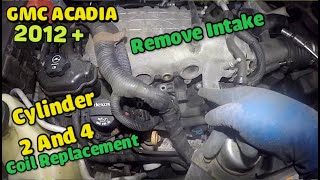
- On the GMC Acadia 3.6L, cylinder 2 is in the front bank (near the radiator), and accessing it requires removing the upper intake manifold.
- Always test the circuit and injector before replacing parts. Swapping the injector with another cylinder is a great way to confirm if the injector is the problem.
- Driving with this code can lead to catalytic converter damage, which is a much more expensive repair.
What's Unique About the 2009-2016 Gmc ACADIA
On the 3.6L V6 engine (LLT) used in the first-generation GMC Acadia and its Lambda platform mates (Buick Enclave, Chevrolet Traverse, Saturn Outlook), the fuel injectors for the front bank of cylinders (2, 4, and 6) are located under the upper intake manifold. While not exceptionally difficult, accessing them requires more disassembly than on engines with more exposed fuel rails. Furthermore, GM issued a Technical Service Bulletin (TSB #PIP4924D) that includes P0264, advising technicians to inspect the injector wiring harnesses for potential rub-through or internal wire opens, indicating that wiring problems are a known concern on this platform.
Diagnostic Flowchart
Tap your situation to follow the diagnostic path that matches what you're seeing on this vehicle.
Symptoms You May Notice
- Check Engine Light is on
- Rough or shaking idle.
- Engine misfire (may feel like a stumble or hesitation).
- Loss of power and poor acceleration.
- Reduced fuel economy.
- Replacing the spark plug or ignition coil for cylinder 2. While these parts can cause a misfire (P0302), they will not cause an injector circuit code like P0264. The diagnosis must focus on the fuel injector and its electrical circuit. A forum post about misfires on cylinders 2, 4, and 6 on a 2010 Acadia highlighted a complex diagnosis that started with timing chains and eventually led to injector and electrical system checks.
Most Likely Causes
- Faulty Cylinder 2 Fuel Injector 🔴 High Probability Injectors can fail over time due to internal coil shorts or becoming clogged, which can alter the electrical characteristics of the circuit. An internal short can cause the injector to draw excessive current, forcing the PCM's driver circuit into a protective low-voltage mode.
How to confirm: Measure the resistance of the injector with a multimeter; it should be within the manufacturer's specification (typically 11-14 ohms for these port-injected engines). The most definitive test is to swap the cylinder 2 injector with another one (e.g., cylinder 4), clear the codes, and see if the fault follows the injector (e.g., P0270 appears).
Typical fix: Replace the faulty fuel injector. It is often recommended to replace all injectors on the same bank, or all six at once, to ensure balanced flow and prevent future failures.
Est. part cost: $50-$150 - Wiring or Connector Issue 🟡 Medium Probability The engine wiring harness can be exposed to heat and vibration, leading to chafed wires, corrosion in the connector, or broken pins. TSB #PIP4924D specifically calls for inspection of the fuel injector wiring harness for rub-through or internal wire opens. This can occur where the harness is routed near brackets or the cylinder head.
How to confirm: Visually inspect the wiring harness and the connector at the cylinder 2 injector for any signs of damage, corrosion, or loose pins. Use a multimeter to check for continuity from the injector connector back to the ECM. Wiggle the harness while testing to expose intermittent opens or shorts.
Typical fix: Repair the damaged section of the wiring harness or replace the injector pigtail connector.
Est. part cost: $15-$40 - Powertrain Control Module (PCM) Failure ⚪ Low Probability While less common, the internal driver circuit within the PCM that controls the injector can fail. This can happen due to an internal fault or be caused by a shorted injector or wiring that overloads the driver.
How to confirm: This is typically diagnosed by exclusion. If the injector and wiring are confirmed to be good, but a noid light shows no pulse or a weak pulse from the ECM, the ECM is the likely culprit. A professional scan tool may also be able to perform a self-test on the injector driver circuit.
Typical fix: Replace and reprogram the Powertrain Control Module.
Est. part cost: $200-$600
Diagnosis Steps
- Scan for Codes: Confirm P0264 is present and check for any other related codes, such as P0302 (Cylinder 2 Misfire).
- Locate Cylinder 2: On the 3.6L V6 in the Acadia, the engine is mounted transversely. The front bank of cylinders (closest to the radiator) are, from passenger to driver side, 2, 4, and 6. The rear bank (closest to the firewall) is 1, 3, 5.
- Visual Inspection: Inspect the fuel injector connector and nearby wiring for cylinder 2. Look for any obvious signs of damage, melting, or corrosion, paying close attention to areas where the harness might rub against engine components, as noted in TSB PIP4924D.
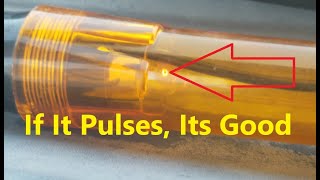
- Check for Injector Pulse: Use a 'noid light' to test the injector connector. The light should flash when the engine is cranked or running, indicating the ECM is sending a signal. If there is no flash, the problem is likely in the wiring or the ECM.
- Test the Injector: Disconnect the injector and measure its internal resistance with a multimeter. Compare the reading to the manufacturer's specification (typically 11-14 ohms). A reading of infinite resistance indicates an open coil, while a very low reading indicates a short.
- Swap Injectors: As accessing the injectors requires removing the intake manifold, this step is more involved. If you perform the disassembly, swap the cylinder 2 injector with another cylinder (like cylinder 4). Clear the codes and run the engine. If the code changes to P0270 (Cylinder 4 Injector Circuit Low), the injector is faulty. If P0264 returns, the problem is in the wiring or ECM.
- Check the Wiring: If the injector tests good, perform a continuity test on both wires between the injector connector and the ECM connector to find any opens or shorts to ground. Gently wiggle the harness during the test to identify intermittent faults.
Parts You'll Likely Need
- Fuel Injector
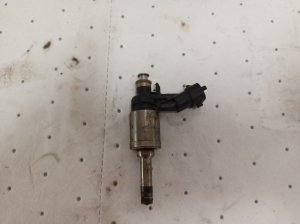
(OEM #12638530)— This is the most common component to fail, either electrically or by becoming clogged, leading to the circuit low code. This part number is superseded by 12669384.
Trusted brands: ACDelco, Bosch, Delphi
OEM price range: $100-$150
Aftermarket price range: $50-$90 - Fuel Injector Connector Pigtail
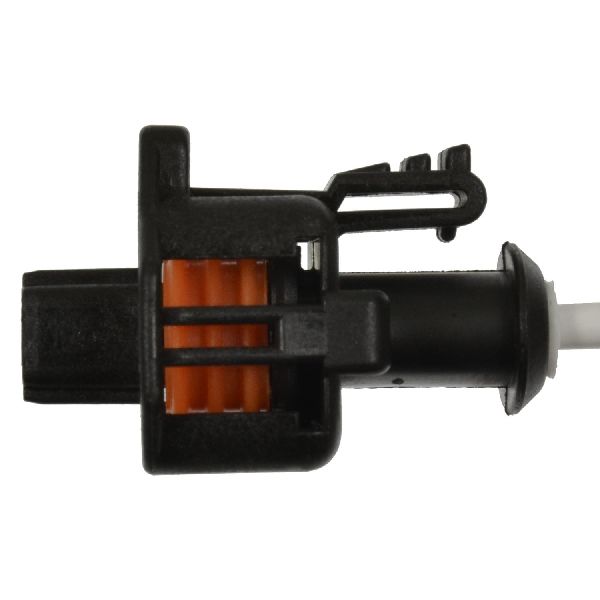
(OEM #PT2160)— If the wiring or connector itself is damaged from heat, vibration, or corrosion, replacing the pigtail is the standard repair.
Trusted brands: ACDelco, Dorman, Standard Motor Products
OEM price range: $25-$40
Aftermarket price range: $15-$25 - Upper Intake Manifold Gasket Set — These are single-use gaskets that must be replaced anytime the upper intake manifold is removed to access the front bank of fuel injectors.
Trusted brands: Fel-Pro, ACDelco, Mahle
OEM price range: $30-$50
Aftermarket price range: $15-$30
Related Codes That Often Appear With This One
- P0302 — This code means "Cylinder 2 Misfire Detected." Since P0264 indicates a problem with the fuel supply to cylinder 2, a misfire in that same cylinder is a direct and very common consequence.
- P0202 — This code means "Injector Circuit/Open - Cylinder 2." It's another code related to the cylinder 2 injector circuit and may appear alongside P0264 depending on the specific nature of the electrical fault.
- P0261, P0267, P0270 — These are low circuit codes for other cylinders (1, 3, and 4). If multiple injector codes appear for the same bank (e.g., P0264, P0270, P0276 for bank 2), it strongly points to a wiring harness issue common to that bank or a problem with the ECM.
Technical Service Bulletins (TSBs) & Recalls
- PIP4924D: Addresses a potential engine misfire and the setting of numerous injector circuit DTCs (including P0264). The bulletin advises technicians to inspect the fuel injector wiring harness for rub-through or internal wire opens and repair or replace the harness as needed.
Platform-Specific Known Issues
- Access to the front bank of injectors (including cylinder 2) requires removing the upper intake manifold, which adds to the labor time and complexity for diagnosis and replacement.
- TSB #PIP4924D was issued by GM for a range of injector codes, including P0264, on these vehicles. It points towards potential wiring harness issues, specifically rub-through or internal wire opens, as a cause for misfires and injector circuit faults, directing technicians to perform a thorough inspection.
Mechanic-Grade Diagnostic Values
- Fuel Injector Coil Resistance — expected: 11-14 Ohms. Failure: A very low resistance indicates a short; a very high or infinite (OL) reading indicates an open coil.
- Injector Voltage (Key On, Engine Off) — expected: ~12V (Battery Voltage). Failure: Significantly less than battery voltage on the power supply wire points to a problem in the power feed circuit.
- Injector Pulse Width (at warm idle) — expected: 2-4 milliseconds (ms). Failure: A pulse width of 0 or one that is dramatically different from other cylinders can indicate a driver or wiring issue.
Scan Tool Commands That Help
- GM GDS2 / High-End Aftermarket: Injector Balance Test / Cylinder Power Balance — This bidirectional function commands the ECM to pulse a specific injector and measures the resulting drop in fuel rail pressure or change in engine speed. If commanding the cylinder 2 injector causes little or no change compared to other cylinders, it confirms a fault in the injector or its control circuit. This is a powerful functional test to perform after basic electrical checks.
Wiring & Ground Locations
- ECM Connector X1, Pin 48 — The Engine Control Module (ECM) is on the left side of the engine compartment. Connector X1 is a 73-pin connector. Pin 48 is the control circuit for the Cylinder 2 Fuel Injector.. This is the specific pin for the cylinder 2 injector control wire (typically Dark Blue/White on a 2009 LLT engine). Testing for continuity and shorts between this pin and the injector connector can definitively diagnose a wiring harness fault.
- G110 — Located on the right front of the engine, mounted to the cylinder head.. This is a primary engine ground. A loose or corroded G110 can cause a variety of intermittent electrical issues, including injector circuit problems. While not the most likely cause, it should be checked for tightness and cleanliness.
Real Owner Repair Stories
- acadiaforum.net user (2011 GMC Acadia) — Check Engine Light with codes P0264 and P0302 (Cylinder 2 misfire).
❌ Tried (didn't work) Initial diagnosis pointed towards a bad injector.
✅ What actually fixed it The problem was a broken wire inside the insulation of the fuel injector wiring harness. The break was not visible externally and was only found when a technician performed a 'wiggle test' on the harness, which revealed the intermittent connection. Repairing the broken wire resolved both codes.
OEM Part Supersession History
12638530→12669384— This is a standard part number update from GM. The new part is a direct replacement.
Heads up: Part numbers 12611545 and 12632255 were also superseded by this part.
Model Year Variations Within This Range
- 2009-2016: The 2009-2016 Acadia primarily used the 3.6L LLT direct-injection V6. While the more updated LFX version of the 3.6L was available in other GM models starting around 2012, the first-generation Acadia retained the LLT engine through its final model year. Therefore, diagnostic procedures and parts for P0264 are consistent across this entire year range.
Helpful Videos
Used OEM Parts in Stock


New Aftermarket Parts Available



The information in this article is provided for general reference and educational purposes only. Vehicle specifications, procedures, and part compatibility can vary by production date, trim level, and region. Always consult your vehicle's factory service manual and verify part numbers before purchasing or performing repairs. Safety-critical components such as airbags, seat belts, and braking systems should be installed by a qualified professional.
- Gmc ACADIA:
- 🎬 Helpful Videos
- 🛍️ Shop This Part
- What's Unique About the 2009-2016 Gmc ACADIA
- Diagnostic Flowchart
- Symptoms You May Notice
- Most Likely Causes
- Diagnosis Steps
- Parts You'll Likely Need
- Related Codes That Often Appear With This One
- Technical Service Bulletins (TSBs) & Recalls
- Platform-Specific Known Issues
- Mechanic-Grade Diagnostic Values
- Scan Tool Commands That Help
- Wiring & Ground Locations
- Real Owner Repair Stories
- OEM Part Supersession History
- Model Year Variations Within This Range
- 🎟️ Get 5% Off