

P0264 on 2010-2016 Cadillac CTS: Cylinder 2 Injector Circuit Low Causes and Fixes
On a 2010-2016 Cadillac CTS, code P0264 is most often caused by a damaged fuel injector wiring harness rubbing against the engine. This is a known issue documented in GM Technical Service Bulletins PIP4924 and PIP5386. Inspect the wiring to injector #2, especially where it passes over the valve cover or near the intake plenum, before replacing any parts.
- P0264 on a 2010-2016 CTS is most likely a wiring problem, not a bad injector.
- Always inspect the injector wiring harness for signs of rubbing or damage before buying parts, as per GM's own service bulletins.
- This code is often accompanied by a misfire code for the same cylinder (P0302).
- A 'wiggle test' of the harness while the engine is running can be a quick way to see if a wiring fault is present.
- If the injector must be replaced, its resistance should be between 1.9-2.3 ohms.
What's Unique About the 2010-2016 Cadillac CTS
For this specific generation of Cadillac CTS and many other GM vehicles with the 3.0L and 3.6L V6 engines, the P0264 code is strongly linked to a known wiring harness issue. Manufacturer TSBs PIP4924C and PIP5386A confirm that the injector wiring harness is prone to chafing or rubbing through its insulation at several specific points. Common rub spots include against the intake plenum, valve cover bolts, fuel lines, and the water outlet bolt boss. This makes a meticulous wiring inspection the most critical first step, as it's a more common failure than the injector itself.
Diagnostic Flowchart
Tap your situation to follow the diagnostic path that matches what you're seeing on this vehicle.
Generation note: This range covers both the end of the second generation (2010-2014) and the start of the third generation (2014-2016) Cadillac CTS. The V6 engines (3.0L LF1, 3.6L LLT, 3.6L LFX) where this issue is most documented were used across this generational change, and the related TSBs cover model years in both generations.
Symptoms You May Notice
- Check Engine Light is on
- Rough or shaking idle
- Engine misfire, which may feel like a stumble or hesitation
- Reduced engine power and poor acceleration
- Decreased fuel economy
- Engine may be hard to start
- Replacing the fuel injector without first inspecting the wiring harness. Given the known TSBs for this platform, the wiring is a more likely culprit than the injector itself.
Most Likely Causes
- Fuel Injector Wiring Harness Damaged or Chafed 🔴 High Probability As documented in GM TSBs PIP4924C and PIP5386A, the harness routing can cause it to rub against engine components. Specific documented chafe points include the water outlet bolt boss (for #2 injector wire), intake plenum brackets, valve cover bolts, or fuel lines, leading to a short to ground.
How to confirm: Visually inspect the entire length of the wiring harness leading to fuel injector #2. On these V6 engines, cylinder #2 is the middle cylinder on the passenger side (Bank 2). Pay close attention to the contact points mentioned in the TSBs. Perform a 'wiggle test' on the harness with the engine running to see if it affects the idle. Check for continuity and shorts to ground on the control wire using a multimeter.
Typical fix: Repair the damaged section of wire using a solder and heat-shrink butt connector. If the damage is at the connector, replace the pigtail. TSB PIP5386A recommends wrapping the repaired area with abrasion tape and applying high-temp tape to the engine boss to prevent future rubbing.
Est. part cost: $10-$45 for a pigtail, $100-$250 for a harness section - Failed Fuel Injector #2 🟡 Medium Probability Direct injection fuel injectors operate under high pressure and can fail internally over time, leading to an electrical short or open circuit.
How to confirm: After confirming the wiring is good, swap the #2 fuel injector with another one (e.g., from cylinder #4). Clear the codes and drive. If the code changes to P0267 (Cylinder 4 Injector Circuit Low), the injector is faulty. You can also test the injector's internal resistance with a multimeter; it should be within the 1.9-2.3 ohm range for these engines.
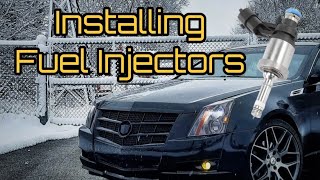
Typical fix: Replace the faulty fuel injector. 🎬 See this walkthrough on how to replace the fuel injectors. It is often recommended to replace all injectors on that bank, or all six, if they are high mileage. Ensure new seals are used.
Est. part cost: $70-$180 per injector - Loose or Corroded Injector Connector ⚪ Low Probability
How to confirm: Disconnect the electrical connector at fuel injector #2. Inspect the terminals for corrosion (green or white powder), pushed-out pins, or damage to the locking tab. Ensure it clicks securely back into place.
Typical fix: Clean the terminals with electrical contact cleaner. If a pin is loose or the connector is damaged, replace the connector pigtail.
Est. part cost: $10-$45
Rare But Worth Checking
- Engine Control Module (ECM) Failure: This is rare. The ECM contains a driver circuit for each injector. While a driver can fail, all other possibilities (especially wiring) must be exhaustively ruled out first before condemning the expensive ECM.
Diagnosis Steps
- Read the freeze-frame data with an OBD-II scanner to understand the conditions when the code was set.
- Identify Cylinder #2: It is the middle cylinder on the passenger side (right-hand bank) of the engine.
- Visually inspect the wiring harness for fuel injector #2. Follow it from the injector back as far as possible, looking for chafing, melting, or breaks. Per TSBs, pay special attention to where it passes the water outlet boss, intake plenum, and valve cover bolts.
- Disconnect the connector at injector #2 and inspect for corrosion or damaged pins.
- Use a noid light to test for an electrical pulse from the ECM at the injector connector. If the light flashes, the ECM and wiring are likely sending a signal.
- If no pulse is present, use a multimeter to check for battery voltage on one pin of the connector (key on, engine off) and check the control wire (the other wire) for a short to ground.
- If the wiring and signal seem good, test the resistance of the fuel injector itself. It should be between 1.9 and 2.3 ohms. If it's out of spec, the injector has failed.
- If wiring and the injector test good, the final possibility is a fault in the ECM's injector driver circuit. This is the least likely cause.
Parts You'll Likely Need
- Fuel Injector Connector Pigtail
(OEM #ACDelco PT2384 (GM 88862303))— If the wiring is damaged right at the connector, replacing the pigtail is the standard repair.
Trusted brands: ACDelco, Dorman, Standard Motor Products
OEM price range: $25-$45
Aftermarket price range: $10-$25 - Fuel Injector
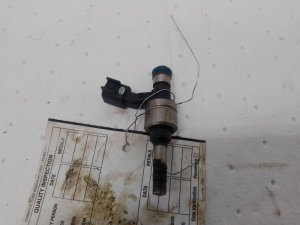
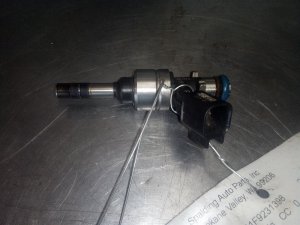
(OEM #ACDelco 217-3449 (GM 12638530) for LLT/LFX; ACDelco 217-3410 (GM 12625029) for LF1)— If the injector itself has an internal short or open circuit, it must be replaced.
Trusted brands: ACDelco, Bosch
OEM price range: $120-$180
Aftermarket price range: $50-$100
Related Codes That Often Appear With This One
- P0302 — This code means 'Cylinder 2 Misfire Detected'. It is a direct result of the injector circuit failing, as a lack of fuel will cause the cylinder not to fire correctly.
- P0300 — This code means 'Random/Multiple Cylinder Misfire Detected'. TSB PIP5386A specifically notes that P0264 can appear with P0300. The ECM may log this general misfire code as it tries to compensate for the fault on cylinder 2.
- P0265 — 'Cylinder 2 Injector Circuit High'. This code can also be caused by the same wiring harness issues, where a wire shorts to a power source instead of ground. TSB PIP5386A mentions this code alongside P0264.
Technical Service Bulletins (TSBs) & Recalls
- PIP5386A: Communicates diagnostic steps for P0264/P0265 with P0300, specifically pointing to a wire rub condition on the water outlet bolt boss for the #2 injector.
- PIP4924D: Warns of misfires with a long list of injector codes due to wiring harness rub-through on various GM V6 engines, including the CTS. Lists common chafe spots like the intake plenum, valve cover bolts, and fuel lines.
- PIP5386: The predecessor to PIP5386A, which first noted that P0264 with P0300 may be due to a wiring concern at the #2 fuel injector.
- PIT5424: Describes a similar wiring harness chafing issue on the 3.6L LFX engine in platform-mate vehicles (Equinox/Terrain), causing codes like P0264.
Platform-Specific Known Issues
- TSB PIP5386A specifically identifies a wiring concern at the #2 fuel injector for P0264/P0265 with P0300, pointing to a rub condition on the water outlet bolt boss.
- TSB PIP4924D (and its predecessors) provides a broader warning for a wide range of injector codes (including P0264) on 2010-2014 CTS models with V6 engines, advising technicians to carefully inspect the injector wiring harness for rubbing through against the intake, valve covers, or fuel lines.
- TSB PIT5424 notes a similar issue on platform mates with the LFX engine, where the harness rubs on the rear of the bank #2 (left cylinder head) valve cover and fastener bolt heads.
Mechanic-Grade Diagnostic Values
- Fuel Injector Resistance (3.6L LFX V6) — expected: 1.2 - 1.8 Ohms. Failure: A reading outside this range, OL (open), or near 0 (shorted) indicates a failed injector.
- Fuel Injector Resistance (3.0L LF1 / 3.6L LLT V6) — expected: ~11 - 15 Ohms. Failure: A significant deviation from this range indicates a failed high-impedance injector.
- Low-Side Fuel Pressure (Key ON, Engine OFF) — expected: 380-410 kPa (55-60 psi). Failure: Pressure below this range indicates a weak in-tank fuel pump or leak, which should be addressed but is not a direct cause of P0264.
- High-Side Fuel Pressure (at idle) — expected: Can exceed 2,000 PSI. Failure: While not a direct cause of an injector circuit code, low high-side pressure would indicate an issue with the high-pressure fuel pump (HPFP).
- Injector Pulse Width (at warm idle) — expected: 2 - 4 milliseconds (ms). Failure: A value of 0 ms on cylinder 2 while other cylinders show a normal pulse width points to the ECM not commanding the injector, likely due to the detected circuit fault.
Hidden / Shadow Codes Worth Checking
- Injector Control Circuit Test Status: This is not a DTC, but a specific data parameter visible on a GM GDS2/Tech2 scan tool. It will change from 'OK' or 'Not Run' to 'Fault' if there is an active condition with the injector circuit or its connection, providing a more definitive real-time confirmation of the fault than a standard code reader. (see via GM GDS2 or other professional-grade bidirectional scan tool.)
Scan Tool Commands That Help
- GDS2 / Tech2 / Professional Scan Tool: Fuel Injector Balance Test — This bidirectional command is used to confirm if an injector is mechanically faulty (clogged) versus electrically faulty. The tool sequentially disables each injector and measures the drop in fuel rail pressure. If the pressure drop for cylinder #2 is significantly different from the others (e.g., outside a 20% variance), the injector itself is likely faulty. This test should be performed after confirming the wiring is intact.
Wiring & Ground Locations
- G106 / G131 — Located on the rear of the right (G106) or left (G131) cylinder head/engine block.. These are primary engine grounds. A loose or corroded connection here can cause a variety of erratic sensor and actuator issues, including injector circuit faults.
- G130 — Located on the rear of the right cylinder head (Bank 2).. This ground is physically close to the Bank 2 injector harness. Verifying its integrity is a crucial step when diagnosing any issues on the passenger-side bank.
- G132 — Located on the top right of the engine.. Another key engine ground point. All engine grounds should be inspected for tightness and corrosion when troubleshooting electrical faults.
- Injector Harness Connectors (X116 / X117) — These are multi-way harness connectors located at the rear of the intake manifold.. Service manual procedures recommend disconnecting these to isolate testing between the ECM and the fuel injectors, allowing a technician to determine if a short or open is in the main engine harness or the injector-specific harness under the intake.
OEM Part Supersession History
GM 12638530 (ACDelco 217-3449)→GM 12669384— Standard part revision and consolidation by the manufacturer.
Heads up: This part has been replaced by 12669384. While the old number may still be found, the new number is the correct current replacement.
Model Year Variations Within This Range
- 2010-2011 (LLT Engine) vs. 2012-2016 (LFX Engine): The 3.6L V6 was updated from the LLT to the LFX in 2012. The injectors are not interchangeable. LLT engines use high-impedance injectors (~11-15 Ohms), while LFX engines use low-impedance injectors (~1.2-1.8 Ohms). Using the wrong type will cause running issues and can damage the ECM. The engines also use different ECMs (Bosch for LLT, Delphi for LFX) and intake manifolds (aluminum for LLT, composite for LFX).
- 2012 only (LFX Engine): The 2012 model year was the first year for the LFX engine, but it reportedly carried over the timing chain design from the earlier LLT engine, which was more prone to issues. The timing chain was redesigned for the 2013 model year, making 2013+ LFX engines generally more robust in this area.
Helpful Videos
Used OEM Parts in Stock

New Aftermarket Parts Available



The information in this article is provided for general reference and educational purposes only. Vehicle specifications, procedures, and part compatibility can vary by production date, trim level, and region. Always consult your vehicle's factory service manual and verify part numbers before purchasing or performing repairs. Safety-critical components such as airbags, seat belts, and braking systems should be installed by a qualified professional.
- Cadillac CTS:
- 🎬 Helpful Videos
- 🛍️ Shop This Part
- What's Unique About the 2010-2016 Cadillac CTS
- Diagnostic Flowchart
- Symptoms You May Notice
- Most Likely Causes
- Rare But Worth Checking
- Diagnosis Steps
- Parts You'll Likely Need
- Related Codes That Often Appear With This One
- Technical Service Bulletins (TSBs) & Recalls
- Platform-Specific Known Issues
- Mechanic-Grade Diagnostic Values
- Hidden / Shadow Codes Worth Checking
- Scan Tool Commands That Help
- Wiring & Ground Locations
- OEM Part Supersession History
- Model Year Variations Within This Range
- 🎟️ Get 5% Off