

P0262 on 2009-2014 Chevrolet Traverse: Cylinder 1 Injector Circuit High Fixes
This code indicates a high voltage problem in the cylinder #1 fuel injector circuit. The most common causes are a failed fuel injector or a damaged wiring harness. Expect a repair cost of $978-$1726 at a shop, as the intake manifold must be removed for access. Before replacing parts, a thorough inspection of the engine wiring harness is critical, as chafing is a known issue on this platform.
- P0262 on a Traverse means there's an electrical problem (high voltage) with the cylinder 1 fuel injector circuit.
- The most common fixes are replacing the cylinder 1 fuel injector or repairing a chafed wiring harness. Always inspect the wiring first due to known TSBs.
- This repair is labor-intensive due to the need to remove the intake manifold, making it a difficult DIY job with a high shop cost.
- Driving with this code can lead to catalytic converter damage, so prompt diagnosis is recommended.
What's Unique About the 2009-2014 Chevrolet TRAVERSE
The 2009-2014 Traverse uses a 3.6L V6 engine (part of the GM Lambda platform) where the fuel injectors are located under the intake manifold, making access labor-intensive. More importantly, GM has issued multiple Technical Service Bulletins (TSBs) like PIP4924D that cover P0262 and other injector codes, pointing to a known pattern of the engine wiring harness chafing against engine components. This rubbing can cause wires to short out, making a wiring fault a very common cause for this code, sometimes even more so than a failed injector.
Diagnostic Flowchart
Tap your situation to follow the diagnostic path that matches what you're seeing on this vehicle.
Symptoms You May Notice
- Check Engine Light is on
- Rough idle or engine stumbling
- Engine misfire, which may be felt as a shake, hesitation, or 'popping' sound
- Loss of power and poor acceleration
- Decreased fuel economy
- Replacing the spark plug or ignition coil for cylinder 1 without proper diagnosis. While these can cause a misfire (P0301), they do not cause an injector circuit code like P0262. The presence of P0262 specifically points to the fuel injector's electrical circuit.
Most Likely Causes
- Failed Cylinder 1 Fuel Injector 🔴 High Probability Direct injection fuel injectors operate under high pressure and can fail internally, causing an electrical short or out-of-spec resistance. This is a common failure part across all vehicles with this engine.
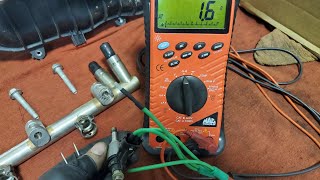
How to confirm: After confirming the wiring is okay, test the resistance of the fuel injector with a multimeter. A typical spec for many injectors is 12-16 Ohms, but the 3.6L LFX direct injector may be lower, around 1.2-1.8 Ohms. A reading significantly outside the manufacturer's specification indicates a faulty injector.
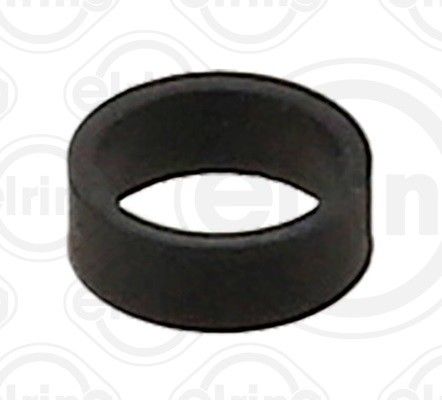
Typical fix: Replace the cylinder 1 fuel injector. Since the intake manifold must be removed, it is often recommended to replace all six injectors at the same time to save on future labor costs. It is also wise to replace the injector seals and intake gaskets during this job.
Est. part cost: $75-$215 per injector - Wiring Harness or Connector Issue 🟡 Medium Probability TSB PIP4924D specifically points to harness inspection. On the GM 3.6L engine, the harness is known to rub against the intake plenum, valve cover bolts, fuel lines, and the side of the cylinder head, leading to chafed wires and short circuits. This is a well-documented issue on the Traverse and its platform mates.
How to confirm: Visually inspect the wiring harness leading to the cylinder 1 injector for any signs of melting, chafing, or corrosion, paying close attention to the areas where it routes near the back of the engine and around brackets. Check the electrical connector at the injector for a secure fit and clean, un-corroded pins. Use a multimeter to check for a short to voltage in the circuit.
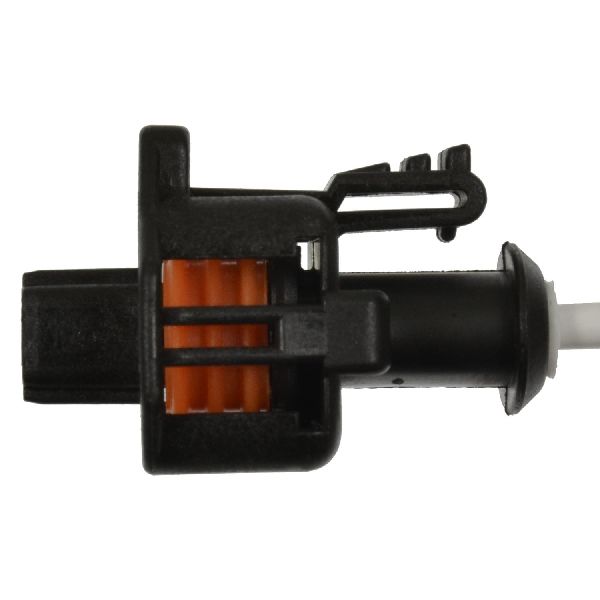
Typical fix: Repair the damaged section of the wiring harness with new wire and heat-shrink tubing or replace the faulty connector pigtail. In severe cases, a new engine harness may be needed.
Est. part cost: $5-$25 for a connector, variable for harness repair
Rare But Worth Checking
- Faulty Engine Control Module (ECM): This is the least likely cause. The internal driver circuit for the injector can fail, but all other possibilities (injector, wiring) should be exhaustively ruled out before condemning the ECM.
- Loose or Corroded Fuse Block Connection: Some owners have reported that misfires on an entire bank of cylinders (e.g., 2, 4, 6) were traced back to poor connections at the under-hood fuse block, caused by vibration or a previous repair. While P0262 is for a single cylinder, a widespread electrical issue could manifest this way.
Diagnosis Steps
- Scan the vehicle for all stored trouble codes and review any freeze-frame data.
- Confirm the presence of P0262 and likely P0301.
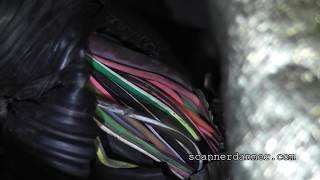
- Perform a thorough visual inspection of the engine wiring harness, especially where it routes near the back of the engine, around the intake manifold, and near the ECM. Look for obvious signs of chafing, melting, or corrosion as noted in TSBs.
- Use a 'noid' light to test the injector connector. The light should flash, indicating the ECM is sending a signal. If it stays on continuously, there may be a short to power.
- Disconnect the injector and use a multimeter to check for battery voltage on one of the pins in the connector with the key on.
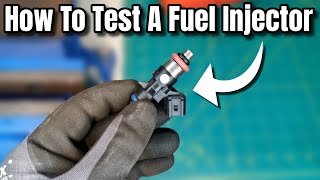
- Test the resistance of the fuel injector itself. Compare the reading to the manufacturer's specifications (e.g., 1.2-1.8 Ohms for LFX). A reading that is too low or shows an open circuit indicates a failed injector.
- If the injector tests good and the wiring appears intact, perform a continuity test on the wires between the ECM and the injector connector to rule out a hidden break or short.
- If the injector and wiring are confirmed to be good, the fault may lie within the ECM, but this is rare and should be the last consideration.
Parts You'll Likely Need
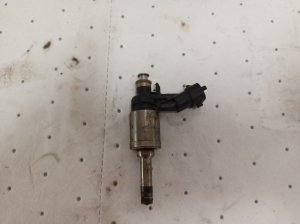
- Fuel Injector
(OEM #12638530 (superseded by ACDelco 217-3445))— This is the most common component to fail internally, causing the electrical fault that triggers P0262.
Trusted brands: ACDelco, Hitachi, Bosch
OEM price range: $110-$215
Aftermarket price range: $75-$150 - Upper and Lower Intake Manifold Gaskets
(OEM #Fel-Pro MS 97218 (example aftermarket set))— These must be replaced anytime the intake manifold is removed to access the fuel injectors to prevent vacuum leaks. Using a quality set with a steel carrier can be an upgrade over OE plastic.
Trusted brands: Fel-Pro, ACDelco
OEM price range: $50-$90
Aftermarket price range: $30-$60
Related Codes That Often Appear With This One
- P0301 — This code indicates a 'Cylinder 1 Misfire'. It is almost always present with P0262 because the injector circuit fault prevents proper fueling, causing the cylinder to misfire.
- P0261 — This code for 'Cylinder 1 Injector Circuit Low' can sometimes appear with P0262 if the wiring has an intermittent fault that causes both low (open) and high (short) voltage conditions.
- P0201 — This code for 'Injector Circuit/Open - Cylinder 1' is another related fault. If multiple injector codes for different cylinders appear (e.g., P0201, P0202, P0262, P0264), it strongly suggests a wiring harness issue affecting multiple wires rather than multiple failed injectors.
Technical Service Bulletins (TSBs) & Recalls
- PIP4924D: Mentions P0262 in a list of codes related to engine misfires and the Check Engine Light, advising technicians to inspect the fuel injector wiring harness for rubbing through or internal shorts.
Platform-Specific Known Issues
- As noted in TSB #PIP4924D, a range of injector circuit codes, including P0262, can occur on these engines, pointing to a need for careful inspection of the electrical system during diagnosis.
- The wiring harness is known to chafe on various engine parts, such as the intake plenum, valve cover bolts, and cylinder head, causing shorts that trigger this code.
Mechanic-Grade Diagnostic Values
- Fuel Injector Resistance (Direct Injection) — expected: 1.2 - 2.0 Ohms. Failure: A reading of 0 Ohms (shorted) or infinite/OL (open).
- Injector Connector Voltage (Key On, Engine Off) — expected: Battery Voltage (~12V) on the power supply wire.. Failure: No voltage indicates a problem in the power supply circuit; voltage on the control wire indicates a short to power.
- Injector Pulse Width (at idle) — expected: ~2.0 - 3.5 milliseconds (ms). Failure: A value of 0 ms or a wildly fluctuating number on cylinder 1 compared to others can indicate a control problem.
- Injector Inductive Kick (Oscilloscope) — expected: A sharp voltage spike to 60V or higher (can exceed 100V) immediately after the ECM grounds the injector.. Failure: A missing or weak inductive kick suggests a shorted injector coil or a problem in the control circuit.
Scan Tool Commands That Help
- GM GDS2 (Global Diagnostic System 2): Fuel Injector Balance Test / Cylinder Power Balance — This function allows a technician to disable one injector at a time to observe the RPM drop for each cylinder. If disabling cylinder 1 causes no change in RPM, it confirms that cylinder is not contributing, which is expected with P0262. It helps verify the fault's impact in real-time.
- GM GDS2 (Global Diagnostic System 2): Injector Test — This is a bidirectional control that commands a specific injector to fire a set number of times. It can be used with a fuel pressure gauge to check for a pressure drop, confirming the injector is mechanically capable of opening, which helps isolate electrical vs. mechanical injector issues.
Wiring & Ground Locations
- Injector 1 ECM Pin — For the 3.6L DI engine, the high-side driver for injector #1 is located at Pin 75 of the X1 ECM connector.. This is the specific pin at the ECM that controls the cylinder 1 injector. A continuity or voltage test can be performed here to definitively determine if the fault is in the wiring harness or the ECM itself.
- G110 — Located on the right rear of the engine, mounted to the back of the cylinder head, often on a bracket above the power steering pressure hose.. This is a primary engine ground. A loose or corroded G110 can cause unstable voltages and electrical noise for sensors and actuators on the rear cylinder bank (Bank 1), which includes cylinder 1.
- G112 — Also located on the rear of the engine, mounted to the rear of the cylinder head.. Similar to G110, this ground's integrity is critical for the proper operation of components on the firewall side of the engine.
- Injector Harness Chafe Point — Pay close attention to where the harness routes around the rear of the intake plenum and near valve cover bolts.. As noted in TSB PIP4924D, this area is a known weak point where engine vibration can cause the harness to rub through, shorting the injector control wire to another wire or to ground, directly causing circuit codes like P0262.
Real Owner Repair Stories
- 2CarPros Forum User (2014 Chevrolet Camaro 3.6L V6 (LFX Engine)) — Misfire on cylinder 5 with DTC P216C (Fuel Injector 5 Circuit High).
❌ Tried (didn't work) Replaced all fuel injectors.
✅ What actually fixed it The issue persisted after replacing the injector, confirming the fault was in the wiring or the ECM. The owner requested and used a wiring diagram and ECM pinouts to perform continuity and voltage checks between the ECM connector and the injector connector to find the short in the harness.
OEM Part Supersession History
12638530→12669384— Standard part revision for improved reliability or manufacturing process.
Heads up: While physically similar, earlier injectors like 12611545 and 12632255 were also part of this family. It is critical to use the correct part number for the specific engine (LLT vs LFX) as flow rates and electrical characteristics may differ slightly.
Model Year Variations Within This Range
- 2009-2011: These model years primarily use the 3.6L LLT V6 engine, which is equipped with a Bosch Engine Control Module (ECM).
- 2012-2014: These model years use the updated 3.6L LFX V6 engine. This engine features a lighter composite intake manifold, integrated exhaust manifolds cast into the cylinder heads, and a different Delphi ECM. The wiring harnesses and ECM pinouts are not directly interchangeable with the earlier LLT engine.
Helpful Videos

Used OEM Parts in Stock


New Aftermarket Parts Available


The information in this article is provided for general reference and educational purposes only. Vehicle specifications, procedures, and part compatibility can vary by production date, trim level, and region. Always consult your vehicle's factory service manual and verify part numbers before purchasing or performing repairs. Safety-critical components such as airbags, seat belts, and braking systems should be installed by a qualified professional.
- Chevrolet TRAVERSE:
- 🎬 Helpful Videos
- 🛍️ Shop This Part
- What's Unique About the 2009-2014 Chevrolet TRAVERSE
- Diagnostic Flowchart
- Symptoms You May Notice
- Most Likely Causes
- Rare But Worth Checking
- Diagnosis Steps
- Parts You'll Likely Need
- Related Codes That Often Appear With This One
- Technical Service Bulletins (TSBs) & Recalls
- Platform-Specific Known Issues
- Mechanic-Grade Diagnostic Values
- Scan Tool Commands That Help
- Wiring & Ground Locations
- Real Owner Repair Stories
- OEM Part Supersession History
- Model Year Variations Within This Range
- 🎟️ Get 5% Off