

P0262 on 2010-2014 Cadillac SRX: Cylinder 1 Injector Circuit High Causes and Fixes
P0262 on a Cadillac SRX means the Cylinder 1 fuel injector has an electrical fault. The most likely causes are a faulty fuel injector or a damaged wiring harness. Since Cylinder 1 is on the rear bank against the firewall, repair requires removing the intake manifold and is moderately difficult.
- P0262 on a 2010-2014 SRX points specifically to a 'Circuit High' electrical fault for the cylinder 1 fuel injector, not a spark or compression issue.
- The most common causes are a failed fuel injector or a chafed wiring harness, which is a known issue documented in GM service bulletin PIP4924D.
- Repair is labor-intensive because Cylinder 1 is on the rear bank, requiring removal of the upper intake manifold.
- When diagnosing, it's crucial to use the correct resistance specification for your specific engine (3.0L LF1 vs. 3.6L LFX).
- Due to the high labor cost, it is wise to consider replacing all three rear-bank injectors and all intake gaskets at the same time.
What's Unique About the 2010-2014 Cadillac SRX
On the second-generation Cadillac SRX, this code is complicated by the location of Cylinder 1. On both the 3.0L and 3.6L V6 engines, Cylinder 1 is part of the rear bank of cylinders, tucked against the firewall. This makes access difficult, as the upper intake manifold must be removed to reach the injector and its wiring. Furthermore, a broad GM Technical Service Bulletin (PIP4924D) covers a wide range of injector codes, including P0262, and points to a known issue with the engine wiring harness chafing 🎬 See this video for common P0262 symptoms and harness repair tips. against engine components, which can cause these faults.
Diagnostic Flowchart
Tap your situation to follow the diagnostic path that matches what you're seeing on this vehicle.
Symptoms You May Notice
- Check Engine Light is on
- Rough idle or engine vibration
- Engine misfire, which may feel like a stumble or hesitation during acceleration
- Reduced engine power and poor throttle response
- Poor fuel economy
- A distinct smell of raw fuel from the exhaust
- Replacing the spark plug or ignition coil for Cylinder 1. While these parts can cause a misfire (P0301), they will not cause a P0262 'circuit' code. The code specifically points to an electrical problem with the injector circuit, not a combustion problem.
Most Likely Causes
- Faulty Cylinder 1 Fuel Injector 🔴 High Probability Direct injection (DI) fuel injectors operate under extreme pressure and can fail internally, causing an electrical short or open circuit. This is a common failure point across the GM High Feature V6 engine family.
How to confirm: After gaining access to the injector, measure its internal resistance with a multimeter. For the 3.0L LF1, the spec is around 11-14 ohms. For the 3.6L LFX, the spec is much lower, between 1.2 and 1.8 ohms. A reading far outside this range indicates a faulty injector. The most definitive test is to swap the Cylinder 1 injector with another cylinder's (e.g., Cylinder 3, also on the rear bank). If the code changes to P0268 (Cylinder 3 Injector Circuit High), the injector is faulty.
Typical fix: Replace the faulty fuel injector. It is highly recommended to replace all Teflon seals and the retaining clip. Many technicians advise replacing all injectors on the same bank (or all six) at the same time, especially on higher mileage vehicles, to prevent future failures.
Est. part cost: $70-$140 for a single OEM injector - Wiring Harness or Connector Issue 🟡 Medium Probability GM TSB PIP4924D specifically calls out wiring harness issues for a range of injector codes. The harness can rub through its insulation at several common points: against the intake plenum, on valve cover bolts, against fuel lines, or on the side of the cylinder head under the intake. This chafing can cause a short to voltage, triggering the P0262 code.
How to confirm: Once the intake manifold is removed, visually inspect the entire length of the wiring harness leading to the Cylinder 1 injector. Pay close attention to the contact points mentioned in the TSB. Check the connector for bent, corroded, or backed-out pins. Perform a continuity test from the injector connector back to the ECM connector to check for shorts to power or ground.
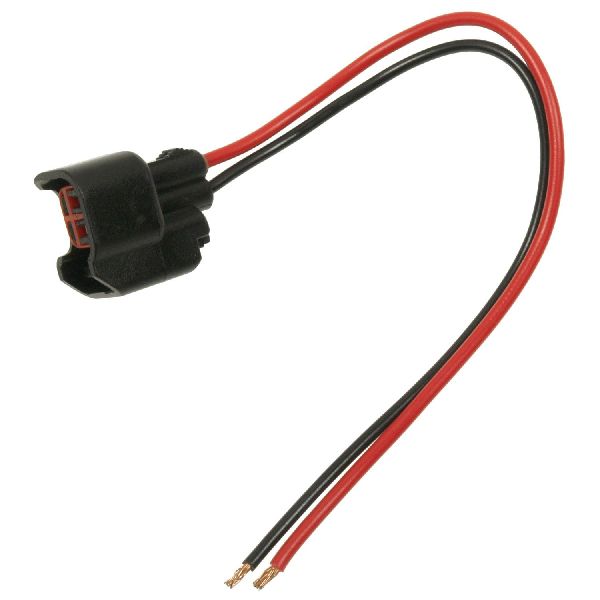
Typical fix: Repair the damaged section of the wiring harness using solder and heat-shrink tubing, or replace the injector pigtail connector if the damage is at the connector itself. Wrap the repaired area with high-quality anti-abrasion tape and ensure the harness is properly routed and secured away from heat sources or sharp edges.
Est. part cost: $15-$50 for a connector pigtail - Faulty Engine Control Module (ECM) ⚪ Low Probability
How to confirm: This should be the last resort after definitively ruling out the injector and wiring. A professional would use an oscilloscope to check the driver signal from the ECM. If the signal is stuck 'on' (grounded) or shows abnormal voltage when it should be pulsing, the internal driver transistor in the ECM has likely failed.
Typical fix: Replace and reprogram the Engine Control Module. This requires a dealership or a specialized shop with the correct programming tools like GM's TIS2WEB.
Est. part cost: $300-$800+
Diagnosis Steps
- Confirm the code with an OBD-II scanner. Note any other codes present, especially P0301.
- Due to the location of Cylinder 1, significant disassembly is required. Disconnect the battery. Remove the engine cover, air intake snorkel, and throttle body.
- Carefully disconnect all sensors and vacuum lines attached to the upper intake manifold and remove it. This will expose the rear fuel rail and injectors. It is critical to replace the intake gaskets during reassembly.
- Locate Cylinder 1 (rear bank, passenger side). Visually inspect the injector's electrical connector and the surrounding wiring for any obvious damage, melting, or corrosion. Check for chafing against the cylinder head or brackets as per TSB PIP4924D.
- Disconnect the injector. Use a multimeter to test the resistance across the two pins of the injector. For a 3.6L LFX engine, the reading should be between 1.2 and 1.8 ohms. For a 3.0L LF1, it should be around 12 ohms. A reading of 0 or infinity (OL) indicates a failed injector.
- If you have a noid light, connect it to the injector harness connector and have a helper briefly crank the engine. The light should flash, indicating the ECM is sending a signal. If the light stays on constantly, it points to a shorted driver in the ECM or a short to ground in the harness.
- The most reliable DIY test is to swap the Cylinder 1 injector with the Cylinder 3 injector (middle of the rear bank). Reassemble the intake manifold enough to run the engine safely (new gaskets are still recommended).
- Clear the codes and start the engine. If the code returns as P0268 (Cylinder 3), the injector is confirmed bad. If the code remains P0262, the problem is in the wiring or ECM.
Parts You'll Likely Need
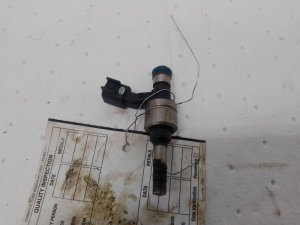
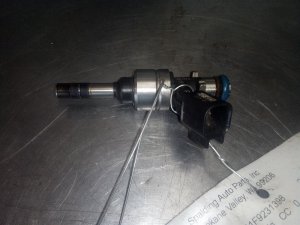
- Fuel Injector
(OEM #12669384 or 12634126 (for 3.6L LFX), 12632255 or 217-3449 (for 3.0L LF1))— An internal short in the injector is a primary cause of a 'Circuit High' fault. Part numbers for the LFX engine have been superseded; always verify the latest number with a dealer.
Trusted brands: ACDelco (GM Genuine), Bosch, Standard Motor Products
OEM price range: $90-$150
Aftermarket price range: $50-$90 - Upper Intake Manifold Gasket Set
(OEM #Fel-Pro MS 97222 / MS 97240-1 (for 3.6L LFX))— The intake manifold must be removed to access the injector. The gaskets are considered single-use and must be replaced to prevent vacuum leaks upon reassembly.
Trusted brands: Fel-Pro, ACDelco
OEM price range: $40-$60
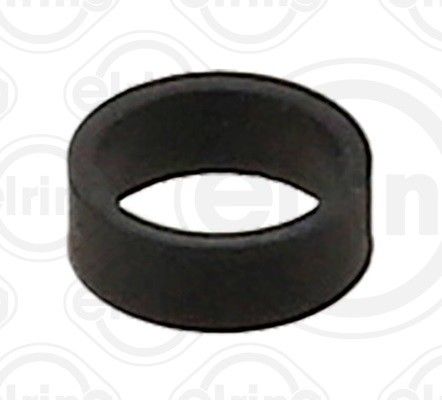
Aftermarket price range: $20-$40 - Fuel Injector Seal Kit — Each direct injector has a Teflon seal at the tip that must be replaced whenever the injector is removed from the cylinder head. A special sizing tool is required to install the seal correctly without damaging it.
Trusted brands: ACDelco, Bosch
OEM price range: $5-$10 per injector
Aftermarket price range: $3-$7 per injector
Related Codes That Often Appear With This One
- P0301 — P0301 is 'Cylinder 1 Misfire Detected'. Since the P0262 fault prevents the injector from delivering the correct amount of fuel, the cylinder will inevitably misfire, logging both codes.
- P0201 — P0201 is a general 'Injector Circuit/Open' for Cylinder 1. Sometimes a fault can be intermittent or on the border between a 'High' and 'Open' condition, causing both codes to be stored.
- P0261 — This is for 'Cylinder 1 Injector Circuit Low'. Seeing this along with P0262 could indicate a very erratic wiring short or a failing ECM driver that is fluctuating between states.
Technical Service Bulletins (TSBs) & Recalls
- PIP4924D: This is the most relevant Preliminary Information bulletin from GM. It lists a large group of injector circuit DTCs (P0201-P0206, P0261, P0262, etc.) and advises technicians that the likely cause is a wiring harness that has rubbed through against an engine component. It specifically mentions checking against the intake, valve cover bolts, and cylinder head.
Platform-Specific Known Issues
- A Technical Service Bulletin (TSB #PIP4924D) exists for a wide range of injector circuit codes, including P0262. It directs technicians to carefully inspect the fuel injector wiring harness for rubbing (chafing) or internal wire opens. Common chafe points are against the intake plenum, valve cover bolts, fuel lines, and the side of the cylinder head. This indicates a known pattern of harness failure on this platform and its relatives.
- The 3.6L LFX and 3.0L LF1 are direct injection engines, meaning the injectors are located under the intake manifold and spray fuel directly into the combustion chamber. This makes them more labor-intensive to service than traditional port-injected engines.
Mechanic-Grade Diagnostic Values
- Fuel Injector Resistance (3.6L LFX Engine) — expected: 1.5 - 1.6 ohms. Failure: A reading of 0 ohms (short), infinity/OL (open), or a value significantly outside the expected range.
- Low-Side Fuel Pressure (Key On, Engine Off) — expected: 55 - 60 PSI. Failure: Pressure significantly below this range indicates a weak in-tank fuel pump or a leak in the low-pressure system.
- High-Side Fuel Pressure (at Idle, Engine Warm) — expected: ~300 PSI. Failure: Pressure that is wildly different from the scan tool's desired reading, or pressure that drops immediately to zero after engine shutdown, indicates a leak in the high-pressure system, very often a leaking injector.
Scan Tool Commands That Help
- GM GDS2 / Tech2 or equivalent professional scanner: Injector Flow Rate Programming — This is a mandatory step after replacing a fuel injector. Each injector has a unique flow rate characterization code printed on it that must be programmed into the ECM to ensure proper fueling and engine performance. The GDS2 path is typically: ECM > Module Diagnostics > Engine Control Module > Control Functions > Configuration Reset > Injector Flow Rate Programming.
- GM GDS2 / Tech2 or equivalent professional scanner: Injector Balance Test — This bidirectional test allows the technician to individually disable each fuel injector and monitor the RPM drop for each cylinder. A cylinder with a smaller RPM drop indicates a weak or non-functioning injector. This can help confirm a fault before performing the difficult intake manifold removal.
Wiring & Ground Locations
- Engine Control Module (ECM) — Located in the left front (driver's side) of the engine compartment.. The ECM contains the injector driver circuits that control the Cylinder 1 injector. All circuit tests for continuity, shorts to ground, or shorts to power will ultimately lead back to the connectors on this module.
- X161 Connector — A large, multi-wire harness connector located at the right rear top of the 3.6L LFX engine.. This is a critical intermediate connector where the fuel injector sub-harness joins the main engine harness. It is an excellent, accessible point to perform continuity and voltage tests without needing to access the less accessible ECM connectors directly.
- G103 / G104 Engine Grounds — G103 is located on the front of the passenger side cylinder head. G104 is a ground strap on the rear of the driver's side cylinder head.. The ECM and its sensors rely on clean, solid ground connections. A corroded or loose engine ground can create voltage offsets and electrical noise, potentially leading to false or intermittent circuit high/low codes. These grounds should be inspected, cleaned, and tightened during diagnosis.
Real Owner Repair Stories
- iATN (International Automotive Technicians Network) (2004 Cadillac SRX (Note: This is a 1st Generation SRX, but provides a relevant data point for the code's cause)) — Multiple injector circuit codes including P0262 and P0265.
❌ Tried (didn't work) Not specified, but the final diagnosis pointed away from injectors or wiring.
✅ What actually fixed it The Engine Control Module (ECM) was faulty and had to be replaced and programmed by the dealer to resolve the codes.
OEM Part Supersession History
12642128→12634126— Standard part evolution, likely for improved reliability or manufacturing process.
Heads up: The newer part number (12634126) is the correct service replacement for the older number.
Model Year Variations Within This Range
- 2010-2011 (3.0L LF1): Uses fuel injector P/N 12632255 (or equivalent) with a higher internal resistance of approximately 12 ohms.
- 2012-2014 (3.6L LFX): Uses fuel injector P/N 12634126 (or superseding number) with a much lower internal resistance, typically measuring between 1.5 and 1.6 ohms.
Helpful Videos
Used OEM Parts in Stock


New Aftermarket Parts Available


The information in this article is provided for general reference and educational purposes only. Vehicle specifications, procedures, and part compatibility can vary by production date, trim level, and region. Always consult your vehicle's factory service manual and verify part numbers before purchasing or performing repairs. Safety-critical components such as airbags, seat belts, and braking systems should be installed by a qualified professional.
- Cadillac SRX:
- 🎬 Helpful Videos
- 🛍️ Shop This Part
- What's Unique About the 2010-2014 Cadillac SRX
- Diagnostic Flowchart
- Symptoms You May Notice
- Most Likely Causes
- Diagnosis Steps
- Parts You'll Likely Need
- Related Codes That Often Appear With This One
- Technical Service Bulletins (TSBs) & Recalls
- Platform-Specific Known Issues
- Mechanic-Grade Diagnostic Values
- Scan Tool Commands That Help
- Wiring & Ground Locations
- Real Owner Repair Stories
- OEM Part Supersession History
- Model Year Variations Within This Range
- 🎟️ Get 5% Off