

P0261 on 2009-2014 Chevrolet Traverse: Cylinder 1 Injector Circuit Low Causes and Fixes
P0261 on a 2009-2014 Traverse indicates a low voltage problem in the cylinder 1 fuel injector circuit. The most common causes are a damaged wiring harness chafing against the engine or a faulty fuel injector. Expect to pay $100-$250 for a new injector and $50-$200 for wiring repair.
- P0261 means the computer has detected a low voltage fault in the cylinder 1 fuel injector's electrical circuit.
- Before replacing any parts, thoroughly inspect the engine wiring harness for signs of rubbing or chafing against the engine, as this is a known issue on the Traverse (TSB #PIP4924D).
- If the wiring is good, the most likely cause is a failed fuel injector for cylinder 1.
- Driving with this code can lead to a misfire, rough running, and potential damage to the catalytic converter.
What's Unique About the 2009-2014 Chevrolet TRAVERSE
On the 3.6L V6 engine used in the Traverse and its platform mates (Acadia, Enclave, Outlook), injector circuit codes like P0261 are frequently linked to the engine wiring harness. A widely-cited GM Technical Service Bulletin (TSB #PIP4924D) specifically points to the harness rubbing through (chafing) on parts of the engine, causing a short circuit. Common chafe points include the intake plenum, valve cover bolts, fuel lines, and the side of the cylinder head. This is a well-documented issue, making a thorough harness inspection a critical first step before assuming the fuel injector itself has failed.
Diagnostic Flowchart
Tap your situation to follow the diagnostic path that matches what you're seeing on this vehicle.
Symptoms You May Notice
- Check Engine Light is on (may be flashing if misfire is severe)
- Engine misfire, which may be more noticeable at idle (P0301)
- Rough or unstable idle
- Hesitation or stumbling during acceleration
- Reduced engine power, sometimes triggering a 'Reduced Engine Power' message
- Poor fuel economy
- Engine may be hard to start
- Replacing the fuel injector without first inspecting the wiring harness. Given the known TSB, a wiring issue is highly probable and should be checked first to avoid unnecessary expense and repeat work.
Most Likely Causes
- Fuel Injector Wiring Harness Damaged or Shorted 🔴 High Probability As noted in TSB #PIP4924D, the injector wiring harness on these engines is known to rub against the intake manifold, valve cover bolts, or cylinder head, leading to chafed wires and short circuits. This is the most probable cause on this specific vehicle.
How to confirm: Visually inspect the entire length of the wiring harness leading to the cylinder 1 fuel injector. Pay close attention to any areas where the harness makes contact with metal engine components, especially under the intake plenum and near the back of the cylinder head. Look for worn plastic conduit, exposed copper wires, or shiny rub marks on the engine. If multiple injector codes are present, a wiring issue is almost certain.
Typical fix: Repair the damaged section of wire and protect the harness with new conduit 🎬 Learn how to professionally restore and protect your engine wiring harness. or re-route it to prevent future contact. In severe cases, the injector harness pigtail or the entire engine harness may need replacement. A Camaro owner with the same engine and codes ultimately had to replace the entire engine wiring harness to fix the short. 🎬 Watch this step-by-step repair for the P0261 code and misfire.
Est. part cost: $15-$50 for a pigtail connector, $200-$400 for a new engine wiring harness section. - Faulty Fuel Injector 🟡 Medium Probability Direct injection fuel injectors operate under high pressure and can fail electrically (internal short) or mechanically over time. An internal short in the injector's coil winding will cause a 'Circuit Low' condition.
How to confirm: Swap the cylinder 1 fuel injector with an injector from another cylinder (e.g., cylinder 3). Clear the codes and drive the vehicle. If the code changes to P0267 (Cylinder 3 Injector Circuit Low), the injector is faulty. You can also test the injector's internal resistance with a multimeter; compare the reading to a known-good injector. A reading significantly lower than the others indicates an internal short. The expected resistance for the LLT engine injector is between 1.25 and 1.75 ohms.
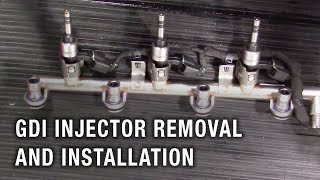
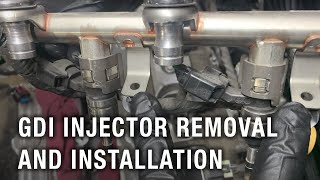
Typical fix: Replace the failed fuel injector. It is often recommended to replace all injectors on the same bank, 🎬 See this walkthrough on how to remove and install GDI injectors. or all six, if they are original and have high mileage to ensure consistent performance.
Est. part cost: $80-$150 - Loose or Corroded Injector Connector ⚪ Low Probability
How to confirm: Unplug the connector at the cylinder 1 fuel injector and inspect the pins and terminals for any signs of corrosion (green or white powder), moisture, or damage. Ensure the connector clicks securely into place and the locking tab is intact.
Typical fix: Clean the connector terminals with an electrical contact cleaner and apply dielectric grease to protect the connection. If the connector is damaged or won't stay secure, replace the connector pigtail.
Est. part cost: $15-$50
Rare But Worth Checking
- Faulty Engine Control Module (ECM): This is the least likely cause. The ECM's internal driver for the injector circuit can fail, but all other possibilities (wiring, injector) must be exhaustively ruled out before condemning the ECM. This should only be considered after confirming the wiring and injector are good.
Diagnosis Steps
- Read the code with an OBD-II scanner and confirm P0261 is present. Note any other codes, especially P0301 or other injector codes.
- Locate cylinder 1 on the 3.6L V6 engine. It is the front cylinder on the passenger side (right bank).
- Perform a thorough visual inspection of the engine wiring harness, focusing on the path from the ECM to the cylinder 1 injector. Per TSB #PIP4924D, pay special attention to where the harness may rub against the intake manifold, valve cover bolts, and the side of the cylinder head.
- Inspect the electrical connector at the cylinder 1 injector. Check for loose pins, corrosion, or damage. Ensure it is securely connected.
- Perform a quick functional check: Start the engine, and carefully place the tip of a long screwdriver on the body of the cylinder 1 injector, then press your ear to the handle. You should hear a steady clicking sound. If it's silent, there's no electrical activity.
- If wiring looks good, swap the cylinder 1 fuel injector with another cylinder's injector (e.g., cylinder 3).
- Clear the DTCs, start the engine, and let it run. Re-scan for codes.
- If the code changes to P0267 (Cylinder 3), the fuel injector is the problem and must be replaced.
- If code P0261 returns, the fault is in the wiring or the ECM. Perform a continuity test on the injector control wire from the injector connector back to the ECM connector to find the short or open circuit.
- A noid light can be used at the injector connector to see if the ECM is sending a pulse. If there is no pulse but the wiring is confirmed to be good, the ECM may be at fault.
Parts You'll Likely Need
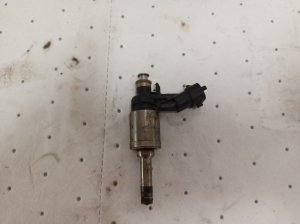
- Fuel Injector
(OEM #12638530)— This is a common failure point if the wiring harness is confirmed to be intact. The internal coil of the injector can short out, causing the 'Circuit Low' condition. This part number is widely cited for the 3.6L LLT engine.
Trusted brands: ACDelco, Bosch
OEM price range: $120-$180
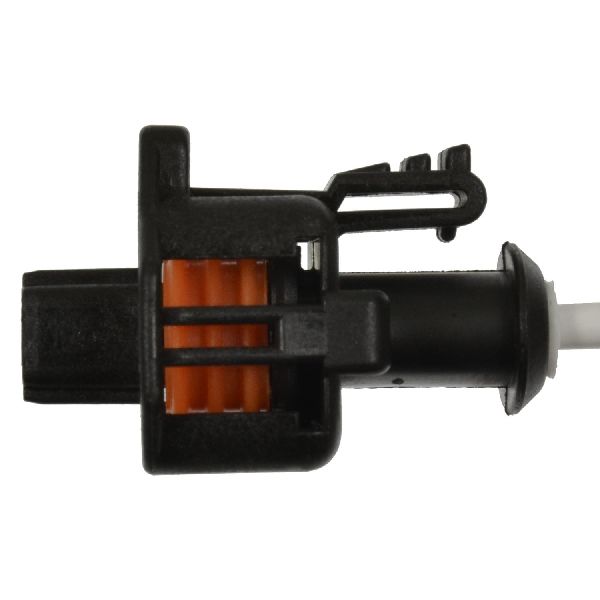
Aftermarket price range: $70-$120 - Fuel Injector Connector Pigtail
(OEM #PT2160 / 88988313)— Needed if the original connector is broken, corroded, or has been damaged by a short circuit at the injector.
Trusted brands: ACDelco, Dorman
OEM price range: $25-$40
Aftermarket price range: $15-$30 - Fuel Injector Wiring Harness (Right Bank)
(OEM #12690532)— If the chafing damage to the harness is extensive, replacing the entire bank's harness section may be easier than repairing multiple wires. This part number is for the passenger side harness.
Trusted brands: GM Genuine Parts
OEM price range: $150-$250
Related Codes That Often Appear With This One
- P0301 — P0301 is a misfire code for cylinder 1. Since P0261 indicates a problem with the cylinder 1 injector circuit, the cylinder is likely not getting the correct amount of fuel, leading to a misfire.
- P0201 — P0201 is a general 'Injector Circuit/Open' code for cylinder 1. It often appears alongside P0261 as they both point to an electrical fault in the same circuit.
- P2149 — This code for 'Fuel Injector Group 'B' Supply Voltage Circuit/Open' can appear if the short in the cylinder 1 circuit also affects the shared voltage supply for that injector bank. A user on a Camaro forum reported this code appearing with P0261 due to a wiring harness short.
- P0300 — This indicates random or multiple cylinder misfires. A severe issue with one injector can sometimes affect engine balance enough for the ECM to detect misfires on other cylinders as well.
Technical Service Bulletins (TSBs) & Recalls
- PIP4924D: Addresses engine misfires and a wide range of fuel injector DTCs, including P0261, caused by the injector wiring harness rubbing through or having internal opens. This is the most relevant TSB for this issue.
Platform-Specific Known Issues
- TSB #PIP4924D explicitly mentions that codes P0261, along with a host of other injector codes, can be caused by the fuel injector wiring harness rubbing through on the engine. This bulletin directs technicians to inspect the harness for damage at specific points: against the intake plenum, at valve cover bolts, against the fuel line, and on the side of the head under the plenum, and then repair or replace it as needed.
Mechanic-Grade Diagnostic Values
- Fuel Injector Coil Resistance (3.6L LLT Engine) — expected: 1.25 - 1.75 Ohms. Failure: A reading of 0 ohms (short), infinity/OL (open), or significantly outside the specified range indicates a failed injector coil.
- Injector Circuit Voltage (Key On, Engine Off) — expected: 11.5 - 12.5 Volts (Battery Voltage) on the power feed wire to the injector.. Failure: Voltage below 9V suggests a problem in the power supply circuit, such as high resistance or a short.
- Wiring Continuity (ECM to Injector Connector) — expected: Less than 0.2 Ohms. Failure: A reading higher than 0.2 Ohms indicates excessive resistance in the wire; an OL (Over Limit) reading indicates an open circuit.
- Low-Side Fuel Pressure (In-Tank Pump) — expected: 50-60 PSI (Key On, Engine Off).. Failure: Pressure below specification indicates a weak in-tank pump or a clogged filter.
- High-Side Fuel Pressure (Engine-Driven Pump) — expected: Highly variable; ~500 PSI at idle, up to and over 1,740 PSI under load. Monitored with a scan tool.. Failure: Pressure that does not respond to engine RPM and load, or is significantly lower than commanded pressure, points to a failing high-pressure fuel pump.
Scan Tool Commands That Help
- GDS2 / Tech2: Injector Balance Test — This function allows a technician to command each injector to fire for a set duration while monitoring fuel rail pressure drop. An injector that causes a significantly different pressure drop compared to the others can be identified as faulty (mechanically restricted or leaking).
- GDS2 / Tech2: Misfire Current Counter — While observing live data with the engine running, this parameter will increment for any cylinder that is misfiring. This helps confirm that the P0261 circuit fault is causing a tangible performance issue on cylinder 1.
- Professional Scan Tool (e.g., iCarsoft, Autel): Active Test / Bidirectional Control — Allows the user to command the cylinder 1 injector to activate (click) with the engine off. If the injector clicks, it confirms the wiring and injector coil are capable of functioning, pointing the diagnosis towards a driver issue in the ECM or an intermittent problem. If it does not click, it confirms a fault in the wiring or the injector itself.
Wiring & Ground Locations
- Cylinder 1 Location — Front cylinder on the passenger side (Right Bank, closest to the front of the vehicle).. This is the specific cylinder referenced by the P0261 code.
- ECM (Engine Control Module) — In the engine bay, located in a black plastic bracket next to the vacuum pump, near the driver's side firewall.. The ECM contains the injector driver circuits and is the termination point for the injector wiring harness. All continuity and voltage tests of the control circuit originate or terminate here.
- ECM Connector X1 — One of the large multi-pin connectors at the ECM. On some 3.6L models, the connector has a Blue terminal position assurance lock.. The control wire for the cylinder 1 injector runs to a specific pin on this connector (e.g., Pin 5 on some diagrams for the related P0262 code). This is the terminal point for checking the control wire's integrity back to the ECM.
- Ground G110 — Located on the right rear of the engine, mounted to the back of the cylinder head.. This is a primary engine ground. A poor or loose connection at G110 can cause erratic voltages and communication issues for multiple components controlled by the ECM, potentially including the injector driver circuits.
OEM Part Supersession History
12638530→12669384— Part has been updated by the manufacturer. The new part number is the current replacement.
Heads up: While the new part number supersedes the old one, it is strongly recommended to replace all six fuel injectors as a set to ensure balanced flow rates and prevent mixing old and new designs, which can cause performance issues.
Model Year Variations Within This Range
- 2009-2012: These models used the 3.6L LLT V6 engine. This engine is particularly noted in TSBs for the wiring harness chafing issue and is also known for timing chain stretch and carbon buildup, which can sometimes complicate misfire diagnosis.
- 2013-2014: While the Traverse largely retained the LLT engine, some other GM platform mates switched to the updated 3.6L LFX V6 engine in 2013. The LFX has a different injector design (solenoid-style with low resistance ~1.2-1.8 Ohms) and uses a Delphi ECM, making parts non-interchangeable with the LLT. It is critical to verify which engine is in the vehicle before ordering parts.
Helpful Videos

Used OEM Parts in Stock
New Aftermarket Parts Available


The information in this article is provided for general reference and educational purposes only. Vehicle specifications, procedures, and part compatibility can vary by production date, trim level, and region. Always consult your vehicle's factory service manual and verify part numbers before purchasing or performing repairs. Safety-critical components such as airbags, seat belts, and braking systems should be installed by a qualified professional.
- Chevrolet TRAVERSE:
- 🎬 Helpful Videos
- 🛍️ Shop This Part
- What's Unique About the 2009-2014 Chevrolet TRAVERSE
- Diagnostic Flowchart
- Symptoms You May Notice
- Most Likely Causes
- Rare But Worth Checking
- Diagnosis Steps
- Parts You'll Likely Need
- Related Codes That Often Appear With This One
- Technical Service Bulletins (TSBs) & Recalls
- Platform-Specific Known Issues
- Mechanic-Grade Diagnostic Values
- Scan Tool Commands That Help
- Wiring & Ground Locations
- OEM Part Supersession History
- Model Year Variations Within This Range
- 🎟️ Get 5% Off