

P0261 on 2010-2014 Cadillac SRX: Cylinder 1 Injector Circuit Low Causes and Fixes
On a 2010-2014 Cadillac SRX, code P0261 is most often caused by a damaged fuel injector wiring harness rubbing against engine components. Before replacing the fuel injector, carefully inspect the harness as noted in GM TSB #PIP4924D. A new injector costs ~$50-$150, but the fix could be a simple wire repair or a ~$35 pigtail connector (ACDelco PT2183).
- For a P0261 code on a 2010-2014 SRX, **always inspect the wiring harness first**.
- Look for rub marks on the harness near the intake manifold, valve covers, and fuel lines, as this is a known GM issue (TSB #PIP4924D).
- A simple wire repair or a new pigtail connector (ACDelco PT2183) is a much cheaper fix than a new fuel injector.
- If other injector codes (P0202, P0203, etc.) or a misfire code (P0301) are also present, it makes a wiring harness problem even more likely.
- Only consider replacing the fuel injector or ECM after confirming the wiring is 100% intact.
What's Unique About the 2010-2014 Cadillac SRX
For this generation of Cadillac SRX (and many other GM vehicles with the 3.0L and 3.6L V6 engines), there is a well-documented issue with the fuel injector wiring harness. A General Motors Technical Service Bulletin, #PIP4924D, specifically calls out that the harness is prone to rubbing through (chafing) against parts like the intake plenum, valve cover bolts, fuel lines, or the edge of the cylinder head. This makes a wiring fault a much higher probability on this vehicle compared to a random injector failure, and the TSB applies to a wide range of GM models, not just the SRX.
Diagnostic Flowchart
Tap your situation to follow the diagnostic path that matches what you're seeing on this vehicle.
Symptoms You May Notice
- Check Engine Light is on (may be flashing if misfire is severe)
- Rough or shaking idle
- Engine misfire, particularly on cylinder 1
- Hesitation or stumbling during acceleration
- Noticeable loss of engine power
- Decrease in fuel economy
- Engine may stall at low speeds
- Replacing the fuel injector without first thoroughly inspecting the wiring harness. Given the known TSB for this vehicle, checking the wiring first can save significant time and money. Many owners replace the injector only to find the P0261 code returns, pointing to the original wiring fault.
Most Likely Causes
- Fuel Injector Wiring Harness Chafing or Damage 🔴 High Probability As documented in GM TSB #PIP4924D, the harness routing on these V6 engines makes it susceptible to rubbing against various engine components, causing an open or short in the circuit. This is the most common cause for this specific code on this platform.
How to confirm: Visually inspect the entire fuel injector harness, paying close attention to where it runs near or touches the intake plenum, valve cover bolts, fuel lines, and the side of the cylinder head. The chafe point is often where the harness bends over the top of the engine. Look for worn insulation, exposed copper wires, or corrosion. Test for continuity from the ECM connector to the injector connector with a multimeter.
Typical fix: Repair the damaged section of wire and protect it from future rubbing with loom or by re-routing. If damage is severe or at the connector, replace the connector pigtail (ACDelco PT2183).
Est. part cost: $5-$40 - Failed Cylinder 1 Fuel Injector 🟡 Medium Probability
How to confirm: After confirming the wiring is intact, test the injector. Unplug the connector and measure the resistance across the two pins of the injector using a multimeter. Compare the reading to the manufacturer's specification (approx. 11-14 ohms for the 3.0L LF1, 1.2-1.8 ohms for the 3.6L LFX). An out-of-spec reading indicates a failed injector. Another method is to use a long screwdriver as a stethoscope against the injector body; you should hear a consistent clicking sound with the engine running.
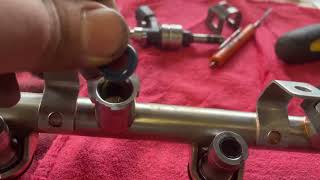
Typical fix: Replace the cylinder 1 fuel injector. It is often recommended to replace the O-rings and seals at the same time.
Est. part cost: $50-$180 - Loose or Corroded Injector Connector ⚪ Low Probability
How to confirm: Unplug the electrical connector at the cylinder 1 fuel injector and inspect the pins on both the injector and the connector side for any green or white corrosion or physical damage. Ensure it clicks securely back into place.
Typical fix: Clean the connector pins with electrical contact cleaner and apply dielectric grease. If the connector is damaged or won't stay secure, replace the connector pigtail.
Est. part cost: $15-$40
Rare But Worth Checking
- Faulty Engine Control Module (ECM): This is the least likely cause. The ECM's internal driver for the injector can fail, but you must exhaustively rule out all wiring and injector issues first before condemning the expensive ECM. A professional diagnosis is recommended before replacing the ECM.
Diagnosis Steps
- Read the trouble codes with an OBD-II scanner and note any other codes that are present, especially P0301 or other injector codes.
- Perform a detailed visual inspection of the fuel injector wiring harness, focusing on the chafe points identified in TSB #PIP4924D: against the intake plenum, valve cover bolts, fuel lines, and cylinder head. Gently move the harness to expose any hidden damage.
- If no visible damage is found, disconnect the cylinder 1 injector connector. Inspect for corrosion or damaged pins.
- Use a multimeter to measure the resistance of the fuel injector. A reading outside the typical 11-14 ohm range suggests a bad injector.
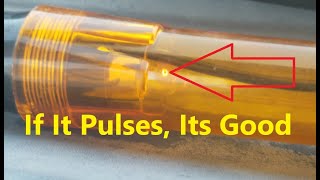
- Use a noid light to test for a signal at the injector connector. With the engine cranking or running, the light should flash brightly and consistently, indicating the ECM is sending a pulse. A dim or no light points to a wiring or ECM issue.
- As a simple mechanical check, place the tip of a long screwdriver on the body of the injector and your ear on the handle. A healthy, working injector will make a distinct, rhythmic clicking sound.
- If the signal is weak/absent, check for continuity and voltage on the wires between the ECM and the injector connector to isolate the fault to the wiring or the ECM itself.
- If wiring and the injector test good, the problem may be within the ECM, which would require professional diagnosis and likely replacement/reprogramming.
Parts You'll Likely Need
- Fuel Injector Wiring Harness Pigtail
(OEM #ACDelco PT2183 (GM 88988963))— Often the fix for the common chafing issue if the damage is localized to the connector or nearby wires.
Trusted brands: ACDelco, Dorman
OEM price range: $30-$45
Aftermarket price range: $15-$30 - Fuel Injector (3.6L LFX, 2012-2014)
(OEM #ACDelco 12634126)— This is the next most likely cause if the wiring harness is confirmed to be in good condition for the 3.6L engine.
Trusted brands: ACDelco, Bosch, Hitachi, Standard Motor Products
OEM price range: $110-$150
Aftermarket price range: $50-$100 - Fuel Injector (3.0L LF1, 2010-2011)
(OEM #ACDelco 217-3449 (GM 12633784))— The correct injector for the earlier 3.0L engine if the wiring is confirmed to be good.
Trusted brands: ACDelco, GB Remanufacturing
OEM price range: $115-$160
Aftermarket price range: $60-$90
Related Codes That Often Appear With This One
- P0301 — P0301 means 'Cylinder 1 Misfire Detected'. Since P0261 indicates a problem with fueling cylinder 1, a misfire on that same cylinder is a direct and very common consequence.
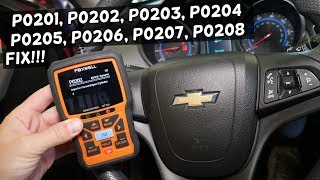
- P0201, P0202, P0203, etc. — If you see multiple injector circuit codes (P0201-P0206) along with P0261, it strongly points to the common wiring harness issue described in TSB PIP4924D, as a single chafed spot can affect the circuits for multiple injectors.
- P0171/P0174 — These codes indicate a 'System Too Lean' condition on Bank 1 and Bank 2. A non-firing injector from P0261 can cause the oxygen sensors to detect excess air, leading the ECM to flag a lean condition.
Technical Service Bulletins (TSBs) & Recalls
- PIP4924D: SES Light And Misfire With Injector Codes - Advises technicians to inspect the fuel injector wiring harness for rubbing through or internal opens at several common locations. This TSB is widely referenced across GM platforms with the High Feature V6 engines.
Platform-Specific Known Issues
- A known issue documented in TSB #PIP4924D involves the fuel injector wiring harness rubbing through its insulation against engine components, leading to a short or open circuit. This is the primary vehicle-specific issue for P0261 on this platform.
Mechanic-Grade Diagnostic Values
- Fuel Injector Resistance (3.6L LFX V6, 2012-2014) — expected: 1.2 - 1.8 Ohms. Failure: A reading outside this range, OL (open circuit), or near zero Ohms indicates an internal injector fault.
- Fuel Injector Resistance (3.0L LF1 V6, 2010-2011) — expected: ~11 - 14 Ohms. Failure: A significant deviation from this range, OL (open circuit), or near zero Ohms indicates a fault in the high-impedance injector's coil.
- High-Pressure Fuel Rail Pressure (3.6L LFX V6) — expected: 300 - 500 PSI (2.0 - 3.4 MPa) at idle. Failure: Pressure that is significantly low, erratic, or does not increase with engine load can indicate a high-pressure fuel pump (HPFP) issue, though this would typically set other codes.
- High-Pressure Fuel Rail Pressure (3.0L LF1 V6) — expected: Approx. 508 PSI (3.5 MPa) at idle. Failure: Significantly low or erratic pressure at idle points to a fuel delivery issue, likely with the HPFP or in-tank pump.
- Injector Circuit Voltage (Key On, Engine Off) — expected: One pin on the connector should show battery voltage (~12V).. Failure: No voltage on the power pin indicates a wiring issue upstream, possibly from the fuse block.
Scan Tool Commands That Help
- GDS2 (GM Tech Tool): Automated Injector Balance Test — This function is used after verifying wiring integrity. The tool disables each injector one by one and measures the corresponding drop in fuel rail pressure. If the pressure drop for cylinder 1 is significantly different from the others, it confirms a faulty or clogged injector.
- GDS2 (GM Tech Tool): Injector Kill / Disable — To confirm a misfire is tied to a specific cylinder. While the engine is running, the technician can disable the cylinder 1 injector. If there is no change in how the engine runs, it confirms cylinder 1 was not contributing, pointing to a problem in that cylinder's fuel or ignition system.
Wiring & Ground Locations
- ECM Connector X1 — The Engine Control Module (ECM) is located in the engine compartment. X1 is one of the main connectors plugging into it.. The control wire (ground pulse) for the cylinder 1 fuel injector originates from a specific pin on this connector. A backed-out pin, corrosion, or wire damage at this connector can cause a P0261 code.
- G101 / G102 (example designators) — Main engine block and chassis ground points are typically located on the engine block, cylinder head, or attached to the chassis/fender wall in the engine bay.. While not a direct cause of a single injector circuit low code, a poor engine ground can cause widespread electrical issues, including erratic sensor readings and unpredictable module behavior. It's a foundational check for any electrical diagnosis.
Real Owner Repair Stories
- Land Rover Forums (discovery4.co.uk) (2016 Land Rover LR4 SCV6 (Note: Different vehicle, but same code and direct injection principle)) — Sudden shaking when started warm, Check Engine Light on with code P0261.
❌ Tried (didn't work) Restarting the car (sometimes worked temporarily), Adding Sea Foam injector cleaner
✅ What actually fixed it The owner had the dealer replace all the fuel injectors, which solved the problem permanently. - YouTube video (unspecified vehicle) (2005 Cadillac SRX 3.6L (Note: Earlier generation, but similar diagnostic principles)) — P0203 (Injector Circuit Fault) and misfire on cylinder 3.
❌ Tried (didn't work) Swapping fuel injectors between cylinders (the fault did not move with the injector), Inspecting the wiring loom for visible damage
✅ What actually fixed it The diagnosis concluded the issue was internal to the ECM, as the wiring and injector tested good, but the ground pulse was missing from the ECM for that specific cylinder. The implied fix is ECM replacement.
OEM Part Supersession History
Unknown→ACDelco 12634126— Standard part for the 3.6L LFX engine.
Heads up: This is a low-impedance injector (~1.2-1.8 Ohms) and is NOT compatible with the 2010-2011 3.0L LF1 engine, which requires a high-impedance injector.Unknown→ACDelco 12633784 / 217-3449 (also see 12629927)— Standard part for the 3.0L LF1 engine.
Heads up: This is a high-impedance injector (~11-14 Ohms) and is NOT compatible with the 2012-2014 3.6L LFX engine.
Model Year Variations Within This Range
- 2010-2011: These models use the 3.0L LF1 V6 engine, which is equipped with high-impedance fuel injectors (approx. 11-14 Ohms), such as ACDelco part #12633784 or #12629927.
- 2012-2014: These models use the 3.6L LFX V6 engine, which is equipped with low-impedance fuel injectors (approx. 1.2-1.8 Ohms), such as ACDelco part #12634126. The ECM is also different (Delphi vs. Bosch). These parts are not interchangeable with the earlier models.
Helpful Videos
Used OEM Parts in Stock
New Aftermarket Parts Available



The information in this article is provided for general reference and educational purposes only. Vehicle specifications, procedures, and part compatibility can vary by production date, trim level, and region. Always consult your vehicle's factory service manual and verify part numbers before purchasing or performing repairs. Safety-critical components such as airbags, seat belts, and braking systems should be installed by a qualified professional.
- Cadillac SRX:
- 🎬 Helpful Videos
- 🛍️ Shop This Part
- What's Unique About the 2010-2014 Cadillac SRX
- Diagnostic Flowchart
- Symptoms You May Notice
- Most Likely Causes
- Rare But Worth Checking
- Diagnosis Steps
- Parts You'll Likely Need
- Related Codes That Often Appear With This One
- Technical Service Bulletins (TSBs) & Recalls
- Platform-Specific Known Issues
- Mechanic-Grade Diagnostic Values
- Scan Tool Commands That Help
- Wiring & Ground Locations
- Real Owner Repair Stories
- OEM Part Supersession History
- Model Year Variations Within This Range
- 🎟️ Get 5% Off