

P0251 on 2013-2020 Land Rover Range Rover: Fuel Pump Control Fault Causes and Fixes
On a 2013-2020 Range Rover, especially those with a V6 engine, P0251 almost always points to a failing high-pressure fuel pump. A Land Rover technical bulletin confirms this is a known issue, often accompanied by a distinct noise from the engine bay. The OEM part number for the pump is LR081595.
- P0251 on a 2013-2020 Range Rover means there's a problem with high-pressure fuel delivery.
- The most likely cause, especially on V6 models, is a failing high-pressure fuel pump, an issue acknowledged by Land Rover in a technical bulletin (SSM74588).
- Symptoms often include a noisy engine bay, reduced power, and difficulty starting.
- Diagnosis should focus on comparing commanded vs. actual fuel pressure with a scan tool.
- Due to the complexity and safety risks of working with a high-pressure fuel system, professional repair is strongly recommended.
What's Unique About the 2013-2020 Land Rover RANGE ROVER

The 2013-2020 Range Rover (L405 generation), particularly models with the AJ126 supercharged V6 engine, is subject to specific Technical Service Bulletins (TSB SSM74588 and TECLTB007103) for this issue. The TSBs note that these vehicles can experience audible noise (clicking, rasping, or whining) from the high-pressure fuel pumps, which directly corresponds with code P0251 and other related fuel pressure codes. This makes a failing high-pressure fuel pump a much more probable cause on this platform compared to general vehicle populations.
Diagnostic Flowchart
Tap your situation to follow the diagnostic path that matches what you're seeing on this vehicle.
Generation note: The 2013-2020 year range covers the L405 generation of the Range Rover. The issues related to code P0251, especially the TSBs regarding the V6 engine's fuel pumps, are specific to this generation and other JLR vehicles using the AJ126 engine.
Symptoms You May Notice
- Check Engine Light is on
- Audible noise (whining, metallic clicking, or rasping) from the high-pressure fuel pumps, as noted in TSBs SSM74588 and TECLTB007103.
- Reduced engine power or 'limp mode', sometimes limiting RPMs.
- Engine hesitation or stumbling during acceleration.
- Rough or unstable idle.
- Difficulty starting the engine or extended cranking time.
- Decreased fuel economy.
- Increased black exhaust smoke under acceleration. 🎬 Watch: A guide to common symptoms of a failing HPFP.
- Replacing only one of two failing high-pressure fuel pumps when both are weak.
- Replacing fuel injectors when the issue is with fuel pressure delivery.
- Replacing the fuel rail pressure sensor when the pump itself is the root cause.
Most Likely Causes

- Failing High-Pressure Fuel Pump(s) 🔴 High Probability A known issue documented in Land Rover TSBs #SSM74588 and #TECLTB007103 specifically calls out noisy and failing HP fuel pumps on the AJ126 V6 engine as a cause for this code and related symptoms.
How to confirm: Listen for unusual noise from the pumps located on the engine. Use a diagnostic scan tool to monitor commanded versus actual fuel rail pressure. A significant deviation where actual pressure cannot meet the commanded pressure under load points to a weak pump. A diagnostic tool can be used to selectively disable each pump to isolate which one is noisy. At idle, fuel rail pressure should be around 3,000 kPa, rising to approximately 4,800 kPa when holding RPMs at 3,000.
Typical fix: Replacement of the faulty high-pressure fuel pump (part number LR081595). Since V6 engines have two pumps, diagnosis is key to identifying which one has failed. However, some owners and shops recommend replacing them in pairs, especially on higher mileage vehicles.
Est. part cost: $275-$800 per pump - Wiring Harness or Connector Damage 🟡 Medium Probability
How to confirm: Visually inspect the wiring and connectors going to the high-pressure fuel pump's control actuator for any signs of corrosion, chafing, or loose pins. A loose electrical plug on the fuel pump metering control valve has been identified as a specific cause.
Typical fix: Repair the damaged section of the wiring harness or secure/replace the connector pigtail. In one documented case for a related Jaguar, simply securing a loose plug with a cable tie resolved the P0251-13 code.
Est. part cost: $20-$100 - Faulty Fuel Rail Pressure Sensor ⚪ Low Probability
How to confirm: Monitor the fuel pressure sensor reading on a scan tool. If the reading is erratic, stuck at a specific value, or clearly incorrect (e.g., showing high pressure with the engine off), the sensor is likely faulty. With the key on and engine off, the low-pressure sensor should read around 729 kPa. A voltage reading of 4-5 volts or higher can indicate a shorted sensor.
Typical fix: Replace the fuel rail pressure sensor.
Est. part cost: $70-$150
Rare But Worth Checking
- Loose Electrical Connector on HPFP: A real-world repair on a Jaguar with the same engine and a P0251-13 code found the cause to be a loose electrical connection on the fuel pump's metering control valve. The fix was as simple as securing the plug with a zip tie. This should be checked before replacing expensive components.
- Powertrain Control Module (PCM) Fault: This is rare, but if the fuel pumps, sensors, and wiring have all been confirmed to be good, the driver circuit within the PCM could be the source of the problem.
- Clogged Fuel Filter or Low-Pressure Fuel Pump Failure: The high-pressure pumps can't function correctly if they aren't receiving adequate fuel supply from the in-tank low-pressure pump. A clogged filter or failing low-pressure pump can starve the HPFPs and trigger this code.
Diagnosis Steps
- Connect a professional scan tool to read the P0251 code and any other related codes. Note the freeze frame data.
- Check for Technical Service Bulletins (TSBs) related to P0251 for your specific VIN. Pay close attention to TSB #SSM74588 and #TECLTB007103.
- Start the engine (preferably when cold) and listen carefully for any whining, buzzing, or metallic clicking/rasping noises coming from the high-pressure fuel pump area on the engine.
- Use the scan tool's live data function to monitor 'Commanded Fuel Rail Pressure' and 'Actual Fuel Rail Pressure'.
- With the engine at idle, check if the actual pressure is stable and near the target of ~3,000 kPa. Safely increase engine RPM to 3,000 and observe if the actual pressure can keep up with the commanded pressure, which should be around 4,800 kPa. A significant lag or inability to reach the target pressure points to a pump or supply issue.
- Turn off the engine and inspect the electrical connectors and wiring harnesses for both high-pressure fuel pumps. Check for loose plugs, especially on the fuel metering control valve, as well as any damage, corrosion, or loose connections.
- If a scan tool with bidirectional controls is available, use it to deactivate each HPFP individually to determine if the noise stops, which will isolate the faulty pump.
- If wiring is intact and pressure readings are faulty, the high-pressure fuel pump is the most likely culprit.
- If the cause is still unclear, test the low-pressure fuel system to ensure adequate fuel is being supplied to the high-pressure pumps.
Parts You'll Likely Need

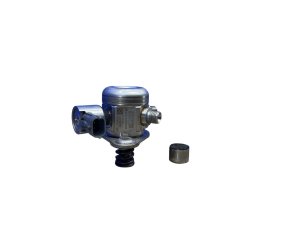
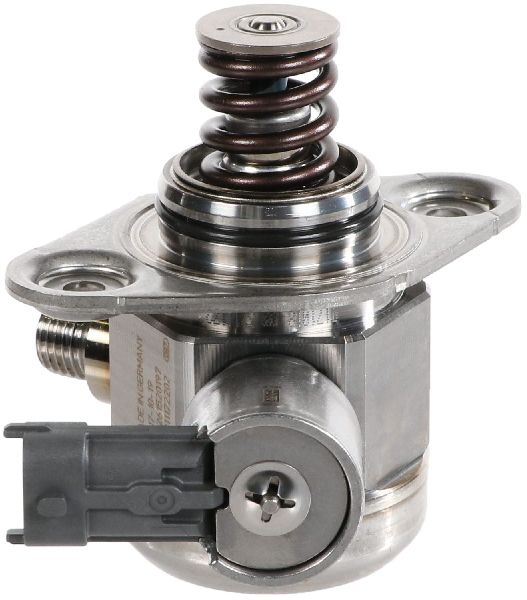
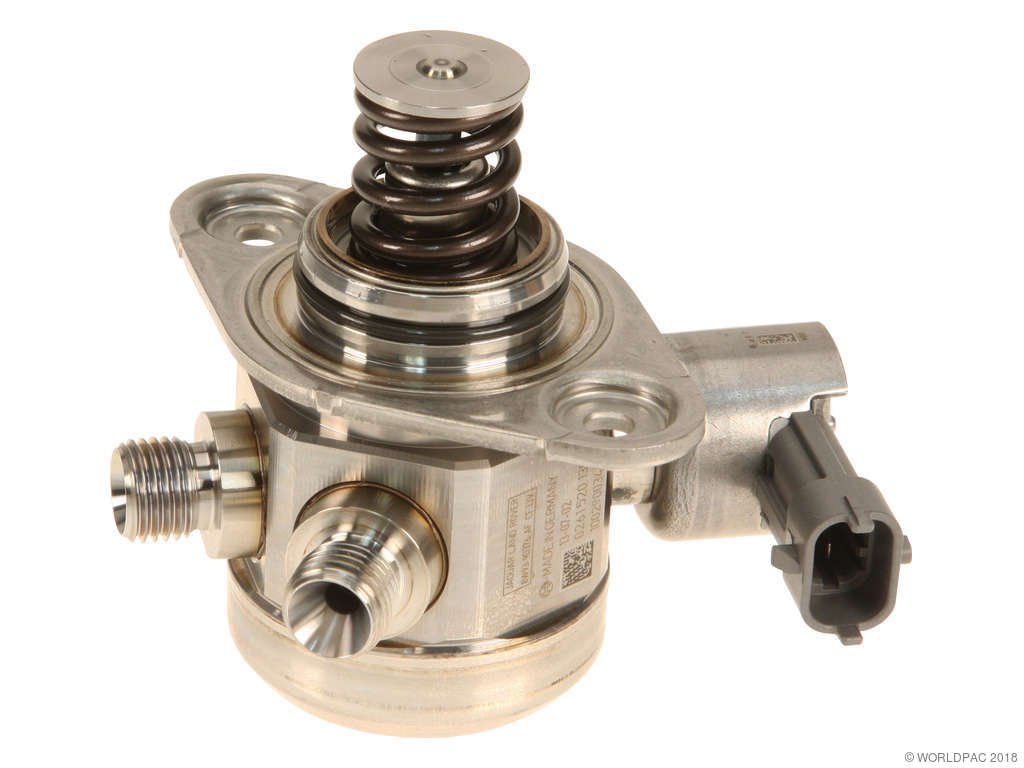
- High-Pressure Fuel Pump
(OEM #LR081595 (supersedes LR035527))— This is the most common failure part for code P0251 on this vehicle, as confirmed by multiple manufacturer TSBs.
Trusted brands: Bosch (OEM), Genuine Land Rover
OEM price range: $275-$900
Aftermarket price range: $200-$650
Related Codes That Often Appear With This One
- P228F — This code for 'Fuel Pressure Regulator 1 Exceeded Learning Limits' is often stored with P0251 as it also points to a problem with controlling fuel pressure. It is mentioned in the same TSB (SSM74588).
- P025C — This code relates to the 'Fuel Pump Module 'A' Control Circuit Low'. It is also listed in TSB SSM74588 and indicates an electrical circuit issue with the pump module.
- P0256 — This is the equivalent of P0251 but for the 'B' circuit ('Injection Pump Fuel Metering Control 'B''). On V-engines with two high-pressure pumps, seeing both codes could indicate an issue with the second pump or a systemic problem.
- P064A — This code for 'Fuel Pump Control Module 'A' Open Circuit' is also cited in TSB SSM74588, further strengthening the diagnosis of a fault in the fuel pump or its control circuit.
Technical Service Bulletins (TSBs) & Recalls
- SSM74588: Addresses noise from the HP fuel pumps and associated DTCs, including P0251, on vehicles with the AJ126 supercharged V6 engine.
- TECLTB007103: Details a metallic 'clicking' or 'rasping' noise from the HP fuel pump on 2014-2016 models and provides a procedure for isolating the noisy pump.
Platform-Specific Known Issues
- TSB #SSM74588 documents an issue on vehicles with the AJ126 supercharged V6 engine where the high-pressure (HP) fuel pumps can become noisy and trigger DTCs P0251, P228F, P025C, P0256, and P064A.
- TSB #TECLTB007103 also addresses a 'metallic clicking/rasping noise' from the engine on 2014-2016 models with the 3.0L V6, caused by a noisy HPFP outlet valve, and provides a diagnostic procedure to isolate the faulty pump.
Mechanic-Grade Diagnostic Values
- Low-pressure fuel sensor reading (Key On, Engine Off) — expected: ~729 kPa. Failure: A significantly different reading indicates a sensor or low-side pump issue.
- High-pressure fuel rail (Actual) at idle — expected: ~3,000 kPa. Failure: Pressure that is unstable or significantly lower suggests a weak HPFP.
- High-pressure fuel rail (Actual) at 3,000 RPM — expected: ~4,800 kPa. Failure: Inability for actual pressure to meet commanded pressure under load points to a failing HPFP.
- Low-range fuel pressure sensor voltage — expected: 1.3V - 3.1V. Failure: A reading of 4-5 volts or higher indicates a shorted sensor.
- High-range fuel pressure sensor voltage — expected: 1.0V - 3.1V. Failure: A reading of 4-5 volts or higher indicates a shorted sensor.
- Wiring harness resistance — expected: < 0.2 Ω. Failure: Higher resistance indicates corrosion or damage in the wiring.
- Ground strap resistance to chassis — expected: ≤ 0.05 Ω. Failure: Higher resistance indicates a poor ground connection.
Hidden / Shadow Codes Worth Checking
- P0251-13: Injection Pump Fuel Metering Control 'A' - Circuit open. This is a specific subtype of P0251 indicating an open circuit in the control wiring. (see via JLR-specific diagnostic tools like SDD or Pathfinder, though some advanced generic scanners may show it.)
- P228F-85: Fuel Pressure Regulator 1 Exceeded Learning Limits - Signal is above allowable range. Often seen with P0251 per TSB SSM74588. (see via JLR-specific diagnostic tools like SDD or Pathfinder.)
- P025C-11: Fuel Pump Module 'A' Control Circuit Low - Circuit short to ground. Often seen with P0251 per TSB SSM74588. (see via JLR-specific diagnostic tools like SDD or Pathfinder.)
Scan Tool Commands That Help

- SDD (Symptom Driven Diagnostics): Powertrain - High pressure fuel pump test — This is the specific function called for in TSB TECLTB007103 to diagnose a noisy HPFP. The tool will sequentially disable each of the two pumps, allowing the technician to audibly identify which one is making noise.
- IIDTool (GAP Diagnostics): Fuel Pump Prime / Purge — After replacing a fuel pump or if the system has run dry, this function can be used to re-enable a disabled low-pressure pump and purge air from the fuel lines.
Wiring & Ground Locations
- Fuel Pump Ground — Left side of luggage compartment, behind the access panel for the taillights, above the light assembly.. A poor ground for the in-tank low-pressure fuel pump can cause it to underperform, starving the high-pressure pumps and potentially triggering a P0251 code.
- HPFP Electrical Connector — On the fuel metering control valve on the back of the high-pressure fuel pump(s) on the engine.. This connector has been documented to come loose, causing an open circuit (P0251-13). Ensuring it is secure is a critical and simple diagnostic step.
Real Owner Repair Stories
- YouTube video 'P0251-13 Dtc Jaguar XF 2013. Fixed' (2013 Jaguar XF (with same AJ126 engine family)) — Check Engine Light with code P0251-13 (Injection pump fuel metering control unit).
❌ Tried (didn't work) The video implies diagnosis led directly to the final fix without other parts being replaced.
✅ What actually fixed it The electrical connector plug on the fuel pump metering control valve was found to be loose. The problem was solved by securing the loose plug with a cable tie.
OEM Part Supersession History
LR035527→LR081595— Standard part revision and update by the manufacturer.
Heads up: LR081595 is the correct current replacement for the original LR035527.
Model Year Variations Within This Range
- 2014-2016: TSB #TECLTB007103 specifically calls out 2014-2016 models for the metallic 'clicking/rasping' noise from the HPFP outlet valve, providing a specific diagnostic routine using the SDD tool to isolate the faulty pump. While the issue can occur on other years, this TSB is targeted at this range.
Helpful Videos
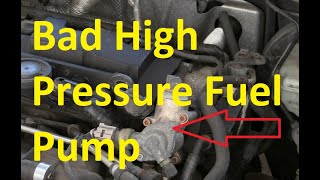
Used OEM Parts in Stock


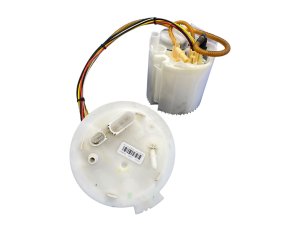

New Aftermarket Parts Available




The information in this article is provided for general reference and educational purposes only. Vehicle specifications, procedures, and part compatibility can vary by production date, trim level, and region. Always consult your vehicle's factory service manual and verify part numbers before purchasing or performing repairs. Safety-critical components such as airbags, seat belts, and braking systems should be installed by a qualified professional.
- Land Rover RANGE ROVER:
- 🎬 Helpful Videos
- 🛍️ Shop This Part
- What's Unique About the 2013-2020 Land Rover RANGE ROVER
- Diagnostic Flowchart
- Symptoms You May Notice
- Most Likely Causes
- Rare But Worth Checking
- Diagnosis Steps
- Parts You'll Likely Need
- Related Codes That Often Appear With This One
- Technical Service Bulletins (TSBs) & Recalls
- Platform-Specific Known Issues
- Mechanic-Grade Diagnostic Values
- Hidden / Shadow Codes Worth Checking
- Scan Tool Commands That Help
- Wiring & Ground Locations
- Real Owner Repair Stories
- OEM Part Supersession History
- Model Year Variations Within This Range
- 🎟️ Get 5% Off