

P0236 on 2021-2023 Chevrolet Trailblazer: Boost Sensor & Icing Fixes
On a 2021-2023 Trailblazer, P0236 is most often caused by ice buildup in the charge air cooler during extreme cold (below 0°F/-18°C), a known issue covered by GM TSB #21-NA-293. The fix is a dealer-installed software update. Other specific causes include a faulty wiring splice (TSB #21-NA-016) or a failed boost pressure sensor.
- For the 2021-2023 Trailblazer, P0236 is strongly linked to a known issue of charge air cooler icing in extreme cold (below 0°F/-18°C), addressed by TSB #21-NA-293.
- The official GM fix for the icing issue is a simple ECM software update performed by a dealer that changes transmission behavior.
- A second, specific cause for 2021 models is a faulty wiring splice (J113), addressed by TSB #21-NA-016.
- If TSBs are ruled out, the next most likely cause is a failed turbocharger boost pressure sensor, which may be contaminated with oil.
- Diagnosis must begin by checking for applicable TSBs, as the solution is often software or a specific wiring repair, not a major component replacement.
- The Buick Encore GX shares the same engines and is affected by the exact same issues documented in these TSBs.
What's Unique About the 2021-2023 Chevrolet TRAILBLAZER

The 2021-2023 Trailblazer, along with its platform-mate the Buick Encore GX, is specifically prone to two documented issues causing P0236. The most common is ice accumulation in the charge air cooler (CAC) in weather below 0°F (-18°C). This icing restricts airflow, triggering the code. GM addressed this with TSB #21-NA-293, which involves an ECM software update that alters transmission shift patterns to keep engine RPMs higher in the cold, preventing ice formation. A second, less common issue for 2021 models is detailed in TSB #21-NA-016, which points to a poor wiring crimp at splice J113 in the engine harness that can skew sensor readings.
Diagnostic Flowchart
Tap your situation to follow the diagnostic path that matches what you're seeing on this vehicle.
Symptoms You May Notice
- Check Engine Light is on
- Reduced engine power and sluggish acceleration
- Engine may hesitate or stumble
- Lack of boost from the turbocharger
- In cold weather, possible engine stalling
- Noticeably higher engine RPMs at highway speeds in cold weather (after TSB fix is applied)
- Oil leaks from engine seals or gaskets (a potential side effect of severe CAC icing)
- Replacing the turbocharger itself when the fault is with a sensor, wiring, or the icing condition described in TSB #21-NA-293.
- Replacing the boost pressure sensor when the actual fault is the wiring harness splice issue described in TSB #21-NA-016.
Most Likely Causes

- Charge Air Cooler (CAC) Icing 🔴 High Probability A known condition for this platform in extremely cold weather (below 0°F / -18°C), as documented by GM in TSB #21-NA-293.
How to confirm: The issue occurs only in very cold ambient temperatures, often on short trips, and may be accompanied by codes P0299, P0234, and P00C7. A GM dealer can confirm if TSB #21-NA-293 applies and if the software update has been performed. In severe cases, the CAC may need to be removed to drain water after thawing.
Typical fix: The official fix is for a GM dealer to reprogram the Engine Control Module (ECM). The new software changes transmission shift patterns to keep the engine warmer and prevent ice buildup. If the CAC is frozen, it must be thawed, drained, and reinstalled.
Est. part cost: $0 (if covered under warranty/TSB) - Faulty Turbocharger Boost Pressure Sensor 🟡 Medium Probability
How to confirm: Using a scan tool, monitor the live data from the boost pressure sensor. The reading should be close to the barometric pressure reading with the key on and engine off. If the reading is stuck, erratic, or doesn't change with engine RPM, the sensor is likely faulty. In some cases, removing the sensor may reveal oil contamination, which can cause failure.
Typical fix: Replace the boost pressure sensor. On these engines, it is a TMAP sensor (Temperature/Manifold Absolute Pressure) located on the charge pipe. A user on a similar GM vehicle reported a successful fix by replacing the sensor, noting the new part was much more responsive.
Est. part cost: $40-$100 - Wiring or Connector Issue (Splice J113) ⚪ Low Probability TSB #21-NA-016 specifically identifies a poor crimp at splice J113 in the engine harness as a cause for P0236 on 2021 Trailblazer and 2020 Encore GX models with the 1.3L engine.
How to confirm: Follow the diagnostic procedure in TSB #21-NA-016: with a scan tool connected, monitor the boost sensor data while manipulating the engine harness. A jump or change in the reading indicates a problem with the splice. A visual inspection of the harness and connector for the boost pressure sensor for damage or corrosion is also recommended.
Typical fix: Repair the faulty splice in the wiring harness as per the instructions in TSB #21-NA-016, which involves re-crimping and soldering the connection.
Est. part cost: $5-$50 - Intake Air Leak ⚪ Low Probability
How to confirm: Inspect all intake hoses and connections between the turbocharger, intercooler, and throttle body for cracks, loose clamps, or damage. A smoke test is the most effective way to find small leaks.
Typical fix: Tighten loose clamps or replace the leaking hose/gasket.
Est. part cost: $20-$150
Rare But Worth Checking
- Faulty Engine Control Module (ECM): This is very rare. The ECM should only be considered after all other possibilities (TSBs, sensor, wiring) have been thoroughly ruled out.
Diagnosis Steps
- Check for Technical Service Bulletins (TSBs). For this vehicle, TSB #21-NA-293 (CAC Icing) is highly relevant, especially in cold climates. Also check for TSB #21-NA-016 (Wiring Splice), particularly for 2021 models.
- Scan for other DTCs. Codes like P0299, P0234, and P00C7 strongly point to the icing issue. Codes P00C7 and P1101 could point to the wiring splice issue.
- If conditions match TSB #21-NA-293 (extreme cold), have a dealer perform the ECM software update. If symptoms persist, the CAC may need to be thawed and drained.
- If the icing TSB does not apply, investigate the wiring. Following TSB #21-NA-016, wiggle the engine harness while watching boost sensor data on a scan tool to check for a faulty splice.
- Visually inspect the boost pressure sensor's wiring and connector for damage, corrosion, or oil contamination.
- Use a scan tool to observe live data from the boost pressure sensor. Compare its reading to the MAP/BARO sensor with the key on, engine off. The values should be similar.
- If the sensor signal is erratic or unresponsive, and wiring is confirmed to be good, the sensor is the likely culprit. Replace the boost pressure sensor.
- If the problem persists, perform a smoke test on the intake system to check for air leaks between the turbo and the engine.
Parts You'll Likely Need

- Turbocharger Boost Pressure Sensor
(OEM #12644228)— This sensor is the primary component that measures boost pressure. It can fail over time, become contaminated with oil, or provide incorrect readings, directly causing a P0236 code.
Trusted brands: ACDelco
OEM price range: $60-$110
Aftermarket price range: $40-$80
Related Codes That Often Appear With This One
- P0299 — Turbo/Supercharger Underboost. Often set with P0236 due to the charge air cooler icing issue, which causes erratic pressure readings.
- P0234 — Turbo/Supercharger Overboost Condition. Also associated with the charge air cooler icing TSB.
- P00C7 — Charge Air Cooler Coolant Temperature Sensor Circuit High / Intake Air Pressure Measurement System Not Plausible. This code is specifically mentioned in both the icing TSB (#21-NA-293) and the wiring splice TSB (#21-NA-016).
- P1101 — Air Flow System Performance. Can be set alongside P0236 due to the wiring splice issue identified in TSB #21-NA-016.
Technical Service Bulletins (TSBs) & Recalls
- Bulletin #21-NA-293: Poor Engine Performance in Extremely Cold Weather Conditions, Charge Air Cooler Icing - Malfunction Indicator Lamp (MIL) Illuminated, DTC P0299, P0234, P0236, P00C7 Set.
- Bulletin #21-NA-016: Malfunction Indicator Lamp (MIL) Illuminated – DTC P00C7, P0236 and/or P1101 Set.
Platform-Specific Known Issues
- TSB #21-NA-293: In weather below 0°F (-18°C), ice can form inside the charge air cooler, restricting airflow. This triggers codes P0236, P0299, P0234, and P00C7. The fix is a dealer-installed ECM software update that changes cold-weather transmission shifting to keep the engine warmer.
- TSB #21-NA-016: On some 2021 models with the 1.3L engine, a poor crimp on splice J113 in the engine harness can cause erratic signals from the boost sensor, setting codes P0236, P00C7, and P1101. The fix is to repair the splice.
Mechanic-Grade Diagnostic Values
- TMAP Sensor 5V Reference — expected: 4.8V - 5.2V DC. Failure: Voltage outside this range indicates a problem with the ECM or wiring, not necessarily the sensor itself.
- TMAP Sensor Signal Voltage (Key On, Engine Off) — expected: ~4.5V DC at sea level. Failure: A significantly lower or higher voltage suggests a faulty sensor or a circuit issue. This reading should correlate with the BARO sensor reading.
- TMAP Sensor Signal Voltage (Engine at Idle) — expected: ~1.0V - 1.5V DC. Failure: Voltage that is too high at idle (e.g., over 2.0V) can indicate a vacuum leak or a faulty sensor that isn't responding to vacuum.
Scan Tool Commands That Help
- Professional Scan Tool (e.g., GDS2, iCarsoft): Live Data Monitoring: 'Desired Boost Pressure' vs. 'Actual Boost Pressure' — This is a critical diagnostic step. While driving under light load, these two values should track each other closely. If the 'Actual' value does not match the 'Desired' value, it confirms a fault in the boost control system (sensor, wiring, leak, or turbo mechanical issue).
Wiring & Ground Locations

- B118 Turbocharger Boost Pressure Sensor (TMAP) — The sensor is located on the top of the intake manifold, towards the firewall side of the engine bay. It may be surrounded by a piece of insulation foam.. Knowing the physical location is essential for testing the sensor's voltage, inspecting its connector for damage, and checking for oil contamination. The insulation foam can hide connector issues.
- Splice J113 — Located within the main engine wiring harness. The exact location is not publicly documented but requires inspecting the harness section that includes the boost sensor wiring.. TSB #21-NA-016 identifies a poor crimp at this specific splice as a direct cause for P0236 on 2021 models. Diagnosis requires wiggling the harness while monitoring sensor data.
Real Owner Repair Stories
- MHH AUTO Forum (Heavy Duty Truck (CAT engine), but principle applies to harness faults.) — Boost pressure sensor high voltage code (similar to a range/performance fault).
❌ Tried (didn't work) Replacing the boost pressure sensor., Replacing the ECM.
✅ What actually fixed it An overlay harness was created. New signal and ground wires were run directly from the sensor connector to the ECM connector, bypassing the factory engine harness. This fixed the issue, proving there was an intermittent open or short in the original harness that was too difficult to locate.
OEM Part Supersession History
12644228→12711681— Standard part revision/replacement by the manufacturer.
Heads up: The new part number is the correct service replacement for the original.
Used OEM Parts in Stock
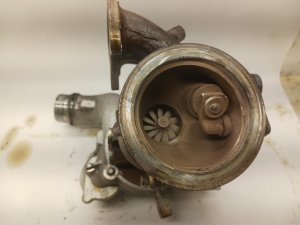
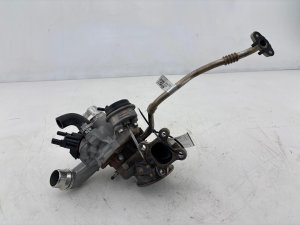
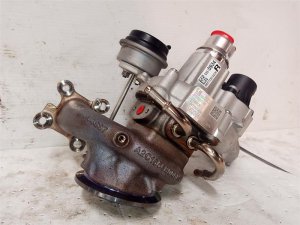
New Aftermarket Parts Available


The information in this article is provided for general reference and educational purposes only. Vehicle specifications, procedures, and part compatibility can vary by production date, trim level, and region. Always consult your vehicle's factory service manual and verify part numbers before purchasing or performing repairs. Safety-critical components such as airbags, seat belts, and braking systems should be installed by a qualified professional.
- Chevrolet TRAILBLAZER:
- 🛍️ Shop This Part
- What's Unique About the 2021-2023 Chevrolet TRAILBLAZER
- Diagnostic Flowchart
- Symptoms You May Notice
- Most Likely Causes
- Rare But Worth Checking
- Diagnosis Steps
- Parts You'll Likely Need
- Related Codes That Often Appear With This One
- Technical Service Bulletins (TSBs) & Recalls
- Platform-Specific Known Issues
- Mechanic-Grade Diagnostic Values
- Scan Tool Commands That Help
- Wiring & Ground Locations
- Real Owner Repair Stories
- OEM Part Supersession History
- 🎟️ Get 5% Off