

P0236 on 2017-2018 Alfa Romeo Giulia: Turbo Boost Sensor Causes and Fixes
On a 2017-2018 Alfa Romeo Giulia, code P0236 most often points to a faulty boost pressure sensor or a leak in the air intake system (e.g., a cracked charge pipe). Replacing the sensor is a common, relatively inexpensive fix. However, on early 2017 models, a PCM software update (TSB 18-030-17) may be required to fix spurious code setting.
- P0236 on your Giulia means the boost pressure reading is incorrect, which severely impacts engine power.
- The two most likely causes are a faulty boost pressure sensor or a leak in the air intake system (like a cracked hose).
- Before buying parts, check for other stored trouble codes and visually inspect all intake hoses for damage.
- A smoke test is the most effective way to find hidden air leaks.
- Replacing the boost sensor is a straightforward DIY job, but diagnosing a leak may require more effort.
What's Unique About the 2017-2018 Alfa Romeo GIULIA

For the Alfa Romeo Giulia (Type 952), this code is often part of a larger cluster of faults identified in manufacturer Technical Service Bulletins (TSBs). Specifically, TSB 18-030-17 Rev. D addresses P0236 alongside codes for fuel pressure, air flow, and lean conditions on 2.0L models built before mid-2017, indicating a PCM software calibration issue that could cause these codes to appear, sometimes after refueling. Real-world owner experiences confirm that physical faults like cracked charge pipes are also common causes, pointing to the importance of checking the entire intake path for leaks, not just the sensor itself.
Diagnostic Flowchart

Tap your situation to follow the diagnostic path that matches what you're seeing on this vehicle.
Symptoms You May Notice
- Check Engine Light illuminated
- Significant loss of engine power and acceleration
- Vehicle may enter 'limp mode' with severely restricted performance
- Hesitation or stumbling when trying to accelerate
- Engine pinging or knocking sounds
- Hissing or whistling noises from the engine bay, indicating a boost leak
- Reduced fuel economy
- Replacing the entire turbocharger assembly when the fault is a much cheaper and simpler issue like a bad sensor, a vacuum leak, a software issue, or a worn wastegate actuator arm.
- Replacing the MAP sensor when the code is for the Boost Pressure Sensor 'A'. While they work together, they are distinct parts. A Reddit user reported replacing the MAP sensor did not fix their P0236 issue.
Most Likely Causes


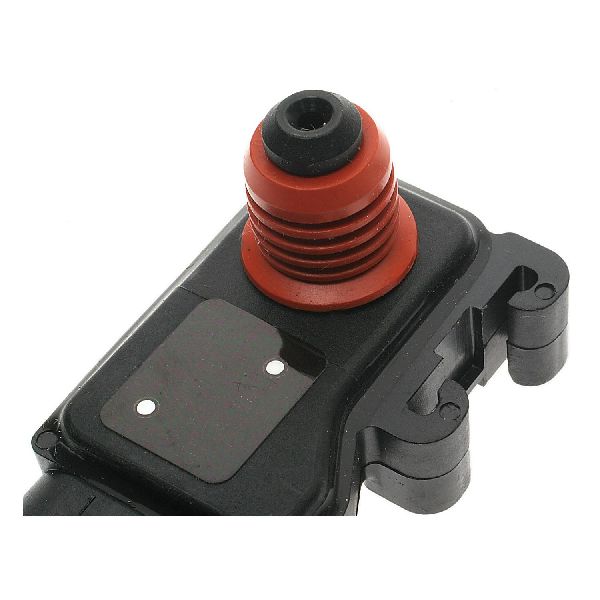
- Faulty Turbocharger Boost Pressure Sensor 🔴 High Probability Sensors can become contaminated with oil or carbon, or simply fail electronically over time, leading to slow or inaccurate readings. The sensor provides the primary reading that the PCM flags as irrational.
How to confirm: Monitor the sensor's live data with an OBD-II scanner while revving the engine; the pressure reading should change smoothly. If it's stuck or provides erratic values, it's likely faulty. The sensor is located near the back of the engine bay on the 2.0L model.
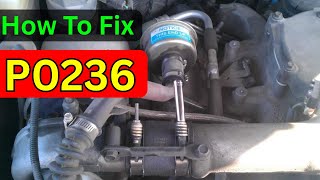
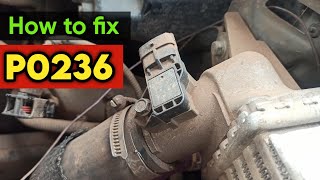
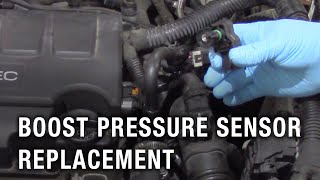
Typical fix: Replace the boost pressure sensor. 🎬 See this walkthrough on replacing the boost pressure sensor.
Est. part cost: $30-$80 - Air Leak in the Intake or Charge System 🔴 High Probability Plastic and rubber components in the intake system, including the intercooler and charge pipes, can become brittle and crack from heat and vibration. A Reddit user with a 2017 Giulia specifically mentioned finding a cracked turbo charge pipe as a cause for this code.
How to confirm: Perform a smoke test on the intake system. This involves pumping smoke into the intake and watching for where it escapes, revealing the location of the leak. Visually inspect all hoses for cracks, especially at connection points.
Typical fix: Replace the cracked hose, leaking gasket, or damaged intercooler. Tighten any loose clamps. An OEM intercooler hose for the 2.0L 🎬 Watch: Installing an upgraded charge pipe on a Giulia. has part number 00500536260.
Est. part cost: $20-$300 depending on the leaking component - Damaged Wiring or Corroded Connector 🟡 Medium Probability The wiring harness to the boost sensor is in the engine bay and exposed to heat and vibration, which can cause wires to fray or the connector pins to corrode.
How to confirm: Visually inspect the wiring harness and connector for any signs of damage, melting, or green/white corrosion. Use a multimeter to check for continuity and proper voltage at the connector.
Typical fix: Repair the damaged section of wiring or clean/replace the electrical connector.
Est. part cost: $5-$50 - PCM Software Calibration Issue 🟡 Medium Probability For 2.0L Giulia models built on or before June 29, 2017, TSB 18-030-17 Rev. D was issued to update the PCM software. The original calibration could cause P0236 and other codes to be set erroneously.
How to confirm: A dealer can check the vehicle's VIN to see if the TSB is applicable and has been performed. This should be considered if the vehicle fits the build date range and other physical causes have been ruled out.
Typical fix: Reprogram the Powertrain Control Module (PCM) with the updated software at an Alfa Romeo dealership.
Est. part cost: $0 (if under warranty) - $200
Rare But Worth Checking
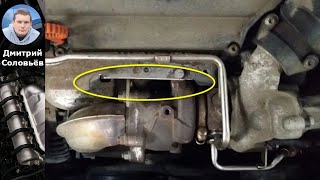
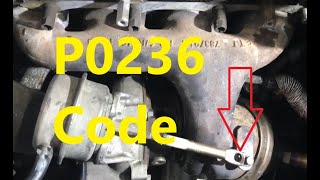
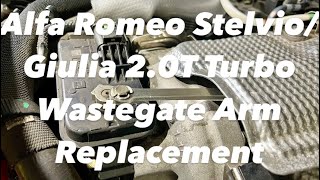
- Faulty Turbocharger Wastegate Actuator Arm: On the 2.0L engine, the wastegate actuator arm bushing is a known wear item. While it more commonly causes the P0299 underboost code, excessive play can lead to erratic boost control that may trigger a P0236 performance code. Aftermarket replacement arms are available to fix this without replacing the entire turbo. 🎬 Watch: How to fix the wastegate arm for under $200.
- Clogged Air Filter: A severely restricted air filter can starve the turbo of air, causing pressure readings that the PCM deems incorrect when compared to other sensors. This is a simple but sometimes overlooked check.
- Faulty Powertrain Control Module (PCM): This is extremely rare, but the PCM itself can fail and misinterpret sensor signals. This should only be considered after all other possibilities, including software updates, have been exhausted.
Diagnosis Steps
- Read all fault codes using an OBD-II scanner. Note any other codes present, as they can provide valuable clues, especially if they match those listed in TSB 18-030-17.
- Check vehicle build date (for 2.0L models) to see if TSB 18-030-17 applies (on or before June 29, 2017). If so, a PCM update may be the primary fix.
- Use the scanner's live data function to monitor the Boost Pressure Sensor ('A') and MAP sensor readings with the key on, engine off. They should read nearly the same, reflecting atmospheric pressure.
- Start the engine. Gently rev the engine and observe the boost pressure reading. It should increase smoothly with RPMs. A sticky or non-responsive reading points to a bad sensor.
- Visually inspect all intake ducting, vacuum lines, and the intercooler for obvious cracks, loose clamps, or damage. Pay close attention to the charge pipes.
- Inspect the boost pressure sensor's electrical connector for corrosion, damage, or loose pins. Check the wiring harness for any signs of fraying or heat damage.
- Perform a smoke test on the entire intake tract to pinpoint any hard-to-see leaks.
- Inspect the turbocharger wastegate actuator arm for excessive play (for 2.0L models). Significant wiggle can indicate a worn bushing, a known issue.
- If no leaks are found and wiring is intact, the boost pressure sensor itself is the most likely culprit and should be replaced.
Parts You'll Likely Need
- Boost Pressure Sensor (2.0L)
(OEM #55219298 (Also cross-references to Bosch 0281006028))— This sensor is the most frequent failure point for code P0236, as it is responsible for the reading that the PCM has flagged as out of range.
Trusted brands: Bosch (OEM), Mopar
OEM price range: $60-$100
Aftermarket price range: $30-$70 - Boost Pressure Sensor (2.9L) — The sensor on the high-performance V6 can also fail, leading to the same code and symptoms.
Trusted brands: NGK (e.g., TP0025), Mopar (OEM)
OEM price range: $150-$350
Aftermarket price range: $100-$200 - Intake Charge Pipe / Hose
(OEM #00500536260 (Example for a 2.0L intercooler hose))— Cracks in the plastic or rubber charge pipes are a known issue on this platform that can cause boost leaks and trigger P0236.
Trusted brands: Mopar (OEM), Aftermarket performance brands
OEM price range: $150-$300
Aftermarket price range: $100-$250
Related Codes That Often Appear With This One
- P0171 — System Too Lean (Bank 1). An unmetered air leak that causes P0236 can also allow excess air into the engine, leading to a lean fuel mixture. This code is listed in TSB 18-030-17.
- P2172 — Throttle Actuator Control System - Sudden High Air Flow Detected. This can be triggered by the same intake leaks that cause P0236. This code is also listed in TSB 18-030-17.
- P0087 — Fuel Rail Pressure Too Low. The PCM may command different fuel pressures based on expected boost; an incorrect boost reading can lead to related fuel system codes. This code is also listed in TSB 18-030-17.
- P1CEA — Boost Side EVAP Purge System Performance. This Alfa-specific code is related to the evaporative emissions system on the turbo side and can be triggered by boost leak issues. It is mentioned in TSB 18-030-17.
- P0299 — Turbocharger/Supercharger Underboost. This code is often a direct result of a worn wastegate actuator arm, which can also cause the P0236 range/performance code due to erratic readings.
Technical Service Bulletins (TSBs) & Recalls
- 18-030-17 Rev. D: A critical PCM software update for 2.0L models built on or before June 29, 2017, to fix spurious setting of P0236 and other codes.
- 18-027-20: Notes P0236 in conjunction with other engine performance and fuel system codes, indicating a pattern of related faults.
Platform-Specific Known Issues
- Technical Service Bulletin #18-030-17 Rev. D is a key document for the 2.0L engine. It involves a PCM
Mechanic-Grade Diagnostic Values
- Boost Pressure Sensor (Bosch 0281006028) Operating Voltage — expected: Typically 0.5V at low boost to 4.5V at full boost, with a 5V reference voltage.. Failure: A signal voltage that is stuck, erratic, or consistently outside the 0.5-4.5V range under changing engine load.
- Boost Pressure Sensor (Bosch 0281006028) Pressure Range — expected: 11,000 Pa to 307,000 Pa (approximately 1.6 PSI to 44.5 PSI).. Failure: Sensor readings that do not correspond to actual boost pressure as measured by a mechanical gauge, or readings that are pegged at the minimum or maximum value.
Scan Tool Commands That Help
- MultiECUScan: Actuators -> Turbo Vacuum Valve — This function allows a technician to directly command the turbocharger's wastegate control solenoid. It can be used to verify if the solenoid is functioning electronically and if the wastegate arm moves accordingly, helping to isolate a control-side problem from a mechanical turbocharger fault. A request for this function was noted on the MultiECUScan forum for Stelvio, which shares the engine.
Wiring & Ground Locations
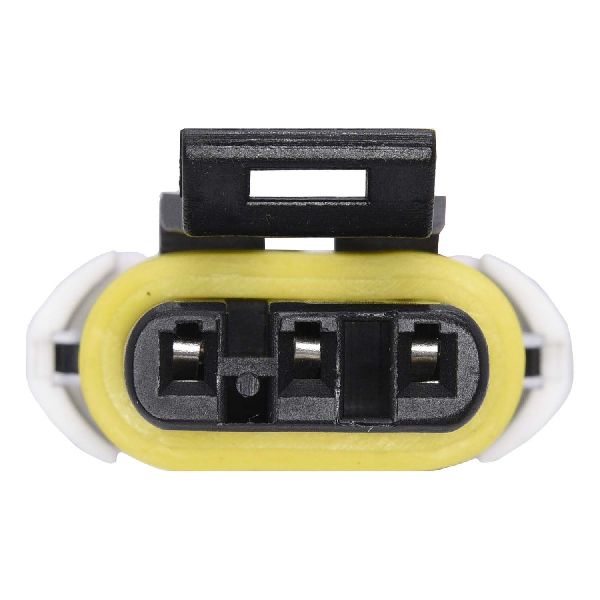
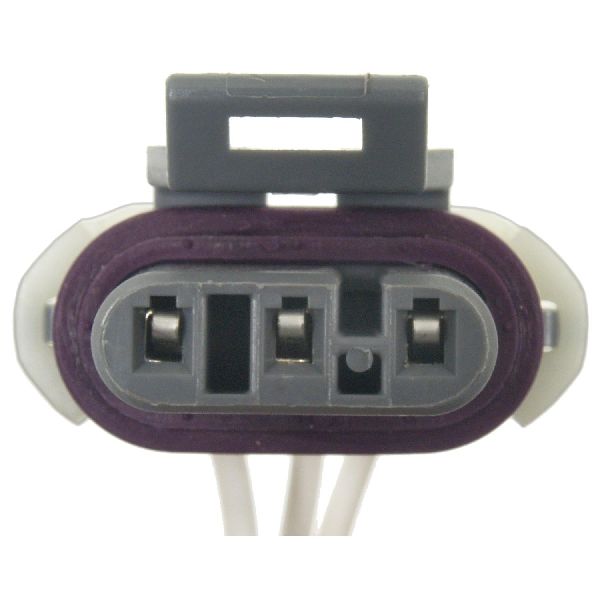
- Boost Pressure Sensor (G31 on some diagrams) — On the 2.0L engine, the boost pressure sensor is located near the back of the engine bay, on the intake piping before the throttle body.. This is the primary sensor ('A' circuit) that triggers the P0236 code. Its 4-pin connector and wiring are exposed to engine heat and vibration, making them a potential point of failure for shorts, opens, or corrosion that would disrupt the signal to the PCM.
- MAP/Manifold Sensor (Driver's Side) — On the 2.9L V6 engine, there are two MAP sensors. The driver's side sensor is located on the intake manifold and is often used for piggyback boost gauges due to its proximity to the firewall pass-through grommet.. While P0236 refers to the boost sensor 'A' (pre-throttle body), the PCM cross-references its reading with the MAP sensor (post-throttle body). A fault in the MAP sensor's wiring or the sensor itself could potentially cause the PCM to see an irrational difference and flag the boost sensor's performance.
Real Owner Repair Stories
- Reddit user on r/AlfaRomeo (2017 Giulia Veloce (2.0L)) — Persistent P0236 code over several months.
❌ Tried (didn't work) Replaced the MAP sensor., Replaced a cracked turbo charge pipe.
✅ What actually fixed it The user was advised by others that the next steps should be to check the turbocharger wastegate arm for play (a known issue) and to inspect/replace the actual Turbocharger Boost Sensor, as the code specifically points to that sensor ('A' circuit) and not the MAP sensor that was already replaced.
OEM Part Supersession History
55219298→77365393 (listed as an alternate OEM number by some suppliers)— Standard part evolution or multi-sourcing by the manufacturer.
Heads up: The Bosch part number 0281006028 is widely cross-referenced as the direct OEM equivalent for 55219298 and is used across many Fiat, Alfa Romeo, and Jeep vehicles with the 2.0L GME engine.
Model Year Variations Within This Range
- 2017 (on or before June 29, 2017): Vehicles in this date range with the 2.0L engine are subject to TSB 18-030-17 Rev. D, which requires a PCM software update. The original software calibration was overly sensitive and could erroneously trigger P0236 along with a cluster of other codes. Later 2017 and 2018 models have the updated software from the factory, making a physical fault more likely.
Helpful Videos
Used OEM Parts in Stock


New Aftermarket Parts Available


The information in this article is provided for general reference and educational purposes only. Vehicle specifications, procedures, and part compatibility can vary by production date, trim level, and region. Always consult your vehicle's factory service manual and verify part numbers before purchasing or performing repairs. Safety-critical components such as airbags, seat belts, and braking systems should be installed by a qualified professional.
- Alfa Romeo GIULIA:
- 🎬 Helpful Videos
- 🛍️ Shop This Part
- What's Unique About the 2017-2018 Alfa Romeo GIULIA
- Diagnostic Flowchart
- Symptoms You May Notice
- Most Likely Causes
- Rare But Worth Checking
- Diagnosis Steps
- Parts You'll Likely Need
- Related Codes That Often Appear With This One
- Technical Service Bulletins (TSBs) & Recalls
- Platform-Specific Known Issues
- Mechanic-Grade Diagnostic Values
- Scan Tool Commands That Help
- Wiring & Ground Locations
- Real Owner Repair Stories
- OEM Part Supersession History
- Model Year Variations Within This Range
- 🎟️ Get 5% Off