

P0234 on 2014-2020 Ram 3500 6.7L Cummins: Turbo Overboost Causes and Fixes
On a 2014-2020 Ram 3500 with the 6.7L Cummins, code P0234 almost always points to a sticking Variable Geometry Turbo (VGT) or a failing electronic turbo actuator due to soot buildup. This is often called 'Stuck Turbo Syndrome'. The fix is typically a new actuator (which requires calibration) or a complete turbo assembly. Do not ignore this code, as it can lead to severe engine damage.
- P0234 on a 6.7L Cummins is a critical code that indicates a potentially engine-damaging overboost condition and should be addressed immediately.
- The most likely culprits are a failing electronic turbo actuator or soot-clogged VGT vanes inside the turbocharger.
- Check for accompanying codes. EGR codes (P0401/P0402) point towards a clogged EGR cooler, while turbo control codes (P00AF) point directly to the actuator. [TSB #1813022, TSB #0900522]
- If you replace the turbo actuator, it must be calibrated with a proper scan tool, or the repair will not be successful.
- Don't overlook simple mechanical checks like ensuring all intake and boost tube clamps are tight, especially if recent work has been done.
What's Unique About the 2014-2020 Ram 3500

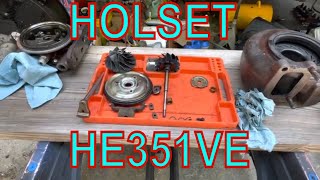
The 6.7L Cummins engine in this generation of Ram trucks uses a Holset HE351VE or HE300VG Variable Geometry Turbo (VGT) that is highly susceptible to issues from soot buildup, a phenomenon known as 'Stuck Turbo Syndrome'. Unlike simpler wastegated turbos, the VGT's internal sliding nozzle/vanes and its external electronic actuator are common failure points. Manufacturer service bulletins specifically link this overboost code to problems within the EGR system, such as a plugged EGR cooler, which can alter exhaust flow and backpressure, directly contributing to the conditions that cause the P0234 code. [TSB #1813022, TSB #9003758]
Diagnostic Flowchart

Tap your situation to follow the diagnostic path that matches what you're seeing on this vehicle.
Generation note: This range covers the end of the fourth generation (2014-2018) and the start of the fifth generation (2019-2020) Ram 3500. While both use a 6.7L Cummins with a VGT turbo, the 2019+ models received an updated engine with a new Holset HE300VG turbocharger. However, the fundamental causes of P0234 (soot buildup causing sticking vanes, actuator failure) are common to both generations and turbo models.
Symptoms You May Notice
- Check Engine Light is on
- Engine goes into 'limp mode' with drastically reduced power.
- Noticeable loss of power and poor acceleration, especially under load or when towing.
- Exhaust brake stops working or works intermittently.
- Excessive black smoke from the exhaust under acceleration.
- Audible whistling, whining, or a siren-like noise from the turbocharger area.
- Engine knocking or pinging sounds during acceleration due to excessive cylinder pressure.
- Replacing only the turbocharger actuator when the underlying VGT vanes are sticking. This will cause the new actuator to fail prematurely from the strain.
- Replacing the MAP sensor when the underlying cause is a mechanical issue with the turbocharger vanes or actuator. Always perform the manual linkage check first.
- Replacing the turbocharger when a clogged EGR cooler was the actual restriction causing the backpressure issue.
Most Likely Causes

- Sticking/Failed Turbocharger Actuator 🔴 High Probability The electronic actuator is mounted directly to the hot turbocharger and is a known high-failure item on the 6.7L Cummins engine. It constantly works to adjust the turbo vanes and can fail from internal electronic failure or its motor can burn out from the strain of trying to move sticking VGT vanes.
How to confirm: Use a capable scan tool to perform a 'VGT Actuator Test' or 'Turbo Actuator Calibration'. This commands the actuator through its range of motion. If it fails the test, makes grinding noises, or doesn't move, it's faulty. Also, check for related codes like P00AF, P003A, or U010C, which directly point to the actuator.
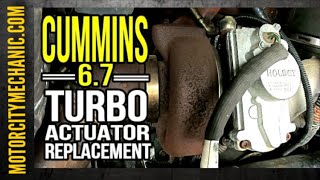
Typical fix: Replace the turbocharger actuator. The new actuator MUST be calibrated to the turbocharger using a specialized scan tool. Failure to calibrate will result in the code returning immediately. This is not an optional step.
Est. part cost: $350-$700 - Sticking Variable Geometry Turbo (VGT) Vanes 🔴 High Probability The 6.7L Cummins produces significant soot, which builds up on the sliding nozzle (vanes) inside the turbo's exhaust housing, causing them to bind or seize. This prevents the turbo from regulating boost correctly, often getting stuck in a position that creates too much boost.
How to confirm: This is the definitive test: with the actuator removed from the turbo, attempt to move the turbo's linkage arm (sector gear) by hand. It should move smoothly and freely through its full range of motion with little effort. If it is stiff, gritty, or completely seized, the VGT mechanism is stuck.
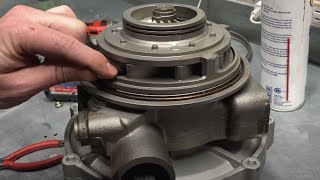
Typical fix: In some cases, the turbo can be disassembled and cleaned, but this is very labor-intensive and often not a permanent solution. The most common and reliable repair is to replace the entire turbocharger assembly. A new turbo typically comes with a new, pre-calibrated actuator.
Est. part cost: $1500-$3000 - Plugged EGR System Components 🟡 Medium Probability As documented in TSB #9003758, a plugged EGR cooler is a known cause for P0234 on these trucks. Soot and carbon from the exhaust gas recirculation system can build up and create a restriction, which increases exhaust backpressure. This can prevent the VGT vanes from moving correctly or fool the system into thinking the turbo is overboosting.
How to confirm: Inspect the EGR valve, crossover tubes, and especially the EGR cooler for heavy, packed-in soot buildup. A significant restriction will be visually obvious upon removal.
Typical fix: Remove and thoroughly clean or, more commonly, replace the clogged EGR components. The EGR cooler is the most frequent culprit.
Est. part cost: $400-$800 for an EGR cooler - Faulty MAP (Boost Pressure) Sensor ⚪ Low Probability While less common than turbo issues, a MAP sensor can fail and send incorrect high-pressure readings to the PCM, causing it to think the engine is overboosting when it isn't.
How to confirm: With the engine off (Key On, Engine Off), use a scan tool to compare the MAP sensor reading to the Barometric Pressure (BARO) sensor reading. They should be nearly identical (within 0.5 PSI). If they differ significantly, or if the MAP sensor reads boost at idle, it is likely faulty.
Typical fix: Replace the MAP sensor. It is typically located on the intake horn and held in by one or two small screws.
Est. part cost: $50-$150
Rare But Worth Checking
- Loose Intake/Boost Tube Clamps: Especially after installing an aftermarket air intake or performing other service, hose clamps on the intake tract can loosen with heat cycles. A user on a Ram forum confirmed this caused a P0234 code on their truck. This can allow unmetered air to enter or cause erratic readings, confusing the sensors. Always double-check that all clamps between the air filter and the engine are tight.
- Exhaust Restriction: A less common cause could be a downstream exhaust restriction, such as a clogged Diesel Particulate Filter (DPF) or a collapsed exhaust pipe. This increases backpressure and can prevent the turbo from regulating boost correctly. This would typically be accompanied by other DPF-related codes.
Diagnosis Steps

- Check for other diagnostic trouble codes (DTCs). Codes related to the turbo actuator (P00AF, P003A) or EGR system (P0401, P0402) are major clues.
- Using a scan tool, monitor live data for Commanded Boost vs. Actual Boost pressure while driving. Confirm if actual boost is significantly exceeding the commanded value under load.
- Perform a 'VGT Actuator Test' or 'Calibration' with a capable scan tool. This will command the actuator to sweep and verify its electronic and mechanical function.
- Crucial Step: Disconnect the actuator from the turbo and attempt to move the linkage arm by hand. It must move smoothly through its full range of motion without binding or grittiness. If it's stuck, the VGT vanes are the problem and the turbo needs replacement. If it moves freely, the actuator is the likely culprit.
- Test the MAP sensor by comparing its reading to the BARO sensor with the key on and engine off. The values should be almost identical.
- Visually inspect all intake and intercooler piping and clamps for leaks, looseness, or damage. Pay special attention to clamps near the turbo.
- If other codes are present, inspect the EGR valve and EGR cooler inlet/outlet for heavy soot buildup, which indicates a restriction. [TSB #9003758]
Parts You'll Likely Need
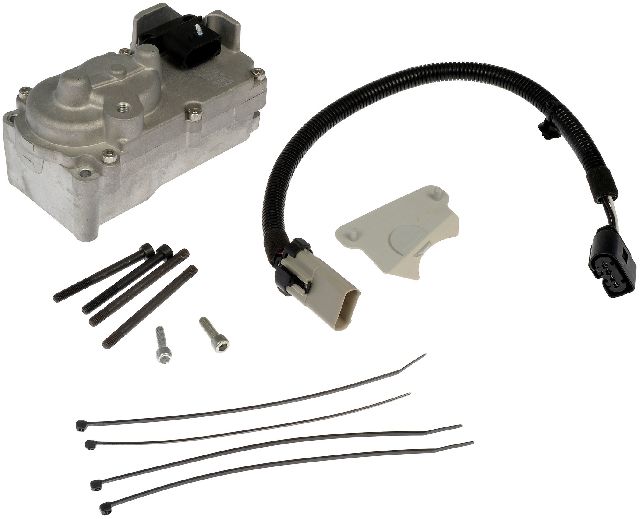
- Turbocharger Actuator
(OEM #68445522AA (superseded by 68481772AA), Holset: 4034309H)— This is the most common failure point for turbo control issues on the 6.7L Cummins, directly causing overboost or underboost conditions. It must be calibrated upon installation.
Trusted brands: Holset (OEM), Mopar, City Diesel, Fleece Performance
OEM price range: $500-$700
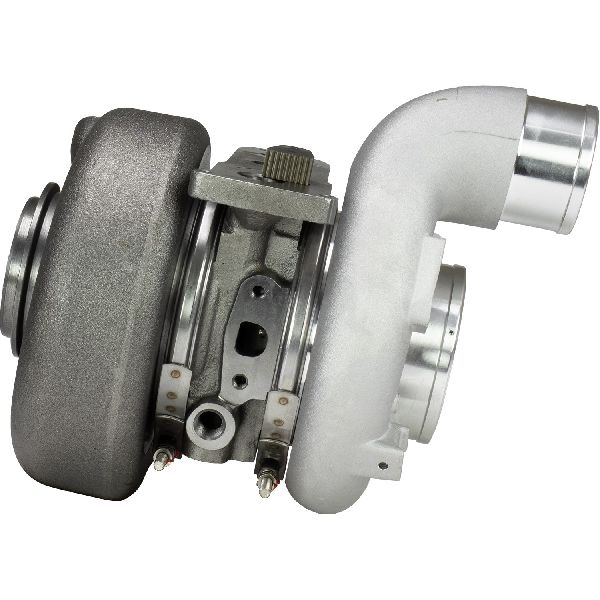
Aftermarket price range: $350-$550 - Turbocharger Assembly
(OEM #68253984AA (2013-18 example))— Required if the internal VGT vanes are seized from soot and cannot be cleaned, or if the turbo bearings have failed. This is the only reliable fix for a mechanically stuck turbo.
Related Codes That Often Appear With This One
- P00AF — Stands for 'Turbocharger Boost Control Module Performance'. This code often appears with P0234 because it directly points to a problem with the electronic actuator that controls the turbo. [TSB #0900522, 12]
- P0401 / P0402 — These are EGR flow-related codes. Their presence alongside P0234 strongly suggests the root cause may be a clogged EGR cooler or valve, as noted in manufacturer TSBs. [TSB #1813022]
- P2262 — Stands for 'Turbo Boost Pressure Not Detected - Mechanical'. This indicates a mechanical problem with the turbo, often sticking VGT vanes, which can lead to either underboost or overboost conditions depending on where the vanes get stuck.
Technical Service Bulletins (TSBs) & Recalls

- 1813022: Groups P0234 with several EGR system DTCs.
- 0900522: Groups P0234 with turbocharger boost control module performance codes.
- 9003758: Directly links P0234 with a plugged EGR Cooler and provides a specific diagnostic path.
Platform-Specific Known Issues
- TSB #9003758 explicitly states that if a customer has a P0234 code and the technician finds the EGR Cooler is plugged with soot, they should contact the STAR Center, confirming this is a recognized issue by the manufacturer.
- TSB #1813022 and #0900522 also group P0234 with a list of other turbo and EGR related codes, indicating a pattern of related system failures.
Mechanic-Grade Diagnostic Values
- VGT Actuator Terminating Resistance — expected: 108 to 132 Ohms. Failure: An 'OL' (Open Line) reading on a multimeter between pins 3 and 4 of the actuator connector indicates a failed actuator.
- MAP Sensor Voltage (Key On, Engine Off) — expected: Approximately 4.5 Volts. Failure: A voltage reading significantly different from 4.5V (e.g., 1-4V) with the engine off suggests the sensor is stuck and not reading atmospheric pressure correctly.
- MAP Sensor Voltage (Engine at Idle) — expected: 1 to 2 Volts. Failure: Voltage that does not drop from the KOEO reading, or remains high, indicates a faulty sensor or a vacuum issue.
- VGT Actuator Power Supply — expected: Approximately 12.5 Volts (Battery Voltage). Failure: A voltage reading less than 1 volt below battery voltage between pin 1 (power) and pin 2 (ground) of the actuator connector points to a wiring or supply issue.
Scan Tool Commands That Help
- wiTECH, AlfaOBD, Snap-on, etc.: VGT Turbo Self-Calibrate / Install — This is a mandatory procedure after replacing the VGT actuator. The function commands the new actuator to learn the start and stop positions of the turbo's internal vanes. Failure to perform this calibration will result in immediate running issues and recurring trouble codes.
- wiTECH, AlfaOBD, etc.: VGT Actuator Test / Sweep Test — This is a diagnostic command used to verify the function of the existing actuator. It commands the actuator to move through its full range of motion. It can confirm if the actuator motor is weak, if the gears are stripped (grinding noises), or if it's completely unresponsive.
Wiring & Ground Locations
- Actuator-Electronic Turbo Connector — Located on the lower right front of the engine, attached directly to the turbocharger assembly.. This is the primary connection point for all power, ground, and communication signals to the VGT actuator. Verifying power, ground, and CAN bus signals at this connector is a critical step in diagnosing whether a fault lies with the actuator itself or the vehicle's wiring harness.
Real Owner Repair Stories
- Ram Heavy Duty Forum (2022 Ram 3500 HO) — P0234 (Overboost Condition) and P0402 codes appeared after installing a Banks Ram-Air intake. The truck would buck and lose power while towing on slight grades.
❌ Tried (didn't work) Initial diagnosis was uncertain, with Banks support stating the P0234 code was new to them in this context.
✅ What actually fixed it The owner found that the hose clamps on the intake tube near the turbo had loosened due to heat cycles. Re-tightening all the clamps resolved the overboost code and drivability issues. - Reddit r/DieselTechs (2019 Ram 2500 6.7L Cummins) — Code P0226C ('boost control slow response') and hesitation while accelerating at various speeds.
❌ Tried (didn't work) A diesel shop quoted $1500 for a new actuator without performing further diagnosis.
✅ What actually fixed it The owner cleaned the mass air flow (MAF) sensors and the intake tubing. This single action resolved both the hesitation and the recurring turbo actuator code.
OEM Part Supersession History
68445522AA→68481772AA— Standard part revision and improvement by the manufacturer.
Heads up: The new part number is a direct replacement for the old one. However, some aftermarket actuators are sold as 'self-learning' while others require a scan tool for calibration. It is critical to confirm which type is being purchased.
Model Year Variations Within This Range
- 2014-2018: These models primarily use the Holset HE351VE turbocharger. While a robust design, its VGT components are known to be susceptible to soot buildup over time.
- 2019-2020: These models transitioned to the updated Holset HE300VG turbocharger. It features design changes to the bearing housing and VGT components. While the fundamental cause of failure (soot and actuator electronics) remains the same, internal parts and some service procedures may differ slightly from the earlier HE351VE.
Helpful Videos
Used OEM Parts in Stock

New Aftermarket Parts Available


The information in this article is provided for general reference and educational purposes only. Vehicle specifications, procedures, and part compatibility can vary by production date, trim level, and region. Always consult your vehicle's factory service manual and verify part numbers before purchasing or performing repairs. Safety-critical components such as airbags, seat belts, and braking systems should be installed by a qualified professional.
- Ram 3500:
- 🎬 Helpful Videos
- 🛍️ Shop This Part
- What's Unique About the 2014-2020 Ram 3500
- Diagnostic Flowchart
- Symptoms You May Notice
- Most Likely Causes
- Rare But Worth Checking
- Diagnosis Steps
- Parts You'll Likely Need
- Related Codes That Often Appear With This One
- Technical Service Bulletins (TSBs) & Recalls
- Platform-Specific Known Issues
- Mechanic-Grade Diagnostic Values
- Scan Tool Commands That Help
- Wiring & Ground Locations
- Real Owner Repair Stories
- OEM Part Supersession History
- Model Year Variations Within This Range
- 🎟️ Get 5% Off