

P0234 on 2015-2020 Ram 2500 6.7L Cummins: Turbo Overboost Causes and Fixes
On a 2015-2020 Ram 2500 with the 6.7L Cummins, code P0234 is almost always caused by a sticking variable geometry turbo (VGT) or a failing electronic turbo actuator, often due to soot buildup. The fix is typically a new actuator (which requires calibration) or a complete turbo assembly. This is a serious code that should be addressed immediately to prevent engine damage.
- P0234 on a 6.7L Cummins is a serious code that indicates a mechanical overboost condition, not just a bad sensor.
- The most likely cause is a sticking/failed electronic turbo actuator or soot-clogged VGT vanes inside the turbocharger.
- A plugged EGR cooler is a known related cause, as documented in manufacturer TSBs.
- If replacing only the turbo actuator, it is critical that the new part is calibrated to the turbocharger with a scan tool.
- Do not continue to drive with this code, as it can lead to severe and expensive engine damage.
What's Unique About the 2015-2020 Ram 2500

The 6.7L Cummins engine uses a sophisticated Holset HE300VG or HE351VE Variable Geometry Turbo (VGT). Unlike a traditional wastegated turbo, the VGT uses an electronic actuator to move internal vanes, changing the exhaust flow to control boost pressure precisely. This design is highly effective but prone to issues with soot buildup from the EGR system. This soot can cause the VGT vanes or the actuator itself to stick, leading directly to the P0234 overboost condition. This is often referred to as "Stuck Turbo Syndrome." Manufacturer TSBs specifically link this code to EGR system problems, highlighting the interconnected nature of these components on this platform.
Diagnostic Flowchart
Tap your situation to follow the diagnostic path that matches what you're seeing on this vehicle.
Generation note: This range covers the end of the fourth generation Ram HD (2015-2018) and the start of the fifth generation (2019-2020). While both generations use a 6.7L Cummins with a VGT, the specific turbocharger (HE351VE vs. HE300VG) and actuator models can differ. However, the fundamental causes of P0234 (sticking actuator/vanes, soot buildup) are common to both generations and even extend back to 2007.5 models.
Symptoms You May Notice

- Check Engine Light is on
- Drastic reduction in engine power (limp mode)
- Engine may run rough or hesitate on acceleration
- Unusual whistling or siren-like sounds from the turbo
- Exhaust brake may become disabled or function erratically
- Black smoke from the exhaust under acceleration
- Noticeable turbo lag or poor low-end power
- Truck bucks or surges when towing, especially on grades
- Replacing only the turbocharger when the issue was a faulty actuator that could have been replaced separately (and calibrated).
- Replacing the MAP sensor without first testing it and inspecting the turbo actuator and VGT linkage, which are far more common failure points.
- Replacing the actuator when the VGT vanes inside the turbo are the actual cause of the binding, leading to the new actuator failing prematurely.
Most Likely Causes

- Sticking/Failing Turbocharger Actuator 🔴 High Probability The electronic actuator on the VGT (Holset HE300VG for 2013+ models) is a very common failure item. It is constantly working and is susceptible to both electronic failure from heat and vibration, and mechanical binding from being overworked trying to move sooty vanes.
How to confirm: Use a high-end scan tool (like wiTECH) to run the 'VGT Actuator Test'. You can also visually inspect the actuator linkage for smooth movement while the test is running. If it's jerky, noisy, or doesn't complete its sweep, it's likely faulty. A failing actuator may also fail to calibrate.
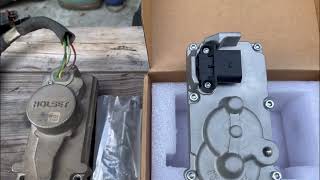
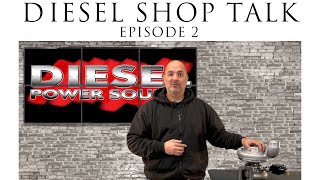
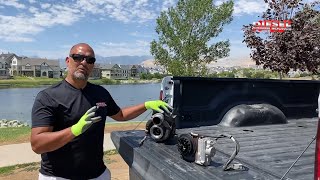
Typical fix: Replace the turbocharger actuator. 🎬 Watch: Step-by-step guide to removing and installing the actuator. This part MUST be calibrated to the turbo using a compatible scan tool or a standalone calibration tool after installation. Failure to calibrate will result in the code returning. Many companies now offer rental calibration tools or pre-calibrated actuators to simplify the process for DIYers.
Est. part cost: $350-$600 - Sticking VGT Nozzle/Vanes 🔴 High Probability Soot from the EGR and combustion process builds up on the internal vanes of the turbo's exhaust housing, a condition often called 'Stuck Turbo Syndrome'. This prevents the vanes from moving freely to regulate boost pressure. TSB #9003758 directly links P0234 to soot buildup.
How to confirm: This is often diagnosed after confirming the actuator is good. With the actuator removed from the turbo, manually move the VGT linkage arm on the turbo itself. It should move smoothly with minimal resistance. If it feels stiff, gritty, or stuck, the VGT vanes are binding. 🎬 See how to quickly diagnose and repair VGT issues.
Typical fix: Sometimes the turbo can be removed, disassembled, and cleaned, but success is mixed and often temporary. Due to the high labor involved and the risk of incomplete cleaning or rapid re-sooting, replacing the entire turbocharger assembly is the more common and reliable long-term repair. Regularly using the exhaust brake can help cycle the vanes and mitigate soot buildup.
Est. part cost: $1500-$3000 - Soot-Clogged EGR System 🟡 Medium Probability As highlighted in TSB #9003758, a plugged EGR cooler can cause exhaust flow and pressure issues that directly impact turbocharger performance and trigger an overboost code. The entire emissions system is interconnected, and a problem in one area creates issues elsewhere.
How to confirm: Inspect the EGR valve, crossover tube, and EGR cooler for heavy soot accumulation. This often requires partial disassembly of the EGR system. The 'Perform Service' message on the dash is often related to the required 67,500-mile EGR cleaning interval.
Typical fix: Clean or replace the EGR valve and EGR cooler. Specific EGR system cleaning chemicals are available from Mopar and other brands. If cleaning, ensure all passages are completely clear. Some owners report a loss of power after cleaning if the valve is not re-seated or connected properly.
Est. part cost: $500-$1200 for a new EGR cooler - Faulty MAP (Manifold Absolute Pressure) Sensor ⚪ Low Probability The MAP sensor can become contaminated with soot or oil, or fail electronically, causing it to send inaccurate high-pressure readings to the PCM. An erratic reading can trick the PCM into thinking an overboost event is occurring.
How to confirm: With the key on and engine off, the MAP sensor reading on a scan tool should be close to the Barometric Pressure (BARO) reading. If they differ significantly, or if the voltage is stuck high or low, the sensor is likely bad. The sensor is located on the intake manifold on the driver's side. Using a multimeter, the signal wire should read around 0.5V with the engine off and increase with pressure.
Typical fix: Replace the MAP sensor. It is typically located on the intake manifold and can be difficult to access.
Est. part cost: $50-$150
Rare But Worth Checking
- Aftermarket Air Intake: Some owners have reported that installing an aftermarket cold air intake can trigger P0234, especially while towing. This may be due to loosened clamps on the intake tube allowing unmetered air or altered airflow characteristics that confuse the VGT control logic, causing it to overshoot its boost target.
- Exhaust Restriction: A clogged Diesel Particulate Filter (DPF) or catalytic converter can increase exhaust backpressure, which can affect the VGT's ability to regulate boost and potentially trigger an overboost code. This is usually accompanied by other DPF-related codes and frequent regeneration cycles.
- Aftermarket Tuning: Aggressive engine tunes that command higher-than-stock boost levels can easily trigger a P0234 code if the turbo cannot be precisely controlled at those elevated pressures or if a 'boost fooler' is not used.
Diagnosis Steps
- Read all fault codes with a quality OBD-II scanner. Note any other codes present, especially for the EGR or turbo systems (P00AF, P0401, P0402, etc.).
- Using a bidirectional scanner, perform the 'VGT Actuator Test'. Observe the actuator's linkage on the turbo for smooth, full-range movement. Listen for any grinding or binding noises.
- Monitor live data. Compare 'Commanded Boost' vs. 'Actual Boost' during a drive, especially under load. A large discrepancy where actual boost significantly exceeds commanded boost confirms the overboost condition.
- Inspect all charge air cooler (intercooler) piping and clamps for leaks or loose connections. Also check the pre-turbo air intake tube for loose clamps, as this can cause erratic VGT behavior.
- If the actuator test passes, remove the actuator from the turbocharger. Manually move the VGT linkage arm on the turbo. It should move smoothly with minimal resistance. If it is stiff, gritty, or stuck, the VGT vanes are binding.
- Inspect the EGR system for heavy soot buildup, particularly the EGR valve and EGR cooler, as recommended by TSB #9003758.
- Test the MAP sensor. With the key on and engine off, compare its reading to the BARO sensor reading on a scan tool. They should be nearly identical. Check the sensor's voltage output to ensure it's within specification (approx. 0.5V engine off, 1-2V at idle).
Parts You'll Likely Need

- Turbocharger Actuator
(OEM #68445522AA)— This electronic motor is the most common failure point for the P0234 code. It fails from heat, vibration, and internal wear. It is for the HE300VG turbo used on 2013+ models.
Trusted brands: Holset/Mopar (OEM), Dorman, Synapse Auto
OEM price range: $450-$600
Aftermarket price range: $350-$500 - Turbocharger Assembly
(OEM #R8048234AI)— Required when the internal VGT vanes are seized with soot and cannot be reliably cleaned. This is the most comprehensive and long-lasting repair. The OEM part number R8048234AI is a remanufactured unit that supersedes many previous part numbers.
Trusted brands: Holset (OEM Reman), Garrett
OEM price range: $2500-$3500
Aftermarket price range: $1500-$2500 - Actuator Calibration Tool — Required to calibrate a new actuator to the turbocharger. Previously a dealer-only tool, several aftermarket companies now offer standalone rental tools for DIY replacement, making the job much more accessible.
Trusted brands: Circuit Board Medics, Synapse Auto, Swag Performance
OEM price range: N/A (Shop Tool)
Aftermarket price range: $150-$250 (Rental/Single-Use License)
Related Codes That Often Appear With This One
- P0401 — EGR Flow Insufficient. As stated in TSB #1813022 and #9003758, EGR system problems are directly linked to the P0234 code.
- P0402 — EGR Flow Excessive Detected. Also mentioned in TSB #1813022, this points to a malfunctioning EGR system affecting turbo operation.
- P00AF — Turbocharger Boost Control Module Performance. TSB #0900522 links this code, indicating a problem with the electronic actuator module itself.
- P2281 — Air Leak Between MAF and Throttle Body. An air leak can cause the turbo to behave erratically as the system tries to compensate, as noted in TSB #1813022.
- P049D — EGR Control Position Exceeded Learning Limit. This code is often seen alongside P0234 and points to the EGR and turbo control systems struggling to operate correctly, as mentioned in TSBs.
Technical Service Bulletins (TSBs) & Recalls
- TSB #1813022: Links P0234 with various EGR and air leak codes (P0401, P0402, P2281, P049D), confirming the systemic nature of the fault.
- TSB #0900522: Connects P0234 directly with turbo actuator performance codes like P00AF, pointing to the actuator as a primary culprit.
- TSB #9003758: Explicitly instructs technicians to contact the STAR center if P0234 is present and the EGR cooler is found to be plugged with soot, directly linking the two issues.
- TSB #18-031-17 (supersedes 18-091-16): A PCM software update that addresses the logic for several DTCs, including P049D, which is often seen with P0234.
Platform-Specific Known Issues

- TSB #9003758 explicitly advises technicians to contact the STAR Center if P0234 is found alongside a soot-plugged EGR Cooler, indicating this is a known and specific issue pattern for the manufacturer.
- TSB #1813022 and #0900522 both list P0234 in conjunction with a host of other EGR and turbo control codes, confirming that a P0234 fault is rarely an isolated sensor issue and almost always points to a mechanical problem with the turbo or EGR system.
Mechanic-Grade Diagnostic Values

- VGT Actuator Terminating Resistance — expected: 108 to 132 Ohms. Failure: An 'OL' (Open Loop) reading on a multimeter indicates a failed internal resistor in the actuator.
- VGT Actuator Harness CAN Bus Resistance — expected: 115 to 125 Ohms. Failure: With the actuator unplugged and key off, measure resistance between the two middle pins of the harness connector. An out-of-spec reading suggests a wiring issue.
- VGT Actuator Data Link Voltage — expected: 2 to 4 Volts. Failure: With the key on, the two data link wires should have voltage in this range. Incorrect voltage points to a circuit or ECM issue.
- MAP Sensor Voltage (Key On, Engine Off) — expected: ~0.5 Volts. Failure: A voltage significantly outside the 0.4-0.6V range at atmospheric pressure suggests a faulty sensor or wiring problem.
Scan Tool Commands That Help

- wiTECH, AlfaOBD, or other capable bidirectional scanner: VGT Actuator Pre-alignment / Pre-install — This is the first step after purchasing a new actuator. It must be run with the new actuator electrically connected to the harness but NOT physically installed on the turbocharger. The command cycles the actuator to find its limits.
- wiTECH, AlfaOBD, or other capable bidirectional scanner: VGT Actuator Self-Calibration / Install — This is the final, mandatory step after the new actuator has been physically bolted onto the turbocharger. This command pairs the actuator's learned travel limits with the turbo's vane position, ensuring correct operation. Failure to perform this step will cause the P0234 code to return.
Wiring & Ground Locations
- Electronic Turbo Actuator Connector — Located on the lower right front of the engine, near the oil filter. It is a 4-pin, light gray connector, often with a red locking tab.. This is the primary connector for all power, ground, and data communication to the VGT actuator. Checking for power, ground, and CAN bus resistance at this connector is a key diagnostic step.
- Actuator Connector Pinout — On the 4-pin actuator connector, the two outer pins are for power and ground, while the two inner pins are for CAN High and CAN Low data communication.. Knowing the pinout is essential for performing accurate voltage and resistance tests to determine if a failure is in the actuator itself or the engine wiring harness.
Real Owner Repair Stories
- HD Rams Forum (2022 Ram 3500 HO Cummins) — P0234 and P0402 codes, occurring frequently when towing or in warmer climates going up grades.
❌ Tried (didn't work) Resetting codes with a scan tool provided a temporary fix, but the codes would return under load.
✅ What actually fixed it The problem was caused by loose hose clamps on the aftermarket Banks air intake tube where it connects to the turbo. Heat cycles from normal driving and towing caused the clamps to loosen, allowing unmetered air to enter pre-turbo. Re-tightening all intake hose clamps resolved the overboost code.
"I Checked Everything" — The Actual Cause
- A common diagnostic dead-end occurs when a smoke test of the charge air system (post-turbo) reveals no leaks, yet the P0234 overboost code persists. The actual cause can be a loose clamp on the air intake tube *before* the turbocharger. This allows unmetered, turbulent air into the turbo, which can confuse the VGT control logic and cause it to overshoot its boost target. This is missed because smoke tests are designed to find pressure leaks, not vacuum/suction leaks.
When the Usual Fixes Don't Work
- While the most common causes for P0234 are a failed actuator or a soot-seized turbo, there are documented cases where the fix was much simpler. In one instance involving a truck with an aftermarket air intake, the code was repeatedly triggered while towing. The final solution was not to replace the turbo or actuator, but to simply re-tighten the hose clamps on the intake tube at the turbo inlet. This demonstrates that before condemning expensive components, all connections on the entire air intake path—both before and after the turbo—must be verified as secure, because unmetered air entering pre-compressor can destabilize the VGT control algorithm and cause an overboost condition.
OEM Part Supersession History
68307025AA, 68445522AA→68481772AA (often sold as remanufactured R8481772AA)— Standard part revision and updates by the manufacturer.
Heads up: While actuators for 2007.5-2012 models look similar, they may have different harness connectors requiring an adapter for use on 2013+ trucks. The 2019+ actuators may also differ. Always verify the part number for your specific model year.
Model Year Variations Within This Range

- 2019-2020: The 6.7L Cummins engine was significantly redesigned for the 2019 model year. Changes include a compacted graphite iron (CGI) block, a new cast-iron cylinder head, and hydraulic lash adjusters (lifters), which eliminate the need for valve adjustments. The compression ratio was lowered from 19:1 to 16.2:1.
- 2019-2020: A new, larger Holset variable-geometry turbocharger was introduced, capable of producing higher boost pressures (up to 33 PSI on HO models). While the failure mode (sticking actuator/vanes) causing P0234 is the same, the physical turbo and actuator part numbers are different from the 2015-2018 models.
Helpful Videos
Used OEM Parts in Stock


New Aftermarket Parts Available


The information in this article is provided for general reference and educational purposes only. Vehicle specifications, procedures, and part compatibility can vary by production date, trim level, and region. Always consult your vehicle's factory service manual and verify part numbers before purchasing or performing repairs. Safety-critical components such as airbags, seat belts, and braking systems should be installed by a qualified professional.
- Ram 2500:
- 🎬 Helpful Videos
- 🛍️ Shop This Part
- What's Unique About the 2015-2020 Ram 2500
- Diagnostic Flowchart
- Symptoms You May Notice
- Most Likely Causes
- Rare But Worth Checking
- Diagnosis Steps
- Parts You'll Likely Need
- Related Codes That Often Appear With This One
- Technical Service Bulletins (TSBs) & Recalls
- Platform-Specific Known Issues
- Mechanic-Grade Diagnostic Values
- Scan Tool Commands That Help
- Wiring & Ground Locations
- Real Owner Repair Stories
- "I Checked Everything" — The Actual Cause
- When the Usual Fixes Don't Work
- OEM Part Supersession History
- Model Year Variations Within This Range
- 🎟️ Get 5% Off