

P0234 on 2014 Ram 1500 EcoDiesel: Turbo Overboost Causes and Fixes
On a 2014 Ram 1500 with the 3.0L EcoDiesel, code P0234 almost always points to a problem with the variable geometry turbo (VGT), often due to a sticking actuator or soot-caked internal vanes. This typically requires a complete turbocharger replacement, which is a complex and expensive repair often requiring the cab to be lifted off the frame for access. Before replacing parts, it is critical to check if a PCM software update is available, as several TSBs address this exact code.
- P0234 on your 2014 EcoDiesel means the turbo is creating too much pressure, which is a serious condition that can damage the engine.
- The most likely cause is a failure of the variable geometry turbo (VGT) assembly due to soot buildup, which is a known issue on these engines.
- Diagnosis requires an advanced scan tool to check the turbo actuator's movement; simply replacing sensors is often a waste of money.
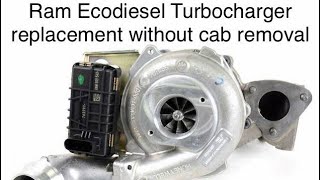
- The repair is almost always a full replacement of the turbocharger, which is an expensive and labor-intensive job not recommended for beginners.
- Before any major repairs, check with a dealer to see if your truck has any pending PCM software updates, as this can sometimes resolve control issues.
What's Unique About the 2014-2014 Ram 1500

The 2014 Ram 1500's 3.0L EcoDiesel engine uses a Variable Geometry Turbo (VGT), specifically the Garrett GTB2056VKL model. This design allows the turbo to provide good performance across the RPM range, but it has a key vulnerability: soot from the EGR system. The VGT mechanism, with its delicate moving vanes and electronic actuator, is prone to getting gummed up with diesel soot. This causes the vanes to stick or the actuator to fail, leading to incorrect boost levels. An owner on an enthusiast forum noted that sooting of the VGT vanes is a primary cause of this issue, especially with city driving. This makes P0234 a particularly common and frustrating code for EcoDiesel owners.
Diagnostic Flowchart

Tap your situation to follow the diagnostic path that matches what you're seeing on this vehicle.
Symptoms You May Notice
- Check Engine Light is on
- Vehicle enters 'limp mode' with drastically reduced power
- Service Electronic Throttle Control message may appear on the dash
- Noticeable loss of engine power and acceleration
- Audible whistling, whining, or siren-like sounds from the engine bay that change with RPM
- Black smoke from the exhaust
- Sudden boost spikes visible on the gauge
- Replacing the boost pressure sensor when the turbocharger itself is the root cause. The sensor is easier and cheaper to replace, but if the turbo's VGT mechanism is stuck, a new sensor will not fix the problem.
- Replacing the turbocharger when the issue is a simple software bug. Several TSBs indicate a PCM reflash can resolve P0234, making this a crucial first diagnostic step to avoid unnecessary, expensive repairs.
Most Likely Causes

- Sticking/Failed Turbocharger VGT Vanes or Actuator 🔴 High Probability The 3.0L EcoDiesel's Garrett GTB2056VKL VGT design is highly susceptible to soot buildup from the EGR system, which causes the delicate vanes inside the turbo to stick or the integrated electronic actuator to fail. This is the most common failure point for this code, with many owners on forums confirming a turbo replacement was the ultimate fix.
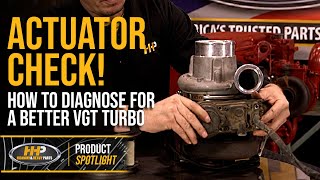
How to confirm: A technician can use a bidirectional scan tool (like wiTECH or AlfaOBD) to command the actuator to perform a sweep test or calibration while observing its actual position PID. If the actual position doesn't match the commanded position, or if the range of motion is limited or fails the test, the turbo assembly is faulty. Physically removing the actuator and manually checking if the VGT linkage moves freely can also confirm if the vanes are seized. 🎬 See how to diagnose and test your VGT turbo actuator.
Typical fix: In most cases, the entire turbocharger assembly must be replaced. The actuator and turbo are sold as a single unit by Mopar, and the new unit must be calibrated to the PCM.
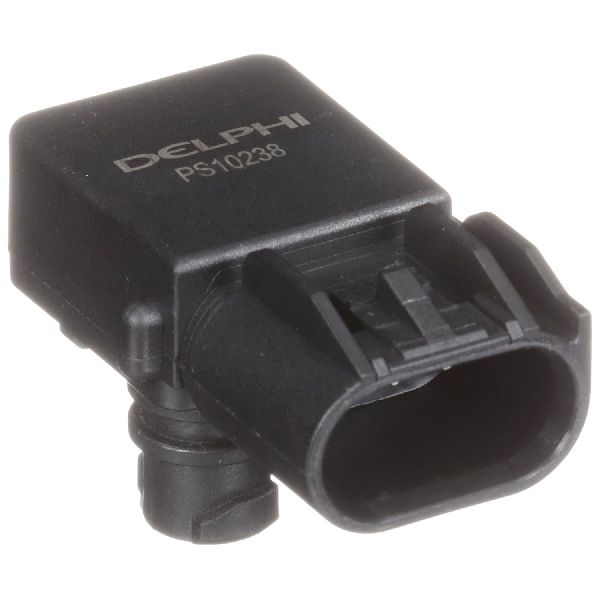
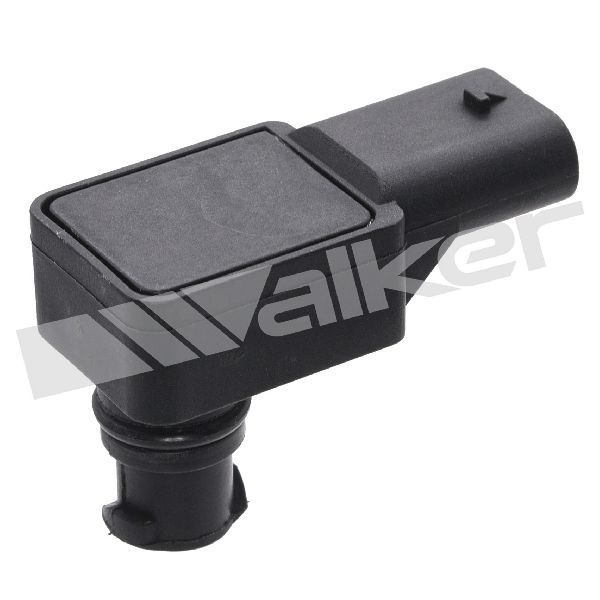
Est. part cost: $1300-$2400 - Faulty Boost Pressure Sensor (MAP Sensor) 🟡 Medium Probability The MAP sensor can become heavily clogged with soot and oil from the crankcase ventilation system, causing it to send inaccurate (often delayed or artificially low) pressure readings to the PCM, which can then command excessive boost.
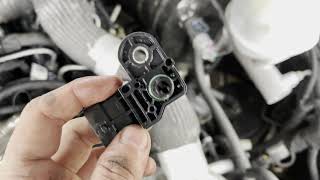
How to confirm: Visually inspect the sensor by removing it (held by a single T40 Torx bolt). If the tip is caked in soot, it needs cleaning. A scan tool can be used to compare its readings to atmospheric pressure with the key on, engine off. A video guide shows the location and cleaning process. 🎬 Watch this quick guide on cleaning your EcoDiesel MAP sensor.
Typical fix: Remove and clean the sensor with electronics cleaner or MAP sensor-specific cleaner. If cleaning doesn't resolve the issue, replace the sensor. Many owners attempt cleaning first as it is a low-cost diagnostic step.
Est. part cost: $120-$200 - Outdated Powertrain Control Module (PCM) Software ⚪ Low Probability As an early model year, manufacturers released several software updates to fix bugs and improve how the engine management system interprets sensor data. Multiple TSBs exist for the EcoDiesel that involve a PCM flash to address a wide range of codes, including P0234.
How to confirm: A dealership or qualified shop using a tool like wiTECH can check your vehicle's VIN against FCA's service records to see if any software updates (flashes) are available or have been performed. This is a critical first step before replacing any hardware.
Typical fix: Reprogramming (flashing) the PCM with the latest software. This is a dealer or specialty shop-only procedure.
Est. part cost: $100-$250
Rare But Worth Checking
- Boost Leak: While a boost leak typically causes an underboost code (P0299), a small or intermittent leak in a charge air hose or at the intercooler can sometimes confuse the system. The PCM may see lower-than-expected boost and command the turbo to compensate, leading to a momentary overboost spike.
- Faulty Powertrain Control Module (PCM): This is extremely rare, but a hardware failure within the PCM, such as a failed driver for the turbo actuator, can cause it to misinterpret data or fail to control the turbo actuator correctly. This should only be considered after all other possibilities, including wiring, have been exhaustively ruled out.
Diagnosis Steps
- Check for Technical Service Bulletins (TSBs). Before any other step, contact a dealer with your VIN to see if TSBs like 18-021-15 or 18-028-14 apply and if a PCM reflash is needed.
- Scan for all DTCs. Note any other codes, especially P0299, P0046, or U010C, as they can help pinpoint the fault.
- Monitor live data with a scan tool. Compare 'Commanded VGT Position' to 'Actual VGT Position' and 'Commanded Boost' vs 'Actual Boost' during a drive. A significant, persistent discrepancy points to a mechanical or actuator issue.
- Inspect and clean the Boost Pressure (MAP) sensor. Remove the single T40 Torx bolt, inspect the sensor for heavy soot, clean it with appropriate cleaner, and reinstall.
- Perform a VGT Actuator Sweep Test. Using an advanced scan tool (like AlfaOBD or wiTECH), command the turbo actuator to perform a sweep test from 0-100%. Visually confirm the linkage moves freely through its full range of motion. A failure or binding indicates a faulty actuator or seized vanes.
- Inspect wiring. Thoroughly check the wiring harness and connector for the turbo actuator and boost pressure sensor for any signs of chafing, melting, or corrosion.
- If the actuator fails the sweep test or the vanes are confirmed to be sticking, the turbocharger assembly must be replaced.
Parts You'll Likely Need
- Turbocharger Assembly
(OEM #68211213AD)— This is the most common fix because the failure is typically internal to the turbo's variable geometry mechanism or its integrated electronic actuator. The part is sold as a complete assembly. This part number supersedes 68211213AA, 68211213AB, and 68211213AC.
Trusted brands: Garrett (OEM Manufacturer), Mopar
OEM price range: $1500-$2400
Aftermarket price range: $850-$1400 - Boost Pressure Sensor (MAP Sensor)
(OEM #68211211AA)— A less common but possible cause is a soot-clogged sensor providing false readings to the computer. It's often cleaned or replaced as a low-cost diagnostic step before condemning the expensive turbo.
Trusted brands: Bosch, Mopar
OEM price range: $150-$200
Aftermarket price range: $80-$120
Related Codes That Often Appear With This One
- P0299 — Turbo/Supercharger Underboost. A faulty actuator or sticking vanes can cause both excessive and insufficient boost at different times, leading to both codes being stored.
- P0046 — Turbocharger Boost Control 'A' Circuit Range/Performance. This code points more directly to an electrical or performance problem with the boost control solenoid or actuator, which is often the root cause of P0234.
- U010C — Lost Communication With Turbocharger/Supercharger Control Module 'A'. This code specifically indicates an electrical failure or communication loss with the electronic turbo actuator, strongly suggesting the actuator itself has failed.
Technical Service Bulletins (TSBs) & Recalls
- Bulletin #18-021-15 REV A: Involves reprogramming the PCM with updated software. P0234-00 is listed as one of many codes this flash is designed to address for 'Diagnostic and System Improvements'.
- Bulletin #18-028-14 REV. D: An earlier PCM software update that also lists P0234-00 - Turbocharger Overboost Condition as one of the codes it can resolve.
- Bulletin #18-012-16: A TSB for the Jeep Grand Cherokee with the same engine that also lists P0234-00 as a code fixed by a software update.
- Bulletin #18-023-15 REV C: Another Jeep Grand Cherokee TSB that includes P0234-00 in a list of codes addressed by a PCM flash.
Platform-Specific Known Issues
- The Garrett GTB2056VKL turbo used on the 3.0L EcoDiesel is known for issues with the electronic actuator failing and the variable vanes sticking due to soot accumulation. This is often exacerbated by short-trip driving cycles where the engine doesn't get hot enough for long enough.
- Multiple Technical Service Bulletins (TSBs) have been issued by Ram for PCM software updates that address a wide range of diagnostic codes, including P0234, indicating that calibration, not hardware, can sometimes be the issue.
Mechanic-Grade Diagnostic Values
- VGT Actuator Connector Voltage/Data Pins — expected: Pin 1: 12V Power, Pin 2: Ground, Pin 3: CAN C (+), Pin 4: CAN C (-). Failure: Loss of 12V power, poor ground, or no CAN bus signal will cause communication codes and prevent actuator function.
- MAP Sensor Voltage (Key On, Engine Off) — expected: Approximately 0.5V at sea level.. Failure: Voltage significantly higher or lower than expected for the ambient atmospheric pressure indicates a faulty sensor.
- Live Data: VGT Actual Position vs. VGT Commanded Position — expected: The 'Actual' PID should closely track the 'Commanded' PID during a sweep test or while driving.. Failure: If 'Actual Position' is stuck at 0% or another value while 'Commanded Position' changes, it strongly indicates a failed position sensor inside the actuator or a seized VGT mechanism.
Scan Tool Commands That Help

- AlfaOBD / wiTECH: Turbo actuator pre-align and self-calibrate — This is a mandatory procedure after replacing the turbocharger or actuator. It involves a two-stage process: a pre-calibration with the actuator electrically connected but physically *off* the turbo, followed by a final calibration after installation. Failure to perform this can damage the new actuator or cause it to function incorrectly.
- AlfaOBD / wiTECH / TopDon: VGT Actuator Sweep Test — Used during diagnosis to command the actuator through its full range of motion (e.g., 0-100%). A technician visually inspects the actuator linkage to see if it moves smoothly or if it binds, sticks, or fails to move at all, which indicates seized VGT vanes or a failed actuator motor.
- AlfaOBD / wiTECH: Forced DPF Regeneration — If an exhaust restriction is suspected as the cause of overboost, initiating a forced DPF regeneration can be a diagnostic step to see if clearing the filter alleviates the condition. This is relevant if P2463 (DPF Restriction) is also present.
Wiring & Ground Locations
- VGT Actuator Connector — On the electronic actuator itself, mounted to the passenger side of the turbocharger assembly.. This is the single connection point for all power, ground, and data to the actuator. Damage or corrosion here will cause a total loss of control, leading to overboost or underboost codes.
- Connector C104 — A large, gray 16-pin connector located on the driver's side frame rail, often near or below the airbox.. This is a major pass-through connector for the engine harness and is a known weak point for moisture and corrosion, which can cause an open or high resistance on the CAN bus circuit to the turbo actuator.
- Ground G105 — On the passenger side of the engine block, often near the starter motor.. This is a primary engine ground point. A loose or corroded connection here can cause erratic behavior or a lack of a proper ground reference for the turbo actuator circuit, leading to control faults.
- MAP Sensor — On the back of the intake manifold, just in front of the turbocharger.. This sensor provides the primary boost pressure reading to the PCM. Its wiring is susceptible to heat from the turbo. Its physical location makes it prone to clogging with soot.
Real Owner Repair Stories
- EcoDieselRam.com forum user (2016 Ram 1500 EcoDiesel) — P0299 (Underboost), but diagnostic process is identical for P0234. 'VGT Required Position' and 'VGT Actual Position' were very different in live data.
❌ Tried (didn't work) Smoke/pressure testing the exhaust and intake systems, which showed no leaks.
✅ What actually fixed it The user diagnosed a failed position sensor inside the VGT actuator because the 'Measured Position' PID was always zero, even though visual inspection during a sweep test showed the actuator arm was moving. Since Ram does not sell the actuator separately, the entire turbocharger assembly had to be replaced. - Dodge Diesel forum user (Dodge Ram with Cummins (similar VGT principle)) — P0234 Overboost code on a stock engine.
❌ Tried (didn't work) Replacing the MAP sensor.
✅ What actually fixed it A technician used a special tool to pressurize the turbo inlet and found the wastegate (VGT vanes) would not open about half the time. Upon removing the turbo, physical interference was found to be blocking the mechanism. Clearing the interference resolved the issue. - Ram Heavy Duty Forum user (2022 Ram HO (similar principle)) — P0234 and P0402 after installing a Banks Cold Air Intake.
❌ Tried (didn't work) Contacting the manufacturer, who had no immediate fix.
✅ What actually fixed it The issue was caused by loose hose clamps at the turbo inlet, allowing unmetered air to confuse the system, and heat cycles causing them to loosen over time. The recommended fix was to retighten all intake hose clamps, especially before towing. Another user noted that some trucks are more sensitive to the increased airflow from aftermarket intakes and may require an ECU tune to prevent false codes.
OEM Part Supersession History
68211213AA, 68211213AB, 68211213AC→68211213AD— Standard part revision and improvement by the manufacturer.
Heads up: The newer part number (68211213AD) is the correct and direct replacement for all earlier versions for the 2014 model year.
Helpful Videos

We Have This Part in Stock


The information in this article is provided for general reference and educational purposes only. Vehicle specifications, procedures, and part compatibility can vary by production date, trim level, and region. Always consult your vehicle's factory service manual and verify part numbers before purchasing or performing repairs. Safety-critical components such as airbags, seat belts, and braking systems should be installed by a qualified professional.
- Ram 1500:
- 🎬 Helpful Videos
- 🛍️ Shop This Part
- What's Unique About the 2014-2014 Ram 1500
- Diagnostic Flowchart
- Symptoms You May Notice
- Most Likely Causes
- Rare But Worth Checking
- Diagnosis Steps
- Parts You'll Likely Need
- Related Codes That Often Appear With This One
- Technical Service Bulletins (TSBs) & Recalls
- Platform-Specific Known Issues
- Mechanic-Grade Diagnostic Values
- Scan Tool Commands That Help
- Wiring & Ground Locations
- Real Owner Repair Stories
- OEM Part Supersession History
- 🎟️ Get 5% Off