

P0234 on 2013-2017 Ford Escape: Turbo Overboost Causes & Fixes
On 2013-2017 Ford Escapes, especially with the 1.6L engine, P0234 is most often caused by a faulty turbocharger wastegate regulating solenoid. This is a well-documented issue covered by Ford TSB 15-0162. Replacing the solenoid (part #CJ5Z-9K378-B) is the common fix, with the part costing around $50-$100 and accessible through the passenger side wheel well.
- P0234 on a 2013-2017 Ford Escape indicates a serious turbocharger overboost condition that should be addressed promptly.
- For the 1.6L EcoBoost engine, the most likely cause is a faulty wastegate regulating solenoid, a fix documented by Ford in TSB 15-0162.
- For the 2.0L EcoBoost engine (specifically 2017 models), the issue could be a simple PCM software update as noted in TSB 16-0116.
- Diagnosis should begin by checking for vacuum leaks and testing the wastegate solenoid before considering a costly turbocharger replacement.
- Driving with an active overboost condition can lead to severe and expensive engine damage.
What's Unique About the 2013-2017 Ford ESCAPE

The 2013-2017 Ford Escape, particularly models with the 1.6L GTDI EcoBoost engine, is known for issues related to the turbocharger's boost control system. This problem is not unique to the Escape; it is shared with other Ford models using the same engine, like the Fiesta ST and Fusion. Ford has issued Technical Service Bulletins (TSBs) specifically addressing this code, pointing directly to a faulty turbocharger wastegate regulating valve solenoid as a common culprit. This makes the diagnosis more straightforward than on other vehicles where the cause might be more ambiguous.
Diagnostic Flowchart

Tap your situation to follow the diagnostic path that matches what you're seeing on this vehicle.
Symptoms You May Notice
- Check Engine Light (MIL) is on
- Significant loss of engine power or acceleration, sometimes described as 'limp mode'
- Vehicle may surge or hesitate during acceleration
- Audible whooshing, whistling, or knocking sounds from the engine bay
- Engine may run rough or misfire
- Increased engine temperature
- Rattling noise when letting off the throttle, which can indicate a loose wastegate actuator arm.
- Replacing the turbocharger assembly when only the wastegate control solenoid is faulty. As per TSB 15-0162, the solenoid is the primary suspect and a much cheaper repair.
- Replacing the boost pressure sensor without testing it. This is rarely the cause of the problem for this specific code on this platform.
Most Likely Causes


- Faulty Turbocharger Wastegate Regulating Solenoid 🔴 High Probability This is a well-documented issue, with Ford issuing TSB 15-0162 specifically calling for the replacement of this solenoid on 1.6L GTDI engines to fix P0234. Numerous owner forums and DIY videos confirm this is the most common failure point.
How to confirm: Perform a visual inspection of the solenoid and its vacuum lines. Test the solenoid for proper electrical and mechanical function. On the 1.6L engine, the solenoid is located on the passenger side of the engine bay, accessed by removing the passenger front wheel and wheel well liner. 🎬 Watch: Step-by-step 1.6L solenoid replacement through the wheel well. On the 2.0L engine, it is located on top of the engine under the cosmetic cover. 🎬 See how to replace the solenoid on 2.0L Ecoboost engines.
Typical fix: Replace the wastegate regulating solenoid and ensure all vacuum hoses are securely connected. 🎬 Watch this DIY walkthrough to fix the overboost condition yourself. This is a common DIY repair that can be completed in about an hour.
Est. part cost: $50-$100 - Sticking or Damaged Turbocharger Wastegate 🟡 Medium Probability The wastegate is a mechanical flap that can bind or stick due to carbon buildup or wear. If it sticks closed, it cannot bypass exhaust gases to regulate boost, causing an overboost condition. The actuator arm can also become loose and rattle.
How to confirm: With the engine off and cool, manually check if the wastegate actuator arm moves freely without binding. A hand-held vacuum pump can be connected to the wastegate actuator nipple to verify it moves smoothly through its full range of motion and holds vacuum.
Typical fix: If the wastegate is part of the turbocharger housing and not separately serviceable, the entire turbocharger assembly may need to be replaced. In some cases, cleaning carbon buildup or lubricating the actuator arm pivot point can resolve the issue.
Est. part cost: $800-$1600 for a new turbocharger assembly. - Leaking or Blocked Wastegate Control Hoses 🟡 Medium Probability The rubber and plastic vacuum lines that control the wastegate are exposed to high heat in the engine bay, causing them to become brittle, crack, or collapse over time. This is a frequent point of failure during solenoid replacement due to the age and fragility of the hoses.
How to confirm: Visually inspect all vacuum lines connected to the wastegate solenoid and turbo actuator for cracks, kinks, or disconnections. Perform a vacuum or smoke test to find leaks that are not visually apparent.
Typical fix: Replace the damaged sections of vacuum hose. It is often recommended to replace the hoses when replacing the solenoid.
Est. part cost: $10-$30 - Powertrain Control Module (PCM) Software Issue ⚪ Low Probability TSB 16-0116 notes that some 2017 Escapes with the 2.0L GTDI engine (built on or before Aug 20, 2016) may set code P0234 due to a software calibration issue.
How to confirm: A Ford dealership or qualified shop can check the current PCM calibration version against the latest available version using the Ford IDS tool.
Typical fix: Reprogram the PCM to the latest calibration using Ford's diagnostic tool (IDS). This is a dealer-only or specialty shop repair.
Est. part cost: $0 (if under warranty) - $150 (shop labor)
Rare But Worth Checking
- Faulty Boost Pressure Sensor (MAP Sensor): While less common, a faulty sensor can send incorrect pressure readings to the PCM, leading to an improper overboost diagnosis.
- Restricted Exhaust System: A clogged catalytic converter or muffler can increase backpressure, preventing the wastegate from effectively controlling turbo speed, leading to an overboost condition.
Diagnosis Steps
- Scan the PCM for trouble codes and review freeze frame data to see the conditions when the code was set.
- Check for relevant Technical Service Bulletins (TSBs), specifically TSB 15-0162 for the 1.6L and TSB 16-0116 for the 2.0L.
- Perform a thorough visual inspection of the turbocharger assembly, including all vacuum lines and electrical connectors to the wastegate solenoid. Look for cracks, leaks, or loose connections.
- For the 1.6L, access the solenoid through the passenger side wheel well. For the 2.0L, remove the engine cover to access the solenoid on top.
- With the engine off, use a hand vacuum pump to test the wastegate actuator. Apply vacuum and watch the actuator rod for smooth movement. It should hold vacuum without leaking down. If it doesn't move or hold vacuum, the actuator/turbo is faulty.
- If the actuator tests good, the solenoid is the next likely culprit. Test the solenoid for proper operation by checking resistance and applying voltage to see if it actuates (clicks).
- If all components test good, especially on a 2.0L model built before late 2016, verify the PCM software is up to date as per TSB 16-0116.
Parts You'll Likely Need
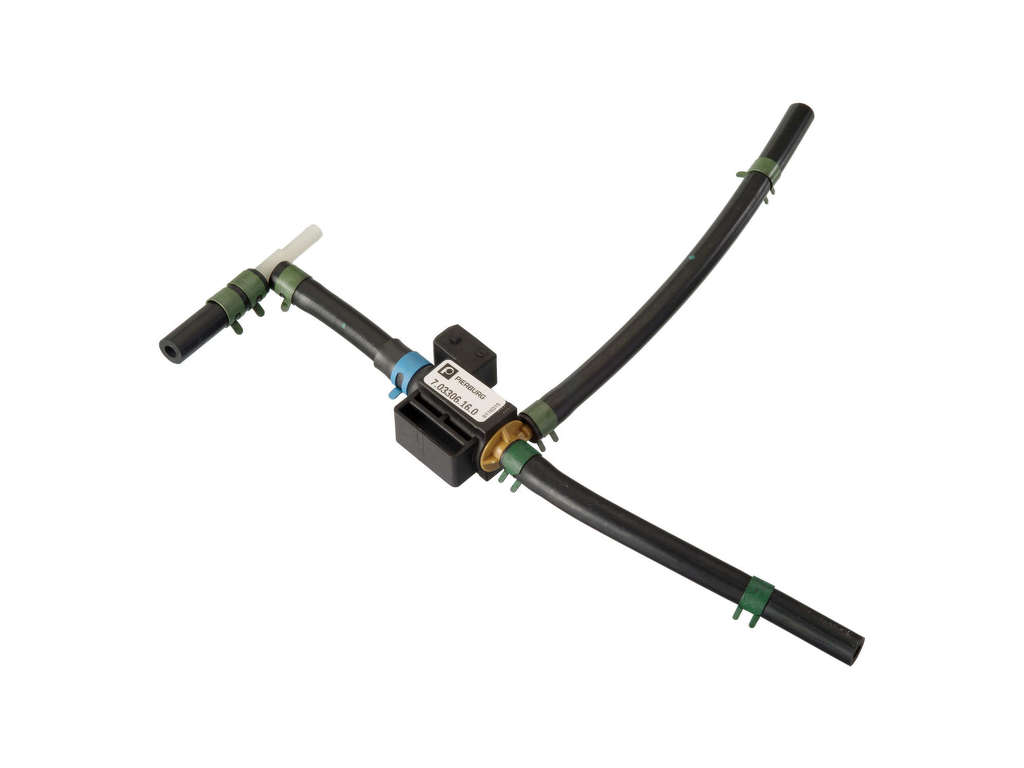
- Turbocharger Wastegate Regulating Valve Solenoid
(OEM #CJ5Z-9K378-B (replaces CJ5Z-9K378-A))— This is the most frequent cause of P0234 on the 1.6L engine, as identified by Ford in TSB 15-0162. It is also a common failure on the 2.0L engine.
Trusted brands: Motorcraft, Dorman, Pierburg
OEM price range: $80-$150
Aftermarket price range: $40-$70 - Turbocharger Assembly
(OEM #CJ5Z-6K682-L (1.6L example))— Needed if the internal wastegate is stuck, damaged, or the actuator fails and is not serviceable separately from the turbo.
Trusted brands: Motorcraft, Garrett
OEM price range: $1200-$1600
Aftermarket price range: $700-$1000
Related Codes That Often Appear With This One
- P0299 — Turbo/Supercharger Underboost Condition. TSB 15-0162 lists P0299 alongside P0234, indicating that a faulty control system can cause both erratic overboost and underboost conditions.
- P0245 — Turbo/Supercharger Wastegate Solenoid 'A' Low. This code points directly to an electrical issue with the control solenoid circuit and is also mentioned in TSB 15-0162.
- P0246 — Turbo/Supercharger Wastegate Solenoid 'A' High. Similar to P0245, this indicates an electrical fault in the solenoid circuit and is listed in TSB 15-0162.
Technical Service Bulletins (TSBs) & Recalls
- TSB 15-0162: 1.6L GTDI - Lack of power with MIL Illuminated - DTCS P0234, P0245, P0246 And/Or P0299.
- TSB 16-0116: 2.0L GTDI- Lacks Power - Illuminated MIL - Diagnostic Trouble Code (DTC) P0234.
Platform-Specific Known Issues
- TSB 15-0162 specifically targets the 1.6L GTDI engine in 2013-2016 Escapes, identifying a faulty wastegate regulating solenoid as the cause for P0234, P0299, P0245, and/or P0246, resulting in a lack of power.
- TSB 16-0116 applies to the 2017 Escape with the 2.0L GTDI engine (and Lincoln MKC), where P0234 and a lack of power may be caused by a PCM software issue that can be corrected with a re-flash.
- An owner complaint (ODI #11561976) noted that replacing the turbocharger overboost solenoid did not fix the P0234 and P0299 codes, suggesting that the root cause can sometimes be a mechanical issue with the wastegate itself or a recurring problem.
- Multiple owners on forums report the P0234 code appears intermittently, often only during hard acceleration on the highway, and may clear itself after a few drive cycles, only to return later under similar conditions.
Mechanic-Grade Diagnostic Values
- Wastegate Solenoid Coil Resistance — expected: 3.42 Ω - 4.18 Ω. Failure: A reading outside this range, or a dead short (no resistance), indicates a faulty solenoid coil.
Scan Tool Commands That Help
- Ford Integrated Diagnostic System (IDS): Powertrain > Air Management > Turbocharger Test (or Turbo Boost Test) — This is a key bidirectional test to use after checking for codes and visual inspection. The IDS software commands the wastegate solenoid to cycle from open to closed, allowing the technician to verify the solenoid's electronic function, the mechanical movement of the wastegate actuator, and the response of the boost and back pressure sensors simultaneously. Failure during this test can pinpoint whether the fault is electrical (solenoid), mechanical (stuck wastegate), or sensor-related.
Wiring & Ground Locations
- Fuse F34 — In the under-hood fuse box (Battery Junction Box), located on the right side of the engine compartment.. This 10A fuse provides power to the wastegate actuator valve solenoid. If this fuse is blown, the solenoid will be inoperative, which can lead to boost control problems and trigger P0234 or related codes like P0245/P0246.
- Wastegate Solenoid Connector — On the 1.6L, it's on the solenoid accessed through the passenger wheel well. On the 2.0L, it's on top of the engine. A diagram in safety recall 17S09 shows its location in the engine harness.. This 2-wire connector is the point for electrical testing (resistance, voltage). Damage or corrosion at this connector can interrupt the signal from the PCM, causing the solenoid to malfunction.
- Engine Ground Points (e.g., G103) — Various points in the engine compartment. One major ground, G103, is located near the battery junction box on the left side of the engine compartment.. While not specific to the solenoid, a poor engine or chassis ground can cause a variety of electrical issues for PCM-controlled components, including erratic sensor readings and actuator behavior that could potentially contribute to a P0234 code.
Real Owner Repair Stories
- Reddit user on r/fordescape (2015 Ford Escape SE 1.6L 4WD) — Intermittent Check Engine Light, only came on during acceleration when RPM was around 3000 for 5-10 seconds. No noticeable lack of power otherwise.
❌ Tried (didn't work) Initial research pointed to the solenoid, but the intermittent nature made diagnosis tricky.
✅ What actually fixed it Replacing the faulty wastegate solenoid resolved the issue permanently. - YouTube video by J Tay187 (2014 Ford Escape 1.6L EcoBoost) — P0234 code active, car would enter a 'limp mode' with no boost after an overboost condition was detected.
✅ What actually fixed it Replacing the turbocharger boost solenoid (wastegate solenoid) fixed the problem. The video documents the repair process through the passenger wheel well. - Reddit user on r/FocusST (Ford Focus ST (shares EcoBoost engine architecture)) — Chased P0234 for months. Intermittent limp mode under wide-open throttle (WOT).
❌ Tried (didn't work) An inexpensive aftermarket solenoid from Amazon had undersized vacuum ports, causing the hoses to slip off.
✅ What actually fixed it Replacing the wastegate solenoid control valve with an OEM unit sourced from a junked Ford Escape solved the problem.
When the Usual Fixes Don't Work
- While TSB 15-0162 and numerous forum posts point to the wastegate solenoid as the primary culprit for P0234, it is not a guaranteed fix. NHTSA complaint #11561976 and a report from a forum user who replaced the solenoid twice with no resolution highlight that the underlying cause can be more complex. In these cases, the fault may lie with a mechanically stuck wastegate inside the turbocharger assembly itself, a failing wastegate actuator diaphragm, or a problem in the wiring harness between the PCM and the solenoid. A complete diagnosis should always include testing the actuator's movement with a vacuum pump and verifying the wiring, especially if an initial solenoid replacement does not solve the problem.
OEM Part Supersession History
CJ5Z-9K378-A→CJ5Z-9K378-B— Standard part revision by the manufacturer, likely for improved durability or performance to address the common failure.
Heads up: The 'A' version is the original, failure-prone part. While it will physically fit, the 'B' revision should always be used for replacement to ensure the most up-to-date design.
Model Year Variations Within This Range
- 2017-2019 (2.0L): The 2017 model year refresh introduced a new twin-scroll turbocharger for the 2.0L engine, replacing the single-scroll unit from 2013-2016. This is a significant hardware change. TSB 16-0116 specifically addresses P0234 on early-build 2017 2.0L models with a PCM software update, indicating the control strategy for this new turbo may have needed refinement.
Helpful Videos
Used OEM Parts in Stock
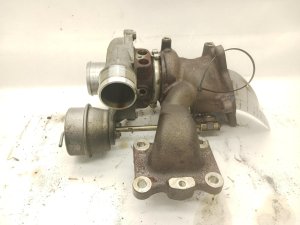
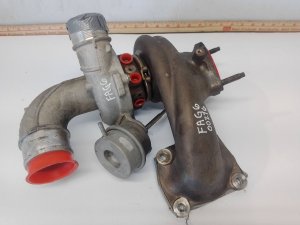
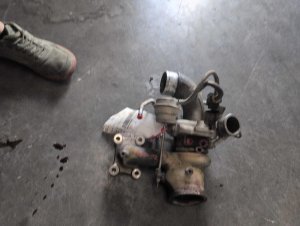
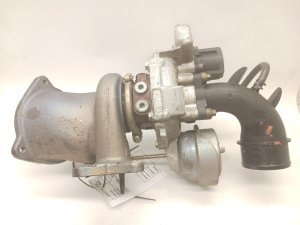
New Aftermarket Parts Available


The information in this article is provided for general reference and educational purposes only. Vehicle specifications, procedures, and part compatibility can vary by production date, trim level, and region. Always consult your vehicle's factory service manual and verify part numbers before purchasing or performing repairs. Safety-critical components such as airbags, seat belts, and braking systems should be installed by a qualified professional.
- Ford ESCAPE:
- 🎬 Helpful Videos
- 🛍️ Shop This Part
- What's Unique About the 2013-2017 Ford ESCAPE
- Diagnostic Flowchart
- Symptoms You May Notice
- Most Likely Causes
- Rare But Worth Checking
- Diagnosis Steps
- Parts You'll Likely Need
- Related Codes That Often Appear With This One
- Technical Service Bulletins (TSBs) & Recalls
- Platform-Specific Known Issues
- Mechanic-Grade Diagnostic Values
- Scan Tool Commands That Help
- Wiring & Ground Locations
- Real Owner Repair Stories
- When the Usual Fixes Don't Work
- OEM Part Supersession History
- Model Year Variations Within This Range
- 🎟️ Get 5% Off